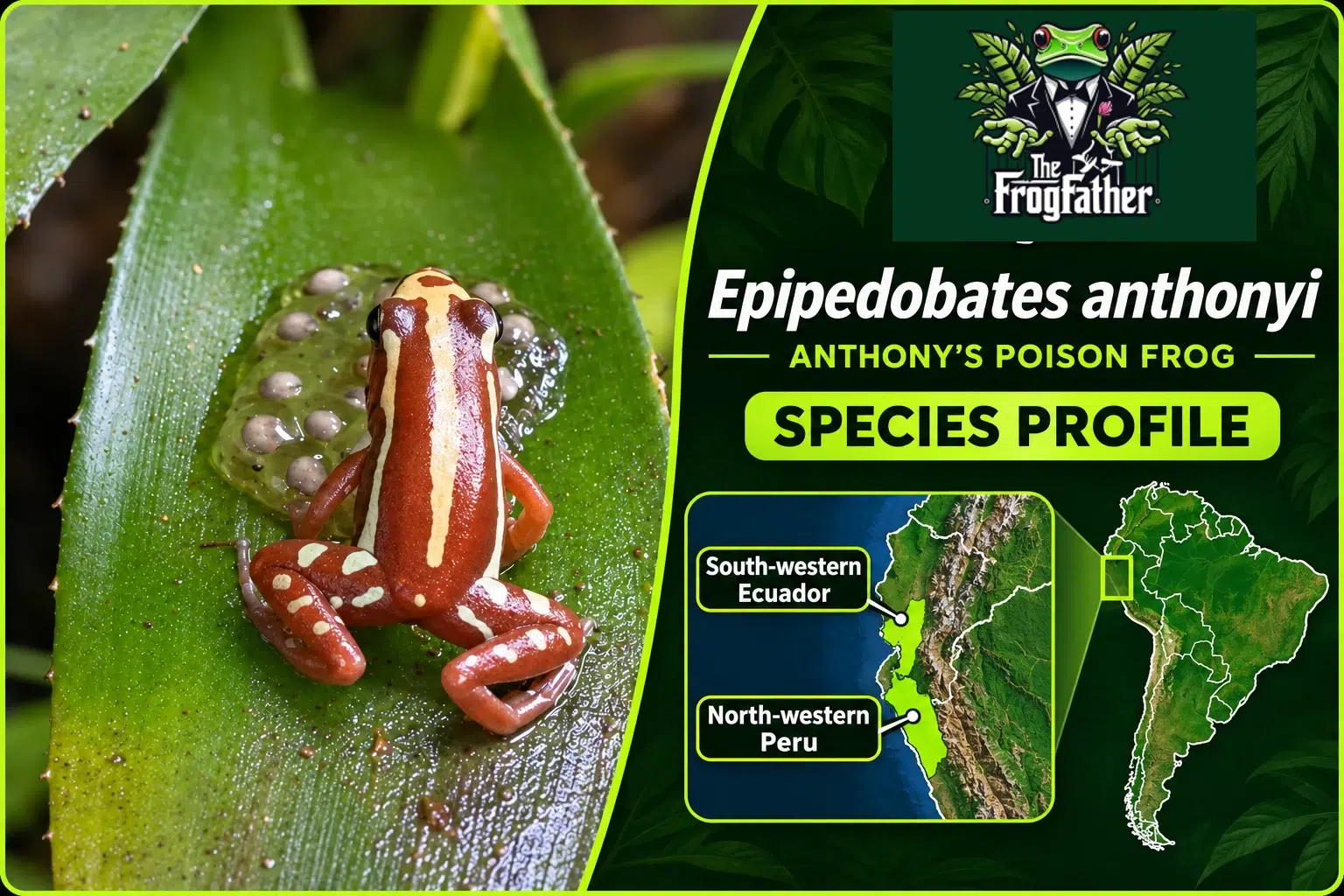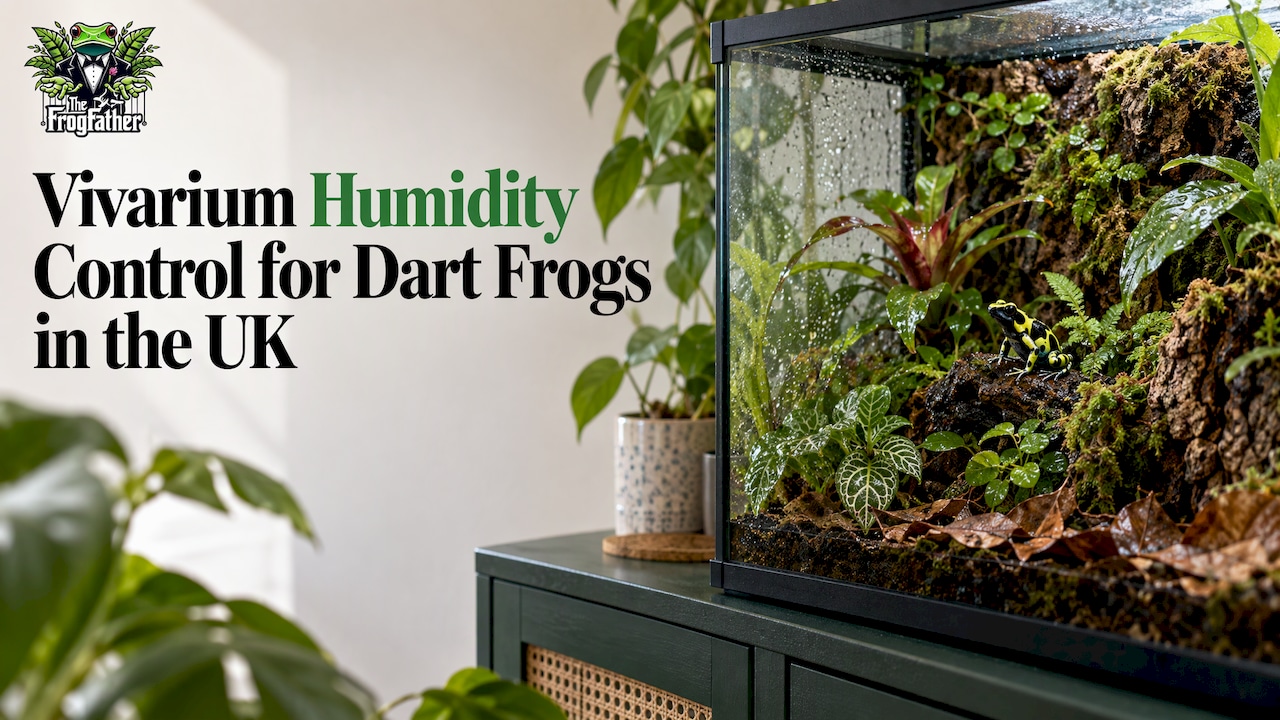

The safest tank mates for a dart frog are others of its own species, in the right numbers and sexes, plus a bioactive clean-up crew of springtails and isopods. Mixing different dart frog species in one vivarium is generally a bad idea, and keeping one frog species with other animals adds risks you do not need. Some species live in groups, many do best as a sexed pair, and the clean-up crew is the one group of “tank mates” every planted vivarium benefits from.
This guide covers who can share, who should not, what goes wrong when keepers mix, and how to plan a shared vivarium that holds together. It is written for UK keepers planning a first setup or adding frogs to an existing one.
TL;DR
- Keep one species per vivarium. Mixing species risks aggression, disease transfer and hybrids.
- Some species, such as Epipedobates, Phyllobates, Dendrobates auratus and D. leucomelas, can live in same-species groups. D. tinctorius, “azureus” and most others do best as one sexed pair.
- Space matters: bigger groups need bigger vivariums, and you should be ready to separate frogs if fighting starts.
- Springtails and isopods are the tank mates that belong in every bioactive vivarium, and they need to be established before the frogs arrive.
Table of Contents
- Can dart frogs live together?
- Which species can live in groups, and which need pairs
- How many frogs per vivarium?
- Why mixing dart frog species goes wrong
- What about other animals as tank mates?
- The tank mates that do belong: springtails and isopods
- A step-by-step plan for a shared (same-species) vivarium
- Our perspective
- Getting the setup right from the start
- FAQ
- Sources
Can dart frogs live together?
Yes, but only within the right species, the right numbers and enough space. “Together” has three different meanings, and the answer changes with each:
- Same species, in a group. Possible for some species.
- Same species, as a pair. The standard for many of the commonly kept species.
- Different species in one vivarium. Generally not recommended.
It is common for beginners to want one of each favourite species in a single enclosure. Frog.care’s guidance on mixing calls this generally not a good idea, with significant risks, and says that if you want several species or locales you should only do it if you can keep a separate vivarium for each type. We agree, and we explain why below.
Which species can live in groups, and which need pairs
Before thinking about other animals, work out what your own frogs need. Susan Horton, DVM, a veterinarian who writes on dart frog care, splits the commonly kept frogs into two caging groups:
| Caging style | Species named |
|---|---|
| Same-species groups | Epipedobates, Phyllobates, Dendrobates auratus, D. leucomelas |
| Individual sexed pairs as adults | D. tinctorius, D. azureus and most other species |
The groups that tolerate company still show periodic territorial aggression, which is why crowding is the thing to avoid. Pair-only species need a male and a female, not two of the same sex.
There is a practical snag. Frogs are usually sold as unsexed juveniles, and the same veterinary source notes that sexing is difficult until adulthood at around one year, when females tend to be larger and males call. If you are building a pair, plan for that wait rather than guessing. Our sexing and ratios guide walks through it, and our species guide shows which type suits which approach.
How many frogs per vivarium?
Numbers depend on species and floor space. As one worked example, the Citizen Conservation breeding guidelines for Epipedobates tricolor recommend a minimum 40 x 40 x 40 cm terrarium for a pair or one male with two females. For groups of five or more, they suggest terrariums of 80 x 50 x 50 cm or larger.
That is guidance for one group-living species. A pair-only frog like D. tinctorius should not be treated as a candidate for a crowd just because the tank is big. Our guides cover the details for UK setups:
- How many dart frogs can I keep together?
- Dart frog tank size guide (UK)
- Choosing the right dart frog vivarium size
- Can dart frogs live in groups?
A bigger footprint is the cheapest insurance you can buy against aggression. More floor, more leaf litter, more visual barriers and more feeding spots all give a subordinate frog somewhere to go.
Why mixing dart frog species goes wrong
Reptile Advisor sums up three risks of keeping different species together:
- Territorial aggression. Injury or intimidation can stop a frog eating or reaching parts of the habitat. The frog that loses is often the one you notice last, because it hides.
- Disease and parasites. Frogs from different regions can carry different parasites, bacteria or viruses, and a shared vivarium gives them every chance to pass them on.
- Hybridisation. Closely related species can produce hybrid young, which muddies captive bloodlines and is a poor outcome for a species you chose for what it is.
The same source notes that some zoos and experienced keepers do mix species. If anyone does, the conditions are narrow: similar habitat requirements, captive-bred animals only, and avoiding triggering breeding activity. For a keeper of any experience, that is a lot of conditions to meet, and each species also has its own needs for size, temperature and calls. One compromise setup rarely suits two.
What aggression looks like
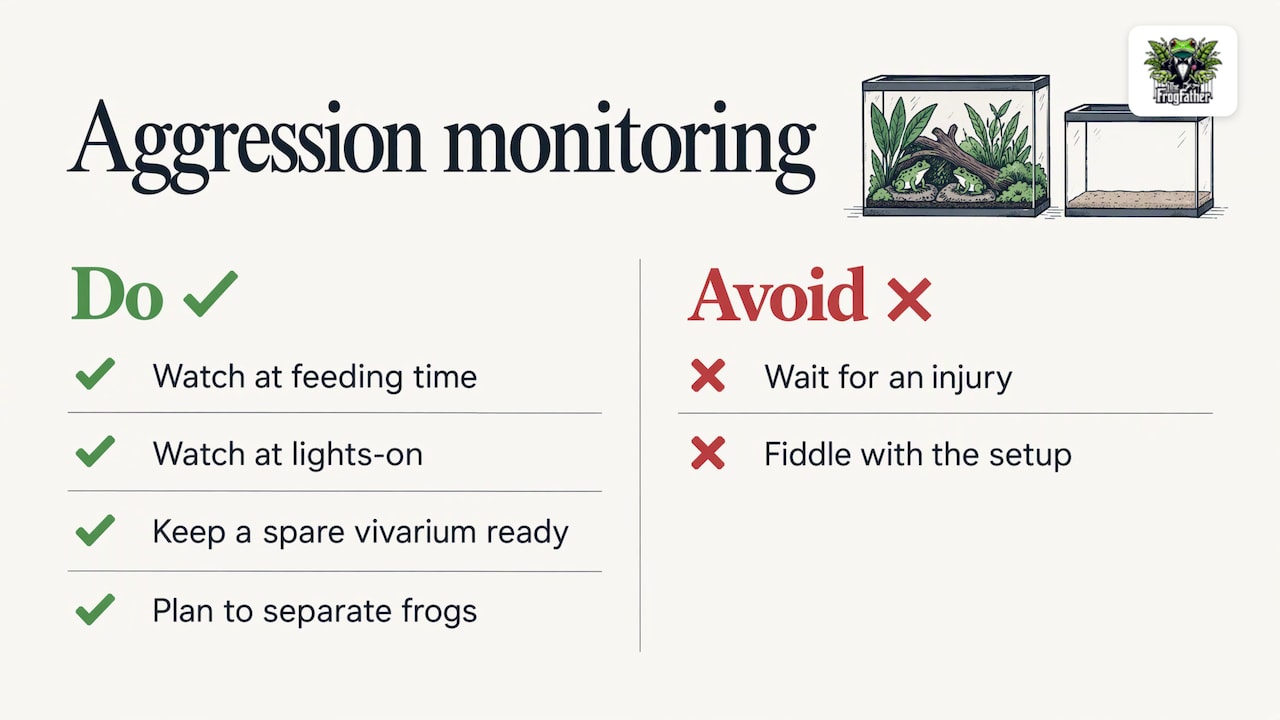
Aggression can happen in any dart frog species. Frog.care’s aggression page describes wrestling, together with territorial calls from males that sound more forced and staccato than mating calls. Do not wait for an injury. Watch the vivarium at feeding time and at lights-on, because that is when chasing and guarding of food or hides shows up.
A calm routine of observation beats fiddling. Keep a spare, set-up vivarium ready or a plan to move a frog, because the advice is to be prepared to separate frogs if needed.
What about other animals as tank mates?
Other animals from different groups, such as geckos, are not something we recommend adding to a dart frog vivarium. Dart frogs need high humidity and a calm, closely managed space, and your frogs’ feeding, supplementation and health checks are far easier to manage when the vivarium holds only the frogs and their clean-up crew. If you want to keep another animal you like, give it its own enclosure.
The same rule of thumb that stops you mixing frog species applies here: every extra animal brings its own food, its own stress and its own pathogens to a small closed system.
The tank mates that do belong: springtails and isopods
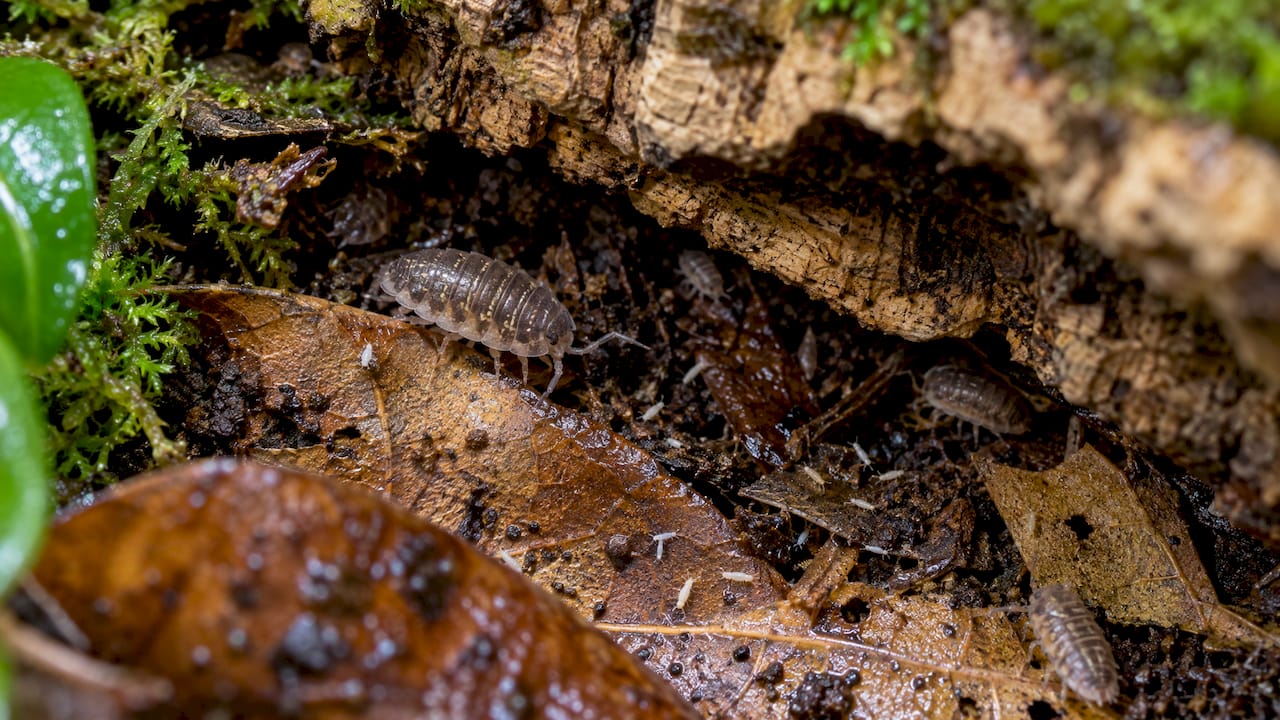
A bioactive vivarium is a small ecosystem of plants, soil and drainage layers. The Insect and Habitat Society’s care sheet describes it as a balanced microclimate, with a clean-up crew of springtails, woodlice and worms that process faecal matter. The same sheet advises leaving the vivarium to settle with no animals for a couple of weeks so the plants establish before you add inhabitants.
In a frog vivarium the clean-up crew does the job of waste processing, and it is the only mixed-species community we would ever recommend. It works for these reasons:
- Springtails graze mould and organic waste and breed quickly in damp substrate.
- Isopods break down leaf litter and waste. Species choice matters, because some small, delicate frogs and some robust isopods are a poor match. Our guide on why some isopods fail in dart frog vivariums explains how to choose.
- Timing. Let the crew breed and settle before the frogs go in, so the vivarium is stable on day one.
For more on how the clean-up crew works, see our guides to isopods and springtails and the microfauna deep dive. A bioactive vivarium still needs maintenance: you feed the frogs, supplement them, top up microfauna and watch the plants. Our checklist, is your vivarium actually bioactive?, is a good way to test your own.
A step-by-step plan for a shared (same-species) vivarium
- Choose the species first. Decide whether it is a group species or a pair species, using the table above and our species guide.
- Size the vivarium for the final group. Buy for the number of adults, not the number of froglets you start with. Check the footprint against the guidance above.
- Build in barriers. Use plants, wood, cork and leaf litter so frogs can leave each other’s sight lines. Add more than one feeding spot and more than one hide.
- Establish the vivarium. Let plants root and the clean-up crew breed before frogs arrive, as the care sheet advises.
- Buy captive-bred frogs from one source, and from the same locale. Frogs from one breeder are a more consistent starting group.
- Plan for sexing. If you want a pair, expect to wait until adulthood and keep your options open for rehoming or a second vivarium.
- Watch daily at first. Look for wrestling, forced calling, a frog that stays hidden or loses weight, and separate quickly if needed.
Our perspective
We keep and breed dart frogs in Nottingham, and our view is simple: give each species its own vivarium and put the effort into the habitat. A single-species vivarium lets you set size, planting and feeding for exactly those frogs, and it removes the risks of hybrids and cross-species disease.
Where frogs can be kept in groups, we favour roomy vivariums with plenty of cover. Where they are pair species, we favour one sexed pair and patience while the juveniles grow up.
The tank mates we do build into every bioactive vivarium are the clean-up crew. Our Microfauna Nutrition Series is designed to support springtails and isopods, so the ecosystem under the frogs stays productive. None of this is effortless, and a good vivarium rewards steady, observant care.
Frogfather
Getting the setup right from the start
We breed dart frogs in the UK and build custom bioactive vivariums, so a keeper can start with a planted vivarium sized for the species they choose. If you prefer to build it yourself, our Bioactive Clean-Up Crew provides springtails and isopods for the vivarium, and our live food range includes fruit fly subscriptions so feeding stays consistent.
If you are choosing between a group and a pair, our established 45x45x60cm vivarium with powder blue dart frogs shows what a fully cycled setup for a single-species pair looks like.
FAQ
Can dart frogs live together?
Some can. Species such as Epipedobates, Phyllobates, D. auratus and D. leucomelas can be kept in same-species groups, while D. tinctorius and most others do best as a sexed pair. Space and cover decide whether a group stays peaceful.
Can I keep two different species of dart frog in one tank?
It is generally not a good idea. The risks are aggression, parasites and bacteria passing between frogs from different regions, and hybrid young. If you want more than one species, a separate vivarium for each is the sound approach.
Can I keep two males together?
Male dart frogs are territorial, and forced, staccato territorial calls and wrestling can occur in any species. Pair-only species need a male and a female. For group species, sexing and space matter, so check the species and the vivarium size before you decide.
Do springtails and isopods count as tank mates?
Yes, and they are the ones you want. They process waste and leaf litter in a bioactive vivarium. Establish them before the frogs go in and choose isopod species suited to your frogs.
Sources
- Dart Frog Care, Susan Horton DVM
- Poison Dart Frog Care: The Complete Guide, Reptile Advisor
- Don’t Mix Dart Frogs, Frog.care
- Aggression, Frog.care
- Citizen Conservation Epipedobates tricolor breeding guidelines (2024)
- Habitat care sheet, Insect and Habitat Society
Recommended
- How Many Dart Frogs Can I Keep Together?
- Can Dart Frogs Live In Groups? A Guide To Social Species, Tank Aggression, And Vivarium Design
- Keeping Dart Frogs With Isopods: Benefits, Limits & Species Choice
- Can You Mix Dart Frog Species? (And Why It Usually Fails)