
“It’s bioactive.”
I hear that phrase a lot. And to be fair, most people mean well when they say it.
But here’s the uncomfortable truth:
Soil + plants + a couple of springtails does not automatically equal a functioning bioactive ecosystem.
A real bioactive vivarium is a balanced, self-supporting micro-ecosystem. And most setups — especially newer ones — aren’t there yet.
This guide will help you work out whether your vivarium is genuinely bioactive… or just looks the part.
What “Bioactive” Actually Means
A true bioactive system should:
- Break down waste efficiently
- Support stable microfauna populations
- Resist mould spikes long-term
- Maintain plant health without constant intervention
- Create environmental stability for your animals
It’s about biological function, not aesthetics.
The Real-World Bioactive Checklist
1. Leaf Litter Breakdown Rate
Take a look at your leaf litter.
If you placed it 3 months ago and it still looks almost identical, your clean-up crew isn’t doing enough work.
In a healthy system:
- Leaves slowly skeletonise
- Edges soften and fragment
- Material integrates into the substrate
No breakdown = low detritivore activity.
2. Springtail Density Test
Gently disturb a damp patch of substrate.
You should see visible movement within seconds.
If you only see one or two, your population may be too small to buffer fungal spikes effectively.
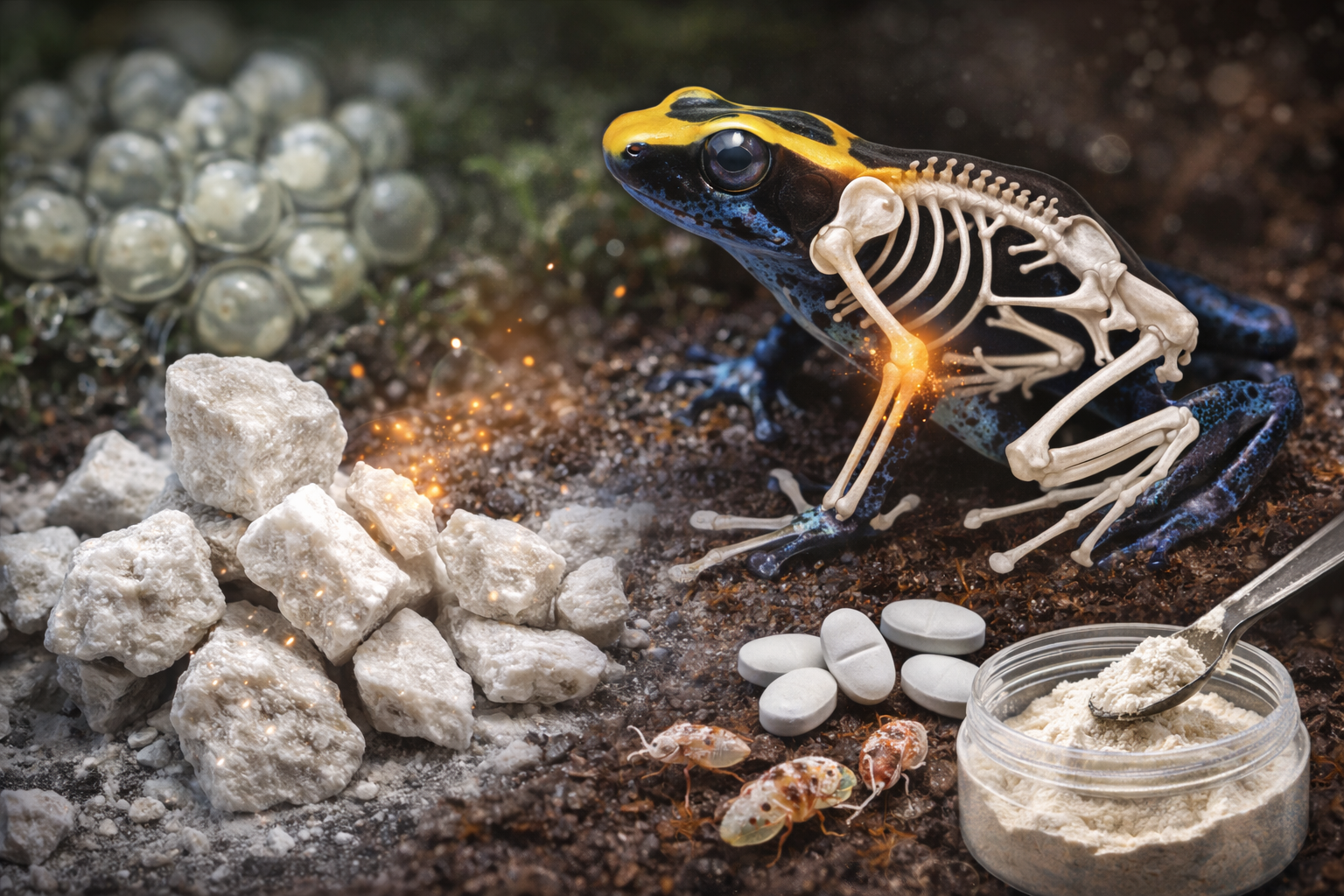
If you’re actively building populations, proper feeding matters. Consistent microfauna nutrition using appropriate foods (such as those found in our supplement range) supports sustainable colony growth.
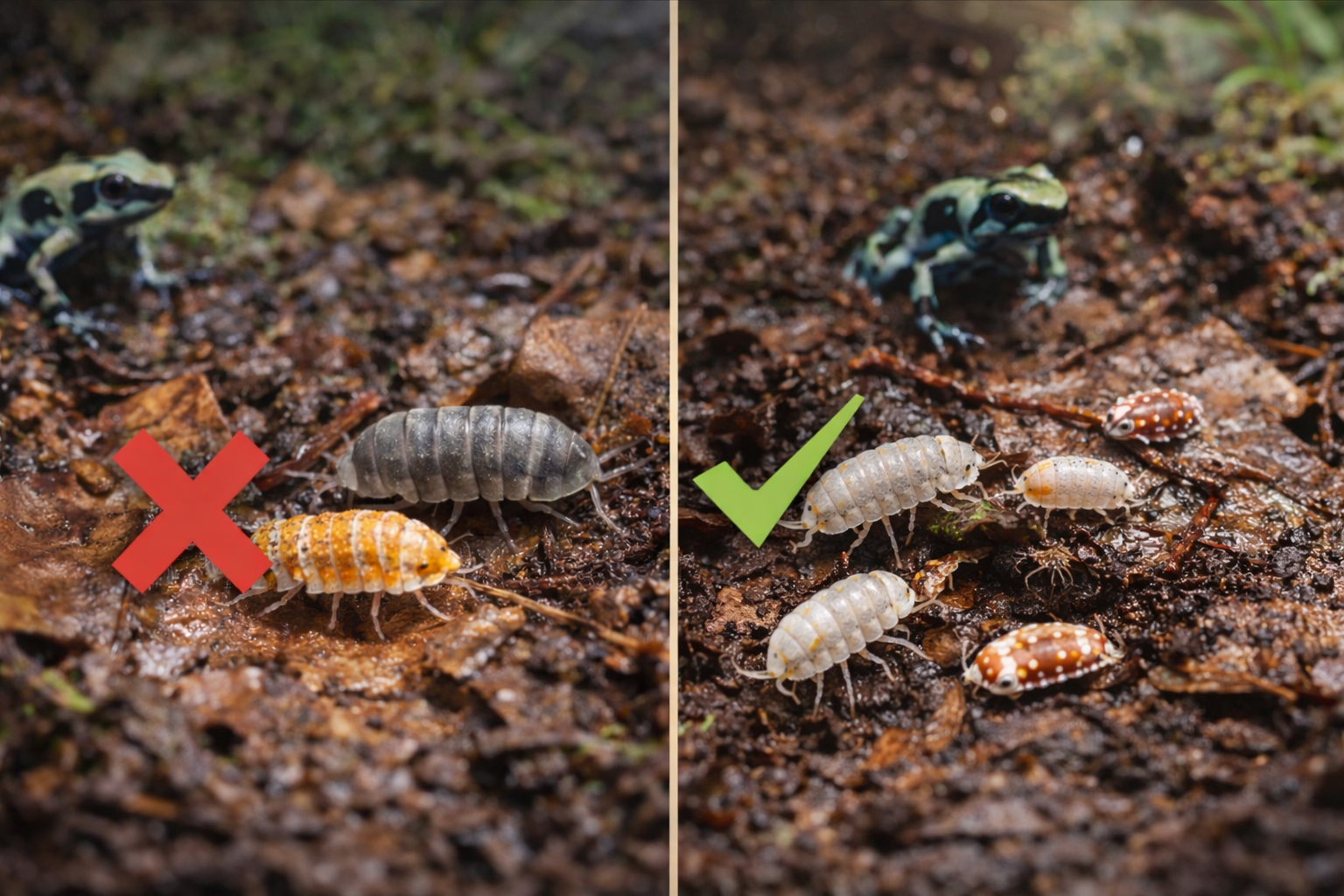
3. Isopod Breeding Signs
Lift cork bark carefully.
Do you see:
- Multiple size classes?
- Juveniles?
- Molted exoskeletons?
If you only ever see the original adults you introduced, they aren’t reproducing — which usually means something is off (humidity gradients, calcium availability, protein balance).
4. Mould Spike Cycle
New setups often experience a mould phase. That’s normal.
But after 6–8 weeks, mould should reduce significantly.
If you’re still battling recurring fuzzy patches months later, the system hasn’t stabilised.
Common causes:
- Over-saturation
- Poor air exchange
- Insufficient clean-up crew density
5. Substrate Structure
Healthy bioactive substrate isn’t sludge.
It should feel:
- Moist but not waterlogged
- Loose, not compacted
- Rich, with visible organic integration
If it smells sour or stagnant, something is biologically imbalanced.
6. Plant Performance
Plants are indicators.
Are they:
- Producing new growth?
- Rooting firmly?
- Showing consistent leaf health?
Or are they stalling, yellowing, or rotting at the base?
A functioning soil food web supports plant roots. A decorative setup does not.
7. Waste Breakdown
Observe droppings.
In a balanced system, visible waste should disappear within days.
If it lingers for a week untouched, your detritivore population may be insufficient.
Common “Fake Bioactive” Signs
- No visible microfauna activity
- Constant glass film
- Persistent mould
- Waterlogged drainage layer
- Isopods surviving but not breeding
- Springtails present but not booming
It might look lush. But biologically, it’s underpowered.
How to Turn a Decorative Setup Into a True Bioactive System
Increase Microfauna Density
Add more springtails and isopods gradually. Allow populations to establish before introducing heavy bioload.
Feed the System
Microfauna need nutrition too. Occasional supplemental feeding supports colony expansion.
Improve Air Exchange
Stagnant air suppresses biological balance. Proper ventilation encourages healthy cycles.
Correct Moisture Balance
High humidity does not mean saturated substrate. Create moisture gradients.
Add More Leaf Litter
Leaf litter is not decoration — it is fuel for the ecosystem.
The 90-Day Rule
Most systems need 2–3 months to stabilise.
Adding animals too early is one of the biggest mistakes keepers make.
If your setup is under 8 weeks old, you’re still in the microbial adjustment phase.
FAQ
How long does it take for a bioactive vivarium to become stable?
Typically 8–12 weeks before microbial and detritivore populations balance out.
Can I have too many springtails?
In most dart frog setups, no. Dense springtail populations are usually beneficial.
Do bioactive systems eliminate all cleaning?
No. They reduce maintenance but do not replace husbandry.
Should I replace substrate yearly?
In a well-functioning system, substrate can last several years with top-ups and maintenance.
Final Thoughts
Bioactive isn’t a label.
It’s a process.
If your vivarium passes most of this checklist, you’re on the right track. If not, don’t panic — biological systems take time, adjustment, and patience.
The goal isn’t perfection.
It’s stability.