One of the strangest things about keeping dart frogs is how misleading a vivarium can look.
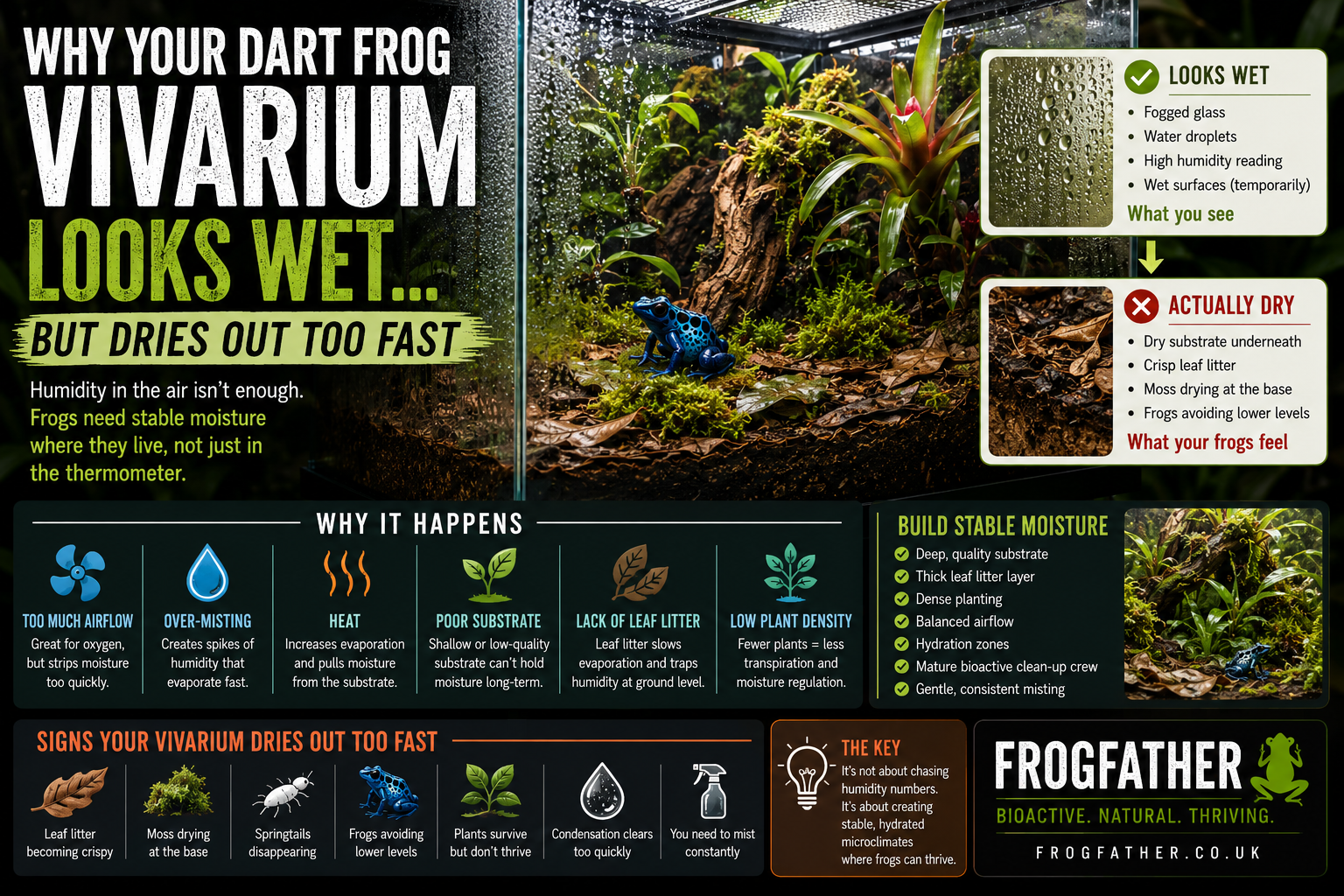
The glass is fogged up. The moss looks damp. The hygrometer says 85%. There’s water droplets everywhere.
Yet somehow the frogs still sit high up all day, avoid the floor, stop calling properly, or start behaving like something feels off.
And honestly? In a lot of cases, it is off.
Because many dart frog vivariums are visually wet while functionally dry.
That sounds contradictory until you understand how moisture actually works inside a bioactive enclosure.
A healthy dart frog vivarium is not just about humidity numbers floating in the air. It’s about moisture retention across surfaces, substrate layers, hydration zones, airflow gradients and microclimates.
And this is where loads of setups quietly fail.
The Biggest Misunderstanding in Dart Frog Humidity
Most keepers focus on airborne humidity.
Frogs care far more about contact moisture.
That means:
- Damp leaf litter
- Moist moss pockets
- Hydrated substrate
- Cool shaded retreats
- Stable hydration surfaces
A vivarium can show 90% humidity while the substrate underneath is drying out rapidly.
That’s because humidity in the air changes very quickly. Substrate hydration changes much slower.
The problem is many modern vivariums create fast evaporation cycles that look tropical but don’t actually hold moisture where dart frogs need it most.
Why Fogged Glass Tricks Keepers
Condensation is one of the biggest false confidence signals in frogkeeping.
Water on the glass does not automatically mean your enclosure is hydrated properly.
In fact, sometimes heavy condensation appears because the enclosure is cycling moisture too aggressively.
Warm wet air hits cooler glass. Moisture condenses. The tank looks extremely humid.
But underneath?
- The substrate may already be drying
- The leaf litter may feel crispy underneath
- Moss may be drying at the base
- Microfauna populations may be shrinking
- Hydration surfaces may only stay wet briefly
Experienced keepers stop reading the glass and start reading the ecosystem instead.
That includes:
- How long surfaces stay damp
- How frogs use lower levels
- How moss behaves
- Whether springtails remain active
- How quickly substrate dries between misting
Fast Airflow Can Secretly Strip Moisture
This is becoming more common in UK setups now people understand overheating risks better.
Extra ventilation helps reduce stagnant air and overheating. But airflow also massively increases evaporation.
So now we see lots of vivariums where:
- Humidity spikes after misting
- The tank looks wet
- Air exchange is high
- Surfaces dry rapidly afterwards
- Lower substrate loses moisture steadily
The result is unstable hydration.
And dart frogs hate instability.
Especially species that naturally spend time close to damp forest floors and saturated leaf litter.
This is why airflow should never be treated separately from hydration retention. They directly affect each other.
Your enclosure needs to breathe without becoming dehydrating.
Leaf Litter Is More Important Than Most People Realise
Leaf litter is not decoration.
It’s moisture infrastructure.
A proper leaf layer slows evaporation, traps humidity near the substrate surface and creates stable damp zones underneath.
Without enough leaf litter:
- Substrate dries faster
- Microfauna struggle
- Moss dries unevenly
- Hydration gradients collapse
- Frogs lose protected humid retreats
Thin decorative scattering isn’t enough.
Natural forest floors are layered. There’s depth. There’s overlap. There’s trapped moisture underneath.
That’s why deeper tropical leaf litter often creates dramatically more stable microclimates in bioactive vivariums.
Products like:
often outperform thinner brittle leaf mixes because they physically retain moisture longer.
Misting Can Actually Make Drying Worse
This sounds backwards but happens constantly.
Heavy misting creates:
- Large humidity spikes
- Rapid evaporation
- Short-term saturation
- Surface wetness
- Temporary fogging
Then powerful airflow strips moisture away quickly afterwards.
The vivarium swings between extremes instead of stabilising.
And many frogs respond badly to constant environmental fluctuation.
Healthy tropical systems are surprisingly stable. Not soaking wet all the time. Not violently fluctuating.
Stable moisture matters more than dramatic misting events.
The Substrate Is Usually the Real Problem
A lot of bioactive substrates look moist on top while drying underneath.
That usually happens because:
- The substrate layer is too shallow
- The drainage layer is oversized
- Airflow is too aggressive
- The substrate mix lacks water retention
- The vivarium is heated excessively
When lower substrate layers dry:
- Microbial activity slows
- Springtails decline
- Isopods retreat deeply
- Plant roots struggle
- Humidity buffering weakens
The enclosure starts losing resilience.
This is one reason mature vivariums often behave better than fresh setups. Established systems retain and cycle moisture more efficiently.
Real Signs Your Vivarium Is Drying Too Fast
These signs usually appear before beginners realise moisture stability is failing:
- Leaf litter becoming crispy underneath
- Moss drying at the base
- Frogs avoiding lower levels
- Springtails disappearing from visible areas
- Plants surviving but not actively growing
- Condensation disappearing extremely quickly
- Frequent misting required to maintain appearance
- Substrate pulling away from glass edges
One sign alone does not always mean a problem. Patterns matter more than isolated observations.
How Experienced Keepers Build Moisture Stability
Long-term successful dart frog setups usually rely on:
- Deep substrate systems
- Layered leaf litter
- Moderate airflow rather than excessive airflow
- Hydration zones
- Dense planting
- Natural shading
- Mature microfauna populations
- Controlled evaporation
Plants play a huge role too.
Dense tropical planting reduces moisture loss massively while helping create stable microclimates.
That’s why thriving vivarium plants are not just aesthetic additions. They actively regulate the enclosure.
Microclimates Matter More Than Average Humidity
Real rainforests are not evenly humid everywhere.
They contain tiny variations in:
- Moisture
- Temperature
- Air movement
- Surface wetness
- Shade
Dart frogs constantly move between these microzones.
Good vivariums replicate that naturally.
Bad vivariums try forcing identical conditions everywhere at once.
Ironically, trying to make an enclosure “perfectly humid” often creates less natural behaviour and poorer hydration stability.
What You Should Focus On Instead
Instead of chasing humidity numbers all day, focus on:
- Stable damp substrate
- Healthy leaf litter moisture
- Active microfauna
- Plant growth
- Natural frog behaviour
- Gradual drying cycles
- Long-term moisture retention
That tells you far more about vivarium health than a hygrometer ever will.
If your dart frog setup constantly looks wet but behaves dry, the issue usually is not humidity itself.
It’s moisture stability.
And once you understand that difference, dart frog husbandry starts making far more sense.
If you’re still building your enclosure, starting with the right dart frog species, substrate structure and hydration strategy from day one prevents most of these problems long before they appear.
Frequently Asked Questions
Why does my dart frog vivarium dry out so quickly?
Usually because airflow, heat or poor moisture retention is causing water to evaporate faster than the enclosure can stabilise naturally.
Can a vivarium look humid but still be too dry for dart frogs?
Yes. Fogged glass and high humidity readings can still happen while substrate, moss and hydration surfaces dry out underneath.
Does more misting fix a dry dart frog vivarium?
Not always. Excessive misting can create rapid humidity spikes followed by aggressive evaporation cycles, leading to unstable hydration.
How do I improve moisture retention in a bioactive vivarium?
Deeper substrate, layered leaf litter, dense planting and balanced airflow all help retain moisture more naturally.
Why is leaf litter important for dart frogs?
Leaf litter traps humidity, slows evaporation, supports microfauna and creates damp protected microclimates frogs rely on.
What are signs my vivarium is drying too fast?
Crispy leaf litter, shrinking moss, reduced springtail activity, frogs avoiding lower levels and constantly needing to mist are all common warning signs.