One of the most misunderstood things in dart frog keeping is condensation.
Some keepers panic the second their glass fogs up.
Others think permanently misted glass means their dart frog vivarium is “perfectly humid”.
Neither is really true.
Because vivarium condensation is basically your enclosure talking to you.
The problem is most people do not know how to read the signals properly.
Condensation can indicate:
- Healthy humidity cycling
- Plant transpiration
- Temperature gradients
- Poor airflow
- Excess saturation
- Stagnant air
- Microclimate imbalance
- Potential bioactive collapse
And sometimes…
A vivarium can look soaking wet while actually functioning dangerously dry for dart frogs.
That sounds backwards until you understand how tropical systems really work.
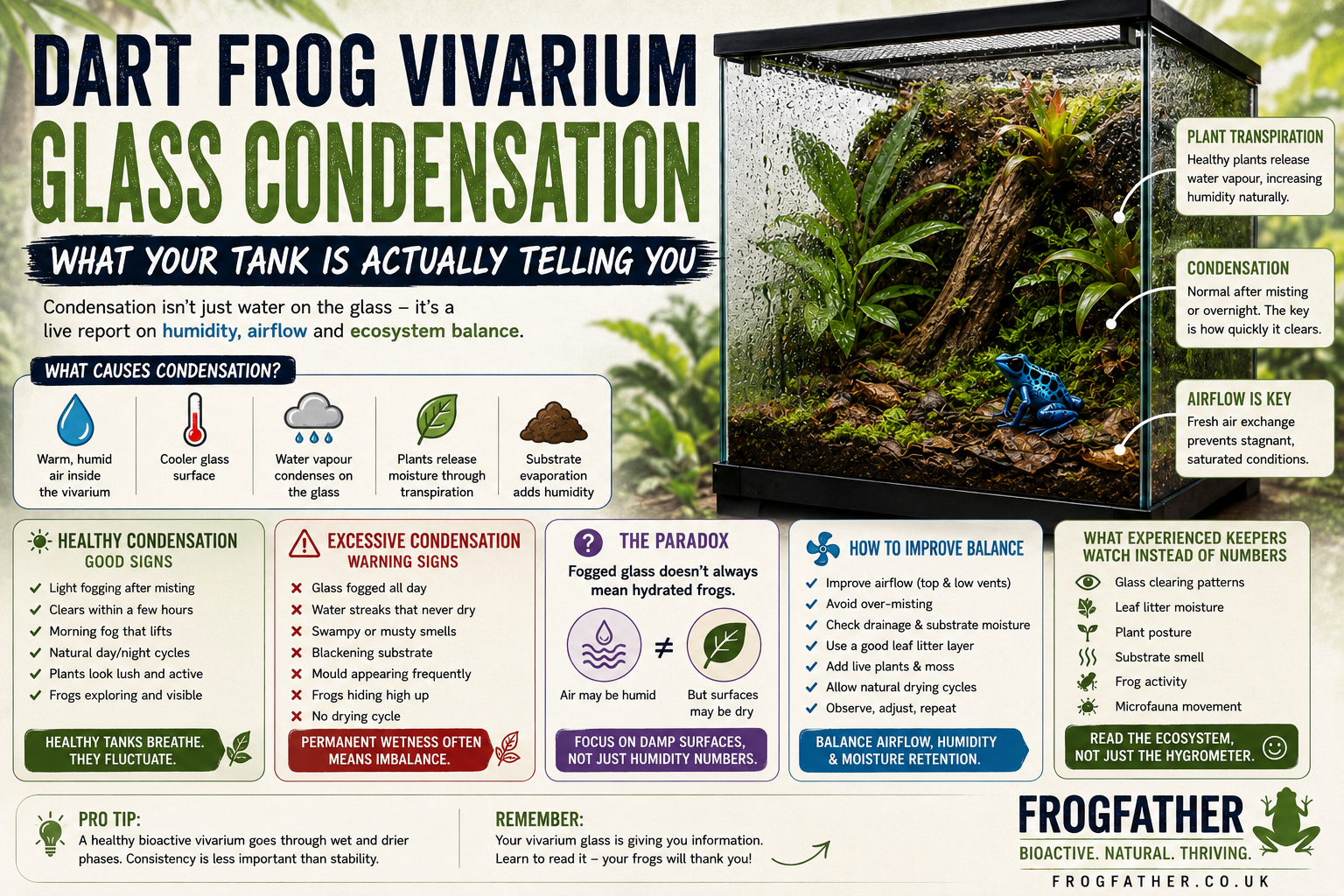
Why Vivarium Glass Condensation Happens
Condensation forms when warm humid air touches a cooler surface.
That surface is usually the vivarium glass.
Inside a tropical setup:
- Misting increases airborne moisture
- Plants release water vapour
- Substrate evaporates moisture
- Lighting creates heat
When that warm moist air meets cooler glass, the water condenses into droplets.
That’s completely normal.
Especially in the UK where room temperatures are often cooler than the vivarium interior.
Morning Fogging Is Usually Healthy
A lot of healthy vivariums fog up slightly overnight or early in the morning.
That often means:
- Humidity is cycling naturally
- Plants are transpiring properly
- Temperature gradients exist
- The ecosystem is breathing normally
Then as the day progresses:
- Lighting warms the enclosure
- Air exchange increases
- Glass gradually clears
That’s usually a good sign.
Healthy vivariums fluctuate.
They are not static boxes frozen at one exact humidity percentage all day.
Permanent Fogged Glass Is Different
If your glass never clears, that’s when you should start paying attention.
Permanent condensation often suggests:
- Poor airflow
- Over-misting
- Substrate saturation
- Low oxygen exchange
- Stagnant air pockets
- Poor temperature balance
This is where many keepers accidentally create “wet boxes” instead of functioning ecosystems.
And interestingly, permanently fogged glass does not always mean healthy humidity for frogs.
That’s one of the biggest misconceptions in bioactive keeping.
The Weird Paradox: Fogged Glass But Dry Frogs
This catches loads of people out.
You can have:
- 90% humidity readings
- Fogged glass
- Water droplets everywhere
…while the actual hydration surfaces frogs rely on are drying out.
Because dart frogs do not drink humidity.
They absorb moisture through contact with damp surfaces:
- Leaf litter
- Moss
- Substrate layers
- Micro-humid pockets
This is exactly why the article:
Dart Frog Humidity: Why 80% Doesn’t Mean Your Vivarium Is Actually Humid
matters so much.
Humidity numbers alone tell you almost nothing about how functional the enclosure really is.
Plants Create Condensation Too
Another thing people underestimate is plant transpiration.
Healthy tropical plants constantly release water vapour into the air.
Dense planting can massively increase condensation.
Especially:
- Bromeliads
- Philodendrons
- Ficus species
- Begonias
- Moss walls
That is not necessarily bad.
In fact, strong plant growth is usually a sign your bioactive system is stabilising properly.
This links closely to:
Why Vivarium Plants Survive… But Don’t Thrive
Why UK Homes Make Condensation Worse
Most online vivarium advice comes from warmer climates.
UK homes behave differently.
Especially during:
- Winter heating season
- Cold mornings
- Damp weather
- Poorly ventilated rooms
When cold room air meets warm vivarium humidity, condensation becomes far more aggressive.
That’s why UK keepers often see:
- Fogged glass every morning
- Condensation pooling
- Water streaking
- Lower airflow during winter
It’s not always dangerous.
But it can become dangerous if airflow is neglected.
Condensation And Airflow Are Connected
The best vivariums balance:
- Humidity retention
- Fresh air exchange
- Evaporation
- Microclimate stability
Too little airflow and condensation builds endlessly.
Too much airflow and hydration surfaces dry too quickly.
That’s why understanding:
vivarium airflow and air exchange
completely changes how you manage humidity.
The Drainage Layer Connection
Persistent condensation can also indicate excess water accumulation lower in the enclosure.
If your substrate is constantly saturated:
- Evaporation increases
- Air becomes heavier
- Glass fogging worsens
- Oxygen declines
This is why proper water separation matters.
Especially in heavily misted systems.
If you have not already, read:
Dart Frog Vivarium Drainage Layers: Do You Actually Need One?
When Condensation Becomes A Warning Sign
Condensation itself is not dangerous.
But the conditions causing it sometimes are.
Warning signs include:
- Glass permanently soaked
- Swampy smells
- Blackening substrate
- Mould outbreaks
- Weak plant roots
- Frogs constantly hiding
- Microfauna decline
- No drying cycle whatsoever
Healthy vivariums normally experience subtle fluctuations through the day.
If nothing ever changes, something is usually out of balance.
Experienced Keepers Read The Glass
One thing you notice after years of keeping dart frogs is that experienced keepers rarely obsess over hygrometer numbers.
They watch behaviour instead.
They observe:
- Glass clearing patterns
- Leaf litter moisture
- Plant posture
- Substrate smell
- Frog activity
- Microfauna movement
Because bioactive vivariums are ecosystems.
Not humidity chambers.
The glass is just one clue among many.
So… Should Your Vivarium Glass Fog Up?
Sometimes?
Absolutely.
Especially:
- After misting
- Overnight
- Early morning
- During seasonal weather swings
What matters is whether the system can regulate itself afterwards.
Healthy dart frog vivariums usually:
- Cycle naturally
- Clear gradually
- Maintain damp hydration zones
- Retain oxygen exchange
- Support active frogs and plants
Permanent wetness is rarely the goal.
Balance is.
If you are still refining your setup, understanding humidity, airflow, drainage and plant transpiration together is what separates a struggling vivarium from one that genuinely thrives long term.
Frequently Asked Questions
Is condensation in a dart frog vivarium normal?
Yes. Some condensation is completely normal, especially after misting or overnight when temperatures drop slightly. Most healthy dart frog vivariums experience natural humidity cycling.
Should my vivarium glass stay fogged up all day?
Usually no. Permanently fogged glass can suggest poor airflow, excess saturation or inadequate ventilation. Healthy bioactive vivariums normally go through wet and drier phases during the day.
Does condensation mean humidity is correct?
Not necessarily. Condensation only shows moisture is present in the air. Dart frogs rely more on damp hydration surfaces like moss, leaf litter and substrate than humidity numbers alone.
Why does my vivarium fog up more in winter?
UK homes often create stronger temperature differences between the room and the enclosure during winter. Warm humid vivarium air hitting colder glass creates heavier condensation.
Can too much condensation harm dart frogs?
Indirectly, yes. Excess condensation may indicate stagnant airflow, waterlogged substrate or poor oxygen exchange, which can negatively affect frogs, plants and microfauna over time.
How do I reduce excessive vivarium condensation?
Improving airflow, reducing over-misting, checking drainage layers and allowing natural drying cycles usually helps stabilise condensation issues safely.