A healthy dart frog vivarium should not be sterile. That might sound odd at first, especially if you are new to keeping dart frogs, but one of the biggest mistakes people make with bioactive vivariums is trying to keep them too clean.
In a normal pet setup, cleanliness often means removing anything that looks messy. In a bioactive dart frog vivarium, however, the goal is different. You are not just decorating a glass box. You are trying to build a living tropical ecosystem with plants, springtails, isopods, fungi, bacteria, leaf litter, moisture, and natural decay all working together.
When that system is balanced, it becomes far more stable. Plants root in properly. Microfauna multiply. Waste breaks down more naturally. Humidity becomes easier to manage. The vivarium begins to behave less like a cage and more like a tiny slice of rainforest.
But when a vivarium is constantly stripped, scrubbed, dried, replaced, sterilised, and reset, it never has time to mature. It looks clean for a short while, but biologically it is weak.
Clean Is Not the Same as Healthy
There is a big difference between a clean vivarium and a sterile vivarium.
A clean vivarium is well maintained. Waste is monitored. Food is not left to rot. Glass is wiped when needed. Ventilation is balanced. Frogs are observed daily. Nothing smells sour, stagnant, or unpleasant.
A sterile vivarium, on the other hand, has been stripped of the very life that makes a bioactive setup work. There is no real leaf litter layer, no established microfauna population, very little fungal activity, and often no mature bacterial balance in the substrate.
It may look tidy, but it is not functioning properly.
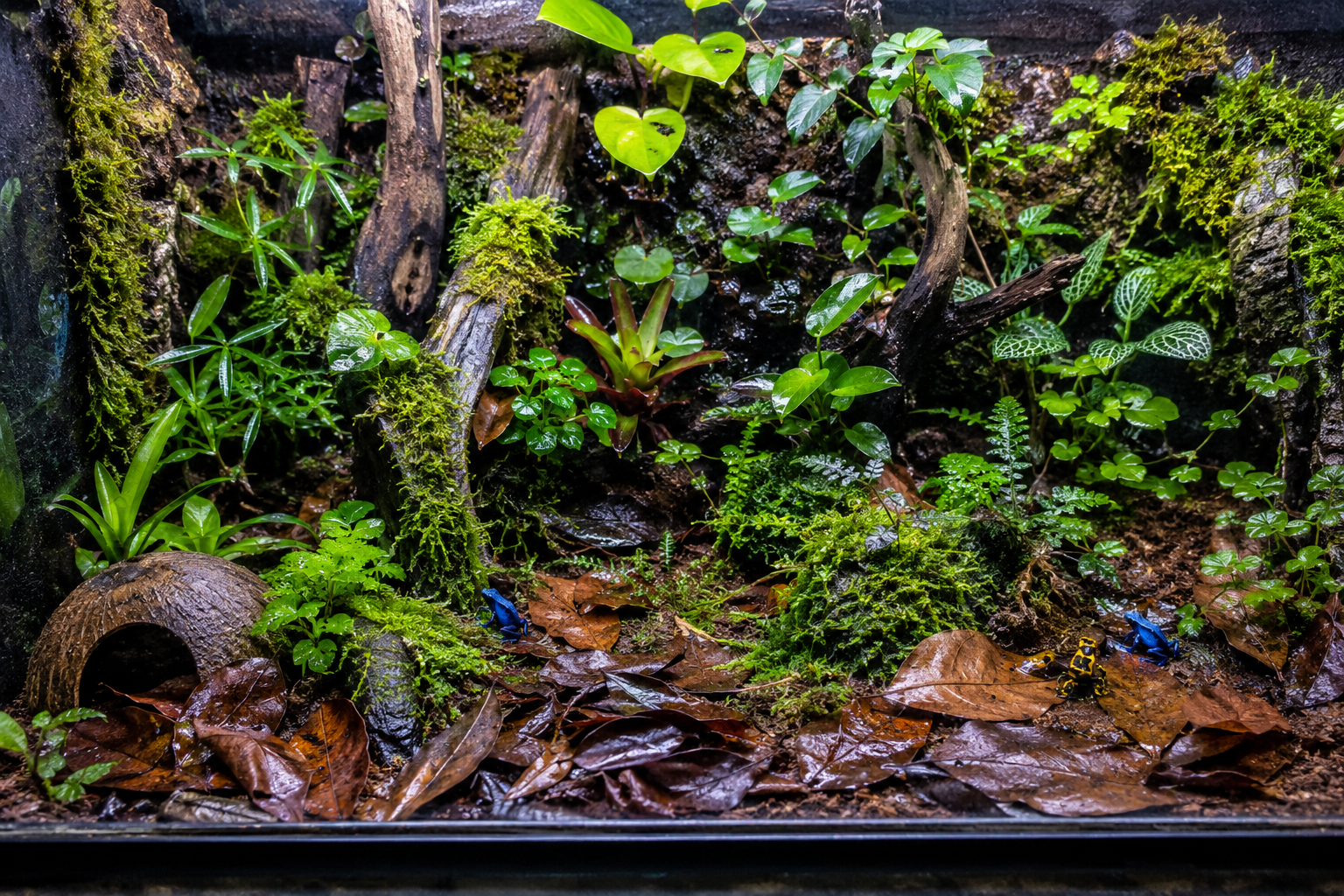
In nature, dart frogs live among wet leaves, rotting wood, moss, roots, fungi, and countless tiny invertebrates. The rainforest is not sterile. It is busy, layered, damp, and biologically active. A good bioactive vivarium should aim to recreate a controlled version of that.
Why Bioactive Vivariums Need “Mess”
That natural-looking layer of leaf litter, moss, bark, seed pods, and decaying plant matter is not just there for decoration. It performs several important jobs.
Leaf litter helps hold humidity. It gives dart frogs hiding places. It creates shaded pockets where microfauna can breed. It slowly breaks down into the substrate, feeding fungi and bacteria. It also softens the vivarium visually and gives frogs a more natural surface to move across.
Springtails and isopods then feed on mould, fungus, decaying plant material, leftover food particles, and organic waste. They are not magic, and they will not fix poor husbandry, but in a well-balanced setup they are incredibly useful.
When you remove all the leaf litter because it looks messy, you remove food and shelter for your clean-up crew. When you constantly replace substrate, you reset the bacterial and fungal balance. When you sterilise everything repeatedly, you make it harder for the vivarium to stabilise.
The Beginner Mistake: Treating a Vivarium Like a Display Cabinet
One of the most common beginner mistakes is trying to keep a dart frog vivarium looking perfect every day.
That usually means:
- removing leaf litter as soon as it starts to break down
- wiping every natural surface too often
- replacing substrate before it has matured
- throwing away moss because it looks patchy
- panicking at the first sign of harmless mould
- deep-cleaning the vivarium far more than necessary
The problem is that bioactive systems improve with age. A vivarium that has been running for a year, two years, or even longer is often far more stable than one that was built last week.
Fresh setups can look beautiful on day one, but they are still biologically immature. The plants have not rooted properly. The clean-up crew has not spread throughout the enclosure. The substrate has not settled. Moisture patterns are still changing. The system has not yet found its rhythm.
That is why patience matters so much.
Decay Is Part of the System
Decay sounds negative, but in a bioactive vivarium it is essential.
Old leaves soften. Wood darkens. Moss spreads unevenly. Fungi appear and disappear. Seed pods break down. Substrate becomes richer. This is not failure; this is the ecosystem developing.
The key is balance.
A small amount of white mould on new wood or leaf litter is usually normal, especially in a fresh vivarium. It often appears because the system has not yet developed enough springtails and competing microorganisms. In many cases, once the clean-up crew population catches up, the mould reduces naturally.
However, bad smells, slimy substrate, stagnant water, dying plants, or persistent uncontrolled mould can point to deeper issues such as poor ventilation, waterlogging, overfeeding, or lack of microfauna.
The goal is not to remove every sign of biological activity. The goal is to understand what is normal and what is a warning sign.
Signs Your Vivarium May Be Too Sterile
A vivarium that is too sterile often looks tidy at first, but it may struggle over time.
Common signs include:
- plants failing to establish properly
- substrate drying out too quickly
- very little visible springtail or isopod activity
- repeated mould spikes after every small change
- frogs hiding more than expected
- humidity swinging too sharply
- no natural earthy smell
- leaf litter disappearing completely because it is constantly removed
A mature vivarium should usually have a gentle, earthy smell. It should not smell rotten, sour, or stagnant. The substrate should hold moisture without becoming swampy. The leaf litter should break down gradually. You should be able to find springtails or other microfauna if you look closely.
What a Healthy Mature Vivarium Looks Like
A healthy mature dart frog vivarium is not spotless. It is stable.
You may see older leaves breaking down at the edges. Moss may grow in patches rather than forming a perfect carpet. Wood may darken. Plants may send roots into the background or substrate. Springtails may gather under bark or around damp organic matter. Isopods may be visible under leaves, seed pods, or cork.
This is exactly what you want.
A good vivarium has layers. There should be damp areas, drier areas, shaded areas, brighter planting zones, hiding spots, feeding areas, and natural cover. Dart frogs benefit from choice. They should be able to move around the enclosure and select the microclimate that suits them.
This is one of the reasons established bioactive vivariums often work so well. They become more complex over time.
How To Correct an Over-Cleaned Vivarium
If you think your vivarium has been kept too sterile, do not panic. You can usually rebuild biological balance gradually.
1. Add Leaf Litter Back In
Leaf litter is one of the easiest ways to improve a bioactive setup. It provides cover, humidity retention, and food for microfauna. Do not just use one or two decorative leaves. Build a proper layer, especially in areas where frogs like to hide or forage.
2. Reintroduce Microfauna
Springtails are especially useful in damp tropical vivariums. Isopods can also help, depending on the species and the setup. Add them before problems appear, not just after mould has already taken over.
3. Stop Replacing Substrate Too Often
Unless there is a genuine hygiene issue, avoid constantly removing and replacing substrate. Mature substrate contains bacteria, fungi, and tiny life forms that help the enclosure function.
4. Let Plants Establish
Plants need time. Some will sulk after planting. Some will drop older leaves. Some will root slowly before putting out new growth. Constantly moving them around prevents them from settling.
5. Improve Airflow Without Drying Everything Out
Ventilation matters, but too much airflow can dry the vivarium too quickly. Too little airflow can create stagnant conditions. Aim for steady air exchange while maintaining suitable humidity for the species you keep.
6. Avoid Panic Cleaning
Not every bit of mould, algae, or decaying leaf matter needs an emergency response. Observe first. If the issue is small and the vivarium is otherwise healthy, your clean-up crew may deal with it naturally.
When You Should Step In
Of course, bioactive does not mean ignoring problems.
You should intervene if you notice:
- rotting food left in the enclosure
- dead feeder insects building up
- bad smells
- standing stagnant water
- substrate turning slimy
- plants collapsing rapidly
- mould spreading aggressively without reducing
- frogs becoming lethargic or behaving unusually
Bioactive systems reduce maintenance, but they do not remove responsibility. You still need to observe the animals, manage feeding, check humidity, monitor temperature, and keep the enclosure safe.
The Older the Vivarium, the Better It Can Become
One of the most rewarding parts of keeping dart frogs is watching a vivarium mature.
Fresh builds are exciting, but older vivariums often have a depth that cannot be rushed. Moss begins to creep into unexpected places. Plants settle into their preferred zones. Leaf litter softens into the substrate. Microfauna become self-sustaining. The enclosure starts to feel less arranged and more alive.
This is why I often prefer established systems over brand-new display setups. A mature vivarium has already gone through its awkward stage. It has stabilised. It has developed its own little rhythm.
For dart frogs, that stability can be incredibly valuable.
Final Thoughts
If you are building a bioactive vivarium for dart frogs, try not to chase a sterile version of cleanliness. Chase balance instead.
A good vivarium should be safe, stable, well observed, and biologically active. It should have leaf litter, microfauna, moisture, airflow, plant growth, and natural decomposition. It should not smell bad or look neglected, but it also should not be stripped of life.
The best bioactive vivariums are not the ones that look perfect on day one. They are the ones that get better with age.
Nature is not sterile. Your vivarium should not be either.
Frequently Asked Questions
Can a dart frog vivarium be too clean?
Yes. Over-cleaning can remove beneficial bacteria, fungi, and microfauna that help keep a bioactive vivarium stable. A healthy vivarium should contain natural biological activity rather than being completely sterile.
Is mould normal in a new bioactive vivarium?
Small amounts of white mould are very common in fresh vivariums, especially on wood or leaf litter. In many cases, springtails and improved ecosystem balance will reduce it naturally over time.
How often should you replace substrate in a dart frog vivarium?
In a properly functioning bioactive setup, substrate should not need replacing frequently. Mature substrate contains beneficial microorganisms that help stabilise the enclosure.
Why is leaf litter important for dart frogs?
Leaf litter helps maintain humidity, provides hiding places, supports microfauna populations, and creates a more natural environment for dart frogs.
What clean-up crew is best for dart frog vivariums?
Springtails are usually considered essential for tropical bioactive vivariums. Many keepers also use tropical isopods to help break down waste and organic material.
How long does a bioactive vivarium take to mature?
Most bioactive vivariums begin stabilising after several weeks, but truly mature systems often take many months or even years to fully develop.