Husbandry & Evidence Review – 5 September 2026
This beginner guide remains deliberately realistic: frogs are observation animals, handling is minimised, and suitability depends on the exact species rather than one generic ‘frog’ care formula.
Do Frogs Make Good Pets? A Realistic UK Beginner’s Guide (Including Dart Frogs)
If you’ve typed “do frogs make good pets” into Google, you’re probably in one of two places:
- You’ve always liked frogs and want something a bit different from the usual pet choices.
- You’ve seen dart frogs online and you’re wondering if the reality is as good as the videos.
This guide is the honest version. Frogs can be brilliant pets — but only if you actually want the type of pet a frog is: a living display animal with a habitat you maintain. They’re not cuddly. They’re not handle-y. And if you cut corners on setup, frogs will find the weak points faster than any other animal I’ve kept.
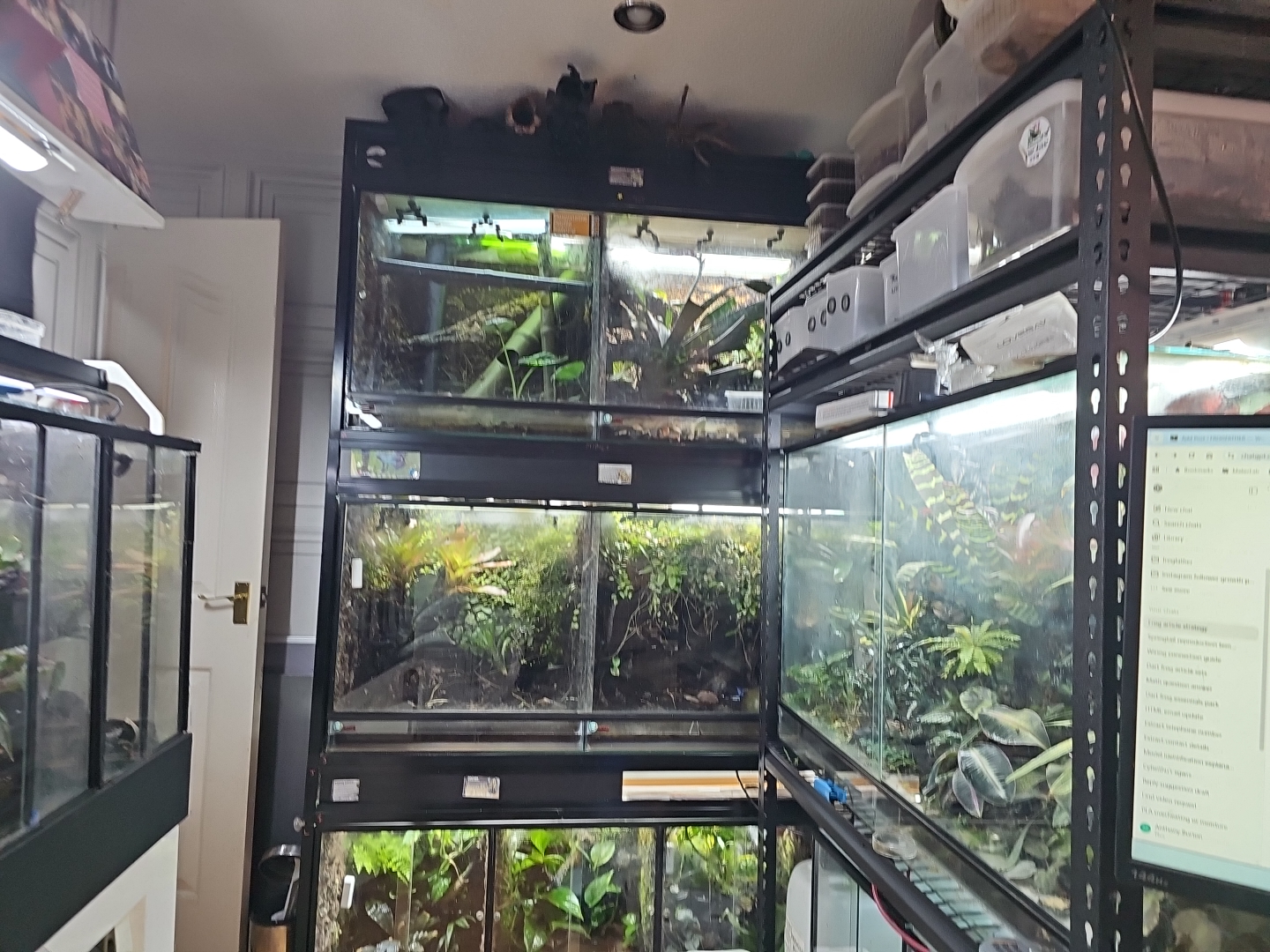
What you do get, if you do it properly, is one of the most rewarding things in the hobby: a miniature rainforest you can keep on a desk or in a living room, with animals that behave naturally and often breed in captivity.
Quick answer: yes, frogs can make great pets — but not for everyone
Frogs make good pets if you:
- Prefer observing over handling.
- Like the idea of maintaining a stable habitat (temperature, humidity, water quality).
- Want something calm, interesting, and genuinely different.
Frogs are a poor choice if you:
- Want a pet you can hold, stroke, or “play with”.
- Don’t want live food in the house (fruit flies are the reality for many species).
- Struggle with routine care.
If you’re still here, good sign.
What kind of frogs are kept as pets in the UK?
Most “pet frogs” people actually buy fall into a few groups:
1) Dart frogs (poison dart frogs)
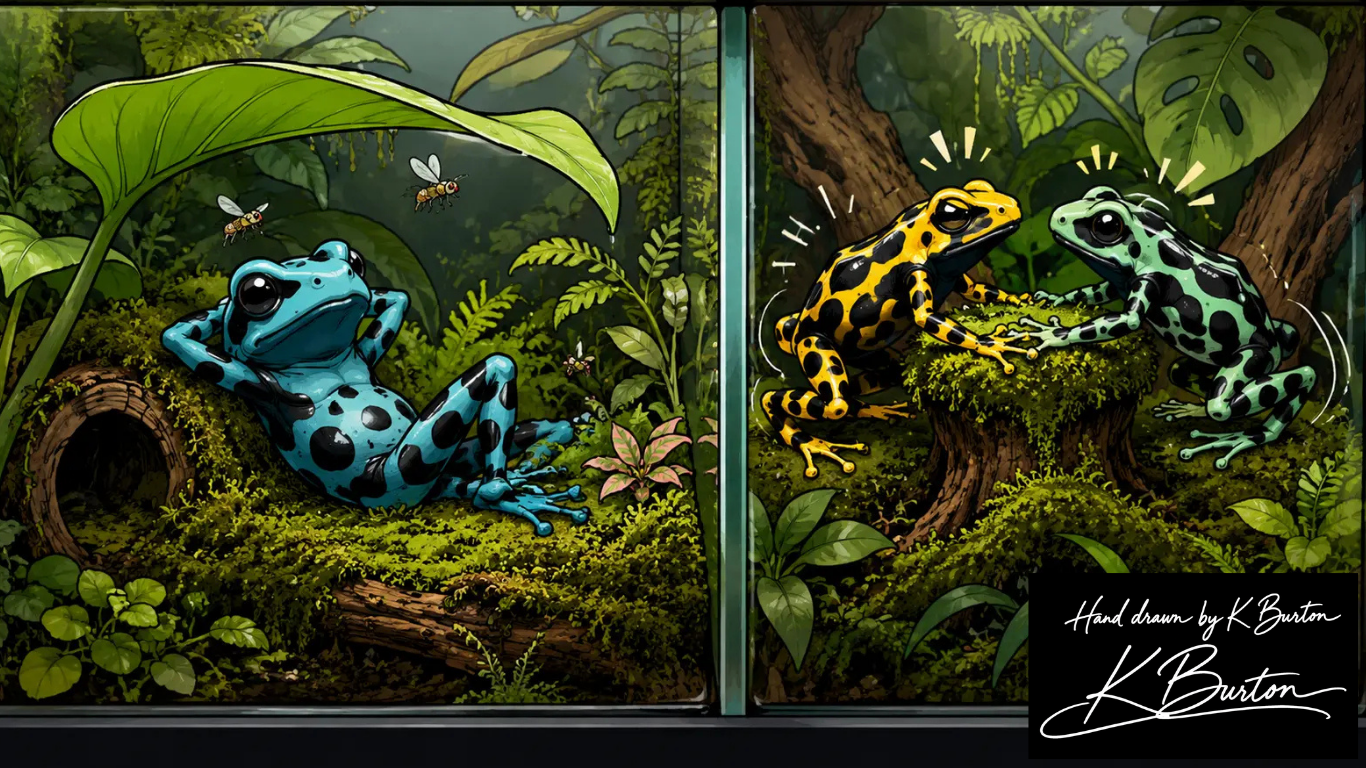
Dart frogs are popular because they’re small, active, and many are awake in the day — which matters more than people realise. They’re display animals. You watch them hunt, explore, call, and breed if you get conditions right.
If you’re brand new, you’ll want to read a proper dart frog overview as well as this beginner guide. Start here: dart frog care sheet for pet poison dart frogs.
2) Tree frogs
Tree frogs can be fantastic if you want a larger frog, and some are more forgiving of small mistakes — but they’re often more nocturnal than dart frogs. If you want a tree frog route, you’ll likely end up reading care sheets for species like White’s tree frogs and red-eyed tree frogs.
3) “Land ambush” frogs (Pac-Man frogs)
Pac-Man frogs are chunky, dramatic, and simple in some ways — but they’re not a “cuddly beginner pet”. They’re more of a specialist pet box with a living animal in it. If you’re considering one, read a full UK-focused guide first: Pac-Man frog care in the UK.
4) Semi-aquatic / aquatic types
Aquatic frogs exist in the hobby, but if you’re reading Frogfather you’re probably here for naturalistic vivariums, not a basic aquarium with a frog in it. Nothing wrong with that route — it’s just a different hobby.
Do poison dart frogs make good pets?
They can do, yes. But let’s clear something up.
Are poison dart frogs actually poisonous in captivity?
In the wild, “poison dart frog” toxicity is linked to diet and environment. In UK captivity, on normal feeder insects, they aren’t going to be chemically weaponised rainforest monsters. That doesn’t mean you should handle them — you still shouldn’t — but the “poison” part is not the main thing you should worry about.
Why dart frogs are a brilliant choice for the right person
- Day-active (many species) — you’ll actually see them.
- Small footprint — the setup can be compact and still proper.
- Behaviour — calling, hunting, social dynamics, tadpole transport in some species.
- Bioactive compatibility — they suit planted, living vivariums.
Why dart frogs can be a nightmare if you wing it
- They punish poor ventilation/humidity balance (fogged glass, mould, stagnant air).
- They need consistent live food and supplementation.
- They do better in stable, mature setups — “freshly built and thrown together” often goes sideways.
If you want the “proper” long read, you’ve already got a mega pillar for it: the ultimate vivarium setup guide for dart frogs in the UK.
Do frogs like being handled?
Blunt answer: no.
Frogs aren’t wired like mammals. Handling is usually stress, not bonding. Their skin is also part of how they regulate water and absorb substances from their environment — which means human hands (soaps, oils, residues) are a risk. For most keepers, the best approach is:
- Keep handling to an absolute minimum.
- Design your habitat so you can do maintenance without “chasing frogs”.
- Use tools, containers, and calm routine rather than grabbing animals.
If you want a pet that enjoys interaction, a frog is rarely the best match. If you want a living slice of rainforest you can observe, frogs are top-tier.
Are frogs noisy?
Sometimes. Not always. And “noise” depends massively on species and the individual animal.
- Dart frogs: some species call quietly, some are surprisingly loud for their size.
- Tree frogs: some call like a squeaky toy in the middle of the night. Cute for ten minutes. Less cute at 2am.
If noise matters, plan for it. Don’t buy based on a photo. Read species behaviour first, and assume a male will eventually decide he owns the room.
For dart frog calling and what it means, you’ve got a dedicated guide: dart frog calls in the UK (with sounds).
Do frogs smell? Do they make a mess?
A well-run vivarium shouldn’t smell “like frog”. If it does, something is off.
Most bad smells come from:
- Over-wet substrate with poor airflow
- Food and waste building up without a clean-up crew
- Stagnant drainage water
- Mould blooms that haven’t been corrected
This is where bioactive setups really earn their keep. If you want the short version of why bioactive matters, start here: the ultimate guide to building a bioactive vivarium.
And if you want a ready-made route rather than piecing it together from scratch, your shop already has the obvious entry point: bioactive vivarium kits.
What does a beginner frog setup actually need?
A proper setup isn’t complicated — but it does have a few non-negotiables.
1) A suitable enclosure / vivarium
For dart frogs and planted setups, a front-opening vivarium makes life much easier.
If you’re building on a budget or setting up grow-out / rearing tubs, you’ve also got purpose-built options like: the 10L ventilated tub (escape-proof).
2) Humidity control (and not the swamp kind)
Beginners usually go wrong in one of two directions: they run it too dry, or they turn it into a wet, stagnant box. The goal is stable humidity with airflow.
If you want automation, something like a misting solution is where most people end up: Smart Spray humidifier/misting system.
You’ve also got the deeper, technical reading if you want to nerd out properly: designing automated climate control for dart frog vivariums.
3) Lighting (not just “bright”, but correct)
Plants need light. Frogs need a stable day/night cycle. Some keepers choose to include UVB depending on species, setup style, and goals — but it’s not a checkbox you tick blindly.
Start here: best lighting setup for a dart frog bioactive vivarium.
And if you’re using Jungle Dawn style lighting and need proper mounting/clearance, you’ve got practical hardware like: Arcadia Jungle Dawn LED light risers.
4) A clean-up crew (microfauna)
Bioactive doesn’t mean “never clean”. It means the system helps you stay stable instead of constantly fighting nature.
Your obvious internal hub here is: everything you need to know about springtails for dart frogs.
If someone wants the quick buy route, you’ve also got: bioactive cleanup crew essentials.
5) Safe leaf litter and natural materials
Leaf litter isn’t decoration — it’s function. It creates hiding, holds humidity, feeds microfauna, and makes the whole system behave like a real habitat.
Feeding: the part nobody thinks about until it’s Tuesday night
Feeding is where beginners either fall in love with the hobby or realise they wanted something simpler.
Most frogs kept in planted vivariums are insectivores. For dart frogs, fruit flies are the backbone. That means you either:
- learn to keep cultures, or
- buy cultures regularly and store/rotate them properly.
Start with your own feeding guide: how to feed dart frogs (simple nutritional guide).
If you want to solve the “my cultures keep failing” problem, you’ve already got the education content: best fruit fly culture media (UK guide).
And if someone wants a straight shop route, you’ve got feeder options like: D. hydei flightless fruit fly cultures.
How much do pet frogs cost in the UK?
This depends on species and whether you buy a full setup or build it gradually.
As a rough reality check, most people underestimate the enclosure and equipment costs, and over-focus on the frog price. The animal is often the cheapest part of “doing it properly”.
If you want a proper breakdown for dart frogs specifically: how much it costs to set up a dart frog vivarium in the UK.
And if you’re looking at dart frog pricing/ranges, you’ve already got: how much are dart frogs in the UK?
“Frogs for sale” and “frog for sale online”: what you should know before buying
When people search frogs for sale or frog for sale online, they’re usually ready to buy before they’re ready to keep.
Here’s the order that saves you money and stress:
- Choose the species based on your home conditions and what you want to see (day-active vs nocturnal).
- Build the habitat and stabilise it.
- Sort food, supplementation, and routine.
- Then buy the frog.
If you want the pre-buy checklist specifically for dart frogs, use your own guide: poison dart frogs for sale — what to know before you buy.
And if someone is browsing inventory, it’s always better to route them via the shop hub rather than random product pages: Frogfather shop.
Which frogs are best for beginners?
There isn’t one perfect beginner frog. There are “good beginner fits” based on your reality.
If you want a day-active, planted vivarium route, dart frogs are often the best match — but you still need to commit to livefood and routine.
You already have a beginner-friendly dart frog piece that fits beautifully under this pillar article: top 5 easiest dart frogs to keep.
If you want larger frogs and don’t mind more night activity, tree frogs can be a great “first frog”. Your care sheet hubs for tree frog types already exist under your site structure.
Are frogs good pets for children?
They can be, but only with the right expectation. Frogs are not a “hands-on” pet for most kids. They are a brilliant “science pet” — something you observe, learn from, and care for properly as a routine.
If the goal is interaction and handling, frogs often disappoint. If the goal is building responsibility and learning how living systems work, frogs are genuinely one of the best pets you can keep.
Common beginner problems (and how to avoid them)
“My frog is hiding all the time”
This is one of the most common beginner worries. Sometimes it’s normal. Sometimes it’s telling you the habitat isn’t comfortable. Use your own troubleshooting read: why is my dart frog hiding all the time?
Fogged glass, mould, and “it feels too wet”
Humidity is not the same as stagnant wetness. If your setup is constantly fogged, smells, or grows mould, you usually need airflow balance, not “less misting”. Your troubleshooting library is strong here, for example: the 10 most common issues in bioactive vivariums.
Feeder insect chaos
Fruit flies escaping, cultures failing, or “I didn’t realise how often I’d need them” is the classic. This is why I always say: solve feeding before you buy frogs.
FAQ: Do frogs make good pets?
Do frogs recognise their owners?
Not in the dog/cat way. But many frogs absolutely learn patterns: light cycles, feeding times, where food appears, and which movements mean “food is coming”. That’s not affection — it’s smart survival behaviour — but it still makes them feel “present” and interactive in their own way.
Do frogs bite?
Most pet frog species don’t “bite” in any meaningful way. A feeding snap can happen if you put fingers where food usually goes. That’s a handling/design issue more than an aggression issue.
Are frogs hard to keep alive?
Frogs are not fragile when kept correctly. They are unforgiving when kept incorrectly. The biggest killer is sloppy husbandry: wrong temps, bad humidity/airflow balance, dirty water, poor nutrition, and stress from constant disturbance.
Do I need a misting system?
Not always. But automation makes consistency easier, and consistency is what frogs thrive on. You’ve already got the dedicated article for this question: can dart frogs be kept without a misting system?
What is the best “first frog tank” size?
Big enough to buffer mistakes, small enough to manage. For planted dart frog setups, most people do best with a proper front-opening vivarium rather than a tiny box. Your “best vivariums in the UK” guide fits here nicely: best vivariums for dart frogs in the UK.
So… do frogs make good pets?
Yes — if you want the experience frogs actually offer.
If you want a pet you handle, frogs will frustrate you. If you want something you can observe every day, learn from constantly, and build a genuinely beautiful living habitat around, frogs are one of the most rewarding pets you can keep.
If you’re leaning toward dart frogs, don’t start with “which frog looks coolest”. Start with setup and routine. Then choose the species that fits your home and your lifestyle.
And when you’re ready to go deeper, the three best next reads on your site are:
- The ultimate vivarium setup guide for dart frogs in the UK
- How to feed dart frogs (simple guide)
- Poison dart frogs for sale: what to know before you buy
FAQ: Do frogs make good pets?
Do frogs make good pets for beginners?
They can do, as long as you want an “observe and maintain” pet rather than a pet you handle. Beginners do best when they choose a species that matches their routine (feeding, humidity control, cleaning) and build the setup before buying the frog.
Do frogs like being handled?
Not really. Handling is usually stressful for frogs and can also be risky because their skin absorbs residues from our hands. Good frog keeping is mostly about designing a habitat that lets you do maintenance without disturbing the animal.
Are frogs good pets for children?
They can be brilliant “science pets” with adult supervision, especially in a well-designed vivarium. They’re usually a poor fit if the expectation is cuddling or frequent handling.
Are frogs noisy at night?
Some can be. Many frogs call, and calling can be loud depending on species and the individual animal. If noise matters, research the species first and assume a male may eventually call regularly.
Do pet frogs smell?
A healthy vivarium shouldn’t smell bad. Persistent smells usually come from stagnant wet substrate, poor airflow, overfeeding, or a lack of clean-up crew and maintenance.
Are poison dart frogs actually poisonous in captivity?
In the wild, toxicity is linked to diet and environment. In UK captivity, with standard feeder insects, they aren’t “poisoned” in the same way. You still shouldn’t handle them, but the bigger focus should be correct husbandry.
What do pet frogs eat?
Most commonly kept frogs are insectivores. Many species thrive on appropriately sized livefood such as fruit flies, small crickets, and other feeders depending on the frog’s size and needs.
Do I need a misting system for frogs?
Not always, but consistent humidity matters. A misting system can make it much easier to keep conditions stable, especially in planted vivariums, but it still needs sensible settings and ventilation balance.
How much does it cost to keep frogs in the UK?
The frog is often the cheapest part. Costs usually come from the enclosure, lighting, heating (if needed), misting/humidity control, plants, substrate, and ongoing livefood and supplements.
What’s the best beginner frog?
There isn’t one “best” frog for everyone. The best beginner frog is the one that fits your home conditions and how you want to keep: daytime display (often dart frogs), night-active climbers (some tree frogs), or simpler single-animal setups (some terrestrial species).