Description
Bioactive Vivarium Kits – Small, Medium or Large
A practical collection of substrate, botanical material, planting and microfauna components for building a managed planted vivarium. No vertebrate animals are included.
Typical contents
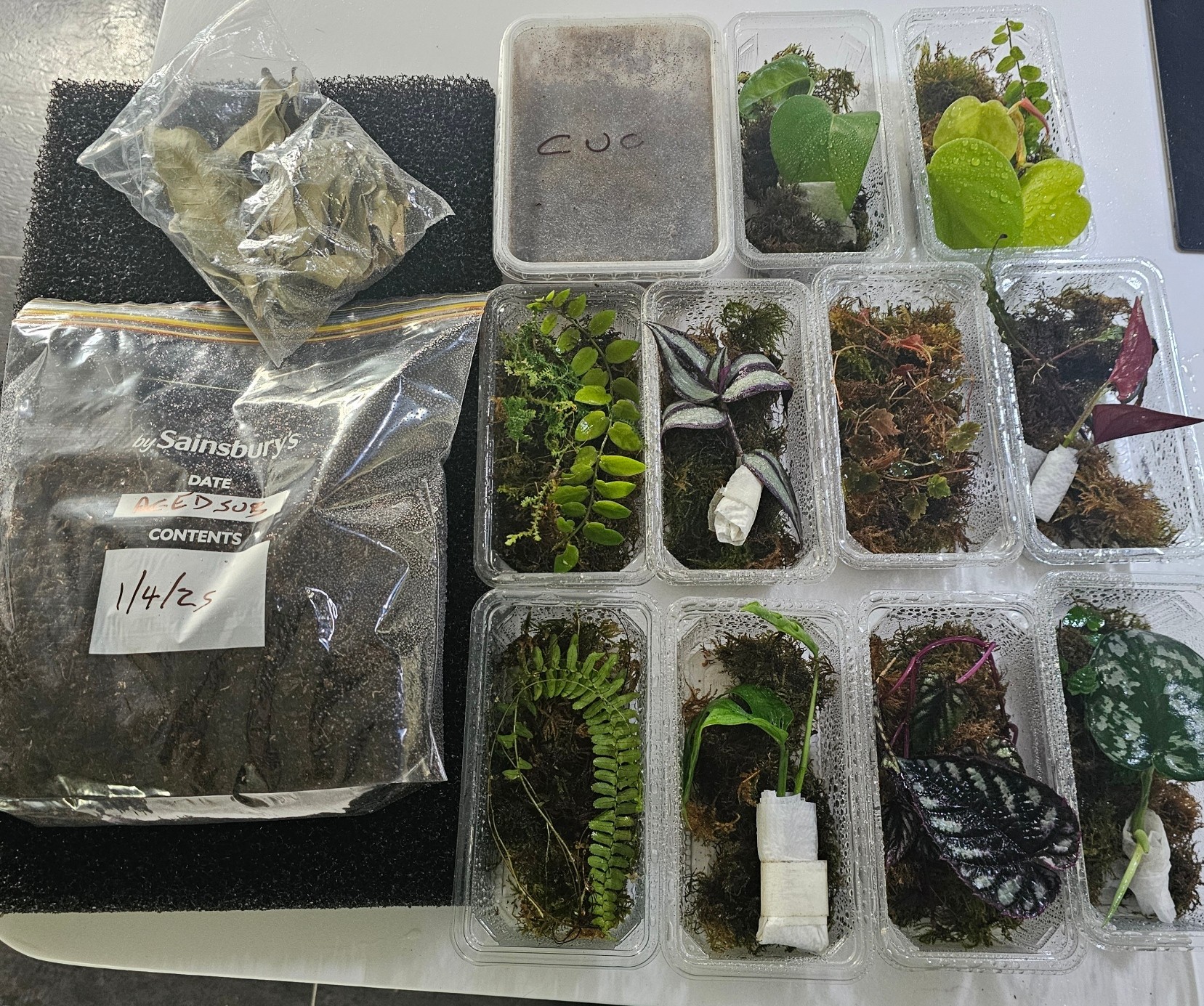
- Aged or prepared bioactive substrate.
- Suitable springtails/isopods where included in the selected kit.
- Live tropical plants and/or moss.
- Leaf litter, cork and natural hardscape.
- Optional lighting, misting and monitoring upgrades where selected.
What the kit does not guarantee
Earlier wording described the kit as creating a “thriving ecosystem”, maintaining “long-term ecosystem balance”, naturally managing waste and promoting healthier animals. Those outcomes depend on the finished enclosure and the husbandry provided.
A kit does not make a vivarium self-sustaining. You will still need to manage water, ventilation, temperature, lighting, feeding, plant growth, microfauna populations and waste.
Choosing the right size
Small, medium and large refer to the quantity of materials supplied for different enclosure volumes. They are not stocking recommendations. Confirm that the final enclosure is suitable for the particular species and number of animals before introduction.
Bioactive System & Evidence Review
Last reviewed: 5 September 2026
A bioactive vivarium can use plants, leaf litter, microorganisms and detritivorous invertebrates to process some organic material, but it is not a closed or self-sustaining ecosystem. Microarthropods can contribute to decomposition, although the magnitude of that effect varies with the organisms, substrate, organic material and environmental conditions.
Frogfather therefore uses terms such as aged, established or matured to describe systems that have been running before sale. Those terms do not guarantee biological stability, eliminate routine maintenance or prove that a vivarium is immediately suitable for any species.
Evidence & further reading
- Kampichler & Bruckner – microarthropods and terrestrial decomposition
- St Claire et al. – husbandry and care of dendrobatid frogs