
Husbandry & Evidence Review – 6 September 2026
This article has been checked against Frogfather’s current evidence-led husbandry guidance. Specific older statements have been corrected or qualified below while unrelated content is preserved.
Dart frogs are a fascinating addition to any terrarium, known for their vibrant colors and engaging behaviors. For those new to keeping these exotic amphibians, choosing species that are hardy and easy to care for is crucial. Here are the top five best or easiest dart frogs to keep:
1. Dendrobates tinctorius (Dyeing Dart Frog)
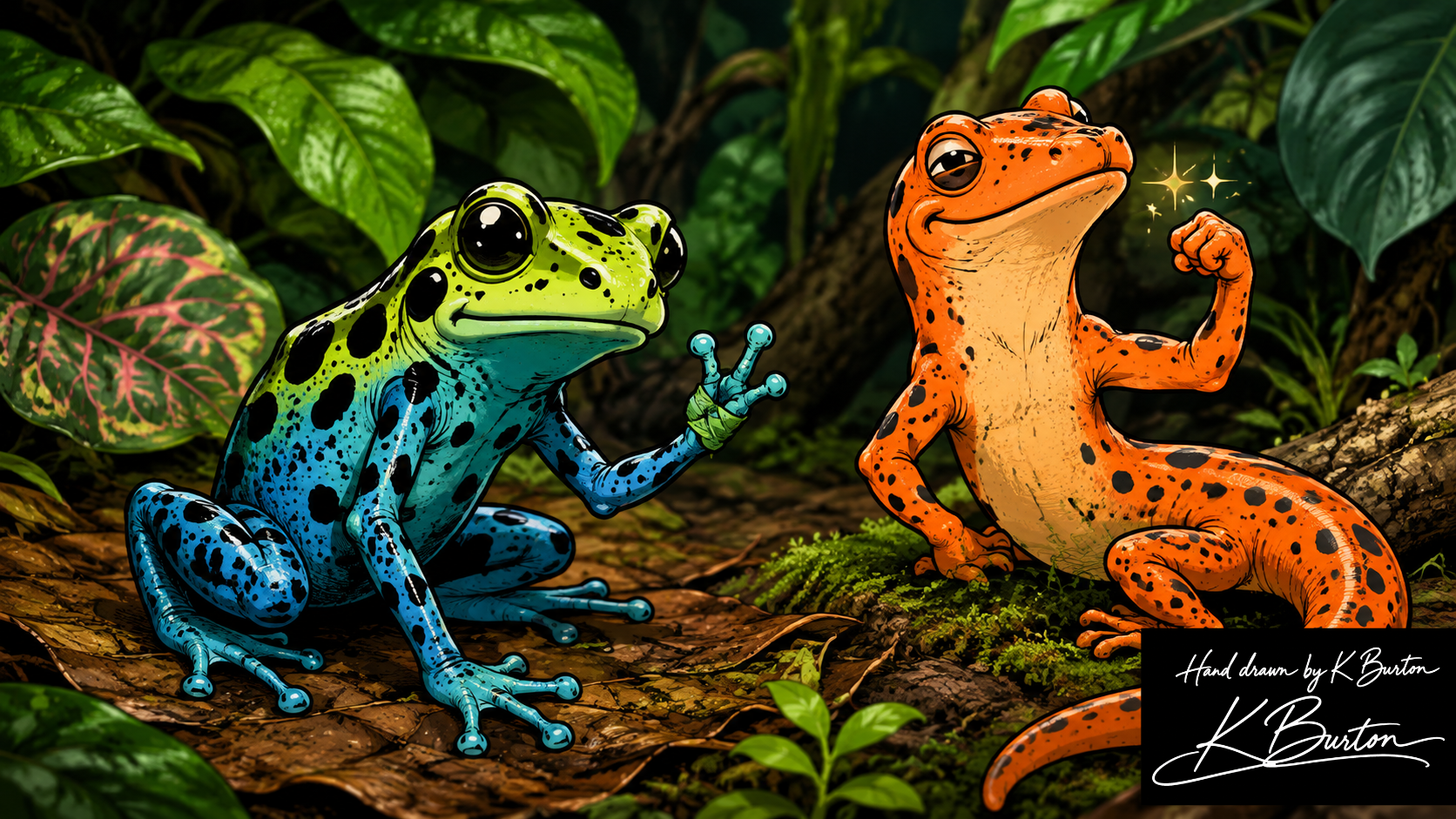
Dendrobates tinctorius, with its striking blue and yellow coloration, is not only one of the most popular dart frogs but also one of the easiest to care for. These frogs are hardy and adaptable, making them an excellent choice for beginners. They thrive in a well-maintained terrarium with high humidity and plenty of hiding spots.
Humidity: do not manage dart frogs or other amphibians to one universal percentage band. Provide species-appropriate moisture, useful ventilation, humid refuges and normal drying/re-wetting cycles, and interpret RH alongside surface moisture and temperature.
2. Dendrobates auratus (Green and Black Dart Frog)
Known for its beautiful metallic green and black patterns, Dendrobates auratus is another top pick for new dart frog enthusiasts. This species is relatively low-maintenance and can adapt well to a range of conditions, making it ideal for those just starting.
- Care tip: use the current species-specific guidance for temperature and moisture rather than applying a universal 72–80°F / 80–100% RH formula. Provide cover, leaf litter/structure and useful ventilation.
3. Dendrobates leucomelas (Bumblebee Dart Frog)
The Bumblebee Dart Frog, with its bold yellow and black banding, is known for being hardy and resilient. They adapt well to captive conditions and are less sensitive to environmental changes, making them perfect for beginners.
- Care tip: use the current species-specific guidance for temperature and moisture rather than applying a universal 72–80°F / 80–100% RH formula. Provide cover, leaf litter/structure and useful ventilation.
4. Ranitomeya imitator (Imitation Poison Frog)
Ranitomeya imitator, or the Imitator Dart Frog, is smaller than the Dendrobates species but equally captivating. They are known for their ease of care and less demanding space requirements. These frogs also come in various morphs with beautiful patterns.
- Care tip: use the current species-specific guidance for temperature and moisture rather than applying a universal 72–80°F / 80–100% RH formula. Provide cover, leaf litter/structure and useful ventilation.
5. Hyloxalus azureiventris (Sky Blue Poison Frog)
Relatively new to the hobby but quickly gaining popularity, Hyloxalus azureiventris is known for its ease of care and stunning sky-blue coloration. They are less demanding than many other dart frogs, making them well-suited for beginners.
- Care tip: use the current species-specific guidance for temperature and moisture rather than applying a universal 72–80°F / 80–100% RH formula. Provide cover, leaf litter/structure and useful ventilation.
Our view
Choosing the right dart frog species is crucial for ensuring a positive and successful experience. The species listed above are not only visually stunning but also relatively easy to care for, making them perfect for those new to keeping dart frogs. With the proper setup and maintenance, these frogs can thrive and provide endless fascination and enjoyment.