If you have ever bought a dart frog after seeing an incredible photograph online, only to discover the frog looks different in real life, you are not alone.
Dart frogs are some of the most photographed amphibians in the world. Their colours, patterns, metallic sheens, and tiny details make them perfect subjects for macro photography. However, modern cameras, editing software, lighting, and even vivarium conditions can dramatically change how a frog appears in an image.
That does not necessarily mean anyone is trying to deceive people. In many cases, the frog genuinely looked that way under specific lighting or through a particular lens. But it does mean beginners often develop unrealistic expectations about colour, brightness, size, or contrast.
This article explains why dart frog photographs can vary so much, how lighting and cameras affect appearance, and what frogs actually tend to look like in a normal home vivarium.
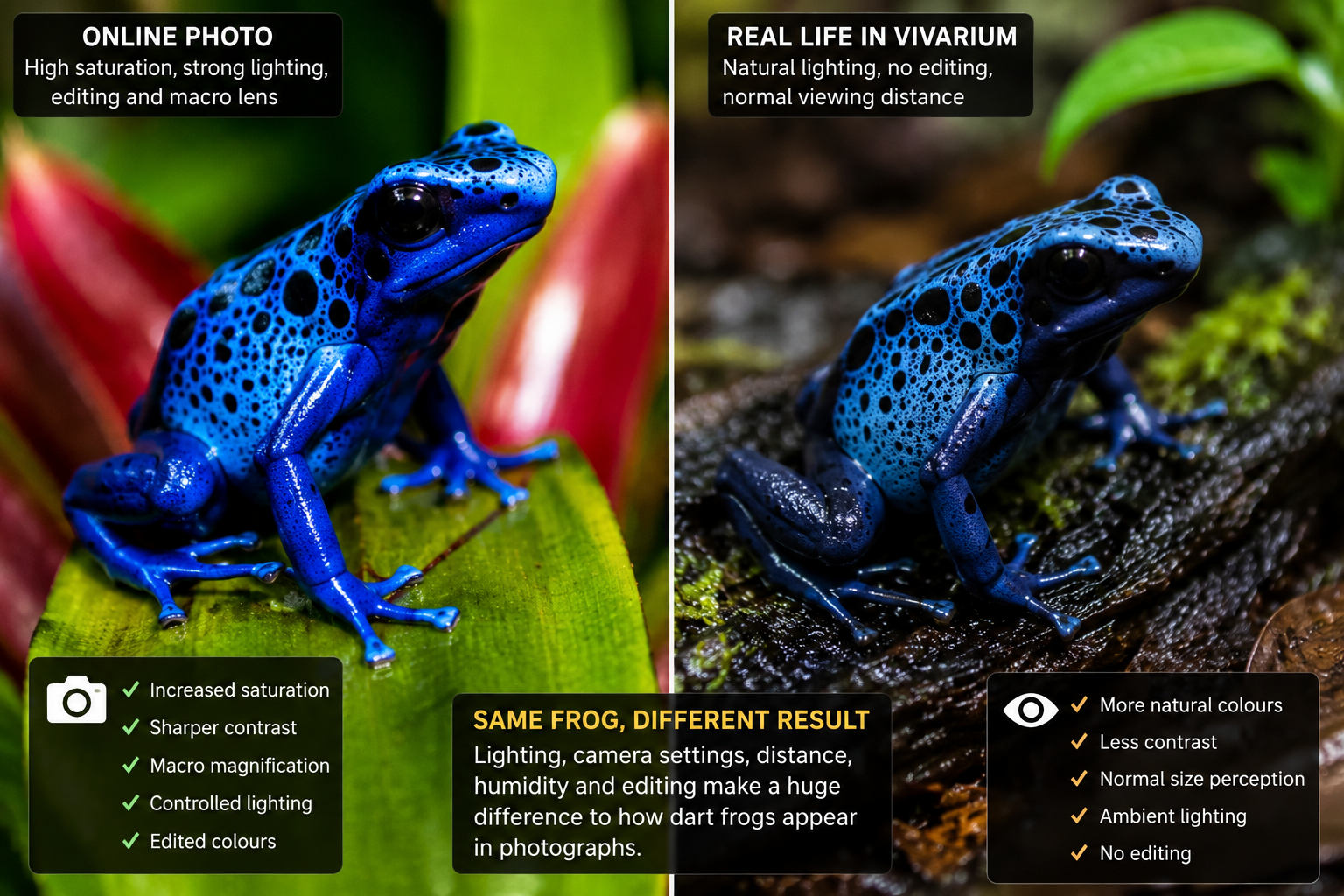
Dart Frogs Really Are Colourful — But Cameras Exaggerate Everything
Dart frogs genuinely are beautiful animals.
Species such as Dendrobates tinctorius, Oophaga pumilio, Ranitomeya, and Phyllobates terribilis contain some of the most vibrant colour combinations found in amphibians anywhere in the world.
However, cameras often push those colours much further.
Modern phones automatically increase:
- saturation
- contrast
- sharpness
- dynamic range
- colour separation
This makes images appear more dramatic, especially on social media platforms where bright colours attract attention.
A frog that looks deep blue in person may appear neon electric blue in a heavily processed photograph. Yellow markings may become glowing orange. Black patterning may look unrealistically crisp.
The frog itself has not changed — the image processing has.
Macro Photography Changes Perspective
One reason dart frog photos look so dramatic online is because they are usually taken with macro lenses.
Macro photography allows extremely close focus, revealing tiny details the human eye does not normally notice at casual viewing distance.
This can make frogs appear:
- larger than they really are
- more textured
- more saturated
- more reflective
- more contrast-heavy
A thumbnail dart frog that is only a few centimetres long can suddenly appear enormous in a close-up macro image.
This is especially common with species photographed using dedicated lenses, ring flashes, diffused lighting, or stacked focus images.
At Frogfather, most frog photography is designed to reflect what the frogs genuinely look like under realistic vivarium conditions rather than artificially exaggerated studio lighting.
Vivarium Lighting Changes Colour Perception
Lighting dramatically affects how dart frogs appear.
The same frog can look completely different under:
- warm LEDs
- cool white LEDs
- natural sunlight
- phone flash
- grow lights
- camera flashes
For example, cooler white lighting often enhances blues and whites, while warmer lighting can make yellows and oranges appear richer.
Humidity also affects appearance. A freshly misted frog often looks far more vibrant because moisture increases reflectivity and contrast.
This is one reason many professional frog photographs are taken immediately after misting.
If you are building a planted enclosure, proper lighting still matters enormously for plant health and frog visibility. A well-designed bioactive vivarium with balanced lighting can make frogs appear far more natural and active without needing artificial image manipulation.
Social Media Makes Everything More Extreme
Instagram, TikTok, Facebook, and YouTube all reward visually intense content.
Bright images perform better. High contrast performs better. Strong colour separation performs better.
As a result, many dart frog images online are edited specifically for engagement.
This may include:
- increased saturation
- selective colour enhancement
- darkened backgrounds
- artificial sharpening
- vignette effects
- HDR processing
Again, this is not always dishonest. It is simply how modern social media content is created.
However, beginners sometimes assume frogs will look exactly like a professionally edited macro image in every lighting condition.
Realistically, dart frogs usually appear more natural, softer, and less intensely saturated in everyday viewing.
Juveniles Often Look Completely Different
Another major source of confusion is age.
Many dart frogs change dramatically as they mature.
Juveniles may:
- appear duller
- show incomplete patterning
- develop colour gradually
- change contrast over time
- darken or brighten with age
This is especially important with younger froglets.
A recently morphed froglet rarely looks identical to a fully mature adult photographed under ideal lighting.
Patience matters.
As frogs mature, colours often intensify naturally, especially when supported by:
- stable humidity
- good nutrition
- appropriate supplementation
- high-quality feeder insects
- low stress levels
- well-balanced bioactive setups
Healthy frogs generally display stronger natural colouration than stressed or poorly maintained animals.
Vivarium Design Affects Frog Colour Too
The enclosure itself can influence how frogs appear.
Darker substrates, moss, cork bark, and tropical planting often make colours stand out more naturally.
Bright sterile setups can wash colours out.
This is one reason naturalistic vivariums often photograph so beautifully. The contrast between tropical greens, dark wood, wet leaf litter, and vibrant frogs creates depth and richness.
A mature bioactive enclosure with moss, bromeliads, and layered planting usually produces far more visually impressive frogs than sparse minimalist setups.
You can browse Frogfather bioactive products and vivarium supplies for inspiration on naturalistic tropical setups.
Some Morph Names Also Create Confusion
Dart frog morph names can sometimes create unrealistic expectations too.
Names such as:
- Azureus
- Powder Blue
- Cobalt
- Inferalanis
- Citronella
…sound incredibly dramatic, and many genuinely are beautiful frogs.
However, even within the same morph, individual frogs vary.
Pattern density, brightness, contrast, and colour tone can all differ slightly between animals.
No two frogs are perfectly identical.
This natural variation is completely normal and is actually part of what makes dart frogs so interesting to keep.
Why Honest Photography Matters
One of the biggest problems in the reptile and amphibian hobby is unrealistic expectation.
Over-edited photographs can lead to disappointment, unnecessary disputes, and confusion for beginners who are still learning what natural variation actually looks like.
Good frog photography should aim to:
- show realistic colour
- represent typical appearance
- avoid misleading editing
- show animals in natural conditions
- reflect genuine husbandry quality
A healthy dart frog does not need extreme editing to look impressive.
In many cases, the most trustworthy photographs are the ones that still look natural.
So What Do Dart Frogs Really Look Like?
In real life, dart frogs are usually:
- slightly softer in colour
- less neon than edited photos
- smaller than macro images suggest
- more reflective when humid
- more dynamic in natural lighting
They are still extraordinary animals.
Watching a healthy dart frog move naturally through a mature tropical vivarium is usually far more impressive than any single photograph.
The movement, behaviour, interaction with plants, feeding response, and natural confidence are what truly bring these frogs to life.
Final Thoughts
Most dart frog photos online are not necessarily fake — but they are often enhanced by lighting, macro lenses, editing, humidity, and camera processing.
That does not make dart frogs any less beautiful.
If anything, it makes real-life vivarium keeping even more rewarding. A healthy frog in a stable bioactive enclosure changes constantly depending on humidity, light, behaviour, and environment.
The best way to appreciate dart frogs is not through heavily edited social media images. It is by watching them naturally within a thriving tropical ecosystem.
And honestly, that usually looks even better.
Frequently Asked Questions
Why do dart frogs look brighter in photos?
Modern cameras and phones often increase saturation, contrast, and sharpness automatically, making dart frogs appear more vivid than they do in normal lighting.
Do dart frog colours change with age?
Yes. Many dart frogs develop stronger colours and clearer patterns as they mature from froglets into adults.
Does humidity affect dart frog colour?
Yes. Frogs often appear more vibrant after misting because moisture increases surface reflectivity and contrast.
Why do macro photos make dart frogs look huge?
Macro lenses magnify tiny details and create dramatic close-up perspectives, making small frogs appear much larger than they are in real life.
Do vivarium lights affect dart frog appearance?
Absolutely. Different lighting temperatures and intensities can significantly alter how frog colours appear to both the eye and the camera.
Are dart frog photos on social media edited?
Many are enhanced using saturation, sharpening, contrast adjustment, or HDR effects to improve visual impact on platforms like Instagram and TikTok.