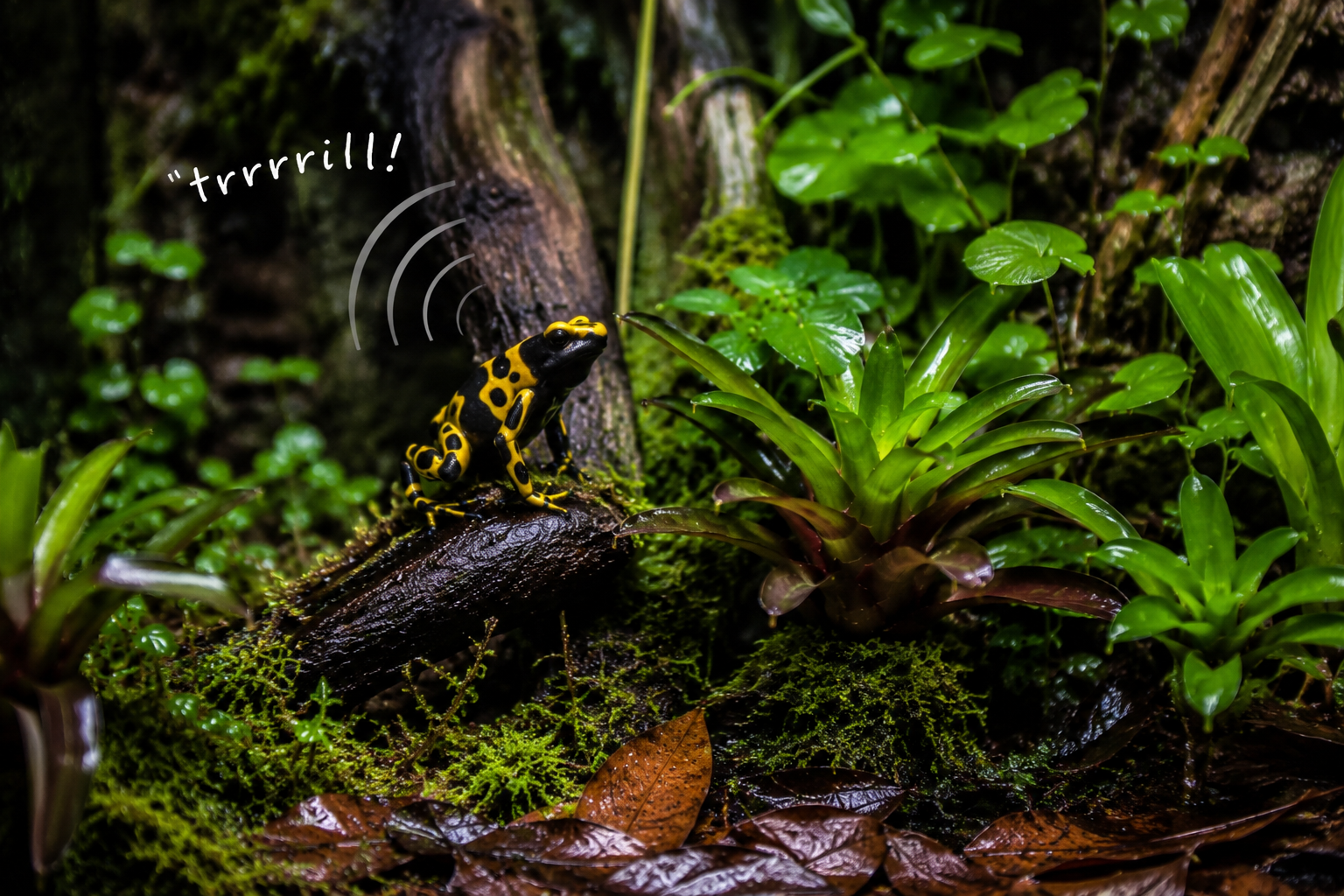
If your dart frogs have suddenly gone quiet, it does not always mean something is wrong. Dart frog calling behaviour can change for lots of reasons, including temperature, humidity, season, maturity, stress, competition, age, enclosure changes, and even simple routine disruption.
That said, a sudden change in calling is worth paying attention to. Male dart frogs call for a reason. They are usually advertising territory, communicating with females, responding to environmental triggers, or reacting to other males nearby. When that behaviour stops, the frog may simply be settling, or it may be telling you something about the vivarium.
This guide looks at the most common reasons dart frogs stop calling, what is normal, what might need adjusting, and how to encourage natural behaviour without constantly interfering with the setup.
First: Calling Is Not Constant
One of the easiest mistakes to make is assuming that a male dart frog should call every day, all year round, at the same volume and frequency.
In reality, dart frog calling naturally comes and goes.
Some males call heavily during periods of high humidity, rain, misting, feeding, or breeding activity. Others call more when they are competing with another male. Some call most strongly at certain times of day. Some call frequently for weeks and then go quiet for no obvious reason.
A quiet male is not automatically an unhealthy male.
However, if calling stops alongside other changes, such as reduced feeding, hiding constantly, weight loss, unusual posture, dull colouration, or lethargy, then it is worth looking more carefully at the overall setup.
Reason 1: The Vivarium Has Changed
Dart frogs are small animals, and small environmental changes can feel significant to them.
Calling may reduce after:
- moving the vivarium
- adding new frogs
- removing frogs
- changing lighting
- altering misting schedules
- heavy pruning
- deep cleaning
- changing hardscape or planting
Even positive changes can temporarily affect behaviour.
For example, if you heavily trim plants, the enclosure may suddenly feel more exposed. A frog that previously felt hidden and secure may stop calling until the vivarium settles again.
This is why mature bioactive vivariums are often so valuable. Dense planting, leaf litter, moss, cork bark, and natural visual barriers help frogs feel safe enough to behave naturally.
Reason 2: Humidity Is Too Low or Too Unstable
Humidity plays a huge role in dart frog behaviour.
Many species become more active and vocal after misting, rainfall simulation, or natural humidity spikes. If the vivarium is drying out too quickly, or if humidity swings sharply between wet and dry, calling behaviour may reduce.
This does not mean the enclosure should be constantly soaked. Overly wet, stagnant vivariums can cause their own problems. The goal is stable tropical humidity with good airflow and proper drainage.
If your frogs have stopped calling, check:
- whether the substrate is drying out too quickly
- whether leaf litter is holding moisture
- whether the vivarium has enough planted cover
- whether the ventilation is excessive
- whether misting happens at useful times of day
- whether humidity rises naturally after lights out
For many dart frogs, a well-balanced misting system can help create more natural behaviour patterns. You can also improve stability by using leaf litter, moss, and properly established substrate rather than relying only on spraying the glass.
If you are building or upgrading a setup, browse the Frogfather vivarium range for bioactive-friendly enclosure options.
Reason 3: Temperature Has Shifted
Temperature affects metabolism, activity, appetite, and breeding behaviour.
If the room has become cooler, frogs may become less active and call less often. If the enclosure is too warm, they may become stressed, hide more, or reduce normal behaviour.
Most dart frogs do best in stable, moderate tropical conditions rather than hot reptile-style setups. They are not basking lizards, and overheating can become dangerous quickly.
Before trying to trigger more calling, check your actual temperatures with a reliable thermometer. Do not guess based on room feel.
Pay attention to:
- daytime temperature
- night-time drop
- temperature near the top of the vivarium
- temperature near the substrate
- heat from lights
- seasonal room changes
Sometimes a frog has not “gone quiet” because of a breeding issue. It may simply be responding to a cooler room, a stronger LED, a warmer shelf, or a change in airflow.
Reason 4: The Male Has No Reason To Call
Male dart frogs call for communication. If there is no competition, no mature female, no breeding trigger, or no territorial pressure, calling may naturally reduce.
A single male may still call, but not always consistently. A male housed near another male may call more frequently because of competition. A male with a mature female may call more strongly during breeding periods.
However, this should not be used as an excuse to overcrowd frogs or mix unsuitable groups.
Species behaviour matters. For example, some Dendrobates tinctorius females can be highly territorial with one another, while some smaller species may tolerate group settings more successfully. Always choose group structures based on the species, enclosure size, and individual behaviour.
If you are choosing frogs for a visible, active setup, you may also find this article useful: The Best Display Dart Frogs for Beginners.
Reason 5: The Frog Is Still Settling In
New dart frogs often go quiet after moving.
This is completely normal.
A frog that was calling at the breeder’s house, at the shop, or in a previous setup may stop calling for days or weeks after being introduced to a new vivarium.
It needs time to learn:
- where the hiding places are
- where food appears
- which areas are safe
- how the lighting cycle works
- where moisture collects
- whether other frogs are a threat
The best thing you can usually do is provide stability.
Avoid constantly moving plants, lifting hides, chasing frogs with a camera, or changing the enclosure every few days. Let the vivarium become predictable.
Reason 6: The Vivarium Feels Too Exposed
Oddly, frogs often become more visible and more vocal when they have more places to hide.
A sparse vivarium can make frogs feel unsafe. They may stay silent because they feel too exposed.
A good dart frog vivarium should include:
- leaf litter
- dense planting
- cork bark
- mossy areas
- visual barriers
- shaded retreats
- stable feeding zones
This gives frogs choice. They can move between open and hidden areas without feeling trapped.
If your vivarium looks attractive but bare, consider adding more structure. A few extra plants, a deeper leaf litter layer, and more cover can make a noticeable difference.
You can find suitable bioactive supplies, plants, and enclosure accessories through Frogfather.
Reason 7: Feeding Routine Has Changed
Dart frogs are highly responsive to routine.
If feeding times change, food quality drops, supplements alter, or prey availability becomes inconsistent, behaviour can shift.
A healthy male with good body condition is more likely to call than a frog that is underfed, stressed, or nutritionally depleted.
Most dart frogs feed primarily on flightless fruit flies, usually dusted with appropriate vitamin and mineral supplementation. Some species may also take springtails, micro crickets, bean weevils, or other tiny prey, depending on size and suitability.
For long-term care, consistency matters more than occasional heavy feeding. Small, regular, well-supplemented feeds usually support better activity than irregular overfeeding.
Frogfather’s dart frog supplies include feeding and bioactive products designed for tropical amphibian setups.
Reason 8: Seasonal Behaviour
Even in captivity, frogs may respond to seasonal changes.
Room temperature, daylight length, heating use, humidity, barometric pressure, and household routines can all shift through the year.
Some frogs call more during warmer, wetter periods. Others become quieter in cooler months. This does not always mean anything is wrong.
If your frog stops calling every year around the same time, check whether the room environment changes seasonally.
Useful things to track include:
- temperature
- humidity
- feeding response
- misting schedule
- lighting hours
- calling frequency
- breeding behaviour
A simple notebook or phone note can be surprisingly useful for spotting patterns.
When Should You Worry?
A quiet frog is not automatically a problem, but you should investigate further if calling stops alongside other warning signs.
Watch for:
- refusing food
- visible weight loss
- lethargy
- staying in one place constantly
- unusual posture
- dull colouration
- excessive hiding after previously being bold
- aggression or bullying
- unstable humidity or temperature
If the frog is eating, moving normally, holding weight, and using the vivarium, a break in calling may simply be normal behaviour.
If several signs appear together, check husbandry first and seek experienced amphibian advice where needed.
How To Encourage Natural Calling Behaviour
The aim should never be to force frogs to call. Instead, create the conditions that allow natural behaviour to happen.
Focus on:
- stable temperatures
- appropriate humidity
- good airflow
- dense planting
- deep leaf litter
- consistent feeding
- mature bioactive substrate
- reduced disturbance
- suitable group structure
Once those basics are right, many males will call when they are ready.
For some species, misting after lights dim, increasing humidity at certain times, or simulating seasonal rainfall can encourage more natural behaviour. But those changes should be made carefully, not constantly.
Final Thoughts
If your dart frog suddenly stops calling, do not panic.
Calling naturally rises and falls depending on environment, maturity, season, stress, group structure, and breeding condition. A quiet male can still be perfectly healthy.
The important thing is to look at the whole picture.
Is he eating? Is he active? Is his body condition good? Is the vivarium stable? Has anything changed recently?
In most cases, the answer is not to chase the frog, strip the vivarium, or make dramatic changes. The answer is to observe carefully, stabilise the environment, and give the frog time.
A confident dart frog in a mature, well-balanced bioactive vivarium will usually show you far more natural behaviour than one in a constantly changing setup.
Frequently Asked Questions
Why has my male dart frog stopped calling?
Male dart frogs may stop calling because of changes in humidity, temperature, stress, season, enclosure layout, group structure, or because they are simply not in breeding condition at that time.
Is it normal for dart frogs to go quiet?
Yes. Dart frogs do not call constantly. Calling behaviour often comes and goes depending on environment, maturity, breeding condition, and confidence within the vivarium.
Do dart frogs call more after misting?
Many dart frogs become more active and vocal after misting or humidity increases, particularly if the conditions mimic natural rainfall or breeding triggers.
Does a quiet dart frog mean it is ill?
Not necessarily. A quiet frog can be perfectly healthy if it is feeding, moving normally, maintaining weight, and using the enclosure. Silence becomes more concerning when combined with other signs such as lethargy, weight loss, or food refusal.
How long do new dart frogs take to settle before calling?
Some dart frogs may begin calling within days, while others may take weeks or longer to settle into a new vivarium before calling confidently.
Can vivarium design affect dart frog calling?
Yes. Frogs often call more confidently in secure, well-planted vivariums with leaf litter, hiding places, stable humidity, and natural visual barriers.