Written by Tony Burton, The Frogfather | UK dart frog keeper, breeder and bioactive vivarium specialist | Last reviewed: 28 August 2026
Why Is My Dart Frog Lying Flat? Resting Posture, Stress or Serious Weakness?
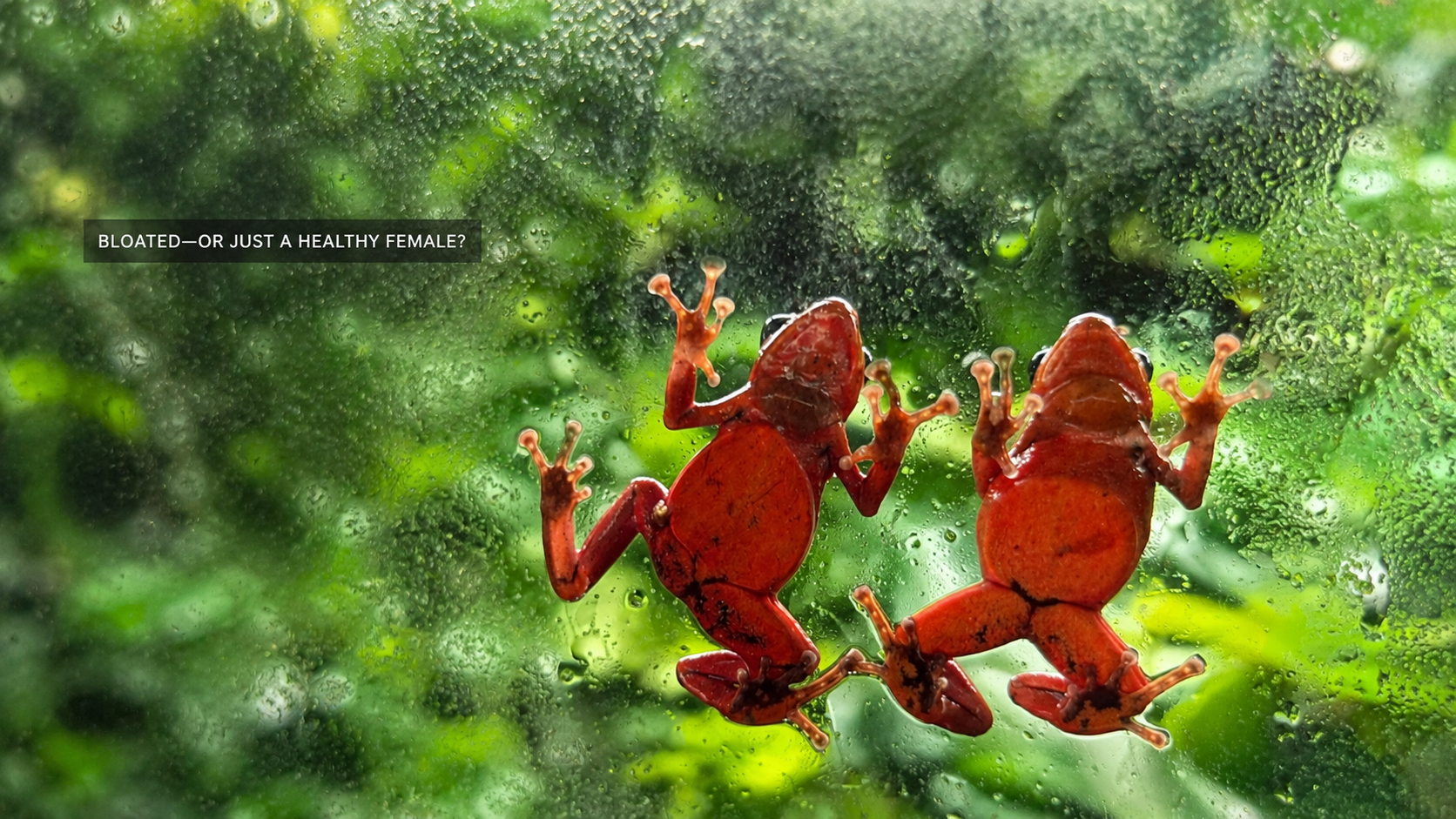
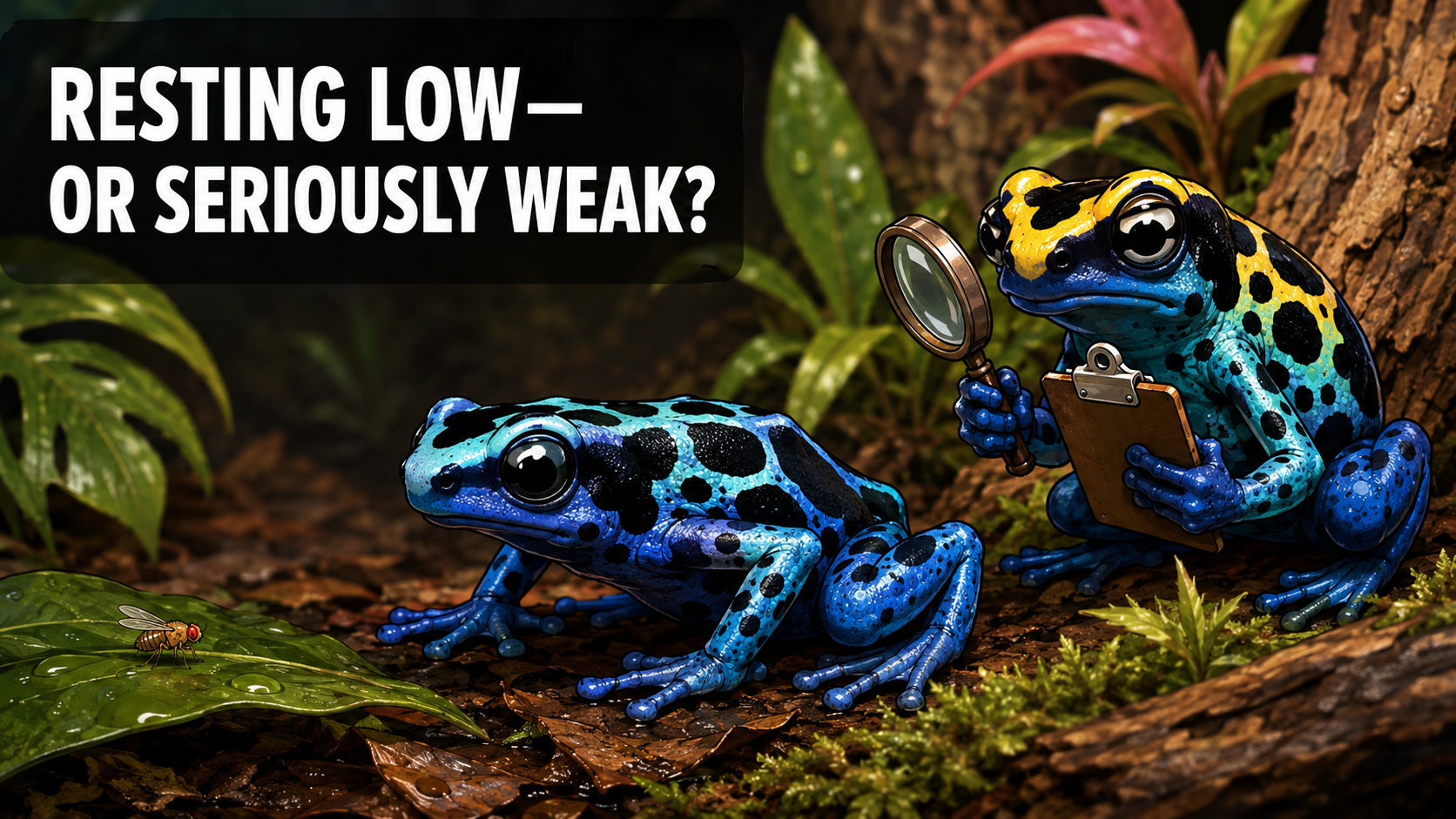
Dart frogs already live close to the ground. They crouch to hunt, press themselves into leaf litter and sometimes freeze when startled. A healthy low posture can therefore look surprisingly flat—especially in a photograph taken from above.
The concerning version is different. A frog may appear collapsed rather than crouched, with its head lowered, abdomen pressed down, limbs positioned abnormally or too little strength to lift and move normally. It may fail to respond to prey, stumble, remain exposed or be unable to regain an upright position after an accidental fall.
The word “flat” is not a diagnosis. The useful distinction is whether the frog is deliberately holding a stable low posture or physically failing to maintain its normal posture. This guide explains what to observe, what to check immediately and when veterinary assessment should not wait.
What does a normal low dart frog posture look like?
Dart frogs do not sit tall like many mammals or birds. Their normal stance is compact, with the body held relatively close to the surface and the limbs folded ready to move. The posture changes continuously with activity.
Crouching while hunting
A hunting frog may lower its body, point its head towards prey and remain motionless before striking. The stillness is focused rather than weak. Its eyes track movement, its toes may reposition and it can launch forwards cleanly.
Resting under cover
A frog resting beneath a leaf, cork ledge or bromeliad may settle closely against the surface. It should retain a natural, balanced outline. When disturbed minimally by normal room activity, it may adjust position or retreat rather than remaining unresponsive.
Using a moist surface
Amphibians absorb water through specialised ventral skin. A frog may sit with its underside in contact with damp leaf litter or another moist surface. This should not be confused with a frog whose chest and head appear to have dropped because it lacks strength.
Settling after transport or an enclosure move
A new arrival may remain low and still while assessing unfamiliar surroundings. More reassuring signs are a controlled posture, normal breathing, appropriate retreating behaviour and gradual resumption of exploration or feeding. The Frogfather guide to what to expect after dart frog transport explains normal settling behaviour.
| Observation | More consistent with a controlled crouch | More concerning |
|---|---|---|
| Body position | Compact, balanced and symmetrical | Collapsed, twisted or unable to lift clear of the surface |
| Limbs | Folded beneath or beside the body, ready to move | Persistently splayed, dragging or positioned unusually |
| Response | Tracks prey, adjusts or retreats appropriately | Little response to ordinary nearby movement or food |
| Movement | Can rise, hop, land and climb normally | Stumbles, misses footing, falls or cannot stand |
| Context | Hunting, resting, hiding or recent mild disturbance | New unexplained posture with other signs of decline |
What does an abnormal flat posture look like?
Reduced posture means more than sitting still. The frog appears unable or unwilling to support itself normally. Keepers may describe it as flattened, pancaked, melted, sprawled or pressed into the substrate.
Features that increase concern include:
- the head and chest remain lowered rather than held alert;
- the abdomen appears to drag continuously;
- one or more limbs remain extended or splayed;
- the frog moves very slowly or cannot lift itself properly;
- it lands badly, slips repeatedly or falls from easy surfaces;
- it remains exposed rather than seeking cover;
- it does not orient towards familiar prey; or
- the posture persists and differs clearly from that frog’s baseline.
A still photograph can hide the most important evidence. Record a short video showing posture, breathing and any spontaneous movement. Do not chase the frog around the vivarium to manufacture a response.
Flat is different from thin
A frog with poor body condition may look narrow or low from above, but posture and condition are separate observations. A well-conditioned frog can become acutely weak, while a thin frog may still hold itself upright and move normally.
If weight or condition is part of the concern, use the safe dart frog body-condition and weighing guide. Do not repeatedly handle a severely weak frog merely to obtain a number before speaking to a vet.
Could the frog simply be freezing or playing dead?
Frogs use several defensive responses when they perceive danger. One is freezing: remaining motionless to avoid detection. Some anurans also display forms of tonic immobility or thanatosis, commonly described as death-feigning.
Defensive immobility is normally linked to a clear trigger such as capture, handling, a sudden vibration or a perceived predator. The frog should recover after the threat is removed. It is not a safe explanation for a frog that remains flattened for hours, repeatedly collapses without a trigger or also has appetite, skin, breathing or coordination changes.
Do not keep provoking the response
If a frog freezes when approached, back away and observe remotely. Repeatedly touching, prodding or picking it up creates more stress and makes the behaviour harder to interpret. A defensive frog is trying to end the interaction.
The article on normal dart frog behaviour versus red flags provides additional context for hiding, stillness and escape responses.
Which environmental problems can cause reduced posture?
Check the environment immediately because a shared equipment or climate problem can affect several frogs quickly. Environmental correction does not replace veterinary assessment when the frog is already weak.
Excessive heat
Heat stress can progress from altered location and reduced feeding to weakness, abnormal posture, loss of coordination and collapse. Measure inside the enclosure at frog level using a reliable thermometer; do not rely on room temperature or touch.
If the vivarium is too warm, remove or isolate the heat source safely and cool the environment gradually while preserving appropriate moisture and airflow. Do not plunge the frog into cold water. Follow the dart frog heat-stress guide.
Cold or rapid temperature change
An inappropriately cold frog may become slow and hold a reduced posture. Sudden changes are important even when the final reading looks acceptable. Check timers, heating controls, open windows, air-conditioning and overnight conditions.
Dryness, saturation or poor ventilation
A dehydrated frog may become weak, while a persistently saturated and stagnant enclosure can contribute to skin and microbial problems. Assess usable surface moisture, ventilation and drainage together rather than chasing a single humidity percentage.
Contaminant exposure
Cleaning products, aerosols, fragrances, pesticides, nicotine, unsuitable water treatments, uncured construction materials and residues on hands or tools can affect amphibians through permeable skin. If exposure is possible, stop further contact, preserve the product information and contact a vet or relevant poison-information service through the veterinary practice.
A shared problem or one affected frog?
Several frogs changing posture at once makes a common environmental or toxic exposure more likely and increases urgency. One affected frog does not rule out husbandry, but individual illness, injury or social exclusion also moves higher on the list.
Which health problems can make a dart frog lie flat?
Abnormal posture is a nonspecific clinical sign. Possible categories include systemic infection, skin disease, nutritional or metabolic disturbance, trauma, toxin exposure, neurological dysfunction, severe dehydration and advanced organ disease. That list is deliberately broad because posture alone cannot identify the cause.
Why the righting response matters
The righting response allows an animal to restore its normal orientation. Veterinary literature recognises loss of righting ability as a serious neurological or systemic sign in amphibians. If a frog accidentally falls or is found inverted and cannot correct itself, seek urgent veterinary help.
Do not deliberately turn a weak frog onto its back to test this repeatedly. The observation adds little once severe weakness is already apparent and may cause stress, injury or aspiration.
Abnormal posture does not prove chytrid
Chytridiomycosis can produce lethargy, abnormal posture, excessive skin shedding, loss of righting ability and neurological signs. Those same signs occur in other diseases and emergencies. Diagnosis requires appropriate veterinary assessment and laboratory testing; appearance cannot confirm it.
Use the dart frog shedding guide if loose skin is also present, but do not delay veterinary contact when shedding occurs with collapse or neurological signs.
Urgent combinations
Contact an amphibian-experienced veterinary practice promptly when flat posture occurs with:
- inability to stand, climb or right itself;
- loss of balance, circling, twisting, tremors or seizures;
- open-mouth breathing, marked effort or bubbles at the nostrils;
- severe weakness or minimal response;
- abnormal shedding, red skin, ulcers or bleeding;
- swelling, prolapse or a rapidly changing body outline;
- known or suspected contaminant exposure;
- rapid deterioration; or
- similar signs in more than one frog.
The complete dart frog health guide can help organise additional observations, but a seriously weak frog needs clinical assessment rather than more online diagnosis.
What should you do if your dart frog is lying flat?
- Observe without touching first. Record posture, breathing, eye position, response to nearby movement and spontaneous attempts to walk.
- Measure the enclosure. Check temperature at frog level, moisture, ventilation and recent equipment changes.
- Look at the other frogs. A group-level change suggests a shared emergency.
- Record a short video. Show the frog’s natural posture and movement without chasing it.
- Contact an amphibian-experienced vet. Describe the onset and accompanying signs so the practice can triage urgency.
- Prepare a simple secure container if advised. Use the clinic’s instructions for moisture, ventilation and temperature during transport.
Should you isolate the frog?
Separation can protect a weak frog from competition and make observation easier, but capture itself can be stressful. If the animal is seriously compromised, call the veterinary practice first where possible and prepare everything before moving it.
Use a secure, simple setup with appropriate moisture, ventilation and temperature—not an unventilated wet box. Avoid cross-contamination by changing moistened powder-free vinyl gloves and equipment between animals. The dart frog quarantine guide explains the principles, but an emergency hospital container should follow veterinary direction.
What information will help the vet?
Do not delay urgent contact to complete a perfect record. Supply what you can:
- species, age, sex if known and how long you have kept the frog;
- when it last held a normal posture;
- photographs and a short unprovoked movement video;
- appetite, last confirmed feeding and supplement routine;
- weight or body-condition trend if already available;
- droppings, shedding, breathing, skin and coordination changes;
- measured temperature and recent humidity or equipment history;
- new animals, plants, substrate or enclosure materials;
- cleaning products, aerosols or possible toxin exposure; and
- whether any tank-mates are affected.
Merck’s amphibian clinical guidance recommends observing body condition, agility, posture, behaviour and respiratory effort before handling. A veterinary investigation may then include physical and neurological assessment, husbandry review, faecal or skin testing, diagnostic imaging and other targeted tests according to the case.
Evidence and further reading
Frequently asked questions
Is it normal for a dart frog to lie flat?
A healthy dart frog may crouch low while resting, hunting or hiding. The posture should look controlled, and the frog should still react appropriately and lift itself to move normally. A persistently collapsed or weak posture is not normal.
Why is my dart frog flat and not moving?
It may be freezing after a disturbance, but severe weakness, temperature problems, toxin exposure, injury or illness can look similar. Check the environment immediately and seek prompt veterinary advice if normal posture and movement do not return quickly.
Do dart frogs play dead?
Some frogs use defensive immobility or death-feigning responses, usually after a clear threat such as capture or disturbance. It should resolve when the threat is removed and should not explain persistent collapse or other signs of illness.
Should I turn my dart frog over to test its righting reflex?
No. Do not repeatedly place a weak frog on its back. If it is accidentally found inverted and cannot right itself, that is already an urgent sign requiring veterinary advice.
Can heat make a dart frog lie flat?
Yes. Advanced heat stress can cause weakness, abnormal posture, poor coordination and collapse. Measure temperature inside the enclosure at frog level and cool gradually while contacting a vet when serious signs are present.
Does a flat posture mean my dart frog has chytrid?
No. Chytridiomycosis can cause abnormal posture, lethargy and loss of righting ability, but many other conditions can produce similar signs. Diagnosis requires veterinary assessment and appropriate laboratory testing.
Should I give a weak dart frog an electrolyte or vitamin bath?
Not unless an amphibian-experienced veterinary surgeon prescribes a specific solution and protocol. Amphibians absorb substances through their skin, and an improvised bath can cause toxicity, stress or delay proper diagnosis.
When is a flat dart frog posture an emergency?
Treat it as urgent when the frog cannot stand, climb or right itself, has splayed limbs, abnormal breathing, tremors, skin lesions, swelling, bleeding, minimal response or rapid deterioration, or when several frogs are affected.