
Husbandry & Evidence Review – 6 September 2026
Behaviour is a valuable monitoring tool but not a diagnosis. Sudden change, weakness, abnormal breathing/coordination or sustained appetite/condition loss may require veterinary assessment.
Dart frogs don’t make noise when something’s wrong.
No barking, no obvious distress calls, no dramatic warning signs. Most of the time, if something’s off, it shows up quietly — in how they move, where they sit, how they feed… or how they don’t.
That’s why behaviour is one of the most important things to learn as a keeper.
Not in a textbook way. In a “you walk past the tank and something just feels off” kind of way.
If you get good at reading behaviour, you catch problems early. If you don’t, things tend to drift until they’re harder to fix.
This ties into pretty much everything else on your site — your setup guide, your common issues guide, even your quarantine process. Behaviour is the thread running through all of it.
What “normal” dart frog behaviour actually looks like
This depends slightly on species, but there are some consistent patterns.
Active, but not frantic
Dart frogs should move with purpose. Short bursts, pauses, exploring, hunting.
Not constant pacing. Not sitting completely still all day either.
Confident feeding response
When food hits the tank, they should notice it and respond.
Some are bold, some are more reserved — but over time, feeding should be reliable.
Use of space
A persistent change in posture/location can be worth investigating, but some normal resting/territorial patterns are individual and species-specific.
They’ll:
- Move across the floor
- Climb through plants
- Use cover but not hide constantly
Regular appearance
Visibility varies by species and individual. Reduced visibility is useful context, not a stand-alone welfare test.
If weeks go by where you barely see them, something usually needs adjusting. This links directly to your hiding behaviour article.
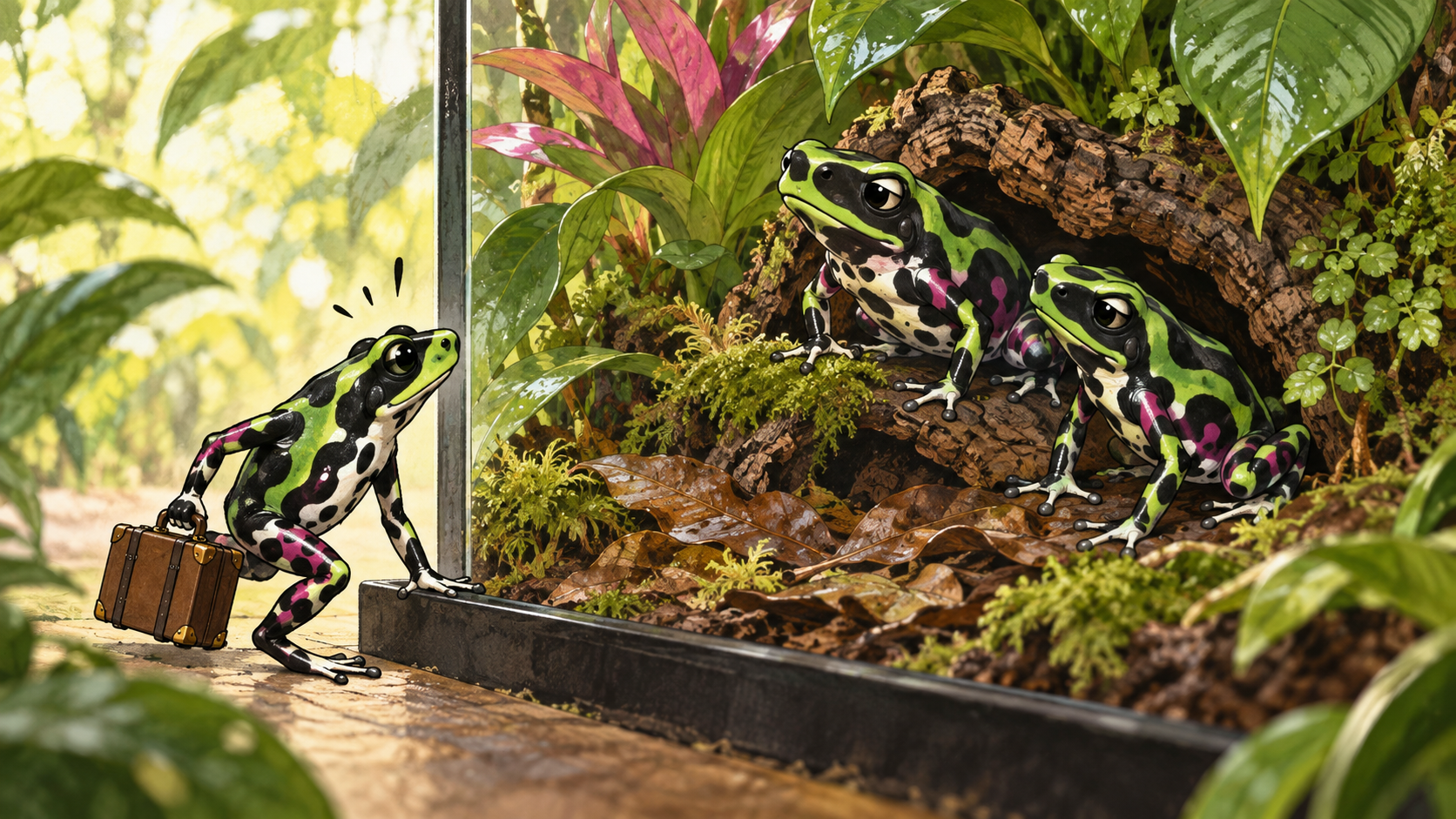
Behaviour changes after moving or buying frogs
This is where people panic too early.
New frogs often:
- Hide more
- Eat less initially
- Move cautiously
That’s normal for the first few days, sometimes a couple of weeks.
This is exactly why quarantine matters — you’re watching for improvement over time, not instant perfection.
If behaviour is trending in the right direction, you’re fine.
If it stalls or worsens, that’s when you start paying attention.
Red flag behaviours to watch for
This is the part that actually matters.
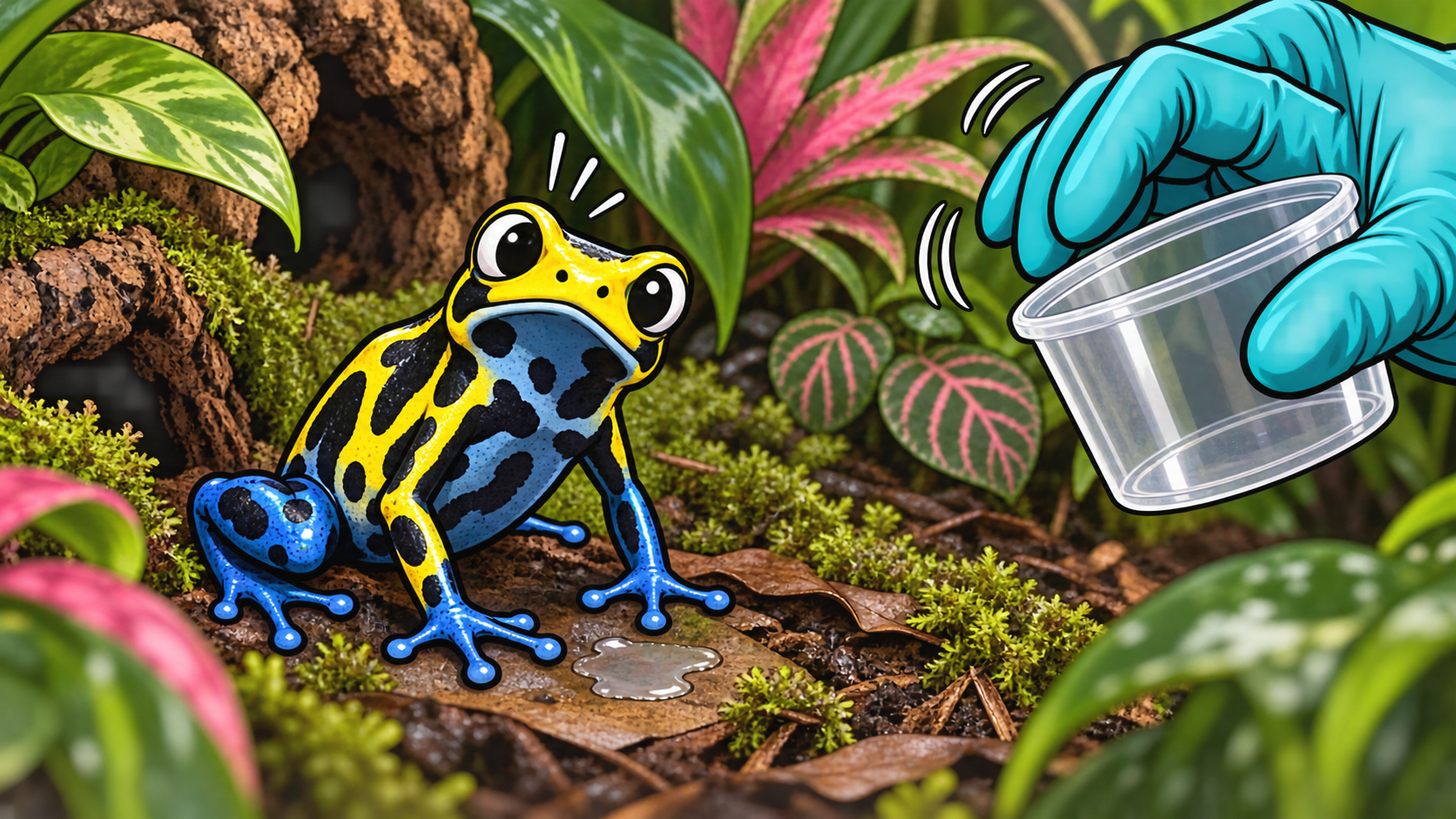
1. Sudden loss of appetite
A frog that was feeding well and suddenly stops is always worth watching.
One missed feed isn’t a crisis. A pattern is.
2. Constant hiding
Some hiding is normal.
Never being seen isn’t.
This usually points to:
- stress
- poor planting
- incorrect conditions
3. Lethargy
Frogs sitting still for long periods, not reacting to movement or food, looking “flat”.
This is one of the clearer warning signs.
4. Erratic movement
Unusual jumping, twitching, or clumsy movement can indicate stress or neurological issues.
5. Weight loss
This shows in the body shape — especially around the hips.
Often paired with reduced feeding.
Subtle signs people miss
These are the ones that experienced keepers notice early.
- Frogs using less of the tank than before
- Slight hesitation when feeding
- Spending more time in one specific spot
- Changes in posture
None of these on their own mean disaster.
Together, over time, they tell a story.
Aggression and interaction between frogs
Not all dart frogs are social in the way people expect.
Some mild interaction is normal:
- Following
- Calling
- Short disputes
But constant chasing, one frog being pushed out of feeding areas, or visible stress is a problem.
This ties directly into your group housing guide.
How your setup affects behaviour
This is where most issues actually come from.
Lighting
Too dim and frogs become inactive.
Too harsh and they hide.
Planting
Too sparse and frogs feel exposed.
Too dense and they disappear completely.
Humidity
Too wet or too dry both affect movement and activity.
Your misting guide covers this well.
Seasonal behaviour changes in the UK
This gets overlooked a lot.
Even indoors, frogs can respond to:
- shorter daylight hours
- cooler ambient temperatures
You might see:
- slightly reduced activity
- less calling
As long as feeding and condition stay solid, this isn’t usually a concern.
When to actually worry
Not every behaviour change is a crisis.
But patterns matter.
If you see:
- ongoing refusal to eat
- clear weight loss
- lethargy that doesn’t improve
- multiple warning signs together
That’s when you act.
Not panic — act.
Check your setup. Review your care. If needed, get proper advice.
Why behaviour is your best tool as a keeper
You can’t constantly test water parameters like an aquarium.
You can’t rely on obvious symptoms.
But you can watch your frogs.
The more time you spend observing them, the quicker you pick up on what’s normal for your setup — and what isn’t.
And that’s what separates a stable vivarium from one that slowly drifts into problems.
Frequently Asked Questions
Is it normal for dart frogs to hide a lot?
Some hiding is normal, especially after moving. Constant hiding usually points to stress or setup issues.
Why is my dart frog not eating?
It could be stress, environmental issues, or health problems. If it continues over multiple feeds, investigate further.
How active should dart frogs be?
They should show regular movement throughout the day, with bursts of activity and periods of rest.
Do dart frogs recognise feeding times?
Yes, many learn feeding patterns and will become more active when food is introduced.
When should I worry about dart frog behaviour?
When changes are consistent over time, especially if combined with weight loss or lack of feeding.