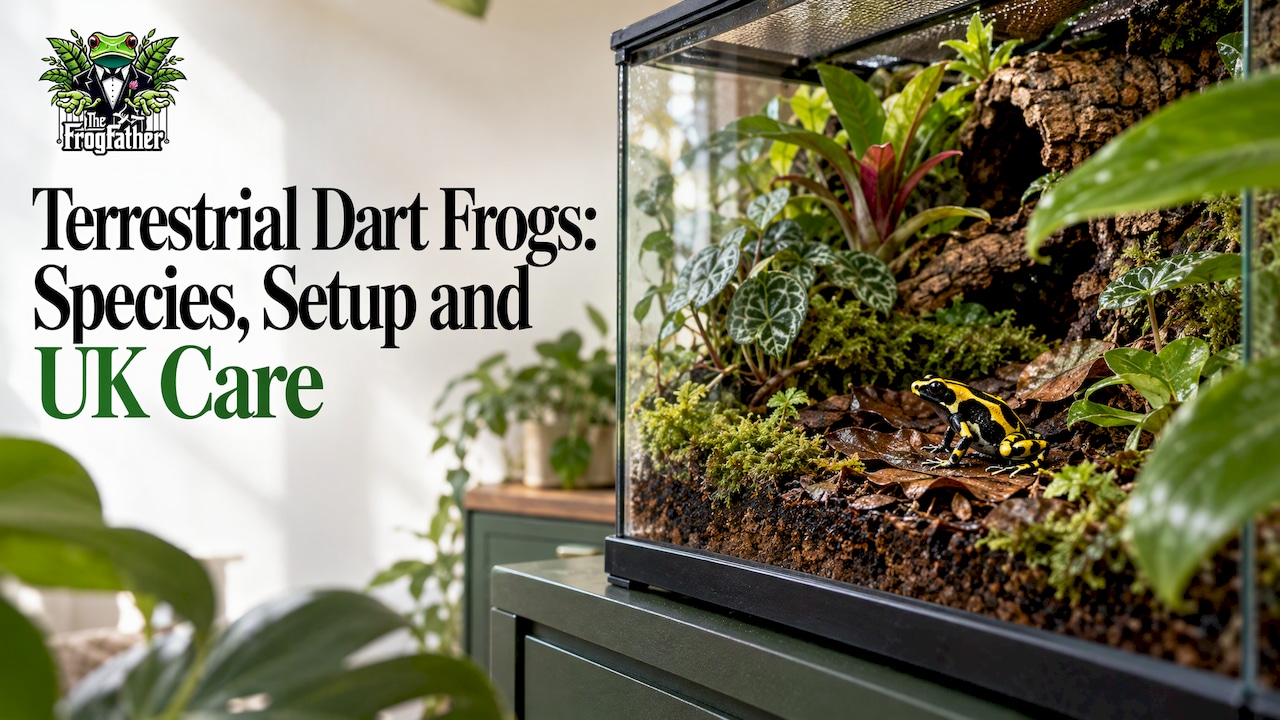
Terrestrial dart frogs live and forage mainly on the forest floor, so they need floor space, leaf litter, cover and a damp, well-drained substrate more than they need height. For most UK keepers the sensible route is captive-bred frogs in a planted bioactive vivarium that is sized by footprint. It should be built before the frogs arrive and maintained steadily afterwards. We breed dart frogs in Nottingham and build bioactive vivariums, and this guide covers what you need to know before you buy.
TL;DR
- “Terrestrial” means ground-dwelling: plan the enclosure around floor area, leaf litter and hiding places, not tall climbing space.
- Most commonly kept dart frogs sit between fully terrestrial and semi-arboreal, so a few elevated perches and bromeliads are still useful.
- Build and cycle the vivarium with drainage, a damp (not wet) substrate, leaf litter, springtails and isopods before the frogs go in.
- Feed tiny flightless prey, dust it with supplements, and quarantine any new frog for several weeks.
- Buy captive-bred. Wild-caught animals and cross-border movements bring CITES permit rules and real penalties.
Table of Contents
- What “terrestrial” means for a dart frog
- Which terrestrial dart frogs suit which keeper
- Planning the vivarium: size, grouping and layout
- Building the substrate: the part terrestrial frogs live on
- Temperature, humidity and ventilation
- Feeding and supplements
- Bringing frogs home: quarantine and health
- UK rules worth knowing
- Start with the right frogs and setup
- FAQ
- Sources
What “terrestrial” means for a dart frog
Dart frogs, also called poison frogs, are small, diurnal (day-active) frogs. San Diego Zoo describes them as living mainly in leaf litter on the forest floor, although some live high in the canopy. In the hobby, “terrestrial” is a loose label. A few species stay almost entirely on the ground. Many others spend most of their time at ground level but will climb logs, cork and plant leaves if you give them the chance, which is why care guides often call them semi-arboreal.
That has three practical effects in a vivarium:
- Footprint beats height. Frogs patrol the floor, so length and depth of the enclosure matter more than extra height.
- Cover matters. Leaf litter, cork tubes, half-logs and dense planting give a ground-dwelling frog places to retreat. A frog with nowhere to hide tends to look nervous and spends less time in view.
- The substrate is their habitat. It is where they walk, hunt, shelter and sometimes deposit eggs, so its quality is the quality of their environment.
Which terrestrial dart frogs suit which keeper
Species differ in size, boldness, noise, how much space they want and how forgiving they are of mistakes. Here is how we group the frogs most UK keepers meet. This reflects our own experience of breeding and keeping them, not a formal ranking.
| Keeper level | Typical choices | Why |
|---|---|---|
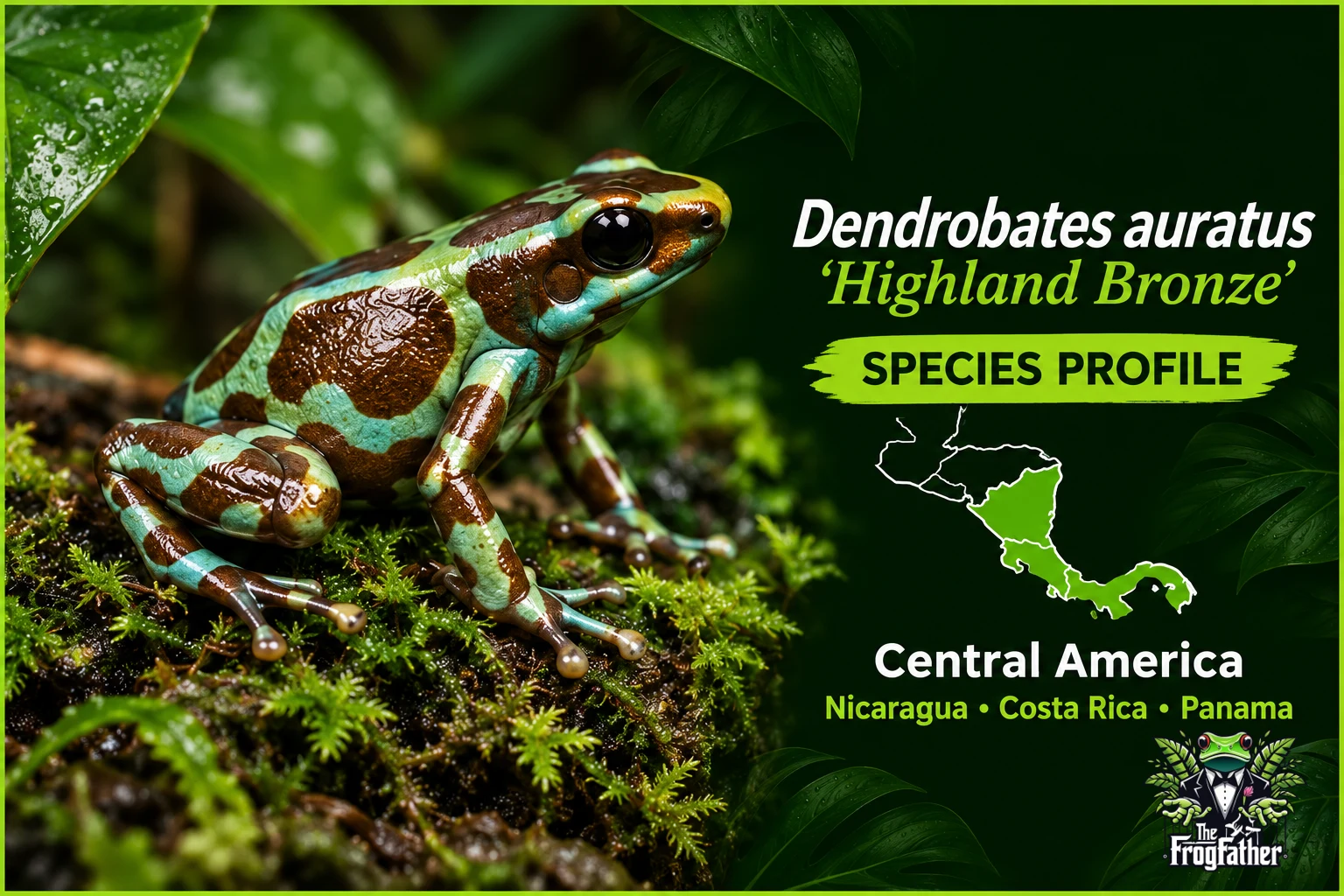
| First-time keeper | Dendrobates tinctorius, Dendrobates leucomelas, Dendrobates auratus | Large enough to feed easily, established in captivity and well documented |
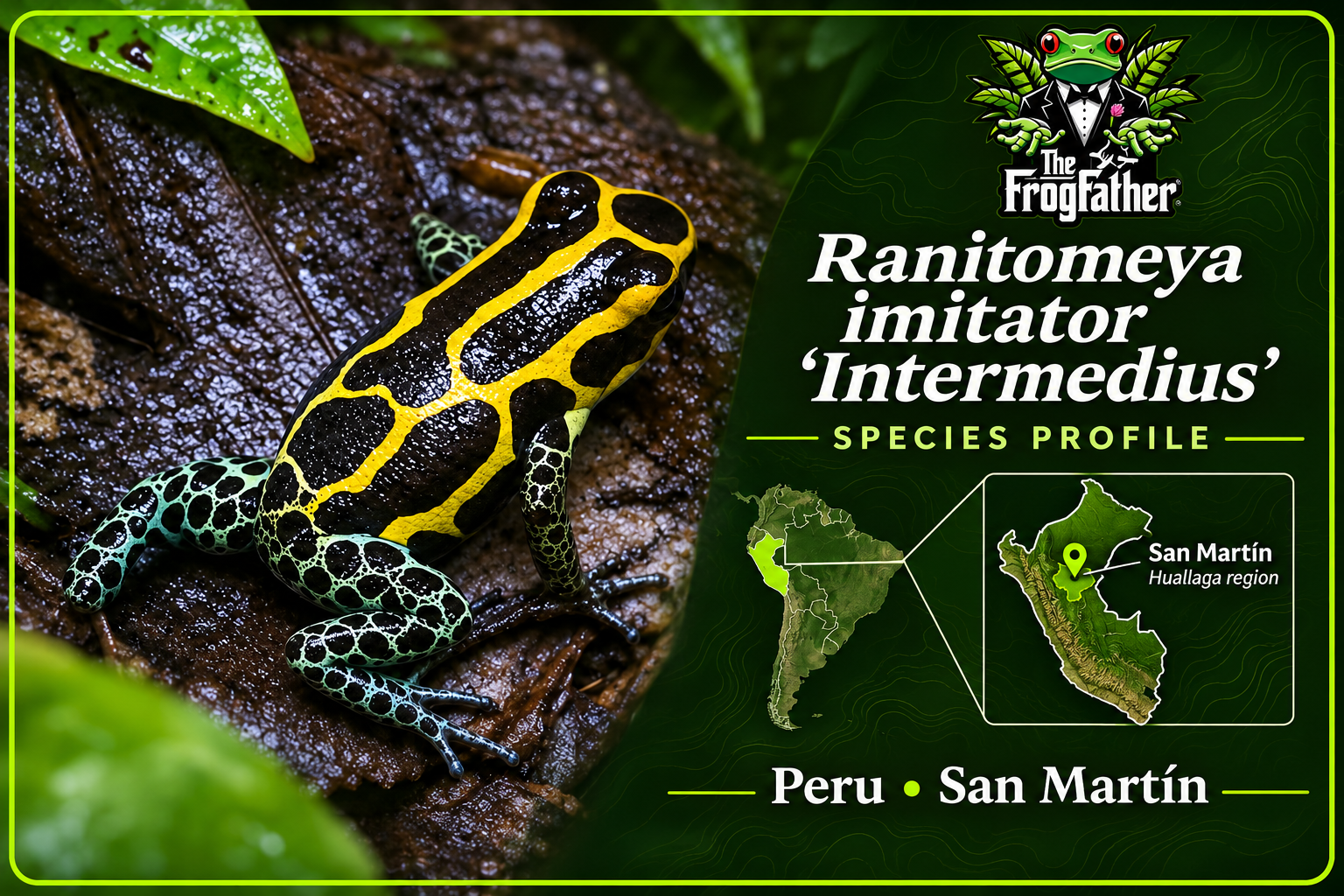
| Some experience | Smaller Ranitomeya and Oophaga pumilio morphs | Smaller frogs, more exacting feeding and often a more planted, higher-humidity style of vivarium |
| Experienced, confident with space and diet | Phyllobates terribilis | More space and feeding, and careful temperature management |
The Dendrobates group is where most beginners should start. D. tinctorius morphs such as the blue “Azureus” are bold once settled, and a pair or small group gives you something to watch every day. D. leucomelas is active and vocal. D. auratus tends to be a steadier, calmer frog, though it can be shy at first.
Whatever the species, choose by the size of the enclosure you can actually house and maintain. A smaller frog does not mean an easier or smaller commitment.
Planning the vivarium: size, grouping and layout
The oldest UK guidance is still a useful anchor. A British Herpetological Society bulletin from 1996 says a 36" x 12" x 15" tank can house four average-sized frogs such as D. auratus. It also says slightly smaller tanks can house small species, that overcrowding should be avoided, and that a tall vivarium is preferable for plant growth. Treat that as a historical floor, not a target. Modern bioactive builds usually give frogs more room than that, and more floor makes the whole system more stable.
For planning:
- Start with the number of frogs you want, then size the footprint for the species. Our tank size guide for UK keepers sets out sizes and grouping, and the vivarium size guide is our current reference.
- Choose the species first, then the group. Mixing species is where many first builds go wrong, so keep one species per enclosure.
- Allow for a tall enough viv that plants have room to grow, but build the layout across the floor: leaf litter, hides, a shallow water spot and a few elevated perches.
- Think about the room too. Glass fronts, lighting and heating need to suit where the enclosure will stand.
If you would rather not build from scratch, we make custom bioactive vivariums, and we list established, fully set-up enclosures with frogs, such as a 45×45×60cm established bioactive vivarium with Powder Blue dart frogs.
Building the substrate: the part terrestrial frogs live on
For ground-dwelling frogs the bottom 10 cm of the build decides most outcomes. An animal hospital care handout describes the standard approach: a drainage layer of expanded clay pellets, a screen or mesh barrier, then a well-draining mix such as coco coir with sphagnum moss at least 2 to 3 inches (about 5 to 8 cm) deep, kept damp but not wet. It then adds a top cover of long-fibre sphagnum and/or leaf litter and seeds the tank with springtails and isopods to break down waste.
In practice:
- Lay the drainage layer and separate it from the substrate with mesh. Our guides on whether you need a drainage layer and building a bioactive substrate layer step by step go through the options.
- Add the substrate and moisten it until it is damp throughout, not sitting in water.
- Plant it and add hardscape such as cork, wood and bromeliads, which also give frogs elevated spots.
- Spread the leaf litter thickly. It gives cover, feeds the microfauna and keeps the surface humid.
- Add the clean-up crew. Springtails and isopods need time to establish before frogs go in. We sell aged bioactive substrate with live microfauna and the Microfauna Support Pack, which feeds the colony so it keeps up with waste.
- Let it run before the frogs arrive. Check temperature, humidity and plant growth settle first.
Bioactive does not mean maintenance-free. You will still trim plants, top up leaf litter, clean glass, replace water, watch moisture levels and notice when the clean-up crew is falling behind. Our real-world checklist for a bioactive vivarium helps you judge that.
Temperature, humidity and ventilation
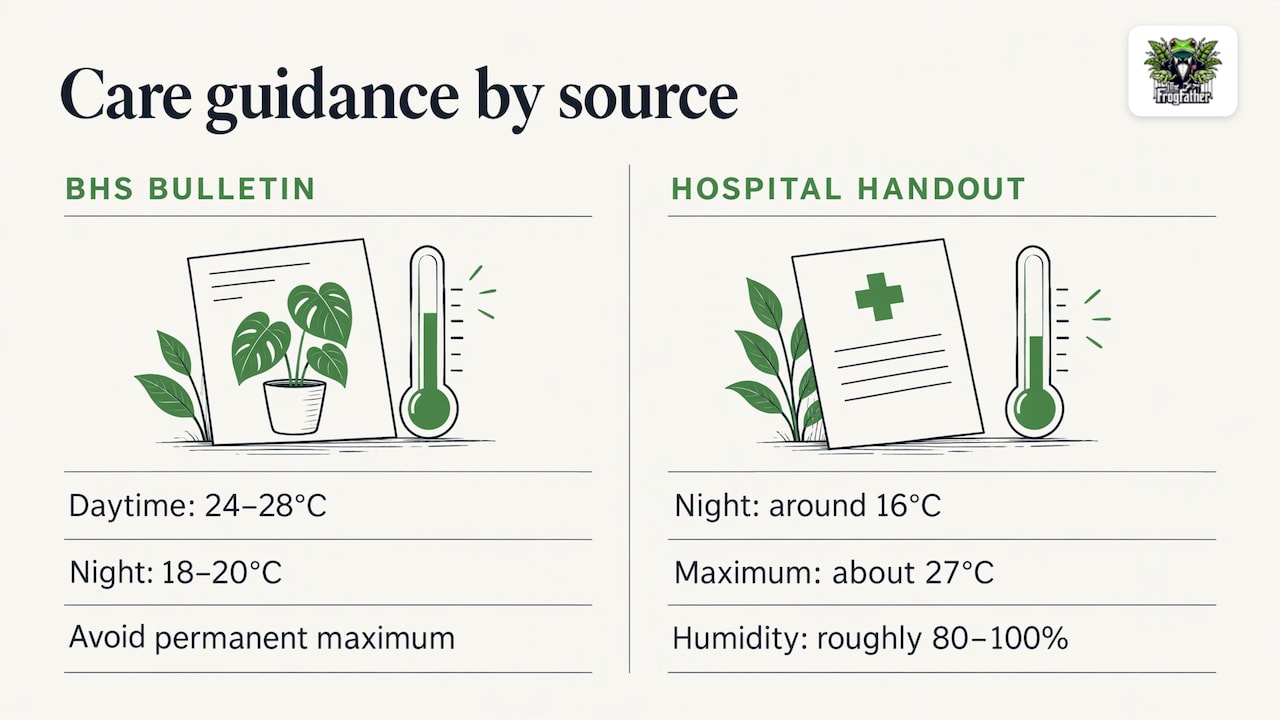
The BHS bulletin recommends daytime temperatures of 24 to 28°C and night temperatures of 18 to 20°C for commonly kept species, and cautions against a permanent maximum temperature. The animal hospital handout above puts humidity at roughly 80 to 100% and says temperatures should not exceed 80°F (about 27°C), with nights down to around 60°F (about 16°C). Species differ, so check the figures for the frogs you choose, and use a reliable thermometer and hygrometer at frog level, not at the top of the glass.
In a UK winter, room temperature and heating decide how much work the vivarium needs, so read our winter heating and humidity guide before the cold arrives.
Ventilation has two jobs that pull against each other. The BHS guidance says vents should be fine enough to stop fruit flies and micro-crickets escaping, and that over-large vents lower humidity and mean more spraying. Fine mesh, a modest vent area and good air movement are the compromise. If a room is dry, a cool mist humidifier for plants can help hold ambient humidity steady while you tune the enclosure itself.
Feeding and supplements
Terrestrial dart frogs hunt tiny, moving prey on the ground. The care handout recommends flightless fruit flies and pinhead crickets, fed daily to young frogs and at least every other day to adults. It also notes high vitamin A and calcium needs, with flies dusted with powdered supplements at least 2 to 3 times a week.
Some practical points:
- Larger frogs such as D. tinctorius take bigger flies. Smaller species may need the smaller Drosophila melanogaster culture.
- Fruit fly cultures must be kept going. We offer fruit fly subscriptions, including D. melanogaster Go Large cultures and dark-eyed black D. hydei, so you do not run out. Our guide to receiving, reviving and storing livefood covers what to do when a culture arrives.
- Feed what the frogs will eat. Our article on overfeeding dart frogs explains why more is not always better.
- If you want to keep colour strong, our guide to feeding for colour covers carotenoids and the Frogfather All-in-One Dust.
Bringing frogs home: quarantine and health
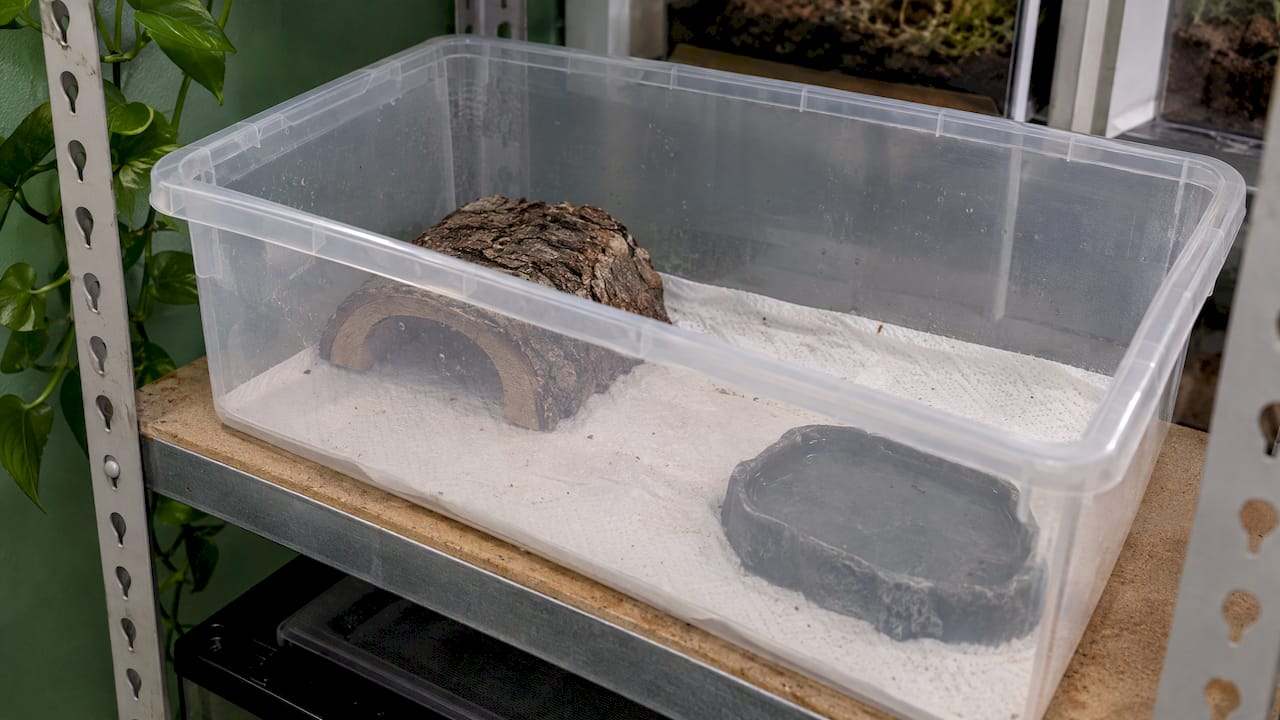
Quarantine new stock for several weeks in a simple set-up. The BHS advice is that a diseased frog could contaminate the main vivarium and cause later infections. A plain quarantine tub with damp paper, a hide and a water dish is enough, and it is much easier to clean than a planted viv.
Dart frogs tend to show problems through behaviour first. Watch for a frog that hides constantly, stops feeding or loses condition. The UK good practice guidelines for privately kept reptiles, which also cover amphibians, say owners are responsible for their animals’ needs and should seek a vet when health may be compromised. For a sick frog, see a vet with exotic species experience. For setup or husbandry questions, our dart frog care sheet is the place to start.
UK rules worth knowing
The same good practice document says that buying captive-bred animals is widely considered the more ethical choice and can be better for welfare because it avoids the stress of capture and long transport. Our frogs are UK-bred.
Two legal points matter for keepers:
- CITES permits. Moving a CITES-listed specimen into or out of Great Britain needs a permit. Without one you could face up to 7 years in prison, an unlimited fine, or both. Applications go through the GOV.UK CITES permit service.
- Escapes. Dart frogs are non-native. GOV.UK says you must not let a non-native animal escape into the wild, and you could be prosecuted and fined if you do. Keep lids and doors secure and never release unwanted frogs.
What we have learned in the frog room
We keep and breed dart frogs every day, and the same lesson repeats: the boringly solid basics decide whether a frog thrives. Floor space, a well-built substrate, a thriving clean-up crew and a steady feeding routine matter far more than any rare morph or clever gadget.
That is why we put effort into the unglamorous parts. Our Microfauna Nutrition Series exists to keep springtail and isopod colonies productive, and we design 3D-printed accessories such as fruit fly separators and light stands because we use them ourselves. We also offer free care resources and a free course, Bioactive Vivarium Fundamentals, because a keeper who understands the system makes better decisions for the frogs.
Frog keeping is rewarding, and it is not effortless. Be patient, watch your frogs, and fix problems calmly one change at a time.
Frogfather
Start with the right frogs and setup
If you are ready to buy, we breed dart frogs in the UK and can supply the plants, microfauna, live food and supplies to match. You can browse captive-bred dart frogs and bioactive supplies, or commission a custom vivarium built for your species.
If you want to learn first, our free Bioactive Vivarium Fundamentals course covers the principles behind everything above.
FAQ
Are all dart frogs terrestrial?
No. Most commonly kept dart frogs live mainly on the forest floor, but some live high in the canopy. Captive species range from mostly terrestrial to arboreal, so check the habits of your chosen species before planning the layout.
What is the best terrestrial dart frog for a beginner?
We usually point first-time keepers to captive-bred Dendrobates tinctorius, D. leucomelas or D. auratus. They are large enough to feed easily and well documented in captivity. Pick the species that suits the enclosure you can provide.
Do terrestrial dart frogs need a tall vivarium?
Floor area matters most, though height still helps. The BHS bulletin notes that a tall vivarium is preferable for plant growth. Give frogs a few elevated perches as well as plenty of ground cover.
How often do dart frogs need feeding?
The care handout recommends daily feeding for young frogs and at least every other day for adults. Dust prey with a vitamin and mineral supplement 2 to 3 times a week.
Sources
- Poison Frog, San Diego Zoo Animals & Plants
- Poison Dart Frog Care Guide, Vivipedia
- British Herpetological Society Bulletin 55, full issue (1996)
- British Herpetological Society Bulletin 55, article on dart frog care (1996)
- Dart Frog Care, Aurora Animal Hospital (PDF)
- Good Practice Guidelines for the Welfare of Privately Kept Reptiles (UK Parliament)
- Check if you need a CITES permit, nibusinessinfo.co.uk
- Apply for a CITES permit, GOV.UK
- Keeping wild birds or animals, GOV.UK
Recommended
- Dart Frog Species Guide UK | Compare Types & Care
- Best Dart Frogs For Beginners In The UK (Species That Actually Thrive)