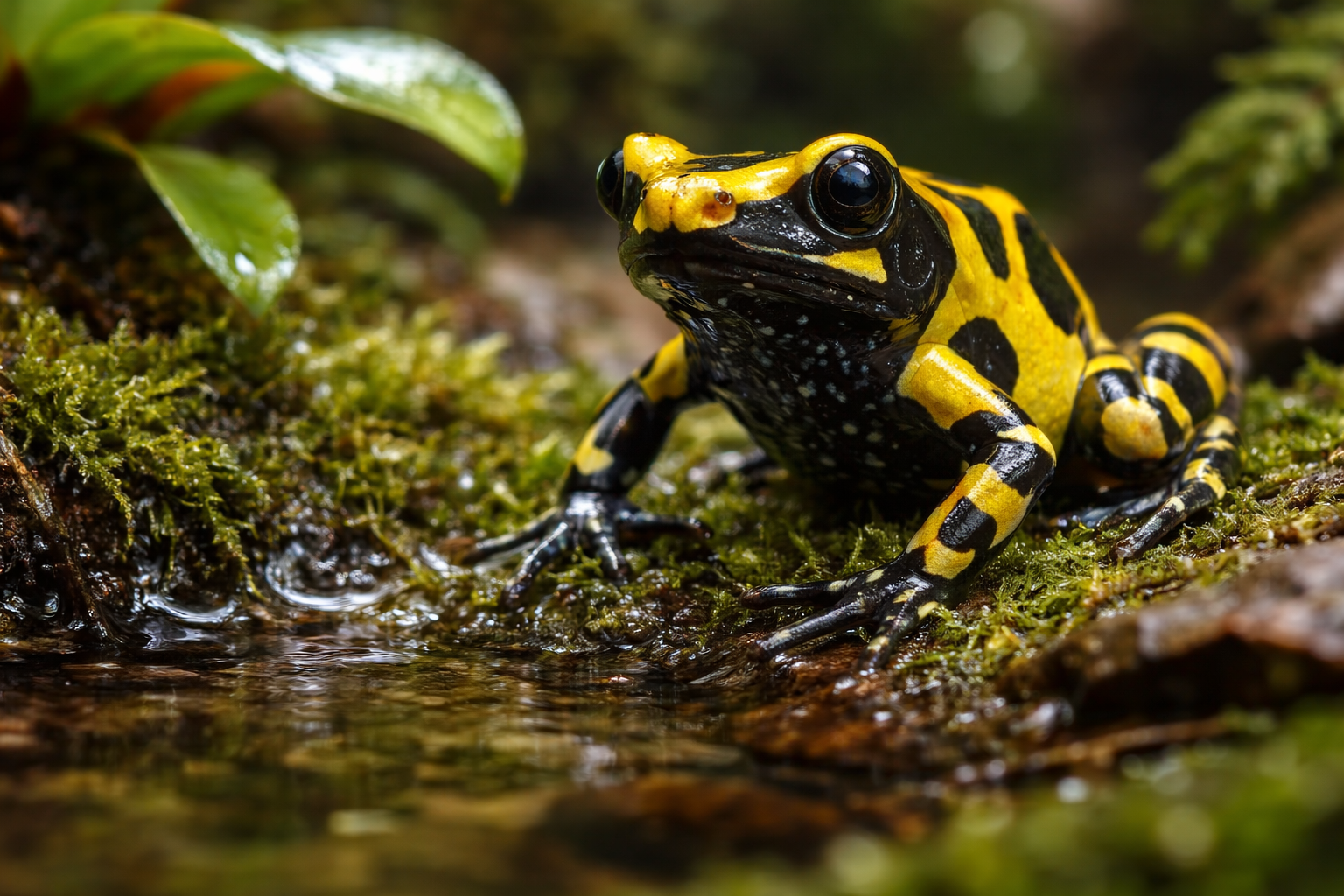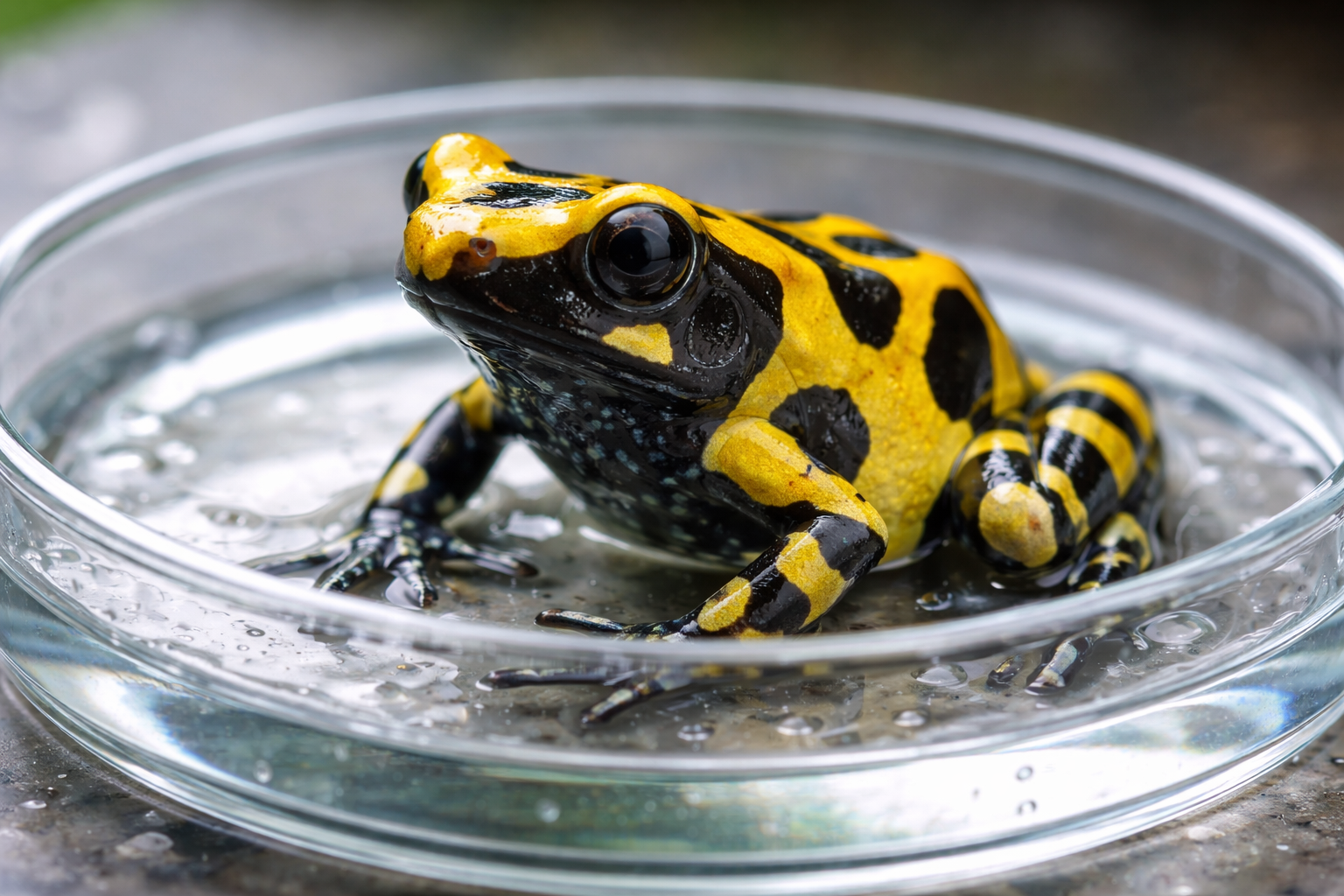

Dart frogs are small, brilliantly coloured frogs from Central and South America. In captivity they are harmless (their toxicity comes from their wild diet) and are hugely popular in bioactive tropical vivaria. This care sheet focuses on commonly kept species such as Dendrobates tinctorius, Dendrobates auratus and similar beginner-friendly dart frogs.
Quick Facts
- Common names: Dart frogs, poison dart frogs, arrow frogs
- Typical genera: Dendrobates, Ranitomeya, Phyllobates
- Adult size: 2–5 cm depending on species
- Lifespan: 8–15+ years
- Difficulty: Beginner (for robust species) to advanced (for tiny obligate egg feeders)
- Activity: Diurnal; very active and visible in a well-designed vivarium
Natural History
Dart frogs inhabit humid tropical forests from the leaf litter up into low vegetation. Many species live around small streams, seeps or bromeliads. They experience stable, warm temperatures, high humidity and frequent rainfall, with little direct sunshine under the canopy.
Enclosure & Setup
- Minimum size: For a pair or trio of a robust species, 45 × 45 × 45 cm is a sensible starting point.
- Orientation: Both floor space and climbing structures are important.
- Substrate: Bioactive layered substrate with drainage balls, mesh, soil mix and leaf litter.
- Décor: Cork bark, branches, vines, leaf litter, moss, bromeliads and other live plants. Small film canisters or hides for breeding for some species.
Dart frogs thrive in planted, bioactive enclosures with microfauna such as springtails and isopods helping to keep things clean.
Temperature & Humidity
- Day temperature: 22–26 °C for most common species.
- Night temperature: 20–22 °C.
- Humidity: 80–100%, but with excellent ventilation so the environment is moist, not stagnant.
Avoid strong overhead heat; dart frogs overheat easily. In many UK homes, a well-lit vivarium with a gentle heat source is sufficient.
Lighting
Provide a full-spectrum LED or T5 plant light and a low-level UVB tube. The UVB should be filtered through foliage to create a dappled effect. A 12-hour photoperiod mimics their natural environment and supports plant growth.
Water & Hydration
- Include a very shallow water area or small pools and film canisters/bromeliads rather than deep water features.
- Mist 1–2 times per day or use an automated misting system.
- Always use dechlorinated or RO-based water.
Diet & Feeding
- Main foods: Fruit flies (various sizes), springtails, pinhead crickets and other tiny insects.
- Feeding frequency: Small amounts daily or at least 5–6 days per week.
- Supplements: Regular calcium and high-quality multivitamin dusting; frequency depends on species and age.
Dart frogs have fast metabolisms and need regular small feeds rather than occasional large meals.
Behaviour & Handling
Dart frogs are display animals. They are best not handled except in emergencies:
- They are small and delicate; drops and squeezes can be fatal.
- Handling removes protective skin secretions and exposes them to salts and chemicals from your hands.
Common Health Issues
- Dehydration/overheating: From poor humidity or strong heat sources.
- Skin issues: From poor hygiene or constantly wet, stagnant conditions.
- Nutritional deficiencies: If diet is not varied or properly supplemented.
Are Dart Frogs Right for You?
Dart frogs are perfect if you want an active, colourful species in a lush bioactive vivarium and are happy to focus on enclosure design and feeder cultures rather than handling. They’re addictive — many keepers quickly find themselves planning their next vivarium.