One of the biggest surprises for new dart frog keepers is discovering that not all dart frogs behave the same way.
Some species are bold, curious, active, and visible throughout most of the day. Others can be far more secretive, especially when young or housed incorrectly. Many beginners spend hours researching colours and patterns, only to end up with frogs they rarely see.
If your goal is to build a stunning tropical vivarium that genuinely feels alive, then choosing the right species matters just as much as the enclosure itself.
Some dart frogs make incredible display animals. They confidently explore the vivarium, rush out for food, interact with their environment, and remain visible for large portions of the day. Others prefer to hide among leaf litter, bromeliads, cork bark, or moss, particularly if they feel exposed or unsettled.
In this guide, we will look at the best beginner-friendly display dart frogs, why some species are naturally bolder than others, and how your vivarium setup itself can dramatically affect visibility and behaviour.
What Makes a Good “Display Frog”?
When people talk about “display frogs”, they are usually referring to species that are:
- active during the day
- visible for long periods
- confident feeders
- less shy around movement
- comfortable exploring open areas
- naturally bold in established vivariums
This does not necessarily mean the frogs are easier to care for. It simply means they are more likely to be seen regularly.
Some dart frog species spend much more time hiding naturally. Others become incredibly confident once settled into a mature bioactive vivarium with plenty of cover and stable humidity.
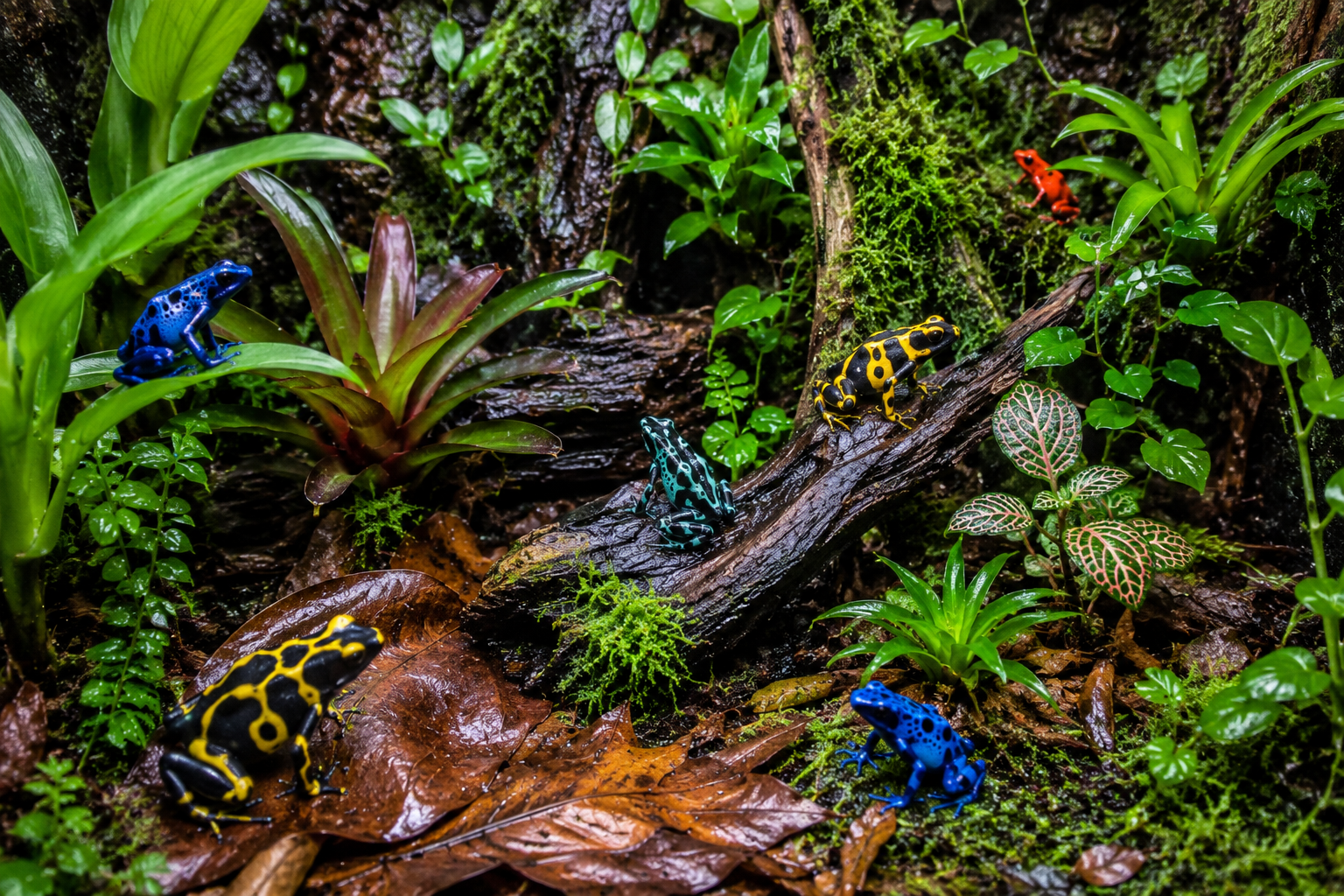
Interestingly, frogs often become more visible when they feel secure. A vivarium with dense planting, natural cork bark, leaf litter, and climbing structures usually produces bolder behaviour than a sparse enclosure with nowhere to hide.
Dendrobates tinctorius: Probably the Best Beginner Display Frog
Dendrobates tinctorius species are often considered the gold standard for display dart frogs.
Large, bold, colourful, and highly food motivated, tinctorius frogs are usually extremely visible once settled. Many individuals quickly learn feeding routines and will actively come to the front of the vivarium when they see movement.
This group includes some of the most visually striking dart frogs in the hobby, with morphs ranging from deep blues and blacks to bright yellows and whites.
Many beginners are drawn to tinctorius because they are:
- large and easy to observe
- active throughout the day
- confident feeders
- very colourful
- well suited to naturalistic bioactive vivariums
They also tend to spend more time on the ground and lower hardscape compared to some arboreal species, making them easier to view in standard front-opening vivariums.
Species such as “Azureus”, “Bakhuis”, “Tumucumaque”, and “Cobalt” remain extremely popular for exactly this reason.
If you are building your first tropical setup, a properly planted bioactive vivarium with tinctorius frogs is often one of the most rewarding combinations.
Dendrobates leucomelas: The Classic Active Beginner Frog
Dendrobates leucomelas, often called the yellow-banded dart frog, is another fantastic display species.
Leucomelas are famous for their bold personalities and active behaviour. They are often seen climbing, exploring, calling, and feeding openly throughout the enclosure.
One of the reasons they are so popular with beginners is their confidence. In many setups, they quickly become comfortable with regular activity around the vivarium.
They are also known for their distinctive vocalisations. Male leucomelas often produce a soft trilling call during the day, adding even more life to the enclosure.
For many keepers, leucomelas offer the perfect balance between:
- visibility
- hardiness
- personality
- colour contrast
- activity levels
Their black-and-yellow patterning also stands out beautifully against moss, tropical plants, and darker bioactive substrates.
Terribilis: Large, Bold, and Surprisingly Calm
Phyllobates terribilis are another excellent display species, particularly for larger vivariums.
These frogs are famous for their larger size and confident behaviour. Many terribilis frogs spend surprisingly little time hiding once they settle into a stable environment.
They often move with a slower, calmer confidence compared to some smaller dart frog species.
Their larger body size makes them especially impressive in heavily planted tropical vivariums, where they contrast beautifully against dark substrate and leaf litter.
Because they are larger frogs, it is especially important to provide:
- good floor space
- stable humidity
- deep leaf litter
- well-established microfauna
- consistent feeding routines
A mature enclosure with active springtails and bioactive substrate often helps these frogs feel more secure and visible.
Ranitomeya: Beautiful but Often More Secretive
Many thumbnail dart frogs, especially Ranitomeya species, are absolutely stunning. Their colours, patterns, and climbing behaviour can be incredible to watch.
However, they are not always the best choice if your main goal is constant visibility.
Some Ranitomeya species are naturally more secretive, especially in newer vivariums. Because they are much smaller, they can disappear into dense planting surprisingly easily.
That said, well-established groups in heavily planted enclosures can still be extremely rewarding.
Many keepers love watching thumbnail species utilise bromeliads, vertical climbing surfaces, and upper canopy areas that larger dart frogs may ignore.
If you enjoy observing natural behaviours and do not mind a little more searching, thumbnails can still make incredible display animals in the right setup.
Your Vivarium Setup Changes Everything
One of the biggest mistakes beginners make is assuming frog visibility depends entirely on species.
In reality, vivarium design plays a massive role.
A frog that feels exposed will hide more. A frog that feels secure will often become much bolder.
This means the best display vivariums usually contain:
- dense tropical planting
- natural cork bark and climbing surfaces
- leaf litter
- shaded retreats
- stable humidity
- good airflow
- natural feeding zones
Ironically, adding more cover often results in frogs becoming more visible because they feel safer moving around.
Overly bright, sparse, sterile vivariums frequently produce nervous behaviour.
This is one reason mature bioactive setups tend to outperform freshly built sterile-looking tanks.
Naturalistic enclosures with established moss, microfauna, and layered planting simply feel more secure for the frogs.
Feeding Behaviour and Confidence
Some dart frogs become incredibly confident around feeding time.
Tinctorius species especially are famous for recognising movement associated with food. Many keepers notice frogs appearing almost immediately when fruit flies are added.
Using high-quality supplements and reliable feeding routines also helps maintain activity levels and overall health.
Products such as properly dusted flightless fruit flies and vitamin supplements play an important role in long-term husbandry.
Frogs that feel healthy and secure are generally much more active and visible.
Common Beginner Mistakes
Choosing Purely Based on Colour
Some of the most colourful species are also some of the most secretive. Behaviour matters just as much as appearance.
Using Sparse Vivariums
Minimal planting often makes frogs nervous. Dense tropical planting creates security.
Expecting Instant Confidence
Freshly introduced frogs may hide for days or weeks while settling in.
Incorrect Temperatures
Overheating is one of the fastest ways to stress dart frogs. Stable temperatures matter enormously.
Poor Humidity Management
Humidity swings can affect both activity and feeding behaviour.
So Which Dart Frog Is Best for Beginners?
If your goal is a colourful, active, visible display vivarium, then species like:
- Dendrobates tinctorius
- Dendrobates leucomelas
- Phyllobates terribilis
…are usually among the best beginner choices.
They are bold, rewarding to observe, and highly suited to well-designed bioactive tropical vivariums.
Thumbnail species and smaller arboreal frogs can also be fantastic, but they are often better appreciated by keepers who enjoy observing more subtle natural behaviours.
The most important thing is matching the species to the type of experience you actually want.
Final Thoughts
The best display dart frogs are not always the rarest or most expensive species.
Often, the most rewarding frogs are simply the ones you get to enjoy every day.
A confident group of active dart frogs exploring a mature tropical vivarium creates a display that genuinely feels alive.
Choose species for behaviour as well as colour, focus on building a naturalistic enclosure, and give the frogs time to settle properly.
In the right environment, even shy frogs can become surprisingly bold.
Frequently Asked Questions
What are the best dart frogs for beginners?
Dendrobates tinctorius, Dendrobates leucomelas, and Phyllobates terribilis are often considered some of the best beginner dart frogs due to their bold behaviour and visibility.
Which dart frogs are most active during the day?
Many tinctorius and leucomelas species are highly active during daylight hours, especially in mature bioactive vivariums.
Why are my dart frogs hiding all the time?
Dart frogs may hide due to stress, sparse planting, unstable humidity, incorrect temperatures, or because they are still settling into a new enclosure.
Do dart frogs become more confident over time?
Yes. Most dart frogs become noticeably bolder once they settle into a stable environment with plenty of cover and regular feeding routines.
Are thumbnail dart frogs good display frogs?
Thumbnail species can be beautiful display animals, but many are smaller and naturally more secretive than larger dart frog species.
Does vivarium design affect dart frog behaviour?
Absolutely. Dense planting, leaf litter, natural climbing surfaces, and stable humidity all help dart frogs feel secure and become more visible.