Husbandry & Evidence Review – 6 September 2026
This article has been checked against Frogfather’s current evidence-led husbandry guidance. No high-consequence contradiction requiring a body-text rewrite was identified in the 5 September snapshot; this review note records that the post has been checked.
Not all fruit fly food is created equal.
Dart frogs may rely on fruit flies as a staple diet, but the nutritional quality of those flies depends heavily on what goes into the culture beneath them. It is easy to think of fruit flies as simple “delivery vehicles” for supplement powder, but that misses a big part of the picture.
Fruit fly nutrition starts long before the flies are tapped into a dusting tub. It starts in the media, while the larvae are feeding, growing and developing. That is where Frogfather Fruit Fly Feast makes the difference.
Our view is simple: if you want better food for your frogs, you need to think about both sides of the feeding routine:
- Feed the insects properly from the inside using a high-quality fruit fly media.
- Dust the flies properly from the outside using a balanced supplement such as Frogfather All-in-1 Vitamin & Mineral Dust.
That is the idea behind the Frogfather feeding system: stronger feeder insects, consistent dusting, and less guesswork for the keeper.
Why Fruit Fly Media Matters So Much
Many keepers focus almost entirely on the flies they can see. Are they producing? Are they moving? Are there enough of them?
Those things matter, but they are only part of the story. The adult flies your frogs eat are the end result of everything that happened inside the culture. If the larvae developed in poor media, the adult flies may still hatch, but they are unlikely to be as strong, active or nutritionally useful as they could be.
With fruit flies, the larval stage is especially important. The larvae feed directly in the media, taking in the proteins, carbohydrates, minerals and other nutrients available to them. That nutrition supports their growth and helps shape the quality of the adult flies that later emerge.
So while adult flies can still take in moisture and surface nutrients, they are not gut-loaded in the same way as larger feeder insects such as crickets or roaches. You cannot reliably transform poor fruit flies at the last minute by sprinkling something into the culture. The better approach is to build better flies from the start.
Fruit Fly Feast: Built for Dart Frog Keepers
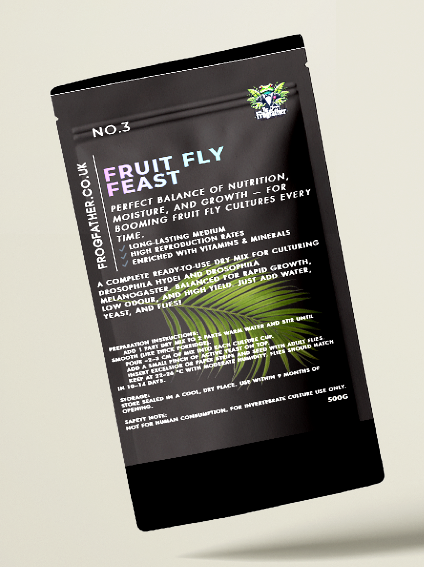
Frogfather Fruit Fly Feast is a fruit fly culture media designed for keepers who care about more than just getting flies to hatch.
The aim is not just production. The aim is to support strong, active cultures that produce useful feeder insects for dart frogs, froglets and other small insectivores.
Fruit Fly Feast is designed around five key priorities:
- Culture productivity — supporting reliable fly output across the life of the culture.
- Larval nutrition — giving larvae a better nutritional base while they are developing.
- Carotenoid support — helping provide colour-supporting nutrients as part of the wider feeding system.
- Culture stability — reducing the risk of cultures souring, collapsing or becoming unusable too quickly.
- Keeper convenience — making culture preparation repeatable, simple and less messy.
It is part of the same thinking behind our All-in-1 Vitamin & Mineral Dust: make the routine easier to get right, then repeat it consistently.
Inside-Out Nutrition: Why Larvae Are the Key
When fruit fly larvae feed in the culture, they are building the body of the future adult fly. That means the quality of the media can influence the quality of the feeder insect your frog eventually eats.
A better media can help support:
- strong larval development;
- better culture productivity;
- more active emerging flies;
- a stronger nutritional base before dusting;
- a more reliable feeding routine for keepers with multiple vivariums.
This is why we talk about Fruit Fly Feast as “inside-out” nutrition. The media supports the flies before they ever reach the dusting tub.
Then, when those flies are lightly coated with Frogfather All-in-1 Dust, you get the full system: better-fed flies plus balanced external supplementation.
What Goes Into a Better Fruit Fly Culture?
A good fruit fly media needs to do several things at once. It needs to feed larvae, hold the right texture, resist collapsing too quickly, avoid becoming too wet or too dry, and support useful production without turning into a sour mess.
Fruit Fly Feast is built around that balance.
Trace minerals
Trace minerals help support the nutritional base of the developing larvae. They are not a replacement for dusting, but they contribute to the overall quality of the feeder insects being produced.
Vitamin support
A stronger media gives larvae access to a broader nutritional foundation while they grow. This supports the idea of improving the feeder insect before it becomes food.
Natural carotenoid support
Carotenoids are important in the wider dart frog diet, especially for species and morphs with red, orange or yellow tones. They do not magically change a frog’s genetics, but they can help support natural colour expression when diet, lighting and husbandry are all working together.
For keepers using Frogfather products, colour support is approached from both sides: Fruit Fly Feast supports the feeder insects, while All-in-1 Dust includes appropriate colour-supporting carotenoids as part of the dusting routine.
Balanced texture
Media texture matters. Too wet and the culture can become foul or drown larvae. Too dry and production suffers. A good fruit fly media should mix into a stable paste that supports larvae and gives flies somewhere productive to develop.
Culture stability
Keepers need cultures that do not collapse immediately. Fruit Fly Feast is designed to support stable production and reduce the frustration of cultures spoiling before they have properly produced.
Stronger Flies, Better Feeding Response
Dart frogs are movement-driven hunters. They respond to small prey moving through the vivarium. If your flies are weak, inactive or produced from tired cultures, feeding response can suffer.
Good fruit fly cultures help produce flies that are:
- active enough to stimulate hunting;
- appropriately sized for the frogs being fed;
- available consistently, rather than in panic bursts;
- part of a predictable routine rather than a weekly emergency.
That matters because feeding problems are often system problems. Weak cultures, inconsistent dusting, poor vivarium structure and hidden group competition can all show up as frogs “not eating properly”.
For the bigger feeding picture, read our Dart Frog Feeding Guide UK.
Fruit Fly Feast + All-in-1 Dust: The Complete Feeding System
Fruit Fly Feast and All-in-1 Dust are designed to work together.
The relationship is simple:
- Fruit Fly Feast supports the feeder insects from the inside while they develop.
- All-in-1 Vitamin & Mineral Dust adds consistent vitamins, minerals, calcium, D3, vitamin A and colour-supporting carotenoids before feeding.
- Good vivarium husbandry makes sure the frogs are confident, hydrated and secure enough to feed properly.
Used together, they remove a lot of the guesswork from dart frog feeding. You are not relying on poor flies plus random dusting. You are building a repeatable system.
Cleaner Cultures, Less Waste
One of the most frustrating parts of dart frog keeping is culture failure. You think you have enough flies, then two cultures crash, one goes mouldy, another dries out, and suddenly feeding becomes stressful.
Traditional media can spoil quickly if the balance is wrong. It may sour, collapse, dry out, grow mould or produce poorly. That is not just annoying — it can leave your frogs without reliable food.
Fruit Fly Feast is designed for consistency. It mixes easily, supports larvae, and helps produce reliable cultures when used correctly. For keepers with multiple tanks, froglets or breeding groups, that reliability matters as much as the nutritional side.
If you struggle with culture problems, you may also find our guide useful: Fruit Fly Cultures Crashing: How to Keep Drosophila Cultures Alive.
How to Use Fruit Fly Feast
Fruit Fly Feast is designed to be simple to use.
- Add the dry media to your culture pot.
- Mix with lukewarm water until it forms a thick, stable paste.
- Add a small pinch of methylparaben if you use additional mould protection.
- Add coffee filters, paper or suitable climbing/pupation material.
- Seed with adult starter flies.
- Keep at a stable room temperature and avoid overheating or drying out.
The finished media should not be runny. It should hold its shape enough to support larvae and remain usable as the culture develops.
Once flies are producing, tap them into a dusting tub, lightly coat them with All-in-1 Dust, and feed them to your frogs as part of a consistent routine.
Using Fruit Fly Feast for Froglets
Froglets need small, reliable prey and consistent nutrition. This is where strong fruit fly cultures and springtails become especially important.
For young frogs, focus on:
- small melanogaster fruit flies;
- springtails as backup micro-prey;
- consistent light dusting;
- frequent feeding without flooding the tub with food;
- watching individual body condition closely.
Fruit Fly Feast helps by supporting the cultures that produce those small feeders. Pair it with springtails and a sensible grow-out routine for the best results.
If you are raising young frogs, read our Dart Frog Grow-Out Tub Master Guide.
Part of a Complete Bioactive Feeding Routine
Fruit flies are the staple, but they are not the whole ecosystem. In a mature bioactive vivarium, feeding is supported by microfauna, leaf litter, moss, humidity and the way the enclosure is structured.
Fruit Fly Feast pairs well with:
- springtail cultures for clean-up crew and micro-prey support;
- Paint-On Tropical Moss Starter for humid microhabitats;
- Dart Frog Clay Bath+ as occasional mineral-rich enrichment;
- live fruit fly cultures for regular feeding;
- captive-bred dart frogs raised on the same practical feeding principles.
The more joined-up the system is, the easier it becomes to keep frogs feeding well without constantly reacting to problems.
Frequently Asked Questions About Fruit Fly Feast
Can adult fruit flies be gut-loaded?
Not in the same way as larger feeder insects such as crickets or roaches. Adult fruit flies may take in moisture and surface nutrients, but the most important feeding stage is the larval stage inside the culture media. That is why the quality of the media matters so much.
What makes Fruit Fly Feast different from standard media?
Fruit Fly Feast is designed to support productive cultures while improving the nutritional base of the developing larvae. It includes a balance of nutrients intended for keepers who want stronger feeder insects, not just any flies.
Does it work with both melanogaster and hydei?
Yes. Fruit Fly Feast can be used for both Drosophila melanogaster and Drosophila hydei. Adjust culture size, temperature and timing according to the species you are working with.
Do I still need to dust flies if I use Fruit Fly Feast?
Yes. Fruit Fly Feast improves the feeder insect side of the routine, but it does not replace dusting. For dart frogs, use it alongside a balanced supplement such as Frogfather All-in-1 Vitamin & Mineral Dust.
How long do cultures stay productive?
This depends on temperature, culture size, fly species, ventilation and how heavily the culture is used. Under normal room conditions, a healthy culture can produce for several weeks, but it is better to keep cultures staggered rather than relying on one pot until it crashes.
Can I use Fruit Fly Feast for froglets?
Yes. Froglets need reliable small prey and consistent nutrition. Fruit Fly Feast can help support the fruit fly cultures used to feed young dart frogs, especially when paired with springtails and appropriate supplementation.