
Husbandry & Evidence Review – 5 September 2026
This article has been tightened substantially. Published evidence does not establish clay baths as a treatment for retained shed, skin problems, dehydration, transport stress or mineral deficiency in dart frogs. Frogfather clay use is presented as optional captive-husbandry experience, not settled science.
🆕 Updated June 2026: This guide has been completely revised to reflect our current husbandry practices, including updated advice on bentonite clay, bioactive vivariums, transport care, shedding support and practical use within modern dart frog setups.
The Complete Guide to Clay Baths for Dart Frogs
Clay baths are becoming increasingly popular with dart frog keepers, but they are also easy to misunderstand. They are not a miracle treatment, and they should never replace good husbandry or veterinary care. Used sensibly, though, a clean bentonite clay bath can be a useful part of a naturalistic dart frog routine.
At Frogfather, clay baths are an optional husbandry feature used in some of our enclosures. We do not treat them as a proven treatment for retained shed, dehydration, transport stress, skin disease or mineral deficiency.
If you already know you want a ready-to-use amphibian clay, you can find our Dart Frog Clay Bath+ here.
What is a clay bath for dart frogs?
A clay bath is a shallow soak made by mixing a small amount of fine natural clay with amphibian-safe water. The result is a cloudy, mineral-rich bath or slurry that frogs can sit in briefly.
The clay most commonly used is bentonite clay. Bentonite is a very fine natural clay formed from volcanic ash. It is widely used because of its absorbent texture, smooth consistency and natural mineral content.
For amphibians, the goal is simple: provide a clean, controlled clay soak that mimics some of the mineral contact frogs may encounter in natural environments.
Why do dart frog keepers use clay baths?
Dart frog keepers usually offer clay baths for four main reasons:
- To provide an optional environmental surface/soak for frogs that choose to use it
- Not as a treatment for retained shed; recurring shedding problems should prompt a husbandry and health review
- To provide mineral-rich environmental enrichment
- Not as a routine post-transport treatment; settling-in should prioritise quiet, correct hydration, temperature, quarantine and observation
It is important not to overstate this. A clay bath is not a treatment for disease. It should not be used instead of proper quarantine, clean water, correct humidity, suitable temperatures or veterinary advice.
However, as part of a complete husbandry system, it can be a useful optional tool.
How frogs interact with clay in nature
Wild amphibians do not live in sterile plastic boxes. They move across wet leaves, soil, clay, decaying wood, mineral-rich seepage areas and natural water sources. Their skin is constantly interacting with the environment around them.
In captivity, we often remove many of those natural contact points. That is sometimes necessary for hygiene and control, but it can also make vivariums more limited than the environments frogs evolved to use.
A clay bath gives keepers a controlled way of offering one of those natural-style contact points without making the whole vivarium muddy.
What bentonite clay may help with
1. Shedding support
Dart frogs regularly shed their skin. Most of the time this happens without any problem. Occasionally, keepers notice retained shed around toes, feet or body areas.
There is not strong species-specific evidence that a clay bath improves retained shed in dart frogs. If retained shed is present, first review hydration, enclosure moisture, ventilation, nutrition and health; persistent or extensive problems warrant veterinary assessment.
2. Skin condition
Amphibian skin is highly permeable and physiologically important. Frogfather therefore avoids claiming that bentonite improves skin condition merely because it contains minerals. Any clay offered should be clean, additive-free and optional.
This should not be confused with treating infection, injury or disease. If a frog has wounds, swelling, severe skin changes, lethargy or weight loss, seek specialist veterinary advice.
3. Settling-in after transport
Transport can be stressful. Frogs may arrive unsettled, slightly dehydrated or covered in substrate and transit residue. A short, supervised clay bath can be useful as part of a settling-in routine.
At Frogfather, clay baths are most useful around new arrivals, post-transport checks and routine husbandry rather than as something we force constantly.
4. Environmental enrichment
Some frogs appear to use clay baths readily, while others ignore them. That is normal. The aim is to provide the option, not force the behaviour.
When used in a shallow dish, a clay bath can become part of a more naturalistic, choice-based setup.
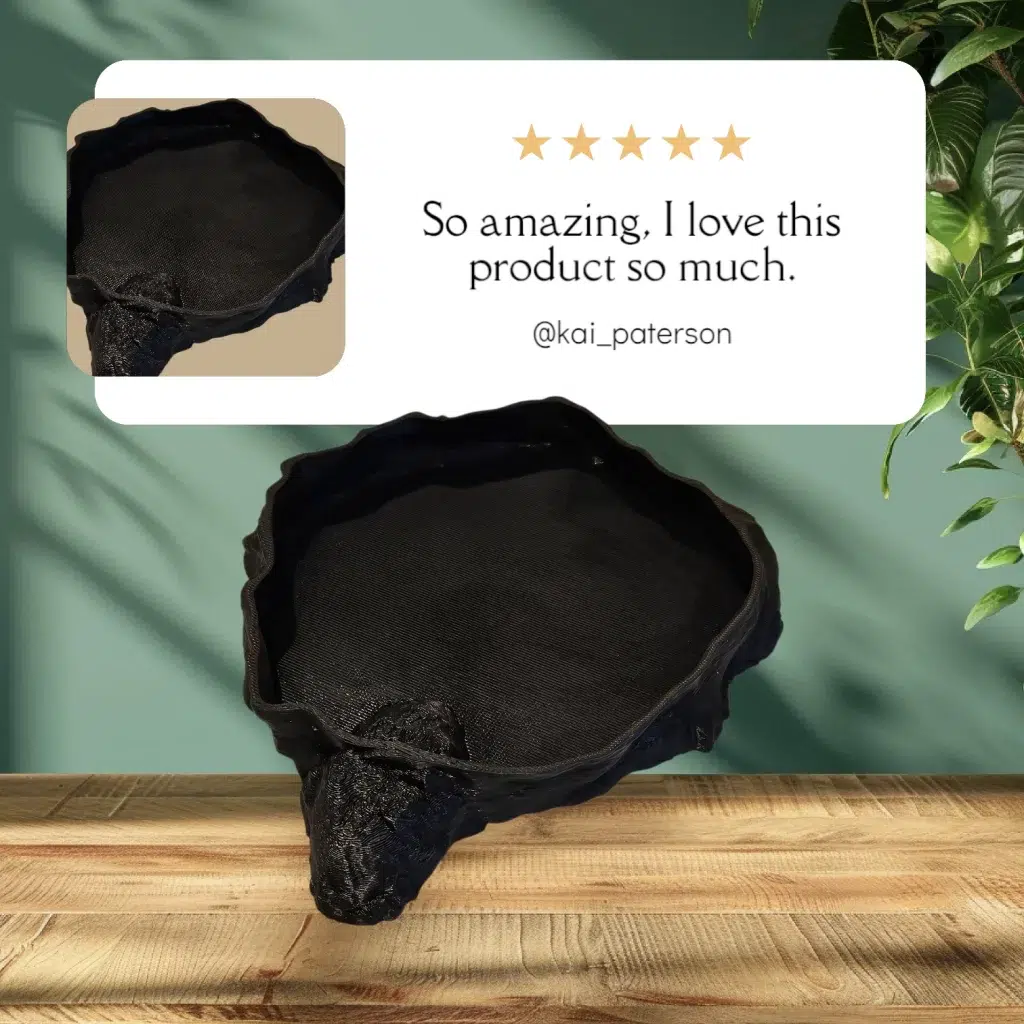
Real Frogfather footage: juvenile Powder Blue dart frogs using a clay bath
The video below shows our own juvenile Dendrobates tinctorius “Powder Blue” dart frogs using a clay bath in a real Frogfather bioactive setup. This is not AI-generated footage, stock content or a staged fantasy image — these are our own frogs interacting naturally with the clay bath.
This is exactly why we prefer real husbandry examples wherever possible. It shows clay baths for what they actually are: a practical, optional part of a wider care routine, not a miracle treatment or marketing gimmick.
Watch the video directly here: juvenile Powder Blue dart frogs using a Frogfather clay bath.
What clay baths do not do
This matters. Clay baths are sometimes discussed online in ways that make them sound more powerful than they are.
- They do not replace veterinary care
- They do not cure bacterial or fungal infections
- They do not fix poor water quality
- They do not replace correct humidity
- They do not replace proper supplementation
- They do not make quarantine unnecessary
Clay baths work best as part of good husbandry, not instead of it.
How to prepare a dart frog clay bath
This is the method we recommend for Dart Frog Clay Bath+.
- Add approximately ¼ teaspoon of clay to 200–250 ml of dechlorinated, remineralised or otherwise amphibian-safe water.
- Shake or stir until the clay is suspended.
- Pour into a very shallow dish.
- Allow the frog to enter voluntarily, or place the frog in briefly only when necessary and appropriate.
- Supervise throughout.
- Limit the soak to around 3–5 minutes.
- Dispose of the mixture after use and prepare fresh next time.
The bath should be shallow enough that the frog can sit safely without risk of drowning or unnecessary stress.
Using clay for retained shed
Frogfather no longer recommends applying a clay paste as a routine treatment for retained shed. Recurrent retained shed should be investigated rather than covered with a topical husbandry product.
- Mix a small amount of clay with amphibian-safe water to form a smooth paste.
- Apply gently to the affected area.
- Leave briefly, usually around 1–2 minutes.
- Rinse with clean amphibian-safe water.
- Do not pull stuck shed unless it releases easily.
If retained shed keeps returning, look at humidity, ventilation, hydration, vitamin balance and general health.
How often should dart frogs have a clay bath?
There is no established evidence-based clay-bath frequency for dart frogs. If clay is offered as enrichment, let frogs choose whether to use it and keep the dish clean rather than following a fixed schedule.
- After courier transport
- When settling new frogs in
- During quarantine checks
- When dealing with minor retained shed
- As occasional enrichment
For most keepers, occasional use is better than overuse.
Can clay baths be used in bioactive vivariums?
Yes, but they should be used sensibly. The best option is to prepare the clay bath in a separate shallow dish and remove it after use. Avoid pouring large amounts of clay directly into the substrate, especially in small vivariums.
Used properly, clay baths can sit alongside springtails, leaf litter, plants and other bioactive elements without becoming messy.
Microfauna, moss and clay baths
In bioactive vivariums, microfauna such as springtails and isopods help break down organic material and maintain balance. A clay bath should not replace leaf litter, drainage, springtails or sensible maintenance, but it can be used alongside them.
If you are building a naturalistic dart frog vivarium, clay baths pair well with springtail cultures, live plants and humid background planting. For mossy, naturalistic backgrounds, see our Paint-On Tropical Moss Starter.
Clay baths and supplementation
A clay bath is not a supplement replacement. It may provide environmental mineral contact, but your frogs still need proper nutrition.
Clay does not replace dietary supplementation. At Frogfather we use our All-in-One lightly at scheduled feeds as our own supplementation system; other systems should follow their own formulation-specific directions.
The best results come from combining good nutrition, correct humidity, clean water, strong microfauna and sensible enrichment.
Best clay types for dart frogs
Not all clay products are suitable for amphibians. The safest approach is to use a clean, fine, natural clay with no cosmetic additives.
Bentonite clay
Bentonite is one of the most popular choices for dart frog clay baths. It has a fine texture, mixes well with water and creates a smooth, mineral-rich slurry.
Kaolin clay
Kaolin is another natural clay sometimes used by keepers. It is generally smoother and less swelling than bentonite.
Clays to avoid
Avoid cosmetic, craft or fragranced clays. Do not use products containing perfumes, dyes, oils, preservatives or unknown additives.
Why use Frogfather Clay Bath+?
Dart Frog Clay Bath+ was created because we wanted a simple, clean bentonite clay product for amphibian keepers.
- Ultra-fine bentonite clay
- Pharmaceutical-grade
- Free from perfumes, dyes and unnecessary additives
- Suitable for dart frogs and tree frogs
- Easy to mix and use
- Suitable for bioactive setups when used in a dish
Part of a complete dart frog care system
- All-in-1 Vitamin & Mineral Dust for consistent supplementation.
- Live fruit flies as a staple feeder.
- Springtail cultures for bioactive balance and froglet feeding.
- Paint-On Tropical Moss Starter for humid naturalistic backgrounds.
- Captive-bred dart frogs raised with the same care principles.
Frequently Asked Questions About Clay Baths for Dart Frogs
Are clay baths safe for dart frogs?
Yes, when made with clean natural clay and amphibian-safe water. Avoid cosmetic clays, fragranced products, oils, dyes and unknown additives.
How often should dart frogs use a clay bath?
Most frogs do not need constant clay baths. Occasional use, such as after transport, during settling-in or when dealing with retained shed, is usually enough.
Can I reuse the clay?
It is better to prepare fresh clay as required and discard it after use. This keeps the routine cleaner and avoids stagnant water or contamination.
Is a clay bath a medicine?
No. A clay bath is a husbandry product, not a medical treatment. If a frog is unwell, seek specialist veterinary advice.
Final thoughts
Clay baths are optional rather than essential. They can provide a controllable clay/water contact area, but Frogfather does not claim proven benefits for skin condition, shedding, detoxification, hydration, mineral self-dosing or post-transport recovery.
The key is to keep it simple: use clean clay, shallow water, short supervised sessions and good overall husbandry.
For a ready-to-use option, see Dart Frog Clay Bath+.