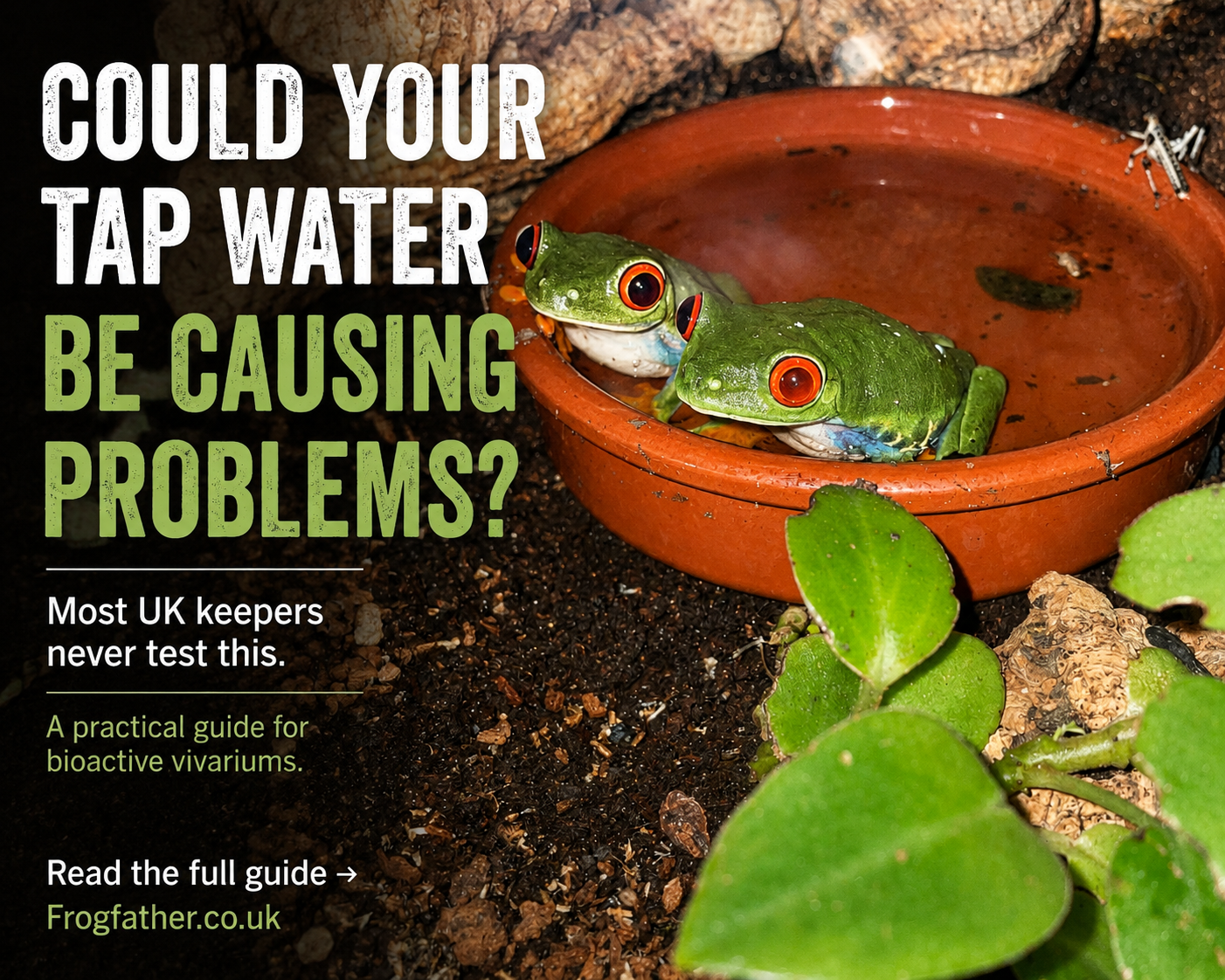

One of the most common misconceptions in amphibian keeping is that all frogs are strong swimmers. After all, frogs are amphibians, so they must love water, right?
In reality, many dart frog species are not particularly adapted for swimming. In fact, poorly designed water features in vivariums can sometimes pose a genuine risk to these small rainforest frogs.
Understanding how dart frogs interact with water is an important part of building a safe and suitable enclosure.
Do dart frogs swim?
Dart frogs can swim if they have to, but they are not specialised aquatic frogs. Most dart frog species live on the forest floor in tropical rainforests, where they spend their time moving through leaf litter, moss, and dense vegetation.
They are far more adapted for climbing, hopping, and navigating complex ground cover than they are for sustained swimming.
This means that while they can survive short encounters with water, deep or poorly designed water areas in captivity can become problematic.
Why shallow water can still be risky
Because dart frogs are small and light, they can struggle in water that has steep sides, slippery surfaces, or no easy exit points. Even a few centimetres of water can become dangerous if the frog cannot climb out easily.
Potential risks include:
- Smooth surfaces that prevent climbing
- Vertical glass or plastic edges
- Strong filtration currents
- Deep water relative to the frog’s size
- Stress caused by being trapped in water
In most cases, dart frogs avoid standing water entirely when given the choice.
How dart frogs hydrate in nature
Instead of relying on open water, dart frogs stay hydrated by absorbing moisture through their skin. Their underside contains specialised areas of skin that allow water to move into the body through osmosis.
This means that humid environments, damp leaf litter, moss, and moist substrate are far more important than water bowls.
You can learn more about this in our article explaining how dart frogs absorb water through their skin.
Do dart frog vivariums need water features?
In most cases, dart frog vivariums do not require a dedicated water feature at all.
A well-designed bioactive enclosure provides plenty of humidity and moisture through plants, substrate, and misting. This natural environment is much closer to the forest floor habitats where these frogs evolved.
Dense planting and leaf litter are often far more beneficial than open water.
Safe ways to include water in a dart frog vivarium
If you do want to include a water element in a vivarium, it should be designed carefully. Shallow edges, rocks, moss, or gentle slopes can help frogs exit the water easily.
Many keepers prefer small, shallow dishes or naturalistic pools that are easy to climb out of.
The key point is that frogs should never feel trapped.
Why bioactive vivariums work so well
A properly designed bioactive vivarium creates stable humidity while avoiding dangerous standing water.
Leaf litter, plants, and microfauna such as springtails help create a miniature ecosystem that supports frog health and enclosure cleanliness.
Stable environments also make feeding easier. Small livefoods such as fruit flies can be delivered in controlled amounts using tools like the Clip-On Fruit Fly Feeder Lid / Dusting Tap Out.
Understanding frog biology leads to better husbandry
Dart frogs are specialised rainforest animals. Their biology reflects the environments they evolved in: humid, complex, plant-filled forest floors rather than open water habitats.
Once keepers understand this, vivarium design becomes much easier. Focus on humidity, planting, and natural ground cover rather than large water features.
Final thoughts
Dart frogs are incredible little amphibians, but they are not miniature aquatic frogs. Even shallow water can become dangerous if it is poorly designed or difficult to escape.
A naturalistic, humid vivarium with plenty of leaf litter and plants is usually the safest and most appropriate setup.
If you are building your own enclosure, explore the range of dart frog products and accessories available at Frogfather to help create a stable and practical habitat.
About the Author
This article was written by Tony Burton, founder of Frogfather.co.uk and a licensed UK dart frog keeper specialising in bioactive vivariums and naturalistic amphibian husbandry.
Frequently Asked Questions
Can dart frogs drown?
Yes. Dart frogs can drown if they become trapped in water without an easy way to climb out.
Do dart frogs need a water bowl?
No. Dart frogs mainly hydrate through moisture and humidity rather than drinking from bowls.
How deep should water be in a dart frog vivarium?
If water is included, it should be shallow and easy for frogs to exit.
Do dart frogs swim in the wild?
Dart frogs can swim if necessary, but most species spend their lives on the forest floor rather than in water.
What is more important than water for dart frogs?
Humidity, plants, leaf litter, and a stable bioactive environment are far more important than open water.