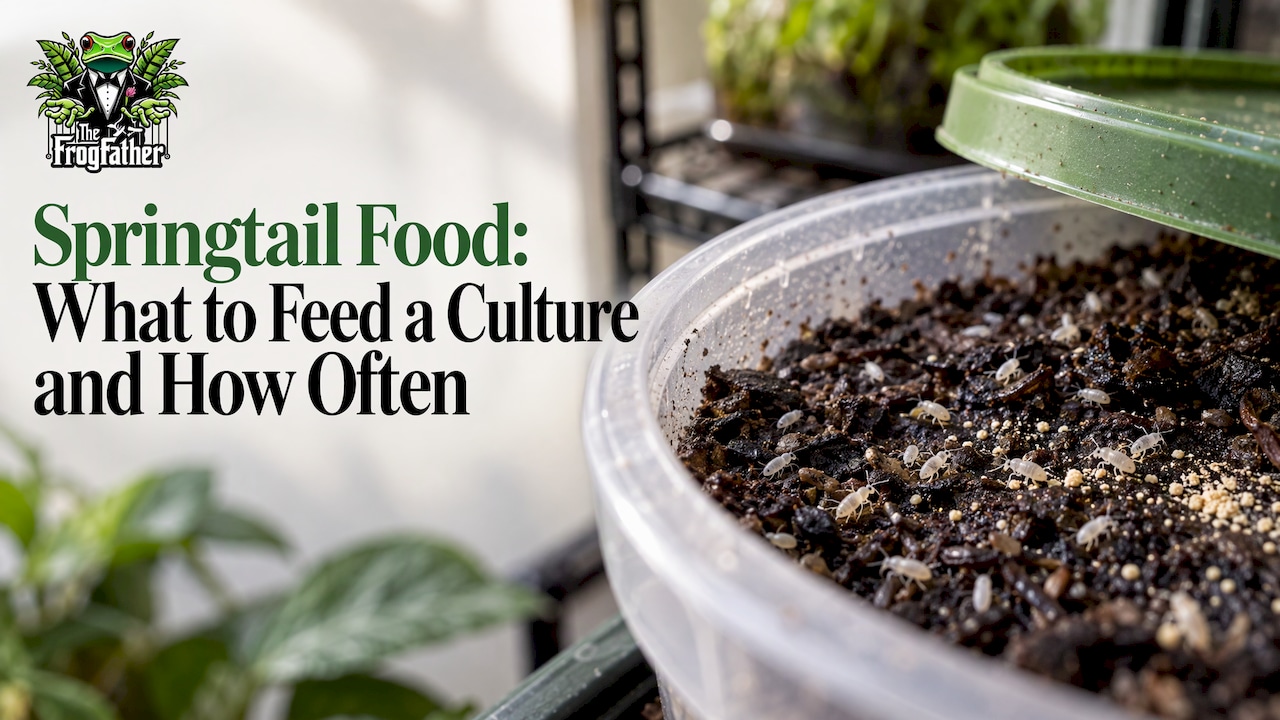
Springtails eat microbes: fungi, bacteria, algae and very fine decaying matter. In a culture, the food you add is mostly a base for those microbes to grow on. The simplest reliable choice is a small amount of dry yeast, fed sparingly, once or twice a week, and cleared before it spoils. Below we cover what to feed, how to judge the amount, what the culture substrate does, and what to check when your springtails stop breeding.
TL;DR
- Springtails graze on fungi, bacteria, algae and decaying plant matter, so the best food is something that feeds those microbes cleanly.
- Plain dry yeast is the usual staple. Rice and fish flake also work, as long as you feed small amounts.
- Feed little and often rather than a lot at once. Food that is still there after a couple of days is too much.
- The substrate is the home, not the food. Keep it damp, never waterlogged.
- Slow breeding is usually down to overfeeding, dryness or cold, not a lack of food variety.
Table of Contents
- What springtails actually eat
- Best food for springtails
- How much and how often to feed
- Culture substrate: the home, not the food
- Tropical springtails and temperature
- Springtails not reproducing: what to check
- Keep a backup culture
- Need springtails, isopods or live food?
- FAQ
- Sources
What springtails actually eat
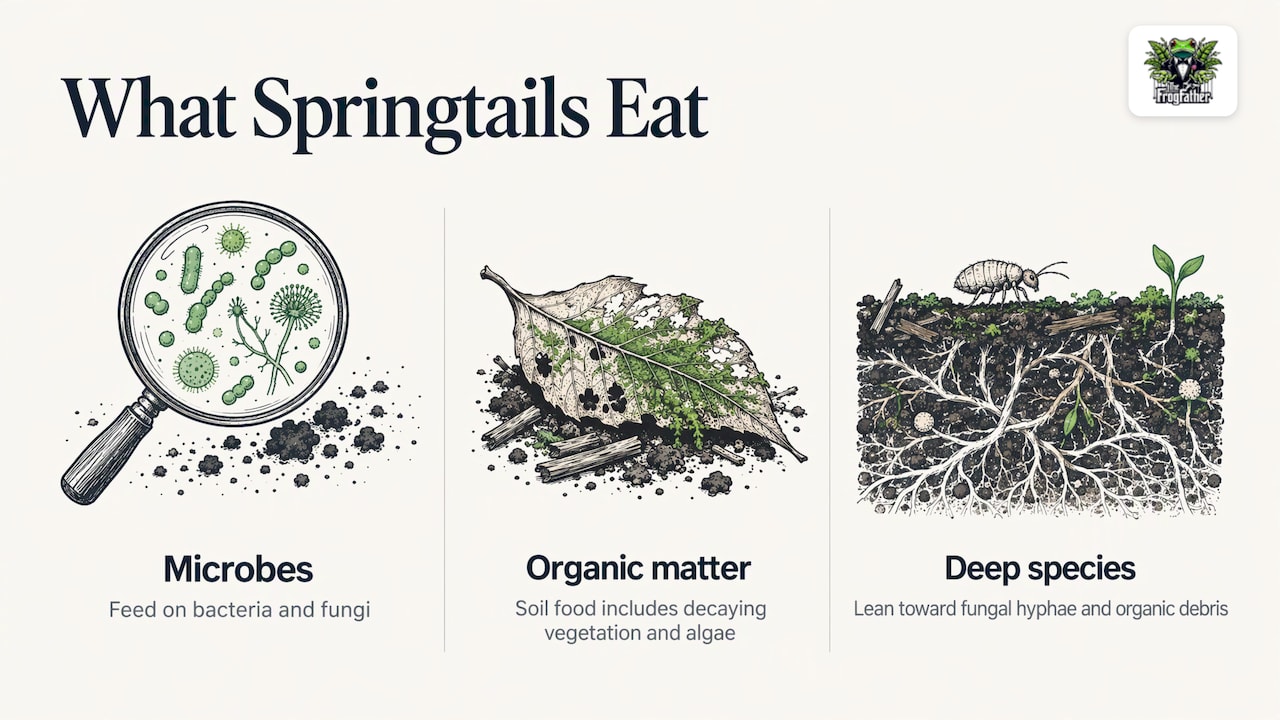
In the wild, springtails are tiny grazers. The Natural History Museum describes them as barely two millimetres long and feeding on microorganisms such as bacteria and fungi, found alongside leaf litter and slime moulds. A British invertebrate reference adds that they feed mainly on organic material in the soil, including bacteria, fungi, decaying vegetation and algae, and that deeper-living species lean towards fungal hyphae and organic debris.
That matters for how you feed a culture. Springtails are not chewing through a spoonful of yeast the way a cricket eats bran. They are working over the film of mould and bacteria that grows on it. A light fuzz is part of the meal. Mould that spreads, turns slimy or smells sour means you have given them more than they can clear.
Do springtails eat leaf litter?
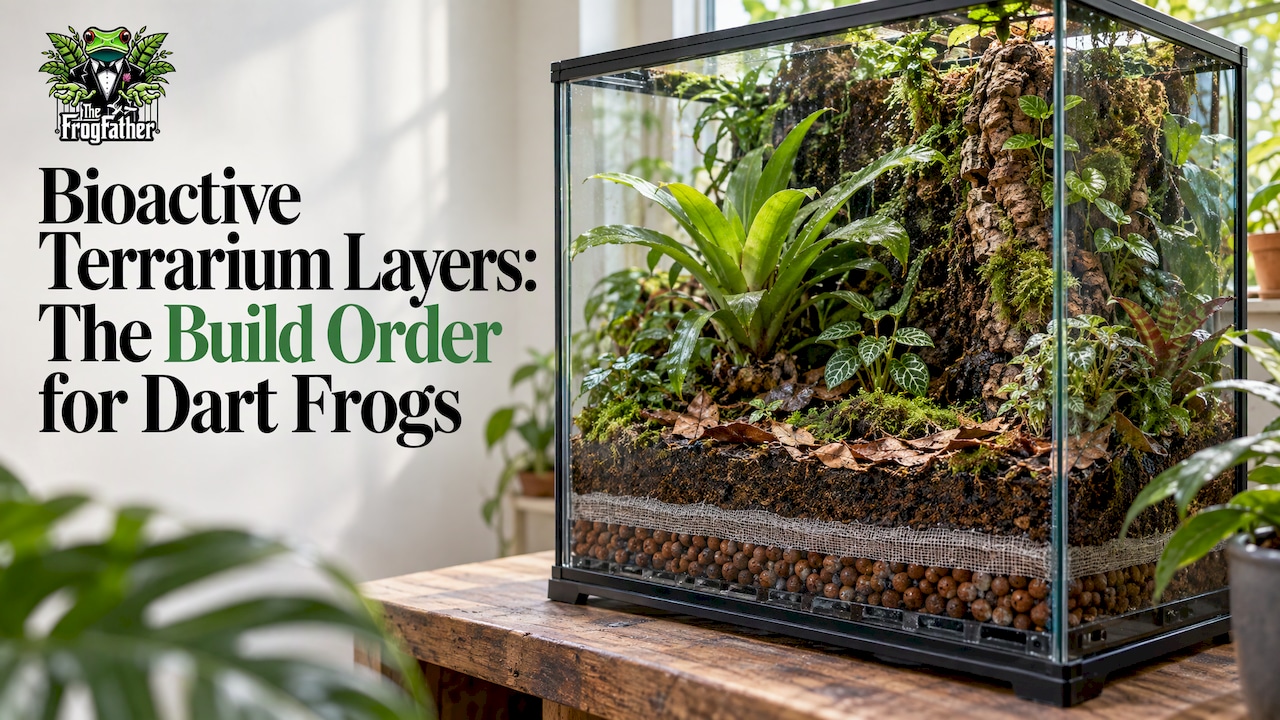
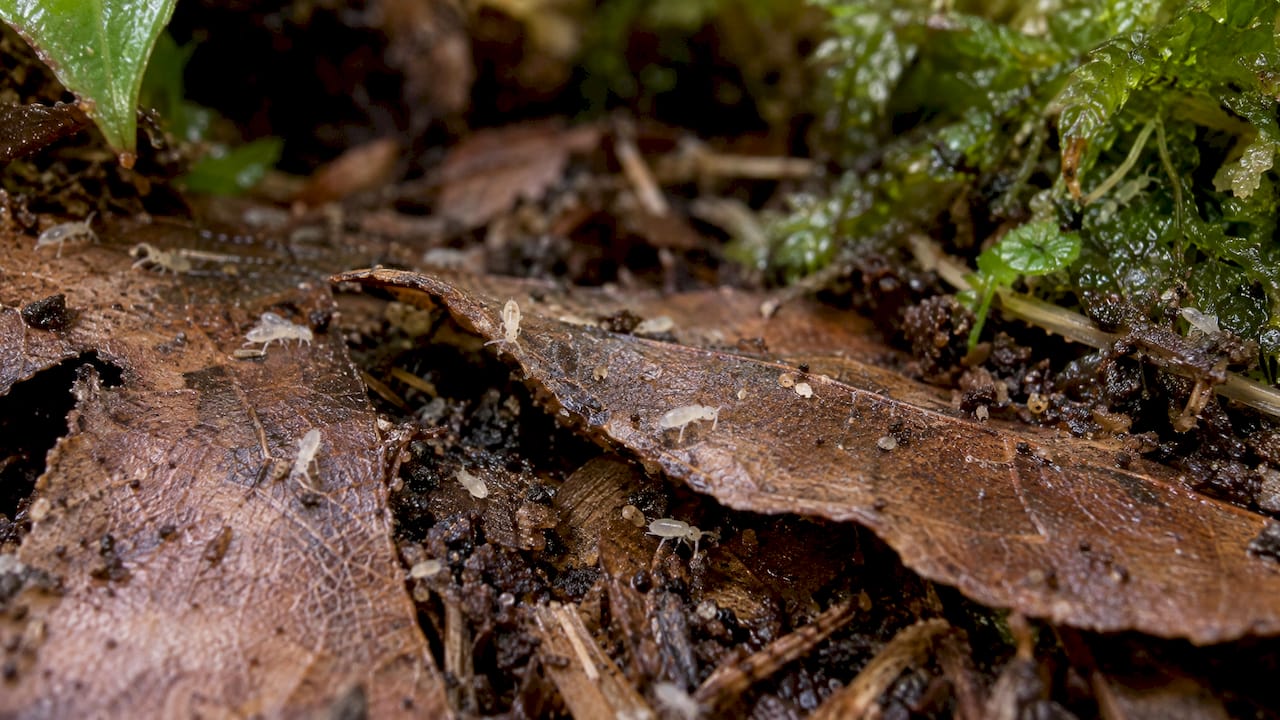
Yes, though mostly indirectly. Springtails fragment decaying material in soil and leaf litter and feed on the fungi and microbes living in it, so a layer of leaf litter in a vivarium is a useful grazing surface. It is a top-up, not a replacement for feeding a dedicated culture. In a planted enclosure with frogs, leaf litter, plant debris and the occasional bit of shed skin give the colony a background supply of food. Our bioactive vivarium guide covers how that litter layer fits into a whole setup.
Best food for springtails
You do not need a product made specifically for springtails. You need something dry, fine and low in fat that microbes will colonise slowly. These are the options we would consider, roughly in order of how easy they are to manage:
| Food | How to use it | Watch for |
|---|---|---|
| Dry baker’s or brewer’s yeast | A few granules or a very light sprinkle on a clean spot | Clumping in damp conditions, which encourages sour mould |
| Dry rice (uncooked) | A few grains placed on the surface | Springtails rasp starch from dry grains, so remove grains once they are overrun with mould |
| Fish flake | A crushed pinch, a little at a time | Smells quickly if overfed, and can attract mites |
| Commercial springtail and isopod foods | Follow the pack, then adjust to your culture | Many are yeast-based, so the same overfeeding rules apply |
For most keepers, plain yeast is the one to start with. It is cheap, it is easy to dose by eye, and it is easy to see when it has gone. Whichever food you choose, stick with it for a few weeks before changing so you can tell what is working.
One point from the rice option is worth knowing. Springtail keepers who have studied it note that springtails scrape starch from hard dry rice with their mouthparts, and once mould takes over the grain they cannot reach the starch easily. That is why we say feed only what can be eaten before it goes bad.
Foods to avoid
- Anything wet, cooked or greasy, which goes off within a day and fouls the culture.
- Large pieces of fruit or vegetable, which invite fruit flies, mites and rot.
- Salty or heavily processed human food.
- Large amounts of any single food, however suitable it looks.
How much and how often to feed
As a guide, feed a culture once or twice a week. A small, new culture needs very little. A large, warm, busy one may clear food in a couple of days and can take a bit more. Published advice varies by keeper and setup, so treat any single figure as a starting point and let the culture tell you what it needs.
A pinch, in practice, means a few granules of yeast or a few grains of rice. Put it on a clean, dry spot such as a small piece of bark, a bottle cap or a scrap of cardboard so you can lift it out without disturbing the substrate.
Read the culture, not the calendar
Use what you see two days after feeding:
- Food gone within a day: they can take a little more next time.
- Food gone in one to two days: you have it about right.
- A light fuzz of mould: normal. This is part of the meal.
- Food still sitting there after two days, or mould spreading: too much. Remove it and skip the next feed.
- Slime or a sour smell: the culture is turning. Remove all leftover food, let it air a little and hold off feeding.
- White specks swarming over the food: probably mites. Remove the food and see our advice below.
- Springtails sitting motionless when you open the lid: often poor air exchange, sometimes made worse by fermenting food. Open the lid, ventilate and cut feeding back.
Underfeeding gives you a thin population that grows slowly. Overfeeding is the bigger risk, because it can sour a whole culture quickly. If you are unsure, feed less.
Feeding springtails already living in a vivarium
Sprigtails in a planted, bioactive enclosure feed on leaf litter, plant debris, mould and shed skin as well, so they usually need far less help than a dedicated culture. Many keepers add a small pinch of food only occasionally, mainly if the population looks thin. Do not mistake that for “self-sustaining”: the colony still needs a damp substrate, enough litter and a keeper who is watching. We explain why in Bioactive Isn’t Self-Sustaining.
Culture substrate: the home, not the food
New keepers often blur the two. The substrate does not feed the springtails. It gives them somewhere to live, hold moisture and lay eggs. Springtails are very sensitive to dryness, so moisture is the first job of any culture medium.
A good culture medium should:
- hold moisture evenly without pooling water at the bottom
- stay open and porous, so air can move through it
- be free of fertilisers, pesticides and added perlite dust
- be easy to refresh or replace
Common choices are a damp coconut-fibre and soil mix, or a charcoal-based layer over a damp base. Keep the surface damp to the touch and the lid vented. A tub with no airflow turns sour quickly, and a tub that dries out loses its colony faster than one that is slightly too wet.
Calcium is a question that comes up often in culture keeping, and cuttlebone is a popular answer. Our guide on whether springtails need calcium explains where it fits.
Tropical springtails and temperature
Tropical springtails are the usual choice for vivariums that run warm and humid, which suits most dart frog enclosures. Temperate species cope with cooler rooms, while tropical cultures slow down when the room turns cold. If your culture sits in an unheated spare room over winter, breeding may drop even though you are feeding correctly. Move it somewhere steadier, away from draughts and direct sun, before you change anything else.
If you keep frogs, cultures and setups through the UK winter, steady conditions matter more than clever feeding. For more on managing temperature and humidity zones inside an enclosure, see our piece on replicating microclimates in a UK dart frog vivarium.
Springtails not reproducing: what to check
Work through this list in order, and change one thing at a time.
- Moisture. Is the substrate damp throughout, and not drying at the edges?
- Temperature. Is the culture sitting somewhere cold overnight?
- Food. Is old food rotting on the surface? Remove it. If nothing is being eaten, you are feeding too much.
- Air. Is the lid sealed or the vent blocked? Stale air hurts a culture fast.
- Crowding and age. An old, exhausted culture benefits from fresh substrate and a transfer of a portion of the colony.
- Pests. Mites on the food, or fungus gnats, mean a clean-out.
If your springtails are vanishing rather than failing to breed, our guide to why springtails disappear lists ten causes with fixes.
Keep a backup culture
Even careful keepers lose a culture now and then, to mites, souring or a missed week. Running a second tub, kept separate, means a bad week does not empty your vivarium’s supply. We set out how to do it in Backup Springtail Cultures. Do not feed both tubs the same way at the same time and then treat them identically if one struggles. Compare them, because the difference often tells you the cause.
Our view on springtail food
We keep and breed dart frogs, and springtails are part of every setup we build. Our experience is that most failed cultures are not hungry. They are overfed, too dry or too cold. The urge to add more food, a new supplement or a different substrate is the thing that usually wrecks a culture that only needed a quiet week.
So we keep feeding boring: one staple, small amounts, removed when spoiled. We also design our Microfauna Nutrition Series around the idea that microfauna deserve a considered diet, and we supply the springtails, isopods and bioactive supplies that go with it. Bioactive is not maintenance-free, but with steady basics it is manageable and rewarding.
Frogfather
Need springtails, isopods or live food?
If you are setting up a culture or restocking a vivarium, we supply microfauna, bioactive supplies, plants and live foods from our Nottingham base, along with UK-bred dart frogs and custom bioactive vivariums. Browse the full range on the Frogfather shop, or see our live food range if you also feed fruit flies.
If you are new to all this, our free Bioactive Vivarium Fundamentals course walks you through the basics at your own pace.
FAQ
Should you feed springtails?
In a dedicated culture, yes: a small, regular amount of food keeps the population growing. In an established bioactive vivarium with leaf litter and plant debris, they need much less, and an occasional pinch is usually enough. Watch the population and adjust.
What do springtails eat in a vivarium?
They graze on fungi, bacteria, algae and decaying plant matter, plus shed skin and other organic debris. Leaf litter and a damp substrate give them a constant background supply, which is why a mature setup needs less topping up.
What is the best food for springtails?
Plain dry yeast is the simplest staple, with a few grains of dry rice or a crushed pinch of fish flake as alternatives. The best food is the one you can dose in tiny amounts and clear before it spoils.
Why are my springtails not reproducing?
The usual causes are a substrate that is too dry, a cold room, stale air or rotting leftover food. Check moisture and temperature first, remove old food and change one thing at a time.
Sources
- Life Under Dead Wood, Wildlife Photographer of the Year (Natural History Museum)
- Collembola, springtails (British invertebrate reference)
- Springtail (Wikipedia)
- What to feed springtails and why not mouldy rice (Springtail Wiki)
Recommended
- Backup Springtail Cultures: Keep A Separate Reserve
- Do Springtails Need Calcium? Cuttlebone & Culture Guide
- Springtails Disappearing? 10 Causes & Solutions