
The plants that cope best with lower light in a vivarium are pothos, creeping fig (Ficus pumila), fittonias, peperomias, pileas, small ferns such as Pellaea rotundifolia, baby tears and a few mosses. None of them grow in the dark. “Low light” really means “tolerates modest light”: you still need a decent tube or LED over the tank, placed sensibly, and you still need to look after the plants. This guide shows which plants to pick for a humid dart frog or tropical amphibian enclosure, how to establish moss and ferns, and what goes wrong.
TL;DR
- Low-light plants still need proper, bright, indirect light for several hours a day. Choose them for the shadier corners and lower levels of the tank, not for a dark cupboard.
- Reliable picks for humid vivariums: pothos, creeping fig, fittonia, pilea, peperomia, small ferns, baby tears and jewel orchids.
- Moss needs firm contact with the substrate, steady moisture, gentle light and clean water. Browning usually starts where there are air pockets.
- Wash any plant before it goes in, and let a new vivarium settle for a couple of weeks before the animals arrive.
- Bromeliads are the exception: they want strong light close to the lamp, so place them high.
Table of Contents
- What “low light” means in a vivarium
- Low-light plants that suit humid frog enclosures
- Ferns for low-light terrariums and vivariums
- Moss types for vivariums
- Bromeliads: the exception that needs more light
- Planting and keeping plants healthy
- A simple low-light planting plan
- Where we can help
- Our view
- FAQ
- Sources
What “low light” means in a vivarium
A terrarium is typically a sealed or part-sealed glass container for plants. A vivarium houses animals as well, usually with more ventilation, a drainage layer and a planned light and humidity routine. Plant lists written for terrariums are a useful starting point, but a frog enclosure is warmer, wetter and busier, so plants must cope with being climbed on, sprayed and sat in by tiny amphibians.
The Royal Horticultural Society says terrarium plants need bright, indirect light for at least six hours a day, and that a north- or east-facing window is ideal. That is a window rule, and it is a good reminder of the scale: “low light” in plant terms is still far brighter than a dim corner of a living room. Most keepers light a vivarium with a purpose-made fixture, and the right output and distance matter more than the plant name. Our guides to vivarium lighting for dart frogs in the UK and the best lighting setup for a bioactive vivarium cover the hardware in detail.
Two practical points follow:
- Light falls off quickly with distance. The floor, the back corners and areas shaded by large leaves are your genuinely low-light zones. Plants that tolerate them go there.
- Never put a closed glass tank in direct summer sun. It heats up fast and the plants and animals suffer. The RHS advises keeping terrariums out of direct summer sun and away from heat sources.
Low-light plants that suit humid frog enclosures
Here is a working shortlist, grouped by what each plant does for you. For the wider picture of which species are safe in UK frog setups, see our UK safe-plant guide and five plants for a thriving dart frog habitat.
| Plant | Role in the tank | Light and care notes |
|---|---|---|
| Pothos (Epipremnum) | Climber for backgrounds and wood | Tolerates low light and still grows well in dart frog tanks; prune to keep it in bounds |
| Creeping fig (Ficus pumila) | Covers walls and hardscape | Slow-growing, small dark leaves, can be pruned; the cultivar quercifolia has smaller, lobed leaves and covers surfaces |
| Fittonia | Ground cover | A staple in humid terrariums, suited to shade and high humidity |
| Pilea and peperomia | Low, compact foliage | The RHS lists peperomias, fittonias, hypoestes and pileas as suited to closed terrariums |
| Baby tears (Soleirolia soleirolii) | Fine carpet | Prefers high humidity and low light, but may outcompete neighbours over time |
| Jewel orchids | Colourful floor-level foliage | Do well in humid vivariums in low to medium light, with a moist but well-drained substrate |
| Small ferns | Texture and height | See below |
A few choices deserve more explanation.
Pothos is the forgiving workhorse. It roots from cuttings, climbs a background and gives you something to trim when growth outpaces the tank. That trimming is part of the routine: a planted vivarium is a living system and needs regular care, not a set-and-forget display.
Baby tears looks wonderful but spreads. If you want a mixed planting, keep it where you are happy for it to win, or cut it back every few weeks.
Jewel orchids are smaller and slower. Plant them in the lower, shadier part of the tank, where the substrate stays damp but never waterlogged.
For a wider range suited to the humidity levels frogs need, our page on high humidity terrarium plants for dart frog vivariums goes further.
Ferns for low-light terrariums and vivariums
Ferns are an obvious answer for shade. The RHS names two small ferns for closed terrariums, both holders of its Award of Garden Merit: Nephrolepis exaltata ‘Fluffy Ruffles’ and Pellaea rotundifolia. The button fern (Pellaea rotundifolia) has rounded, glossy leaflets and stays compact, which suits smaller enclosures. ‘Fluffy Ruffles’ is a dwarf, frilly sword fern that needs trimming in a small tank.
Other ferns and fern allies commonly used in tropical enclosures include Humata tyermanii, Polypodium polycarpon ‘Grandiceps’ and Selaginella, listed in a tropical terrarium design article. A vivarium plants guide notes that some ferns do well in lower light areas where other plants struggle, and many thrive in the high humidity of dart frog tanks.
Tips for ferns:
- Plant them in the shadier half of the tank, away from the hottest part of the lamp.
- Keep the substrate evenly moist, never soaking.
- Remove brown fronds promptly so they do not rot against the glass.
- Give them ventilation. Still, saturated air is how fungus gets a hold.
Moss types for vivariums
Moss is the finishing layer that makes a bioactive vivarium look like a rainforest floor. It also holds moisture and gives microfauna somewhere to hide. Three groups cover most needs:
- Sheet moss forms flat mats and works well on the substrate and around hardscape.
- Sphagnum holds a lot of water and is handy for planting pockets and for moist spots on the back wall.
- Java moss (Vesicularia dubyana) is a common choice in tropical terrarium plant lists and tolerates a range of conditions.
If you want to grow moss across a surface rather than lay mats, our guide to growing tropical moss in a vivarium with paint-on moss mix explains the method step by step.
How to establish moss
This routine draws on a UK terrarium moss guide and suits a planted vivarium too:
- Build drainage. Lay a 2 to 4 cm layer of pebbles or clay granules, with mesh over the top so substrate does not wash through.
- Add a peat-free substrate. Coir, bark fines and leaf mould make a good base. Our aged bioactive substrate is a live microfauna blend if you want a cycled start.
- Press the moss down firmly. Air pockets are where browning starts.
- Water with rainwater where you can, and keep it bright but indirect.
- Add springtails to graze mould as the moss settles.
- Wait. Leave the new enclosure about a fortnight to settle before rearranging anything.
The point about avoiding peat deserves a note. Peat moss decomposes quickly in terrariums and is slightly acidic, and it can be harmful to certain terrestrial amphibians. A peat-free mix is the safer base for frog enclosures.
Where to get moss
The RHS says moss is available from online retailers and aquarium specialists, and garden moss can be used if checked for insects. It also warns against taking moss from the countryside without the land-owner’s permission, which is sound advice on both legal and ecological grounds. Rinse whatever you buy and look it over before it goes in.
Bromeliads: the exception that needs more light
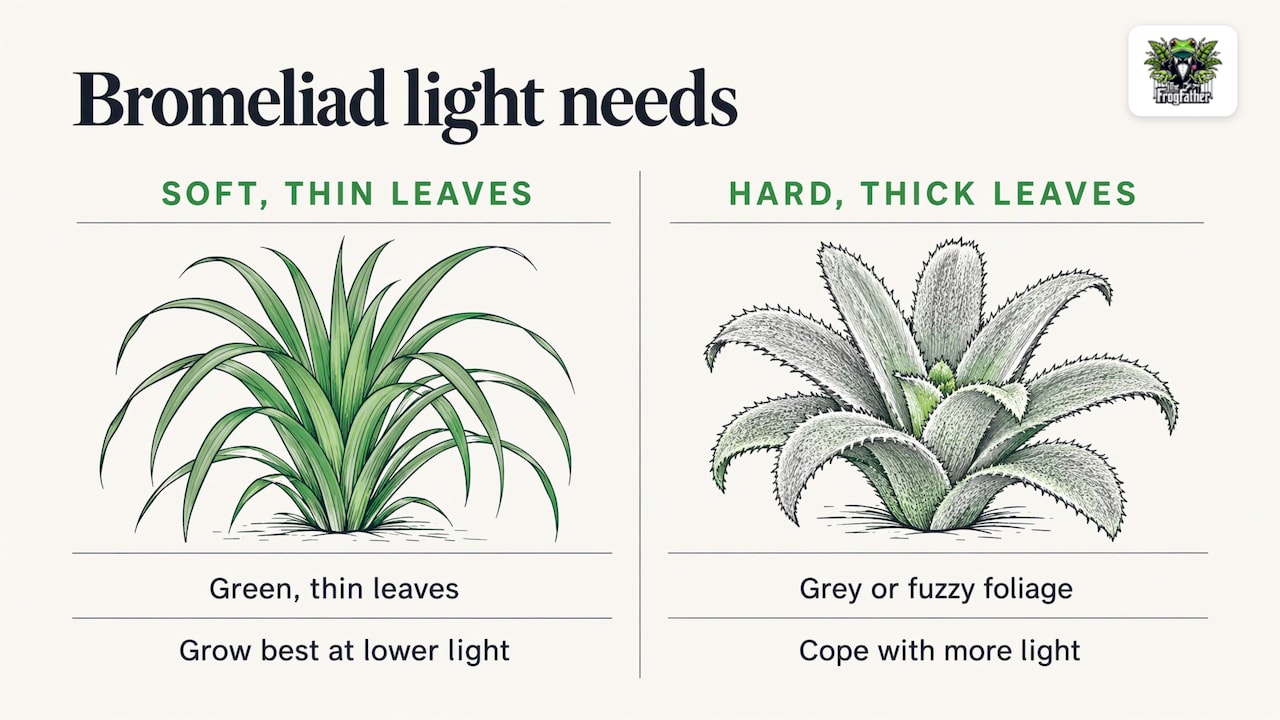
Bromeliads often appear in “low light” lists, so they need clearing up. One magazine guide says small bromeliads (under 10 to 12 inches across) need a lot of light within 6 to 8 inches of the light source, and probably two standard fluorescent tubes over the tank to thrive. Another vivarium guide says they will tolerate low light for long periods but look better with proper light, and that soft, green, thin-leaved species grow best at lower levels, while hard, thick, grey or fuzzy foliage copes with more.
They also rot in constantly wet substrate, so mount them on wood or the background rather than burying them. Many dart frogs use them for egg laying and tadpole deposition. Our bromeliad guide for UK dart frog vivariums and why dart frogs choose bromeliads go into placement and use.
Planting and keeping plants healthy
Check before you plant
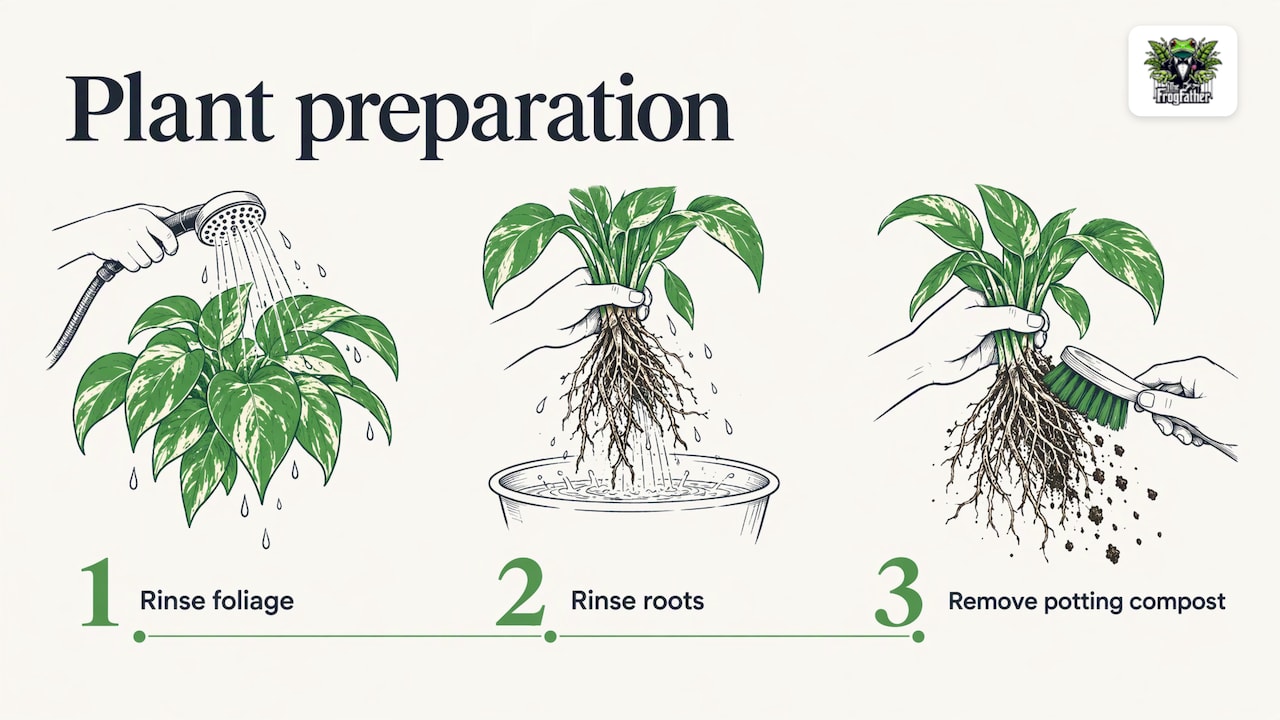
Garden centre plants may carry fertilisers, pesticides or leaf shine. A tropical terrarium article advises washing them in water first, and says specialist supply stores are usually the safest source for amphibian enclosures. Rinse roots and foliage, and remove as much of the original potting compost as you can.
Let the tank settle
A habitat care sheet from the International Herpetological Society recommends building a bioactive vivarium over several weeks and leaving it a couple of weeks without animals so plants and moss establish before the animal community goes in. That patience pays off: the plants root, the microfauna multiply, and humidity stabilises.
Common mistakes
A terrarium guide names overwatering as the number-one cause of failure. Related problems it lists include no drainage layer, overcrowding that traps moisture and invites mould, garden soil that compacts, and a closed tank with no springtails to clear mould and decay.
In a frog enclosure we would add:
- Choosing plants by the label. “Low light” tells you about tolerance, not about what makes a plant look good.
- Overplanting. Leave room for leaf litter and for the frogs to move.
- Skipping maintenance. Even a well-built bioactive tank needs pruning, watering checks and observation. Our checklist on whether your setup is actually bioactive is a good routine to follow, and the guide on why vivarium plants survive but do not thrive helps you diagnose slow growth.
A simple low-light planting plan
For a typical front-opening vivarium, work in layers:
- Back wall and wood: creeping fig and pothos cuttings, with bromeliads mounted nearest the light.
- Mid level: small ferns and a pilea or two.
- Floor: fittonia, a patch of baby tears or jewel orchids, and moss over the gaps.
- Finishing: leaf litter, springtails and isopods, then a fortnight’s wait.
Plant small and let growth fill the space. Trim when it needs it, and move anything that is stretching or going pale closer to the light.
Where we can help
We breed dart frogs in the UK, build planted vivariums and supply tropical plants, springtails, isopods and bioactive supplies, so the plants, the microfauna and the animals can come from one place. If you would rather start with a finished enclosure, browse our complete setups or ask about a custom bioactive vivarium. Our free Bioactive Vivarium Fundamentals course takes you through the basics at your own pace.
For microfauna and supplies to go with your planting, see our bioactive supplies and microfauna foods and supplements.
Our view
We keep our own frog rooms, and the pattern is consistent: tanks that do well start with steady basics, not clever plant lists. Pick plants for the light you actually have, put them where that light reaches, and give the enclosure time.
Low-light plants are forgiving, not maintenance-free. A bioactive vivarium is a small ecosystem, and it rewards regular, observant care: trimming, checking moisture, watching the plants and the frogs. We would rather you plant modestly and watch it fill in than pack the tank on day one.
That is why we put so much into free guides and a free course, and why we supply plants, springtails and isopods alongside the frogs. Get the foundations right and the rest follows.
Frogfather
FAQ
What is the best low-light plant for a dart frog vivarium?
Pothos is the easiest starting point. It tolerates lower light, grows well in frog tanks and is simple to prune. Creeping fig and fittonia are close behind for covering walls and floor.
Do low-light plants need a lamp?
Yes. They tolerate less light than most plants, but they still need bright, indirect light for several hours a day. A purpose-made vivarium light placed at a sensible distance gives them a steady day length that a windowsill cannot.
Which moss is best for a vivarium?
Sheet moss suits the substrate and hardscape, sphagnum holds moisture in planting pockets, and Java moss is a flexible, widely used option. Press it firmly into damp substrate so there are no air pockets, and keep the light gentle.
Can I use ferns in a vivarium?
Yes, in the humid, shadier parts. Small types such as Pellaea rotundifolia and Nephrolepis exaltata ‘Fluffy Ruffles’ are RHS-recommended for closed terrariums. Keep the substrate evenly moist and trim dead fronds.
Should I add plants before the frogs?
Yes. Build the enclosure and let it settle without animals for a couple of weeks so plants and moss establish, as the International Herpetological Society habitat care sheet advises.
Sources
- Terrariums and Bottle Gardens, RHS Advice
- Dart Frog Vivarium Plants, Reptiles Magazine
- Vivarium Plants Guide, tropical-hobbies
- How to Grow and Care for Baby Tears, The Spruce
- Tropical Terrarium Design, Amphibian Care
- Sphagnum vs Sheet Moss for Terrariums, Moss Digest
- Habitat care sheet, International Herpetological Society
- Common Terrarium Mistakes, Terrarium Creations
Recommended
- Tropical Mosses For Vivariums: A Complete Guide For UK Enthusiasts
- Wet Moss Mix For Vivariums: A Practical Guide To Establishing Moss
- Selecting And Maintaining Vivarium Plants: A Scientific Guide For Dart Frog Setups
- The Most Common Plants For A Bioactive Vivarium