Description
Dendrobates tinctorius ‘Brazilian Yellowhead’ Tadpoles – UK Captive Bred
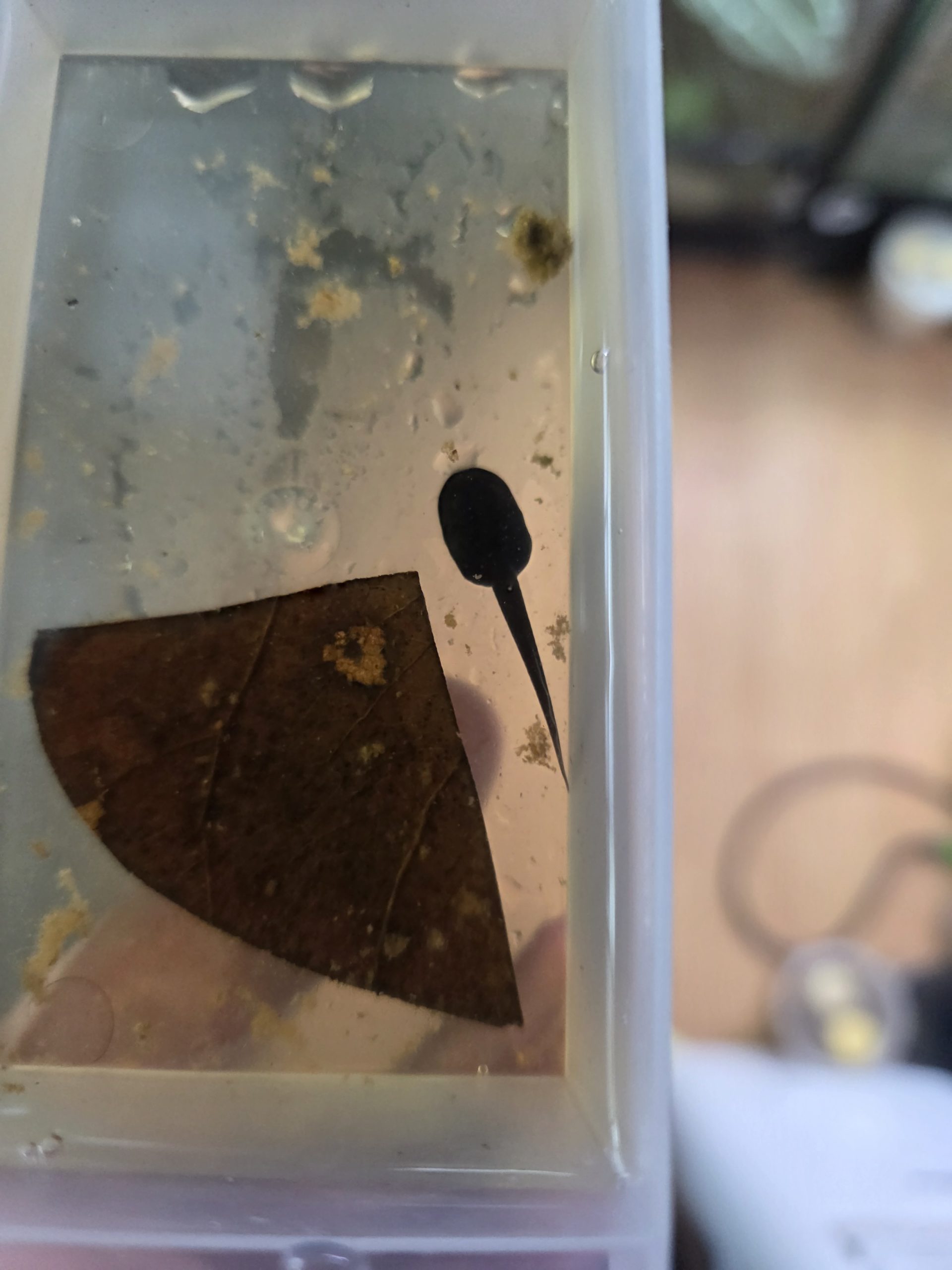
Raise one of the most spectacular forms of the dyeing poison dart frog with our Dendrobates tinctorius ‘Brazilian Yellowhead’ tadpoles, captive-bred at The Frogfather in Nottingham.
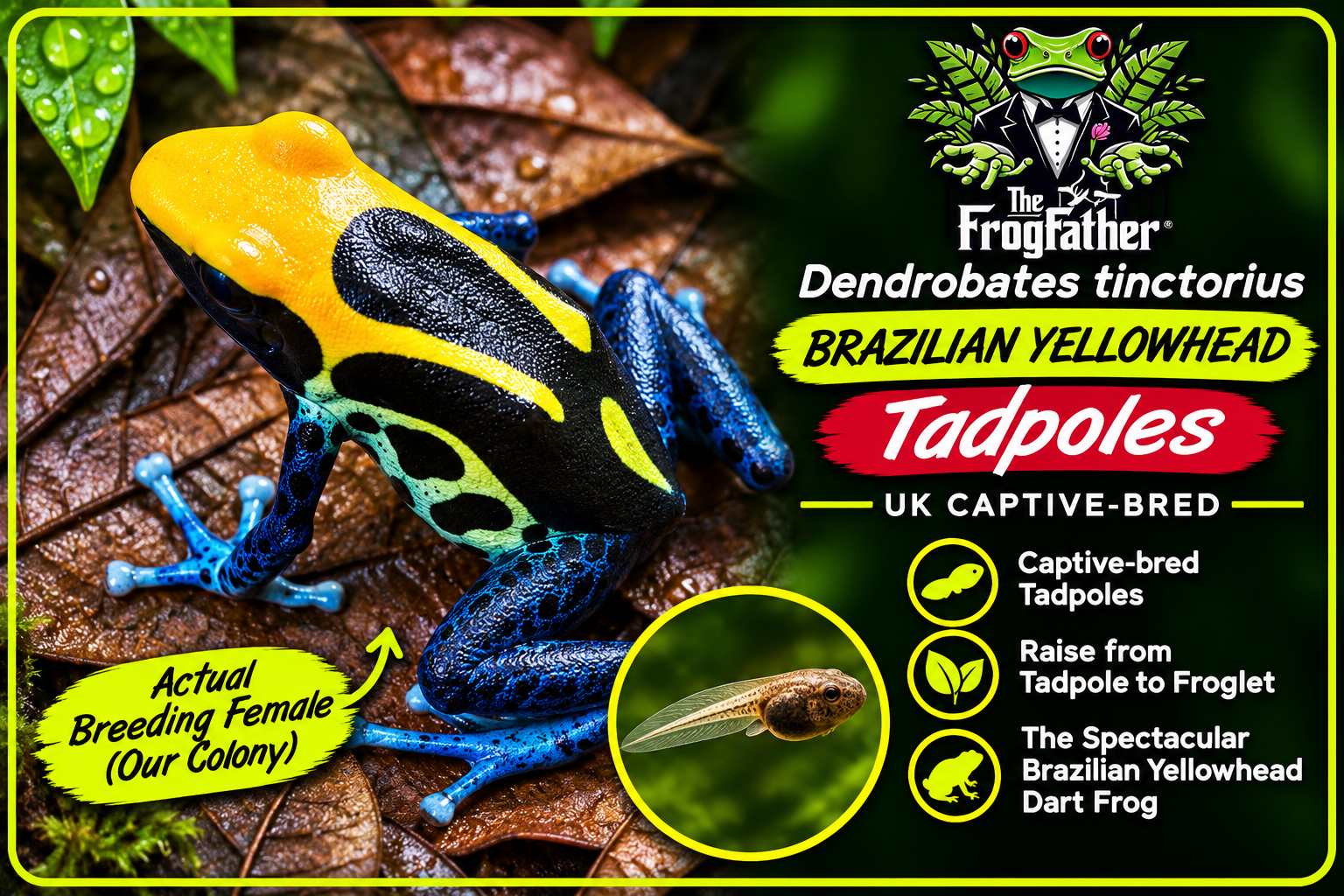
Brazilian Yellowheads are admired for their brilliant golden-yellow heads, bold black markings and striking blue legs. The contrasting colours make these frogs particularly impressive in a naturalistic tropical vivarium.
Our tadpoles provide an opportunity to experience the remarkable journey from aquatic tadpole to fully metamorphosed dart frog.
Meet the Brazilian Yellowhead Dart Frog
Dendrobates tinctorius, commonly known as the dyeing poison dart frog, is native to the tropical rainforests of the Guiana Shield region of South America.
The Brazilian Yellowhead is a recognised form within the dart frog hobby, valued for its distinctive colouration and impressive appearance.
Our breeding animals display bright yellow heads, black dorsal markings and vivid blue legs, as shown in our photograph of the parent stock.
Individual offspring may develop different patterns and colour intensities, so identical markings cannot be guaranteed.
Captive Bred at The Frogfather
Our Brazilian Yellowhead tadpoles are produced through our own captive breeding programme in Nottingham.
We maintain the parent animals in carefully managed bioactive vivariums designed to provide appropriate environmental conditions, natural shelter and opportunities for breeding behaviour.
Breeding dart frogs allows us to observe courtship, egg development, parental tadpole transport and metamorphosis.
By purchasing captive-bred tadpoles, you can experience these remarkable stages of amphibian development while supporting responsible captive breeding.
What Will You Receive?
- One captive-bred Dendrobates tinctorius ‘Brazilian Yellowhead’ tadpole
- Suitable individual transport packaging
- A feeding and developing tadpole selected from available stock
- Practical rearing guidance from The Frogfather
Tadpole sizes and developmental stages vary naturally. An exact metamorphosis date cannot be guaranteed.
Raising Your Brazilian Yellowhead Tadpole
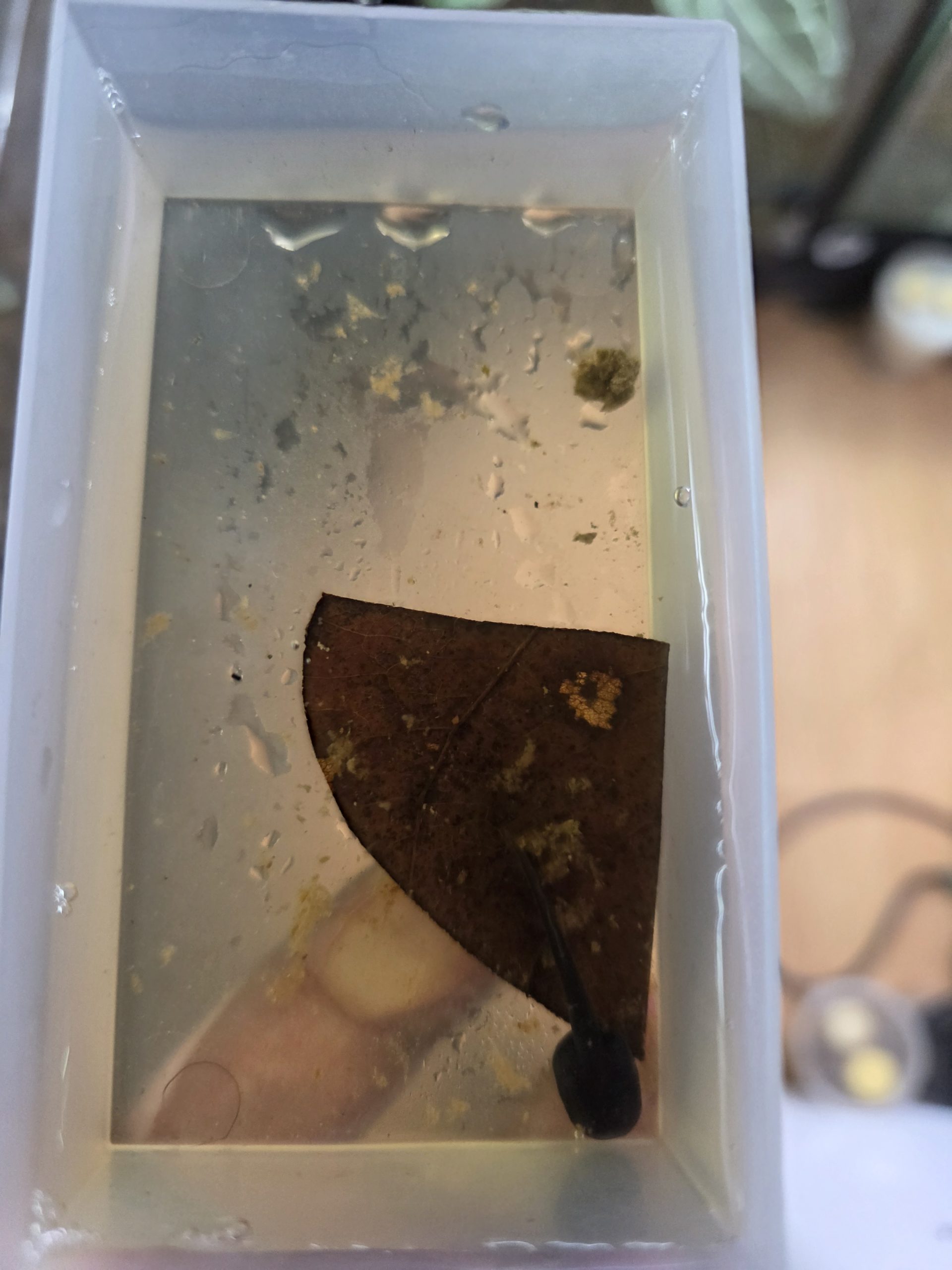
Successful tadpole rearing requires suitable aquatic housing, appropriate nutrition, stable water conditions and regular monitoring.
We recommend raising Dendrobates tinctorius tadpoles individually, as they can display cannibalistic behaviour towards other tadpoles.
- Provide clean, appropriately conditioned water.
- Maintain stable water temperatures, generally around 21–24°C.
- Avoid overheating and direct sunlight.
- Feed a suitable, nutritionally balanced tadpole diet.
- Remove deteriorating uneaten food to protect water quality.
- Monitor growth, limb development and general condition.
- Prepare a safe terrestrial transition area before metamorphosis.
Water quality is particularly important. Small containers can experience rapid changes in water chemistry, so suitable water volume and regular monitoring are essential.
Recommended: Tadpole Grow-Out Kit & Bioactive Tub
Prepare for the Journey From Tadpole to Froglet
Our specialist Tadpole Grow-Out Kit & Bioactive Tub provides a convenient starting point for raising dart frog tadpoles.
The kit helps organise individual aquatic rearing and prepares you for the transition to terrestrial life.
Having suitable equipment ready before your tadpole arrives makes it easier to monitor development and maintain appropriate conditions.
From Tadpole to Froglet
As your Brazilian Yellowhead tadpole develops, hind legs will appear, followed by front legs as metamorphosis approaches.
The developing froglet gradually absorbs its tail and transitions from aquatic to terrestrial life.
Once the front legs emerge, safe access out of the water becomes essential to prevent drowning.
Newly emerged froglets require a secure, appropriately humid and ventilated enclosure with hiding places and access to tiny live foods.
Preparing a Bioactive Froglet Environment
Young Brazilian Yellowheads benefit from a carefully prepared terrestrial grow-out enclosure with suitable shelter, leaf litter and established microfauna.
Natural leaf litter provides hiding places and helps support beneficial invertebrates within the enclosure.
Our Forest Floor Tamarind Leaves are a useful addition to a suitably prepared froglet environment.
Feeding Your Developing Dart Frogs
After metamorphosis, young Brazilian Yellowheads require appropriately sized live foods, including springtails and small fruit flies.
As they grow, feeder insects should be nutritionally supplemented as part of a balanced feeding programme.
At The Frogfather, we use our All-in-One Vitamin & Mineral Dust for lightly dusting suitable feeder insects at every feed.
Important: Supplement dust is intended for suitable live feeder insects after metamorphosis and should not be added directly to tadpole water.
Long-Term Housing and Compatibility
As your Brazilian Yellowhead matures, it will require a suitably sized, planted tropical vivarium with stable environmental conditions, hiding places, leaf litter and appropriate live foods.
Adult Dendrobates tinctorius can become territorial, particularly between females. Compatible sexed pairs are commonly maintained, while incompatible animals may need separating.
We recommend keeping accurately identified breeding lines separate rather than mixing different tinctorius forms.
Why Choose The Frogfather?
- UK captive-bred: Produced through our own Nottingham breeding programme.
- Established breeding colony: We maintain and care for the parent animals ourselves.
- Specialist experience: Practical experience breeding and raising multiple dart frog species.
- Responsible husbandry: Animal welfare and appropriate care are central to our approach.
- Specialist equipment: Tadpole and froglet rearing supplies available through our shop.
Frequently Asked Questions
Are these Brazilian Yellowhead tadpoles captive-bred?
Yes. Our tadpoles originate from our own breeding colony at The Frogfather in Nottingham.
Will my frog develop the same colours as the parent photograph?
The photograph shows a Brazilian Yellowhead from our breeding stock. Offspring are expected to develop the characteristic colouration of this form, although individual markings and colour intensity will vary.
Can I raise multiple tadpoles together?
We recommend individual rearing because Dendrobates tinctorius tadpoles can be cannibalistic.
How long does metamorphosis take?
Development time varies according to temperature, nutrition, water conditions and individual growth. An exact metamorphosis date cannot be guaranteed.
What should I feed newly emerged froglets?
Newly emerged froglets require appropriately sized live foods, typically springtails and small fruit flies, alongside suitable nutritional supplementation.
Can I purchase a complete tadpole rearing kit?
Yes. Our Tadpole Grow-Out Kit & Bioactive Tub provides equipment to help prepare for aquatic development and the transition to terrestrial life.
Can the tadpoles be delivered?
Yes, or Collection is currently available by appointment from Nottingham. Please see the checkout regarding current delivery arrangements.
Availability & Collection
Availability depends on the natural breeding cycles of our animals and the developmental stages of the tadpoles currently being raised.
Collection by appointment from Nottingham.
Please ensure that suitable aquatic housing and a prepared terrestrial grow-out environment are available before purchasing.
By The Frogfather
Nottingham, United Kingdom