Husbandry & Evidence Review – 6 September 2026
Seasonal management should be room-first and measurement-led. Heat/cold emergency actions must avoid creating local hot spots, excessive saturation or unmonitored chemical-heat exposure.
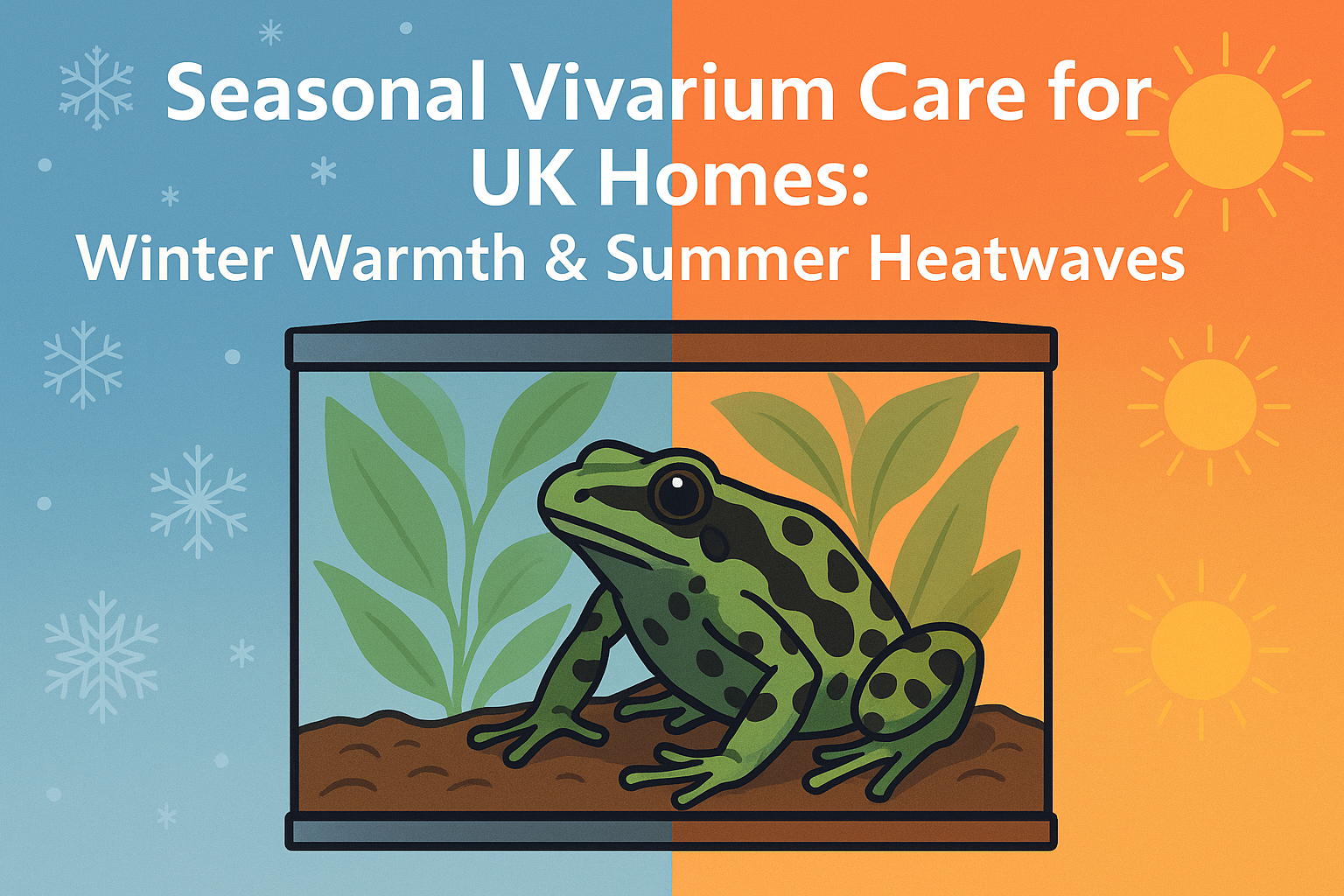
Seasonal Vivarium Care for UK Homes: Winter Warmth & Summer Heatwaves
British weather gives vivariums a workout. Winter sneaks humidity away; summer can turn a room into a sauna. Here’s a keeper’s playbook to keep conditions steady without hammering your energy bill.
Winter: comfortable warmth without condensation chaos
- Room-first approach: Warm the room to a stable baseline before adding spot heating. A steady room makes thermostats work predictably.
- Thermostat logic: Use quality thermostats with probes placed near the warmest part of the viv—not pressed against glass.
- Air movement: Lift hot fixtures off the lid—Arcadia Jungle Dawn LED wall mounts and the double light riser improve airflow.
- Misting schedule: Shorter, more frequent mists maintain humidity without flooding. For a step‑by‑step, see How to maintain optimal humidity.
- Photoperiod: Keep day length consistent with timers (10–12 hours). Predictable light helps appetite and routine.
Summer: coping with heatwaves
- Passive cooling first: Shade curtains, crack windows overnight if safe, and keep the room door open for cross-ventilation.
- Active measures: Fans to move room air; avoid blasting the viv directly. To reduce canopy heat, the angled light riser for Jungle Dawn spreads light and lifts heat away from foliage.
- Lighting: Switch to cooler-running LEDs where possible. Shift photoperiod slightly to cooler parts of the day.
- Misting: Mist early morning and late evening; avoid creating a midday sauna. Use smart plugs to finesse timing—set smart‑plug timings to the second.
Recognising heat stress vs simple dehydration
Heat stress and dehydration can overlap and signs are non-specific. Behavioural change, abnormal posture/breathing, weakness or reduced feeding should prompt direct checks of temperature, moisture and ventilation rather than diagnosis from one sign.
Energy-savvy tips
- Insulate the back and sides of vivaria that sit on cold exterior walls.
- Use smart plugs or timer blocks to lock in schedules.
- Do not group enclosures or animals as a humidity/heat treatment. Manage the room and each enclosure independently so airflow and temperatures remain measurable.
Plant care across seasons
Bromeliads scorch under summer midday sun through a window; move tanks away from glass or add a shade. In winter, trim any rot early and keep cups fresh. Epiphytes appreciate consistent airflow all year.
Emergency playbook
- Heatwave: Lights off for a few hours; add room fans; offer cooler microhabitats with damp moss hides.
- Cold snap: Pre-warm the room; check door and window drafts; confirm thermostats and heaters are working before bedtime.
- If emergency heat is needed, use a controlled room-level or externally insulated strategy where possible. Chemical heat packs can overheat locally and should never contact the enclosure or animals directly; monitor temperature continuously.
With a room-first mindset and a few small tweaks, UK seasons become predictable, and your frogs carry on as usual.