Description
Vivarium Cooling Box – Supplemental Heatwave Cooling Housing
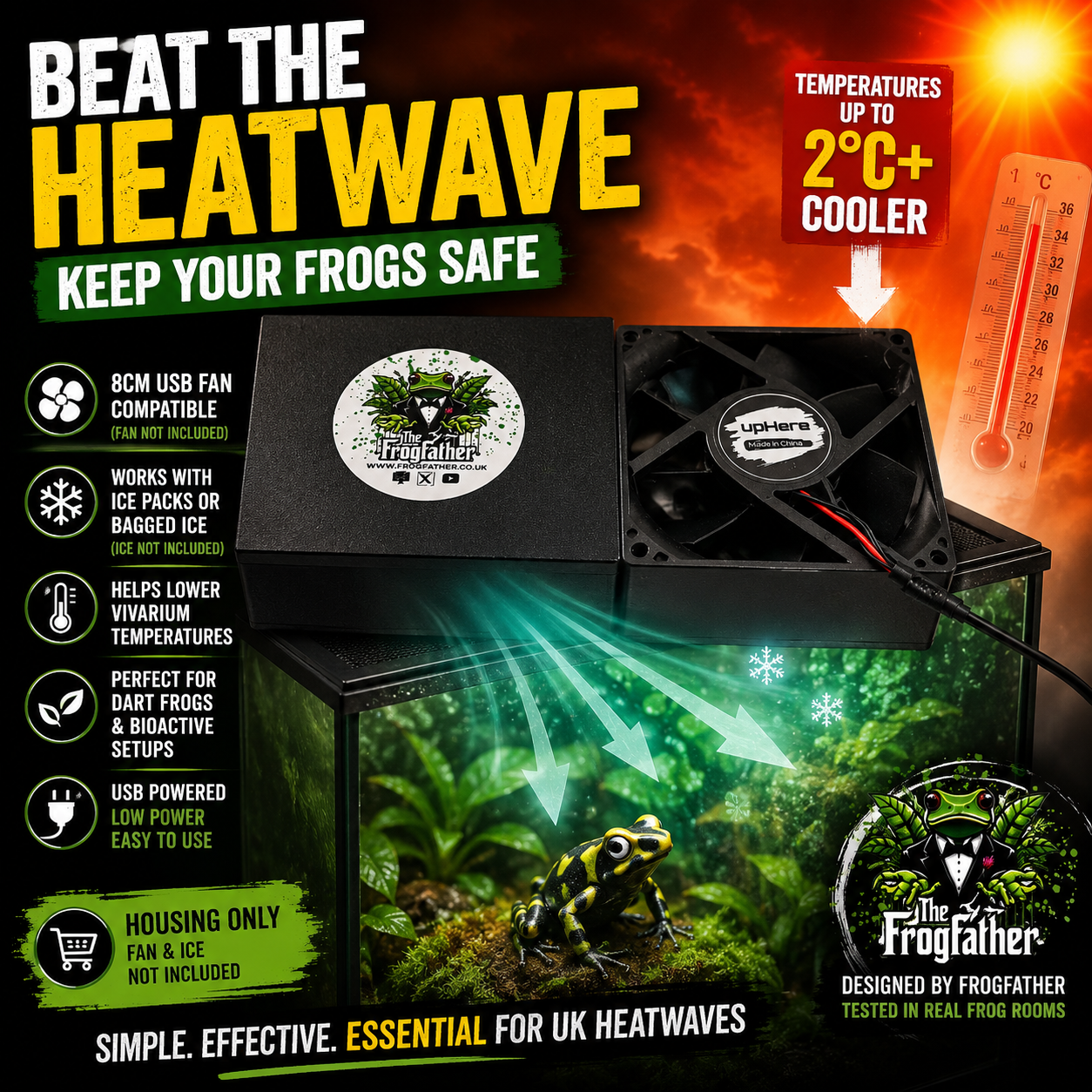
A 3D-printed housing designed to work with a standard 80 mm USB fan and bagged ice or reusable ice packs as an emergency/supplementary cooling aid during hot weather.
This listing is for the printed housing only. Fan, power supply, cable and ice/ice pack are not included.
Important welfare framing
Many amphibians can be harmed by prolonged overheating, but rapid over-cooling, cold direct airflow and large temperature swings can also be harmful. The goal is to keep the enclosure within the appropriate species range, not to make it as cold as possible.
Performance claims corrected
The earlier page said the unit could reduce temperatures by “around 2°C or more” and cool for “up to approximately 6 hours”. Those figures can vary dramatically with room temperature, fan output, ice mass, enclosure ventilation, humidity and sensor position. They are not guaranteed product specifications.
If Frogfather informal tests are quoted elsewhere, they should be labelled clearly as observations from that specific test setup, not universal expected performance.
How to use safely
- Use an independent thermometer at animal level and monitor during operation.
- Avoid directing intensely cold air directly onto resting frogs.
- Avoid condensation or meltwater entering electrical equipment or the enclosure.
- Replace/rotate ice packs before temperatures begin oscillating widely.
- Provide shade, reduce unnecessary heat-producing lights/equipment and cool the room itself where possible.
- Do not leave an improvised cooling setup unattended until you have tested it under the exact conditions in which it will be used.
Not a thermostat
This is a passive cooling aid rather than a thermostatically regulated chiller. It should not be relied upon as the sole protection for heat-sensitive animals during a prolonged heatwave.
Last reviewed: 5 September 2026. Fixed temperature-drop/duration claims have been replaced with monitored, species-led heatwave guidance.
Background reading
St Claire et al. – dendrobatid husbandry, including temperature management