Description
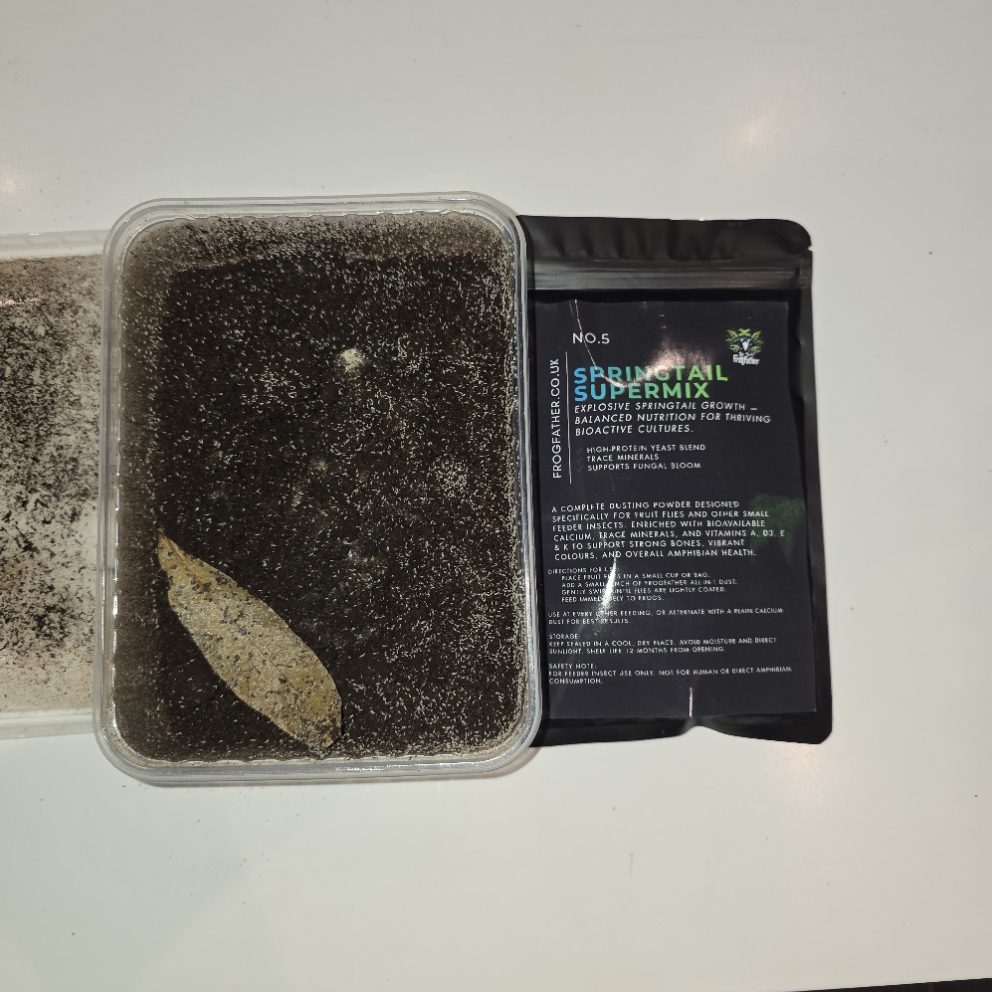
Springtails Supermix – 500cc Live Springtail Culture with Food
A live springtail culture supplied with Frogfather springtail food for seeding enclosures, maintaining a separate culture and harvesting suitable micro-prey.
What’s included
- Live springtail culture in an approximately 500cc container.
- Springtail food for ongoing culture maintenance.
- Basic care and harvesting guidance.
What springtails contribute
Many springtails graze fungal growth, microbes and decomposing organic material and can contribute to the detrital food web in a bioactive enclosure. They may also be eaten by froglets and very small insectivores.
We have removed “unlimited bioactive supply”, “daily harvesting” and “indefinitely” claims. A strong culture can be harvested repeatedly, but sustainable harvesting depends on colony size and reproduction. Removing too many animals, overfeeding, drying, flooding, mites or contamination can all reduce or crash a culture.
Maintaining the culture
- Keep it suitably moist but not waterlogged.
- Feed a very small amount.
- Wait until most of the previous food is gone before adding more.
- Harvest conservatively and retain enough animals for the colony to recover.
- Maintain a backup culture where reliable availability is important.
Using it in a vivarium
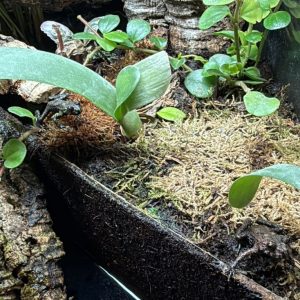
Add springtails to suitable damp substrate and leaf litter and give them time to establish. They are a useful component of a bioactive system, not a replacement for spot-cleaning, plant care, ventilation or normal enclosure management.
Microfauna & Evidence Review
Last reviewed: 5 September 2026
Springtails are part of terrestrial decomposer food webs. Many species feed on fungi, microbes and decaying organic material, and microarthropods can contribute to decomposition. Their exact diet and ecological effect vary among taxa and conditions, so Frogfather does not describe a springtail culture as a complete waste-removal system or a guarantee of a stable, self-sustaining vivarium.
Bioactive enclosures still require observation, suitable substrate and leaf litter, moisture and ventilation management, animal feeding, plant care and removal of uneaten food or accumulated waste when necessary.
Evidence & further reading
- García-Palacios et al. / microarthropod decomposition meta-analysis
- Worldwide review of trophic resources of soil microarthropods