Description
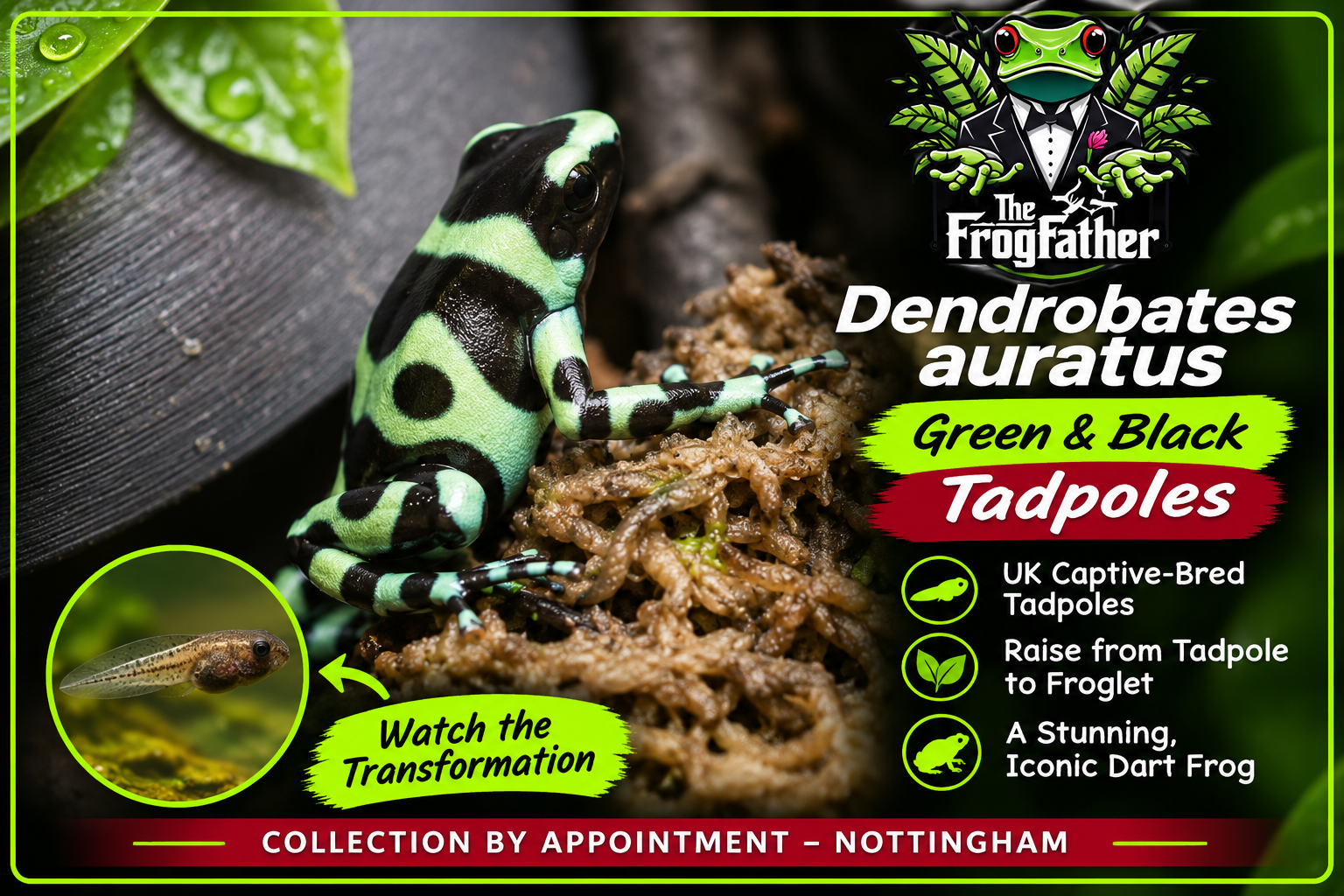
Dendrobates auratus ‘Green & Black’ Tadpoles – UK Captive Bred
Few experiences in amphibian keeping are quite as rewarding as raising a tiny tadpole into a beautifully patterned dart frog.
At The Frogfather in Nottingham, we maintain our own breeding colony of Dendrobates auratus, commonly known as the Green and Black Poison Dart Frog.
Our captive-bred tadpoles offer enthusiasts the opportunity to observe the remarkable transformation from aquatic tadpole to terrestrial froglet, eventually developing the beautiful green and black markings that make this species so popular.
Meet the Green & Black Auratus
Dendrobates auratus is a species of poison dart frog native to parts of Central and South America.
Green & Black Auratus are particularly admired for their contrasting colouration, with vivid green or turquoise markings set against deep black patterning.
Individual frogs can display different arrangements of spots, bands and irregular markings, making each animal visually distinctive.
Although sometimes shy, established auratus can become fascinating animals to observe as they explore planted vivariums, hunt tiny invertebrates and interact with their surroundings.
Captive Bred at The Frogfather
Our tadpoles are produced through our own captive breeding programme in Nottingham.
We maintain the parent animals in planted, bioactive vivariums designed to support natural behaviour and reproduction.
Breeding dart frogs is one of the most rewarding aspects of our work, allowing us to observe courtship, egg development, tadpole transport and metamorphosis.
Purchasing captive-bred tadpoles offers an opportunity to experience these remarkable stages of amphibian development.
The Journey From Tadpole to Froglet
Like other dart frogs, Dendrobates auratus undergoes a complete metamorphosis as it transitions from an aquatic tadpole into a terrestrial frog.
- Aquatic stage: Tadpoles feed and develop in suitable water conditions.
- Hind-leg development: The first visible limbs begin to emerge.
- Front-leg emergence: The tadpole approaches the final stages of metamorphosis.
- Tail absorption: The developing froglet gradually absorbs its tail.
- Terrestrial stage: The froglet leaves the water and begins feeding on tiny live invertebrates.
Development time varies according to temperature, nutrition, water conditions and individual growth. An exact metamorphosis date cannot be guaranteed.
Preparing Your Tadpole Grow-Out Setup
Appropriate aquatic housing is essential for successfully raising dart frog tadpoles.
Water quality, suitable nutrition, regular observation and a safe transition to terrestrial life are all important considerations.
Recommended: Tadpole Grow-Out Kit
Our specialist Tadpole Grow-Out Kit provides a convenient way to prepare for the aquatic rearing stage and the transition to life as a froglet.
Preparing your equipment in advance helps ensure your tadpoles have appropriate housing throughout their development.
Creating a Natural Froglet Environment
Once your auratus complete metamorphosis, they will need a secure, humid terrestrial enclosure with suitable ventilation, hiding places and appropriately sized live food.
Leaf litter is an important component of a naturalistic dart frog enclosure, providing shelter and supporting beneficial microfauna.
Our Forest Floor Tamarind Leaves are an excellent addition to a planted bioactive vivarium.
The small leaves create natural cover and help establish a forest-floor environment for young frogs.
Feeding Your Developing Dart Frogs
During their aquatic stage, tadpoles require an appropriate diet and carefully maintained water conditions.
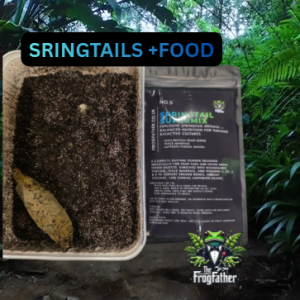
After metamorphosis, young auratus transition to tiny live invertebrates, including springtails and suitably sized fruit flies.
As they grow, nutritional supplementation becomes an important part of their feeding routine.
At The Frogfather, we use our All-in-One Vitamin & Mineral Dust as part of our routine feeder-insect supplementation programme.
Our All-in-One formulation is designed for lightly dusting suitable feeder insects at every feed, providing vitamins and minerals as part of a balanced feeding regime.
Important: Supplement dust is intended for suitable feeder insects after metamorphosis. Do not add it directly to tadpole water.
Why Choose The Frogfather?
- UK captive-bred: Produced through our own Nottingham breeding programme.
- Established breeding colony: We maintain and care for the parent animals ourselves.
- Specialist experience: Practical experience breeding and raising multiple dart frog species.
- Responsible husbandry: Animal welfare and appropriate care are central to our approach.
- Specialist equipment: Suitable tadpole and froglet rearing supplies available from our shop.
Frequently Asked Questions
Are these Green & Black Auratus tadpoles captive-bred?
Yes. Our tadpoles originate from our own captive breeding colony in Nottingham.
Will the tadpoles develop green and black markings?
Yes. As they develop into froglets, they begin to display the characteristic green and black patterning associated with this form of Dendrobates auratus. Individual markings and colour intensity can vary.
How long does metamorphosis take?
Development varies depending on the individual and rearing conditions. We cannot guarantee a specific metamorphosis date.
Can I raise multiple tadpoles together?
Individual rearing is generally a sensible precaution because tadpoles can compete for food and may differ in size and development. Separate rearing containers also make monitoring easier.
What should I feed my froglets?
Newly emerged froglets require appropriately sized live foods, typically including springtails and small fruit flies, supported by suitable nutritional supplementation.
Can the tadpoles be delivered?
Collection is currently available by appointment from Nottingham. Please contact us to discuss availability and collection arrangements.
Availability & Collection
Our breeding programme follows the natural reproductive cycles of our animals, so tadpole availability will vary.
Collection by appointment from Nottingham.
Please ensure that suitable aquatic housing and a prepared froglet grow-out environment are available before purchasing.
For husbandry advice or equipment recommendations, please contact us through our website.
By The Frogfather
Nottingham, United Kingdom