Description
3D Printed Arcadia T5 Light Risers – Straight or Angled
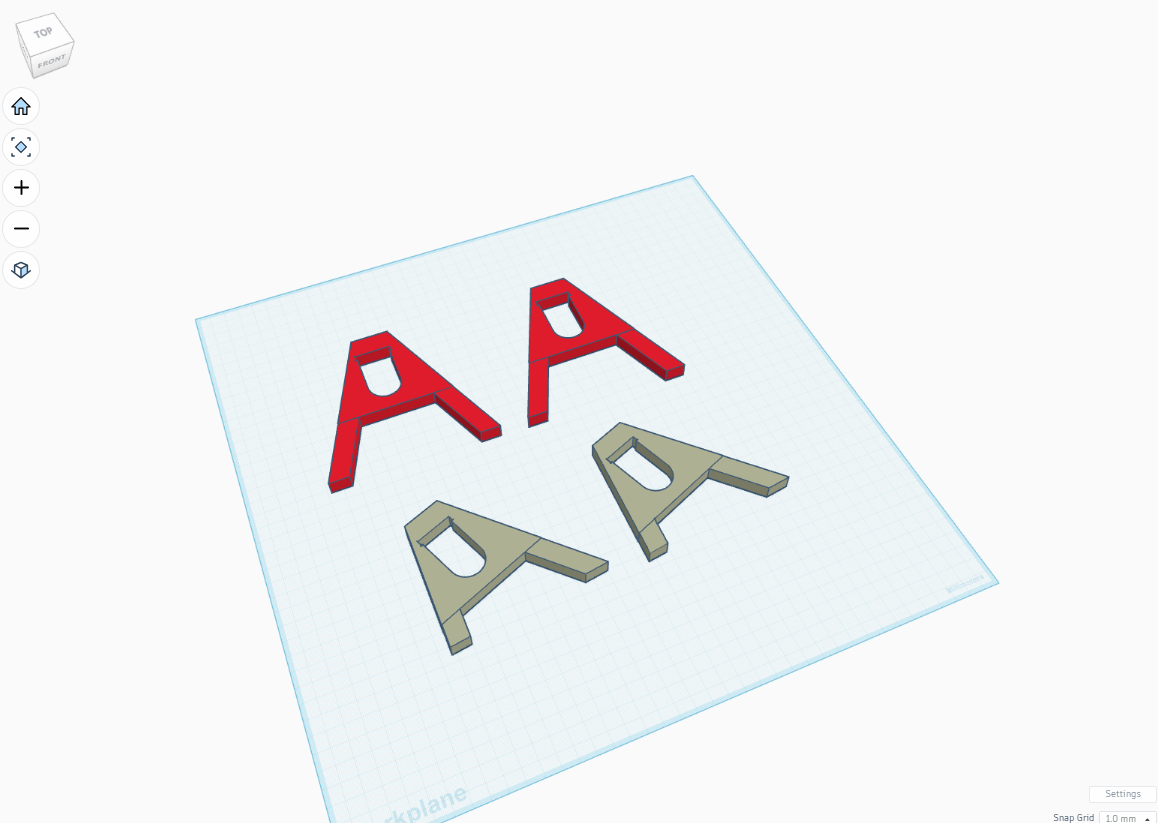
These 3D printed Arcadia T5 light risers are designed to lift Arcadia T5 UVB fixtures above mesh or solid vivarium lids, improving light distribution, airflow, and temperature control across the enclosure.
Available in two variants — Straight or Angled — these risers allow you to tailor your lighting setup depending on enclosure layout, planting density, or whether you want light directed more centrally or slightly forward/backward.
They are ideal for dart frog vivariums, bioactive terrariums, planted enclosures, and arboreal setups, where controlled fixture positioning can be useful.
Each riser is precision 3D printed for a secure, stable fit with Arcadia T5 units, offering a discreet, functional solution without modifying the enclosure lid.
Variant Options
Straight Risers
• Raise the light evenly above the enclosure
• Ideal for flat, central light coverage
• Best for evenly planted or symmetrical vivariums
Angled Risers
• Raise the light while introducing a gentle tilt
• Useful for directing light toward specific areas (plants, bromeliads, background growth)
• Ideal for tall, planted, or display-focused setups
Key Features
• Designed specifically for Arcadia T5 UVB fixtures
• Choice of straight or angled riser designs
• Improves UVB and visible light spread
• Helps reduce heat build-up directly above lids
• Lightweight, strong, and moisture-resistant
• Clean, minimal appearance suitable for display enclosures
Material & Build
• 3D printed using durable, enclosure-safe plastic
• Suitable for indoor vivarium and terrarium use
• Supplied as a matching pair (unless stated otherwise)
Important Notes
• Arcadia T5 light unit not included
• Designed for use with Arcadia T5 fixtures only
• Always ensure lighting is securely seated before use
UVB & Lighting Safety Review
Last reviewed: 5 September 2026
This product guidance has been reviewed against peer-reviewed amphibian UVB/vitamin D research and current Frogfather husbandry guidance.
Important: a riser, stand or mount positions a lamp; it does not by itself establish a safe or appropriate UVB exposure. UVB reaching an animal depends on the lamp and reflector, distance, mesh or other obstruction, angle, enclosure layout and the species being kept. Where UVB is used, provide a gradient with effective shade and assess exposure at animal level rather than choosing a setup from the percentage printed on the lamp alone.
Published amphibian evidence supports a biological role for UVB and vitamin D3, but does not establish one universal UVB requirement or one fixed lamp percentage/distance for all amphibians or all dart frogs.
Evidence & further reading
- Antwis & Browne (2009) – Ultraviolet radiation and vitamin D3 in amphibian health
- Tapley et al. (2015) – Meeting ultraviolet B radiation requirements of amphibians in captivity
- Ferrie et al. – Nutrition and Health in Amphibian Husbandry




