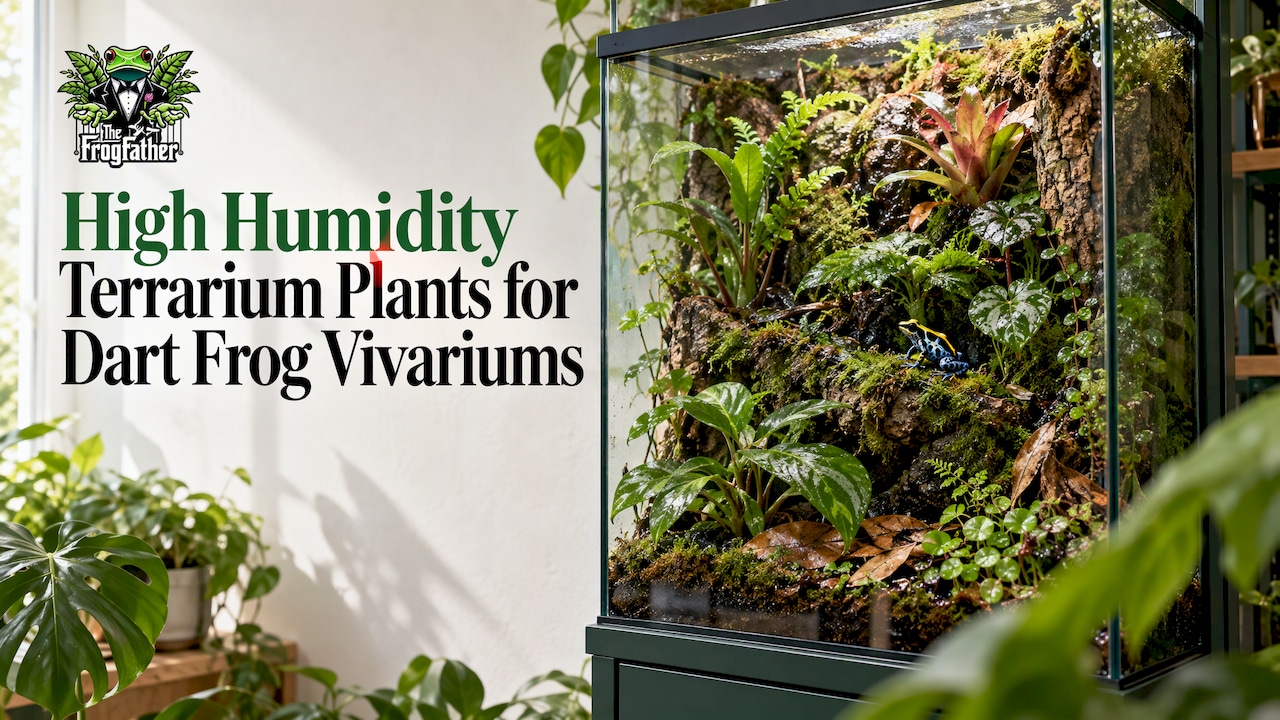
The best high humidity terrarium plants for a dart frog vivarium are compact tropical species that like warmth, constant moisture and moderate light: Fittonia, small ferns, Philodendron scandens, Peperomia, bromeliads and mosses. Pick them for your frogs’ temperature range, prepare them properly before planting, and light them with a suitable horticultural lamp. We build and maintain planted vivariums, and the same few rules apply every time.
TL;DR
- Choose plants that tolerate constant moisture and a steady 21–25°C: Fittonia, Philodendron scandens, small ferns, bromeliads and mosses.
- Check each plant against your frogs’ temperature range. Some species suit warm setups better than cooler montane ones.
- Wash and inspect every plant for pesticide residue and pests before it goes in.
- Plants grow on light, not humidity: a full-spectrum or horticultural LED or T5 lamp matters as much as the plant list.
- High humidity still needs ventilation and upkeep. A planted tank is never maintenance-free.
Table of Contents
- What “high humidity” means for plant choice
- Plants that cope with constant moisture
- A quick comparison
- How to prepare and plant them
- Light: what “full spectrum” really means
- Keeping humidity healthy, not just high
- Our perspective
- Plants, microfauna and setups from us
- FAQ
- Sources
What “high humidity” means for plant choice
Many terrarium lists are written for sealed glass jars on a windowsill. A dart frog vivarium is different: it is warm, ventilated, sprayed regularly and home to animals that eat, climb on and burrow around the plants. A plant has to survive moisture, warmth and being walked on.
The Royal Veterinary College’s care sheet for a related tropical frog, the White’s tree frog, gives 60–70% humidity checked with a hygrometer placed in the middle of the enclosure. Dart frog keepers often aim higher, but a number on a dial tells only part of the story. Our piece on why 80% does not mean your vivarium is actually humid explains why surface moisture, airflow and cheap sensors matter, and our guide to checking hygrometer accuracy shows how to confirm your readings.
Plants help here. Merck Veterinary Manual notes that live plants generate humidity, filter light and provide hiding and perching places for terrestrial amphibians. They also take up waste from the soil.
Plants that cope with constant moisture
Fittonia (nerve plant)
Fittonia is a staple for a reason. The RHS says it needs a bright spot out of direct sun, 15°C or more, consistently moist soil and high humidity, and names an enclosed terrarium as a good home. It droops when dry and recovers after a thorough watering. Keep it low on the ground cover layer and trim it back when it starts to cover your leaf litter.
Philodendron scandens
A climber for backgrounds and cork. One UK plant guide describes it as hardy in varied conditions, including 100% humidity. It grows fast, so expect to prune it every few weeks. Cuttings root easily in the vivarium itself.
Peperomia
Peperomia rotundifolia likes constantly moist soil and temperatures above 24°C, according to the same guide, which also notes that poison frogs are commonly kept around 21–25°C. That makes it a good fit for warmer species and a poorer one for cooler montane frogs. This is the kind of match between plant and animal that lists often skip.
Ferns
Maidenhair ferns (Adiantum) need fairly warm and humid conditions and in the wild grow in shaded, moist spots on rock faces and stream banks. Their delicate fronds suit shaded back corners, but they dislike drying out, so they work best in well-ventilated yet damp setups. Button ferns and other small ferns are easier for a first tank.
Bromeliads
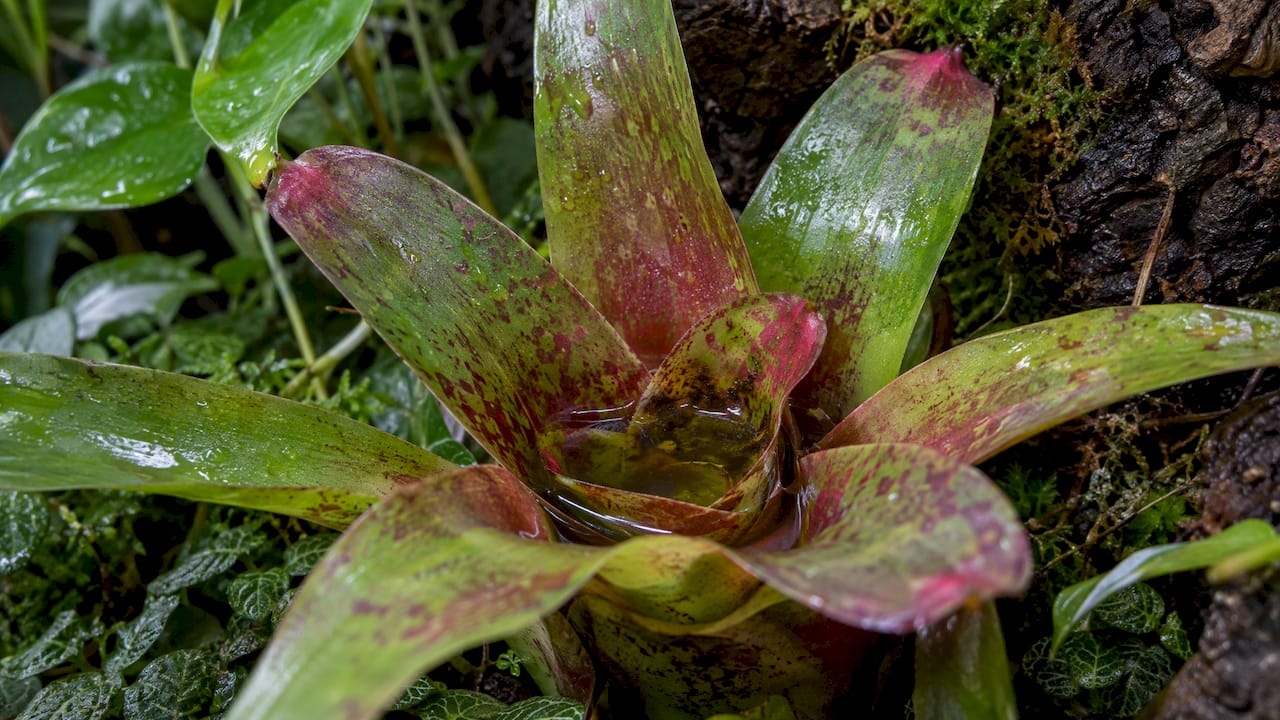
Bromeliads give structure and a reservoir of water in their leaf cups. Plant guides describe those cups as humidity reservoirs and useful sites for climbing, shelter or tadpole rearing for some dart frogs. Vriesea saundersii can grow in comparatively low light, while Cryptanthus stays small and prefers bright light. Our UK bromeliad guide covers species choice in more depth.
Mosses and ground cover
Mosses hold moisture at the surface and soften the substrate line. They need steady damp and gentle light, and they struggle under a hot, strong lamp. Use them as a carpet, not as the only plant.
A quick comparison
| Plant | Best position | Notes for frog keepers |
|---|---|---|
| Fittonia | Floor and mid level | Wilts dramatically when dry, recovers quickly |
| Philodendron scandens | Background, climbing | Fast grower, needs regular pruning |
| Peperomia rotundifolia | Mid level | Suits warmer setups above 24°C |
| Maidenhair fern | Shaded corners | Needs constant moisture and airflow |
| Bromeliads | Branches, cork, high spots | Cups hold water, size varies by species |
| Mosses | Substrate surface | Prefer gentle light |
For named species that are safe and proven, see our UK safe-plant guide for dart frog vivariums and the shorter top five plants.
How to prepare and plant them
- Match plant to animal. Check your frogs’ temperature range and light level first, then the plant’s. Plant selection should replicate the animal’s natural conditions and biology, as the Wisconsin Herpetological Association puts it.
- Remove the chemicals. Plants and their potting media should be free of pesticides, synthetic fertiliser residues and other harmful chemicals, and inspected for aphids, mealybugs, mites, snails and slugs. Buying from a source that grows plants for vivariums saves you this worry, and it is what we do with the plants we supply.
- Strip the compost. Shake off the potting mix and rinse the roots. Many nursery composts hold fertiliser pellets that do not belong in a frog tank.
- Plant into a drained base. Use a drainage layer and a substrate your springtails and isopods can live in. Our aged bioactive substrate comes with live microfauna already working.
- Leave room to grow. Plant a little sparsely. In warm, wet conditions growth will fill gaps within weeks.
- Settle the tank before the frogs. Let plants root and the clean-up crew establish. Our clean-up crew of springtails and isopods help break down leaf litter and waste.
Our scientific guide to selecting and maintaining vivarium plants goes further on rot, toxicity and overgrowth.
Light: what “full spectrum” really means
Humid plants only thrive with enough light. “Full spectrum” is a marketing term for a lamp that gives a broad, daylight-like range of wavelengths. It is not the same as UVB, which Merck Veterinary Manual defines as 280–320 nm and says may support calcium metabolism and colour rendition in diurnal amphibians. A plant lamp and a UVB lamp can be separate jobs, or a single product may do both.
For plants, the RHS lists T5 HO fluorescent tubes and LED horticultural lighting as options, and gives around 16 hours daily as an example for a simple system. T5 tubes can give strong growth light, last about 20,000 hours and produce comparatively little heat, though they are less energy-efficient than LEDs.
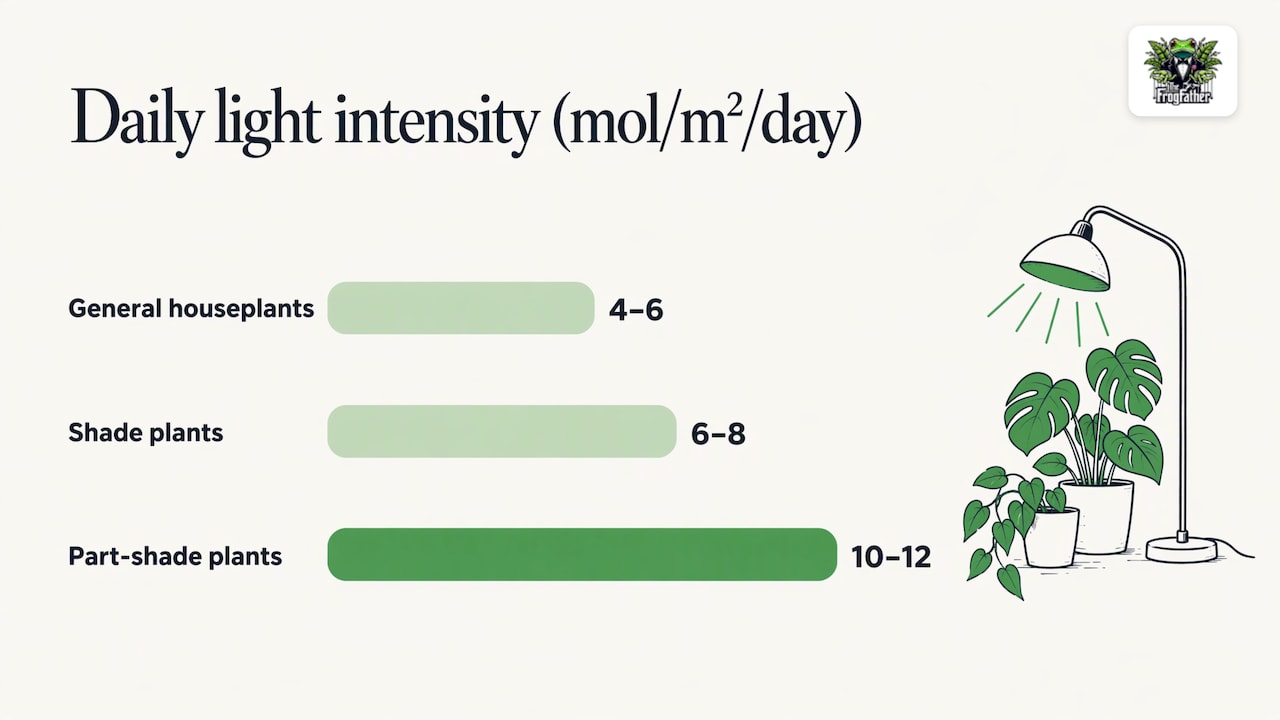
What matters most is how much usable light reaches the leaves. University of New Hampshire Extension suggests 4–6 mol/m²/day for general houseplants, 6–8 for shade plants and 10–12 for part-shade plants, and notes that changing a lamp’s distance changes the intensity delivered. So pick plants to suit the light you can give: ferns, Fittonia and mosses at the shadier end, Cryptanthus and many bromeliads nearer the lamp.
Safety points for lamps over a humid tank:
- Merck advises fluorescent or LED bulbs to avoid heat, lighting within 18 inches of the inhabitants, and replacing UVB bulbs every 6–8 months or as the manufacturer says.
- The RVC’s tree-frog sheet recommends low-output lamps for about 12 hours a day at the manufacturer’s recommended distance.
- Keep fittings and cables out of spray and condensation, and use equipment designed for damp enclosures.
Our round-up of the best five lights for a bioactive vivarium compares options in practical terms.
Keeping humidity healthy, not just high
High humidity without airflow invites rot, algae and stagnant corners. Merck says amphibian enclosures need adequate ventilation, with about 1–2 fresh-air changes per hour. In practice that means a vented lid or side panels, regular misting and a damp-but-not-waterlogged substrate.
A few habits keep plants healthy:
- Prune weekly in the first months. Fast climbers shade slower plants.
- Remove yellowing or rotting leaves before they foul the surface.
- Watch for a sour smell or black, slimy stems, which mean too much water and too little air.
- Feed plants lightly, if at all. Fittonia, for instance, needs half-strength general-purpose fertiliser only every two or three months, and anything you add must be safe for frogs.
Humid and low-maintenance are not the same thing. A planted vivarium stays healthy through steady, observant care. Our guide to maintaining optimal humidity and the piece on microclimates in a UK vivarium build on this.
Our perspective
Most plant failures we see on paper come down to the same thing: a plant chosen for looks, not for the animals and the light. We design and maintain bioactive vivariums with the plants, substrate and clean-up crew working as one system, and we test our own accessories in our frog rooms.
Start with a short plant list you can keep alive, give it proper light and airflow, and add slowly. A boringly solid base beats a crowded one that rots.
Frogfather
Plants, microfauna and setups from us
We are a Nottingham-based specialist in dart frogs and bioactive vivariums, and we supply tropical plants, springtails, isopods, supplements and enclosure supplies. If you would rather start with a planted tank that is already running, look at our custom and established bioactive vivariums, or begin with the plants and supplies you need.
New to the hobby? Our free Bioactive Vivarium Fundamentals course walks through setup step by step, and our complete UK guide to bioactive vivariums covers the rest.
FAQ
What is the best plant for a high humidity vivarium?
Fittonia is a dependable first choice because it likes constant moisture and recovers quickly if it dries out. Philodendron scandens suits the background and copes with very high humidity. Choose by your frogs’ temperature range and your lighting, not by humidity alone.
Do I need full-spectrum lighting for vivarium plants?
Plants need enough usable light at the leaf, and a horticultural LED or T5 lamp does that. Full spectrum is a broad label and is separate from UVB, which relates to calcium metabolism in some diurnal amphibians. Follow the lamp maker’s distance and replacement guidance.
Can I use any houseplant in a dart frog tank?
No. Plants must be chemical-free, inspected for pests and suited to frogs. Check them against a safe-plant list, and wash off compost before planting. Our UK safe-plant guide is a good starting point.
How do I stop plants rotting in high humidity?
Give the tank ventilation, a drainage layer and a substrate that is damp but not soaked. Remove dying leaves promptly and prune fast growers. Rot usually points to stale air or overwatering.
Sources
- How to grow fittonia, RHS Growing Guide
- Artificial Lighting for Indoor Plants, RHS Advice
- Environment and Husbandry for Amphibians, Merck Veterinary Manual
- White’s Tree Frog Care, Royal Veterinary College
- Using Live Plants in Reptile/Amphibian Enclosures, Wisconsin Herpetological Association
- Maidenhair Fern, San Diego Zoo Animals & Plants
- Optimizing Plant Growth with Indoor Lighting Q&A, UNH Extension
- Terrarium Plant Guide: Best Plants for Bioactive Vivariums
Recommended
- Top 5 Plants For A Thriving Dart Frog Habitat
- How To Maintain Optimal Humidity Levels In Your Dart Frog Vivarium
- Selecting And Maintaining Vivarium Plants: A Scientific Guide For Dart Frog Setups
- Best Plants For Dart Frog Vivariums (2026): UK Safe-Plant Guide