Husbandry & Evidence Review – 6 September 2026
This article has been checked against Frogfather’s current evidence-led husbandry guidance. Specific older statements have been corrected or qualified below while unrelated content is preserved.
Dendrobates tinctorius, affectionately called tincs, are one of the most recognisable dart frogs in the UK hobby. They’re chunky, bold, and hard to miss thanks to their wide range of colour morphs – from powder-blue Azureus to bright yellow Patricias.
They’re also forgiving compared to some of the trickier species, which makes them popular with both beginners and experienced frogkeepers. This guide covers everything UK keepers need: morphs, setups, feeding, breeding, and the pitfalls that tend to crop up in our damp little island.
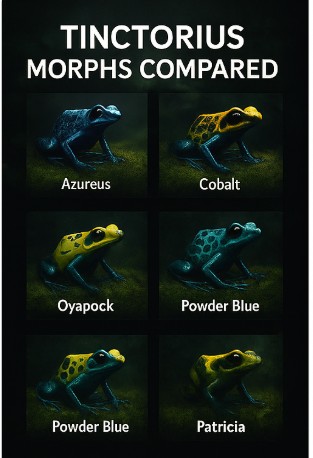
Morphs You’ll Commonly See in the UK
The diversity of tincs is half the fun. In the UK trade you’ll usually find:
- Azureus – also called the “Blue Poison Dart Frog,” famous for its powder-blue body.
- Cobalt – deep blue legs paired with a yellow-and-black patterned back.
- Oyapock – yellow with mottled green and black markings.
- Patricia – bold yellow-and-black bands, high contrast.
- Tumucumaque – rarer, with more muted tones but plenty of character.
They all share the same care requirements, so your choice is purely about what makes your heart sing.
Cross-link: Top 5 Plants for Bioactive Vivariums.
Vivarium Setup
Tincs are on the larger side for dart frogs, so give them room. For a pair, 60 × 45 × 45 cm is a sensible minimum. A group deserves more. Front-opening vivariums make life easier, and ventilation strips help with airflow.
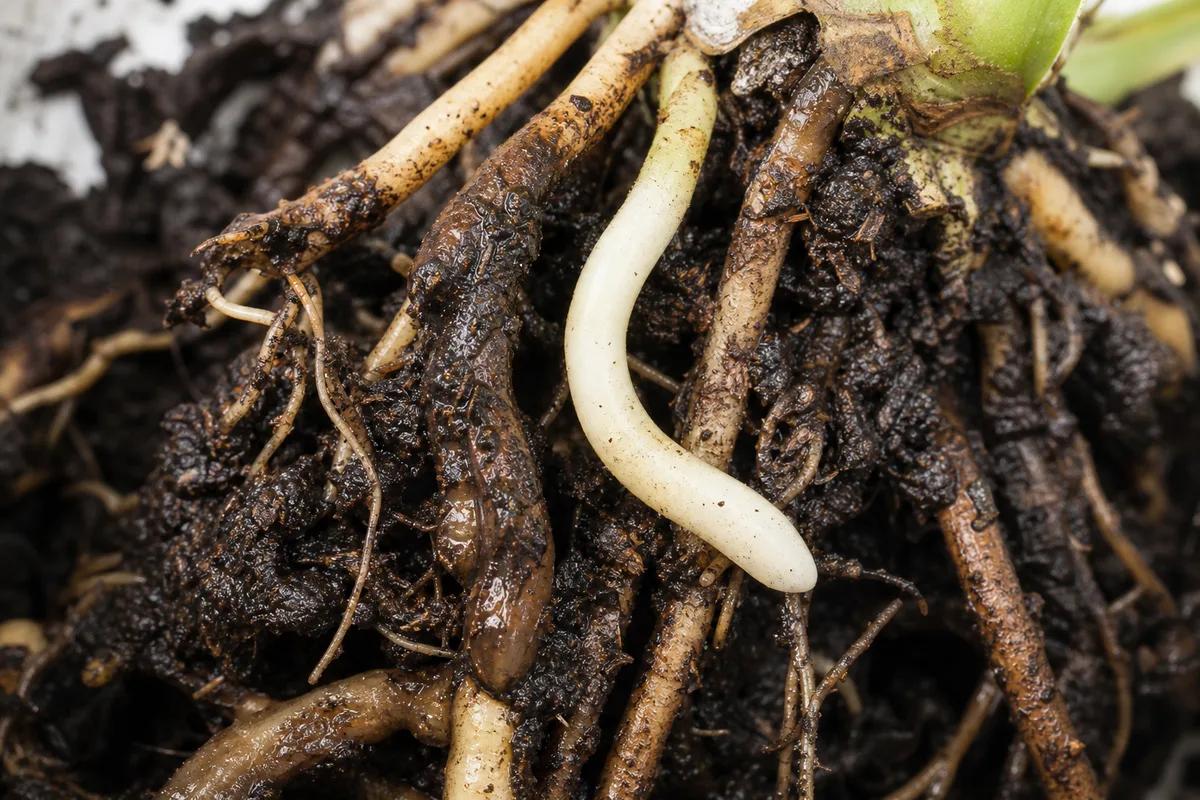
Bioactive is the standard these days, and for good reason: less cleaning, more stability, and natural foraging behaviour. Build layers: drainage → mesh → soil blend → oak leaf litter. Seed heavily with springtails and isopods.
Recommended links:
Heating & Humidity
Target 22–26 °C during the day, with a small nighttime drop. The UK winter is the trickiest bit: central heating dries the air while outside temps drop. Use a ceramic heater or side-mounted heat mat, always on a thermostat.
Humidity: do not manage dart frogs or other amphibians to one universal percentage band. Provide species-appropriate moisture, useful ventilation, humid refuges and normal drying/re-wetting cycles, and interpret RH alongside surface moisture and temperature.
Cross-link: How to Maintain Humidity in UK Vivariums.
Lighting
UVB: dedicated UVB is not always essential where dietary vitamin D3 is reliably supplied, but controlled UVB can be used. Bulb percentage or brand alone does not define exposure; assess what reaches the animal and provide complete shade.
Cross-link: Do Dart Frogs Need UVB?.
Diet & Feeding
If there’s one thing to know about tincs: they are greedy.
Staples:
- Flightless Fruit Flies
- Springtails
- Isopods
Supplementation: use one coherent, formulation-specific system appropriate to the exact product, feeder, life stage and UVB/D3 strategy. Fixed universal weekly/monthly rotations are not supported across all species and products.
Cross-link: Fruit Fly Culture Media Tips.
Behaviour & Social Life
Unlike some shy thumbnails, tincs are usually out and about. They’re perfect “display frogs.” But males can get territorial. Keep pairs or well-managed groups with plenty of space and sight breaks.
Breeding in the UK
Mature tincs breed readily. Males call with a low buzz and guide females to an egg site. In captivity: film canisters, bromeliads, or breeding huts.
Eggs hatch into tadpoles after ~2 weeks. Rear them separately in treated water (use RO or dechlorinator). Feed on algae wafers, spirulina, or boiled greens.
Cross-link: Raising Tinctorius Cobalt Tadpoles.
Common UK Challenges
- Water chemistry – Hard tap water causes limescale; use RO or dechlorinator.
- Heating in winter – Insulate frog rooms, cover part of mesh tops.
- Fruit fly dependency – Rotate feeders, culture multiple tubs to avoid crashes.
Cross-link: UK Water Chemistry Guide.
FAQ
- Are tincs beginner-friendly? Yes, if you’re committed to live foods and humidity.
- How long do they live? 10–15 years with good care.
- Can I mix species? No – risk of stress and hybridisation.
Final Notes
Tincs are a fantastic entry into the dart frog world. Hardy, long-lived, and stunning – they’ll reward good care with years of bold displays and, if you’re lucky, a chorus of buzzing calls.