
Tap water is one of the most overlooked factors in dart frog keeping.
Most keepers spend hours thinking about humidity, temperature, lighting, plants, drainage, misting systems, supplements and live food. All of those matter. But the water itself is often treated as an afterthought.
That is a mistake.
In the UK, tap water varies massively depending on where you live. Some areas have relatively soft water. Others have very hard water. Some supplies contain chlorine. Others use chloramine. Many contain dissolved minerals that are perfectly acceptable for human drinking water but not always ideal for delicate amphibian skin, misting systems, tropical plants, mosses and bioactive microfauna.
This does not mean tap water is automatically dangerous.
It does mean that water quality can quietly shape the long-term health of your vivarium.
If your moss will not establish, your glass constantly marks up, your misting nozzles clog, your plants stall, or your frogs seem to prefer certain damp areas over others, water quality may be part of the picture.
Quick Answer: Can You Use Tap Water for Dart Frogs?
You should not use untreated tap water directly with dart frogs.
UK tap water may contain chlorine, chloramine and dissolved minerals. These are added or present for good reasons in human water supplies, but dart frogs are more sensitive than people because they absorb water through their skin.
For most keepers, the safest practical options are:
- reverse osmosis water
- properly treated tap water
- rainwater from a clean and safe collection system
- dechlorinated water where appropriate
- distilled water remineralised or used carefully depending on purpose
The best choice depends on whether the water is being used for misting, drinking dishes, tadpoles, plants or cleaning.
For related water guidance, read UK water, dart frogs, tadpoles, chloramine and RO.
Why Water Matters More for Frogs Than Reptiles
Dart frogs do not drink like mammals.
They absorb water through their skin, especially through specialised areas on the underside of the body.
This means their skin is not just an outer covering. It is part of how they regulate water and interact with their environment.
That makes water quality especially important.
A lizard may drink from a dish occasionally. A dart frog lives in a film of moisture. It moves across wet leaves, sits on damp substrate, uses bromeliad water, absorbs moisture after misting, and relies on a stable humid environment.
That constant contact makes small water issues more important over time.
If you have not already read it, dart frogs do not drink like we do explains this in more detail.
What Is Actually in UK Tap Water?
UK tap water is treated to make it safe for people to drink.
That treatment can include disinfectants and naturally occurring dissolved minerals. Depending on the region, local geology and supplier, tap water may contain different levels of:
- chlorine
- chloramine
- calcium
- magnesium
- sodium
- fluoride
- nitrates
- silicates
- trace metals
- pH buffers
None of this automatically means the water is dangerous.
The problem is that dart frog vivariums are small, enclosed ecosystems. Even tiny repeated inputs can build up when sprayed every day, especially in misting systems and planted glass enclosures.
What is safe for humans to drink is not automatically ideal for amphibian skin, mosses, bromeliads, tadpoles, springtails and long-term bioactive balance.
Chlorine vs Chloramine: Why the Difference Matters
Some UK water supplies use chlorine. Others use chloramine. Some may use different approaches depending on treatment process and region.
Chlorine is relatively unstable. If water is left standing, chlorine can reduce over time, especially with aeration.
Chloramine is different.
Chloramine is more stable, which makes it useful for water suppliers, but more awkward for amphibian keepers. Leaving water to stand does not reliably remove chloramine.
This is why the old advice of “just leave tap water out overnight” is not always enough.
For dart frogs, especially if the water will be used daily for misting or tadpoles, you need to know what you are dealing with.
If using tap water, use a suitable dechlorinator that deals with chlorine and chloramine, and follow the dosage instructions properly.
Hard Water and Limescale: The Slow Vivarium Problem
Hard water contains higher levels of dissolved minerals, especially calcium and magnesium.
In many parts of the UK, hard water is a normal part of life. You see it in kettles, showers, taps and glass.
In vivariums, the same mineral build-up can appear as:
- white marks on glass
- blocked misting nozzles
- residue on leaves
- crusty deposits on backgrounds
- mineral build-up around water dishes
- poor moss establishment
- stressed or declining delicate plants
This is not usually dramatic overnight. It builds slowly.
That is why hard water problems are often mistaken for lighting, airflow, plant choice or humidity issues.
If your vivarium glass is constantly marking up, see how to clean vivarium glass safely. For a purpose-made product, our vivarium glass cleaner for limescale and algae is designed for vivarium use.
Why Hard Water Can Be Rough on Moss
Moss is one of the first things to show water problems.
Many keepers blame light or humidity when moss fails, and those factors do matter. But repeated misting with hard water can leave mineral deposits on surfaces and slowly change the conditions moss is trying to grow in.
Some mosses tolerate this better than others. Others stall, brown off, or never properly attach.
If you are using a moss slurry, paint-on moss, or trying to establish live moss on wood or background surfaces, water quality becomes even more important.
Our Paint-On Tropical Moss Starter works best when the wider vivarium conditions are suitable: good moisture, gentle airflow, appropriate light and water that does not constantly leave mineral residue.
For more context, read wet moss mix for vivariums.
Tap Water and Misting Systems
Misting systems magnify water problems because they turn water into fine droplets and spray it repeatedly across glass, plants, backgrounds and nozzles.
If you use hard tap water in a misting system, mineral deposits can build up inside nozzles and tubing.
This can lead to:
- blocked nozzles
- uneven spray patterns
- reduced pump performance
- white residue on plants
- more frequent cleaning
- shorter equipment lifespan
This is one reason many experienced keepers prefer reverse osmosis water for misting.
RO water reduces mineral build-up and helps keep nozzles cleaner for longer.
For wider misting advice, read the truth about misting systems and can dart frogs be kept without a misting system?
Tap Water and Bioactive Microfauna
A bioactive vivarium is not just frogs and plants.
It is also springtails, isopods, fungi, bacteria and other tiny organisms that make the system function.
These organisms are sensitive to their environment.
Water quality can influence:
- springtail population strength
- isopod activity
- fungal balance
- bacterial communities
- substrate chemistry
- decomposition rate
- mould patterns
Again, this is rarely instant. But repeated misting with unsuitable water can change the vivarium slowly.
If your clean-up crew is struggling, water is one factor worth considering alongside food, substrate, airflow and humidity.
For more on this, see springtails, isopods and the hidden engine of your vivarium.
If you are culturing springtails separately, Springtail Supermix can help support stronger cultures before seeding them into a vivarium.
Tap Water and Dart Frog Skin
Dart frog skin is delicate.
That does not mean frogs instantly die if they touch imperfect water, but it does mean repeated exposure matters.
Poor water quality may contribute to stress through:
- skin irritation
- osmotic stress
- reduced comfort in wet areas
- avoidance of water dishes or pools
- greater vulnerability when combined with poor hygiene or stress
Frogs often tell you things through behaviour before there is an obvious health crisis.
If frogs avoid certain damp areas, sit unusually, spend too much time in water, or change behaviour suddenly, always check the basics: temperature, humidity, airflow, water, food and social stress.
For behaviour context, read why some dart frogs become bold and others never do.
Water Dishes: Do They Matter for Dart Frogs?
Dart frogs do not drink from bowls in the same way a dog or cat does.
But water dishes, bromeliad cups, film canisters and damp areas can still matter.
Frogs may sit near water, use damp zones, deposit tadpoles, or absorb moisture from wet surfaces.
For tree frogs and other amphibians, dishes become even more important because many species soak more visibly.
If you use a water dish, keep it clean and use safe water. Do not let it become a stagnant nutrient soup full of drowned flies, faeces and decaying plant matter.
That sounds obvious, but it is a common issue.
Tap Water and Tadpoles
Tadpoles are even more directly exposed to water quality because they live in it.
For tadpoles, water is not background. It is the entire environment.
Poor water quality can affect:
- development rate
- feeding response
- gill function
- survival
- metamorphosis
- size at froglet stage
Different keepers use different water approaches depending on species, experience and system, but untreated tap water should not be the default.
For tadpole-specific guidance, read how to raise dart frog tadpoles from egg to froglet and water matters: the role of remineralisation in frog care.
Reverse Osmosis Water: Why Many Keepers Use It
Reverse osmosis water, usually shortened to RO water, has been filtered to remove most dissolved minerals and contaminants.
For dart frog keepers, it is popular because it gives you a cleaner starting point.
RO water is especially useful for:
- misting systems
- reducing limescale
- delicate mosses
- sensitive plants
- tadpole work
- avoiding unknown tap water variation
The downside is that pure RO water is very low in minerals.
That can be useful for misting, but for some uses it may need remineralising or balancing depending on species and purpose.
This is why water advice needs nuance. “Use RO” is a good starting point, but not the whole conversation.
Distilled Water, Rainwater and Dechlorinated Tap Water
There is more than one way to provide safer water.
Distilled Water
Distilled water is very low in dissolved minerals. It can be useful, but like RO water it may not be appropriate for every use without considering mineral balance.
Rainwater
Rainwater can be excellent or risky depending on how it is collected and stored. Roof run-off, dirty containers, bird droppings, airborne pollution and stagnant storage can all cause problems.
If using rainwater, collect it carefully and keep it clean.
Dechlorinated Tap Water
Dechlorinated tap water may be acceptable for some uses if treated correctly, but it does not remove hardness minerals. If hard water is your problem, dechlorinator alone will not fix limescale.
Always match the solution to the actual problem.
Should You Test Your Water?
Yes, at least at a basic level.
You do not need to become a chemist to keep dart frogs well, but basic water awareness helps.
Useful things to know include:
- whether your area uses chlorine or chloramine
- general hardness
- carbonate hardness
- pH
- whether your misting system is building residue
- whether your plants or moss are showing mineral stress
Aquarium test kits can give a useful starting point.
Your local water supplier may also publish water quality information for your area.
The goal is not perfection. It is awareness.
Signs Tap Water May Be Causing Problems
Water may be part of the issue if you notice:
- white marks on glass after misting
- misting nozzles blocking repeatedly
- moss failing despite good humidity
- bromeliads declining for no obvious reason
- delicate plants burning or spotting
- mineral crusts on backgrounds
- water dishes marking up quickly
- tadpoles developing poorly
- springtails declining in very damp zones
None of these proves tap water is the only cause.
But if several appear together, water quality is worth investigating.
A Simple UK Water Plan for Dart Frog Keepers
If you want a practical starting point, here is what I would suggest for most UK keepers.
For Misting
Use RO water where possible to reduce mineral build-up and protect misting nozzles.
For Water Dishes
Use RO, appropriately remineralised water, or properly treated water depending on species and setup. Keep dishes clean.
For Tadpoles
Be more careful. Use a consistent water source and understand whether remineralisation is needed for the species you are raising.
For Plant Watering
RO or rainwater may be better for delicate mosses and tropical plants, especially in hard water areas.
For Emergency Use
If you only have tap water, treat it properly with a product that deals with chlorine and chloramine. Do not rely on standing alone unless you know chlorine is the only issue.
How Water Links to Long-Term Vivarium Success
Water quality is one of those factors that becomes more important with time.
A vivarium may look fine for the first few months even with poor water practices. Then mineral build-up, moss decline, plant stress and equipment problems start appearing.
This is why water belongs in the same conversation as airflow, drainage, substrate, lighting and microfauna.
Long-term vivarium success depends on all of those systems working together.
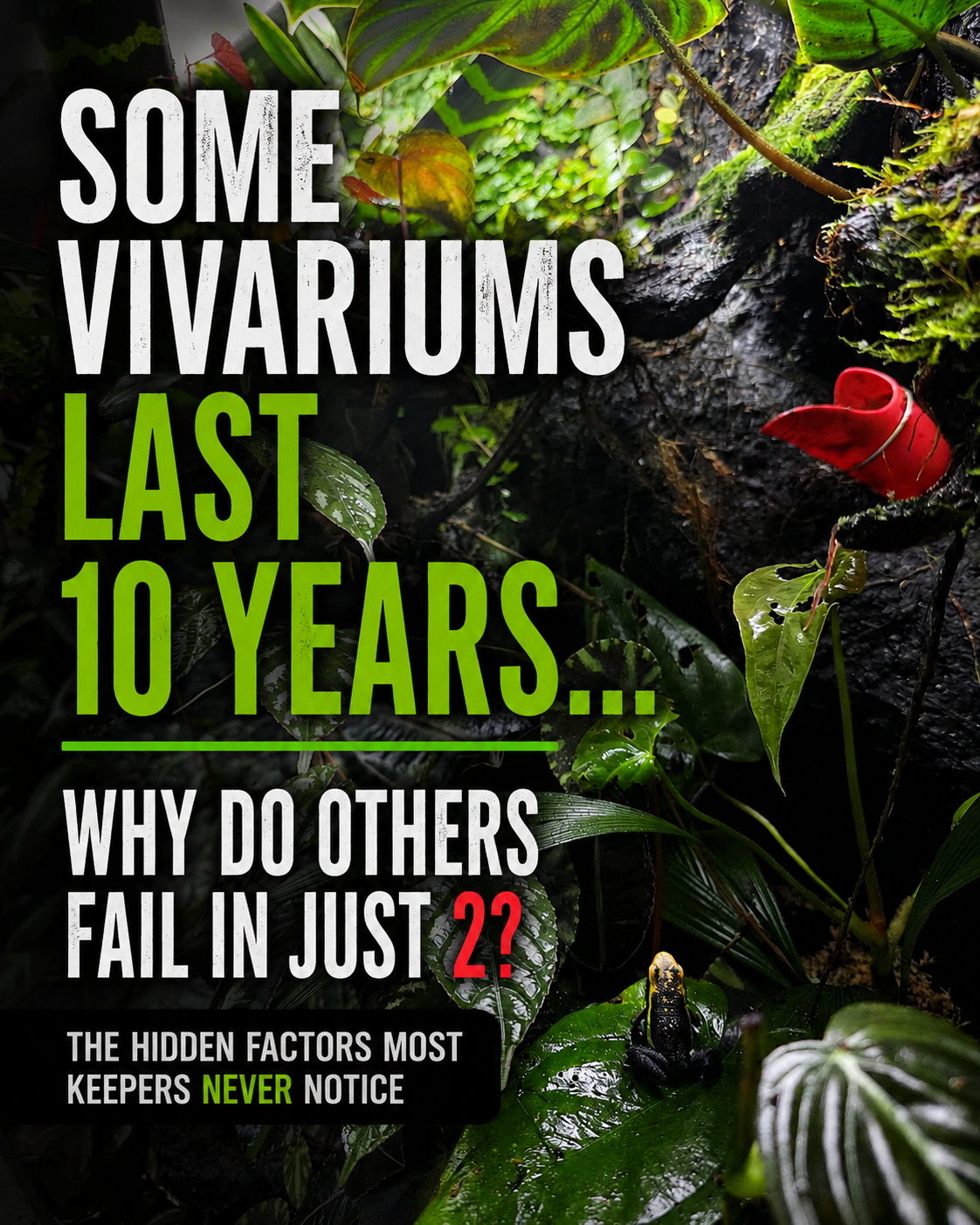
If you have not read it yet, why some dart frog vivariums thrive for 10 years while others fail within 2 explains the wider principle.
Final Thoughts
Tap water is easy to overlook because it feels ordinary.
We use it every day. We drink it. We wash with it. So it is tempting to assume it is harmless in every context.
But dart frogs and bioactive vivariums are not ordinary contexts.
They are small, humid, living systems where repeated inputs matter.
The point is not to panic about water. It is to stop ignoring it.
If your vivarium is thriving, your frogs are active, your plants are growing, and your misting system is clean, you may already have a workable routine.
But if you are battling limescale, failing moss, clogged nozzles, struggling tadpoles or unexplained plant decline, water quality should be on your checklist.
Small improvements now can prevent much bigger problems later.
Frequently Asked Questions
Is tap water safe for dart frogs?
Untreated tap water should not be used directly with dart frogs. UK tap water may contain chlorine, chloramine and dissolved minerals. Use RO water, properly treated water or another safe source depending on the situation.
Does leaving tap water out remove chlorine?
Leaving water out can reduce chlorine over time, but it does not reliably remove chloramine. If your water supply uses chloramine, use a suitable treatment product or another water source.
What is the best water for misting a dart frog vivarium?
Reverse osmosis water is usually the best option for misting because it reduces mineral build-up, protects nozzles and helps avoid limescale on glass, plants and backgrounds.
Can hard water harm vivarium plants?
Hard water can leave mineral deposits on leaves, glass and backgrounds. Over time, this may contribute to poor moss growth, plant stress and limescale build-up.
Do dart frogs need water dishes?
Dart frogs do not drink from bowls like mammals, but clean water dishes and damp areas can still be useful. They may absorb water through their skin or use moist areas for comfort.
Can tap water affect tadpoles?
Yes. Tadpoles live directly in water, so water quality is especially important. Untreated tap water, chlorine, chloramine or unsuitable mineral balance can affect development and survival.
Should I use distilled water for dart frogs?
Distilled water can be useful for some purposes, but it is very low in minerals. Depending on use, it may need remineralising or balancing, especially for tadpoles or long-term water features.
How do I know if my tap water is causing vivarium problems?
Repeated limescale, clogged misting nozzles, poor moss growth, mineral residue on leaves and unexplained plant decline can all suggest water quality is part of the issue.