Husbandry & Evidence Review – 6 September 2026
Live-animal transport is a welfare process, not a fixed-hours recipe. See current GOV.UK animal-welfare-in-transport guidance for applicable duties.
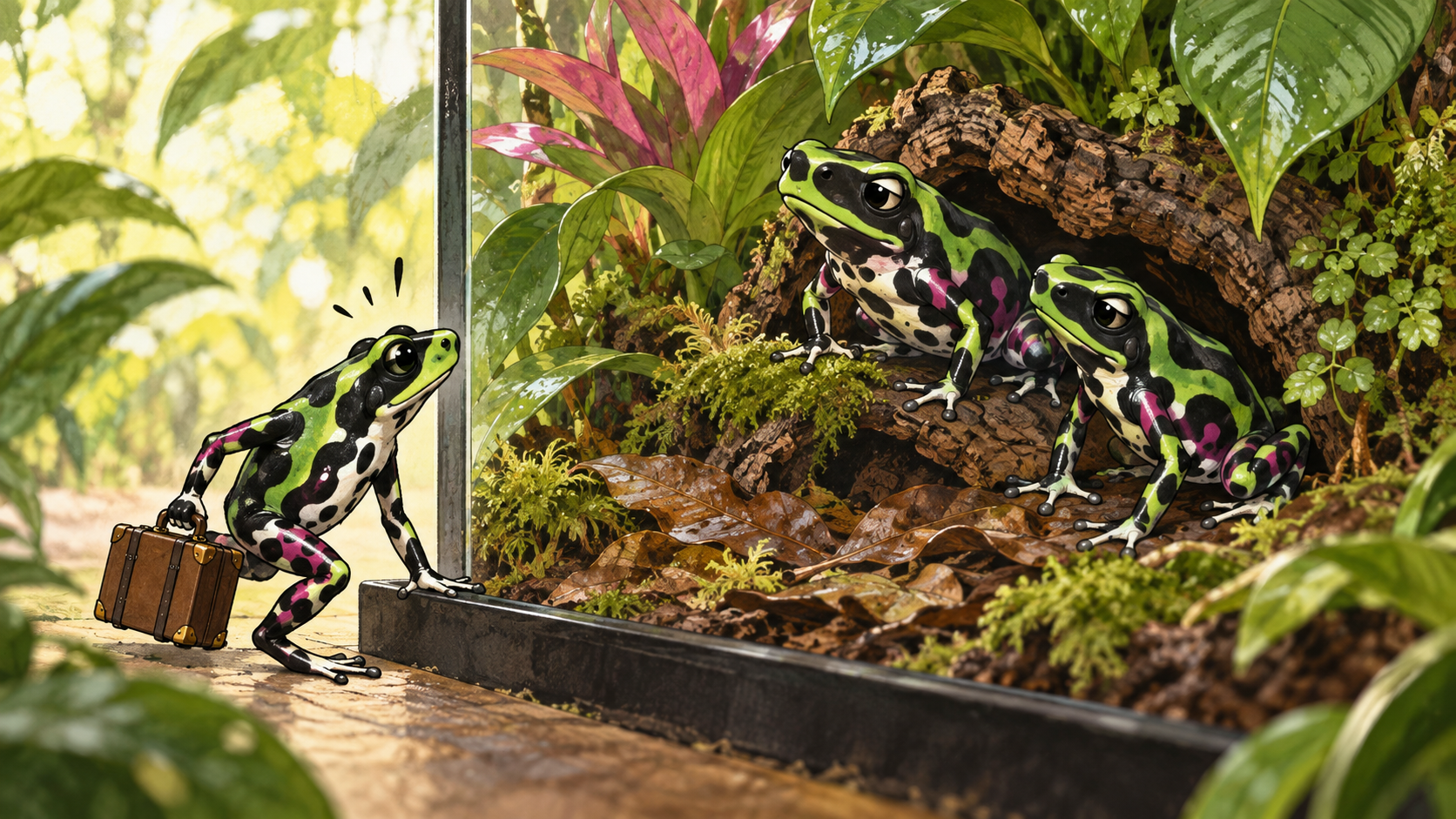
Moving dart frogs is one of those things that sounds simple until you actually do it.
It’s just putting a frog in a tub and taking it somewhere… right?
Not quite.
Transport is one of the most stressful things a dart frog will go through. Even captive-bred, well-established frogs can take a hit if it’s handled badly. And the frustrating part is, problems don’t always show up straight away.
They show up days later. Reduced feeding. More hiding. Slight weight loss. Behaviour shifts you only notice if you’re paying attention.
So whether you’re picking frogs up, selling them, moving house, or just shifting setups around — doing this properly matters.
This sits alongside your moving house guide, but this is focused purely on the frogs themselves.
What you’re actually trying to control
When transporting dart frogs, you’re managing three things:
- Temperature
- Humidity
- Stress
Everything else is secondary.
If those three stay stable, most moves go smoothly. If they swing, that’s when problems start creeping in.
The best containers for transporting dart frogs
Keep it simple and secure.
Recommended setup
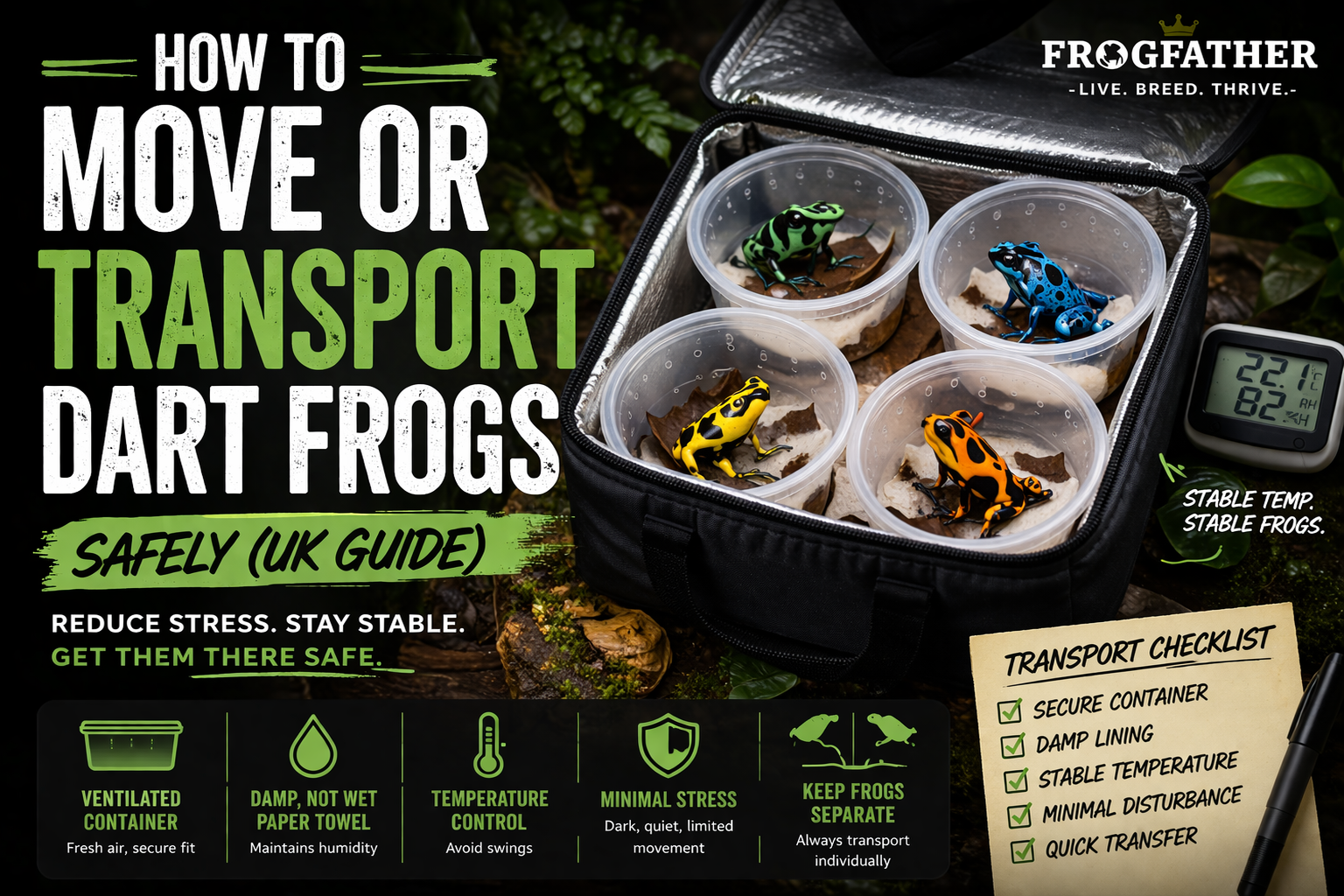
- Small ventilated deli cups or plastic tubs
- Damp (not wet) paper towel lining
- A bit of leaf or cover for security
You don’t want space for the frog to bounce around. You want controlled, minimal movement.
Too much room = more stress, more risk of injury.
What to avoid
- Large containers
- Standing water
- Dry setups
It’s about balance. Damp, stable, contained.
Temperature control (UK reality)
This is where most transport mistakes happen.
UK weather is unpredictable, and cars don’t stay stable.
Cold conditions
- Use insulated boxes
- Heat packs if needed (but never direct contact)
Warm conditions
- Avoid direct sunlight
- Keep airflow around containers
The goal is not “warm”. It’s stable.
Sudden changes are worse than slightly imperfect temperatures.
How long can dart frogs be transported?
Short journeys (1–3 hours) are usually straightforward if done properly.
Longer journeys are still possible, but you need to be more controlled.
For extended transport:
- Check conditions periodically
- Avoid unnecessary opening
- Keep movement to a minimum
Most issues come from repeated disturbance, not the journey itself.
Moving frogs between vivariums
This is often underestimated.
Even moving frogs across a room can cause stress if rushed.
Best approach:
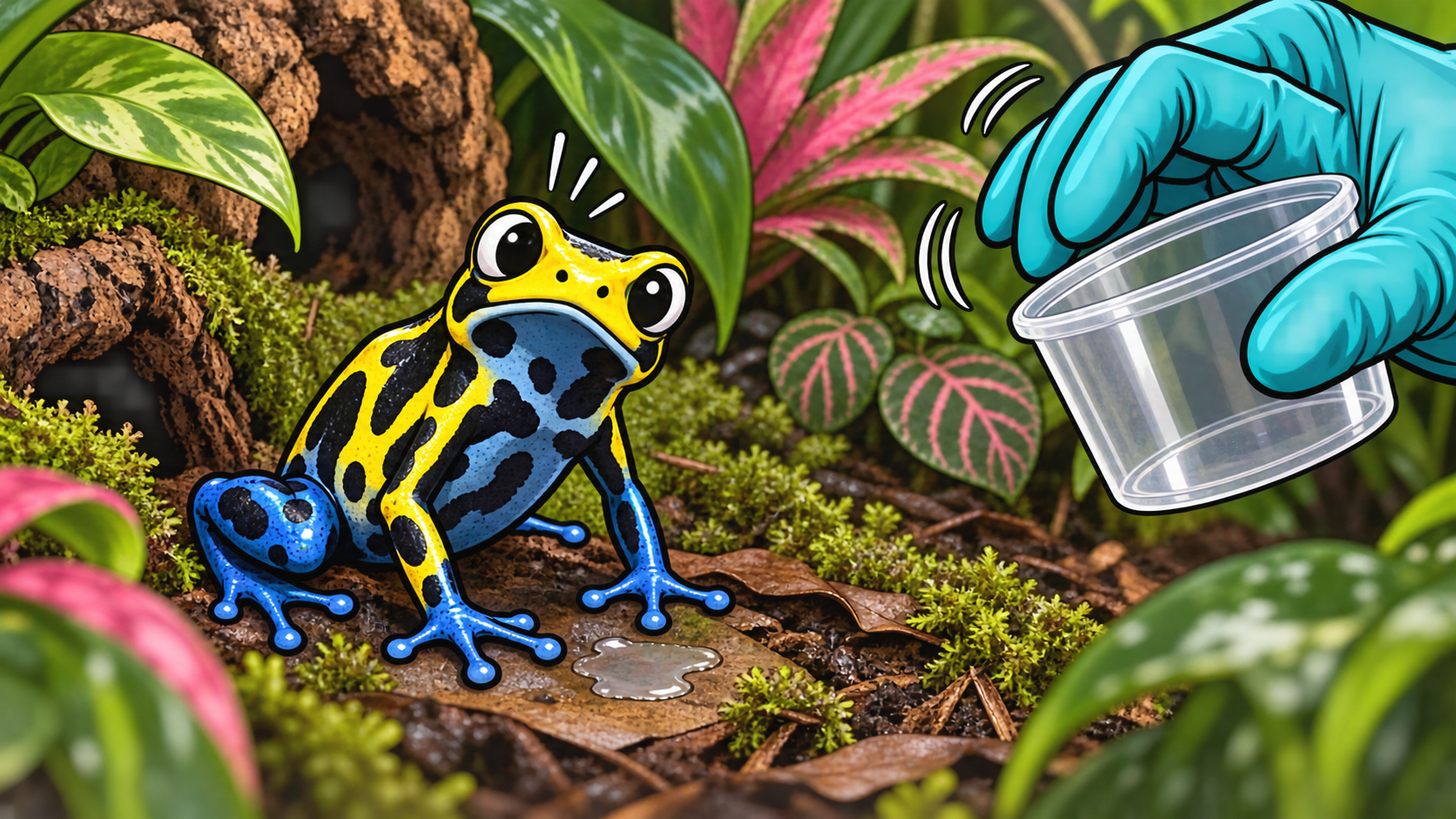
- Use a catch cup, not hands
- Move calmly and directly
- Avoid chasing
Quick, controlled movement is far better than drawn-out attempts.
Transporting multiple frogs
Keep them separate.
Even if they live together normally.
Transport changes behaviour. Stress levels rise. Keeping frogs together in a small container increases risk of:
- competition
- injury
- additional stress
Individual containers are often preferred because they reduce direct interaction, but transport format should follow species, number, container size, trip duration and welfare monitoring rather than an absolute rule.
After transport: what to expect
This is where people overreact.
After moving, frogs may:
- Hide more
- Eat less initially
- Move cautiously
This is normal.
Give them time.
This links directly back to your behaviour guide — you’re watching for recovery, not instant normality.
When transport causes problems
Issues usually come from:
- temperature swings
- overhandling
- poor container setup
If something does go wrong, it’s rarely random.
It’s usually one of those three.
Simple transport checklist
- Secure container
- Damp paper towel
- Temperature controlled
- Minimal disturbance
- Direct transfer to enclosure
Nothing complicated. Just done properly.
Why transport is worth getting right
Most dart frog setups take weeks or months to build properly.
Bioactive systems settle over time. Frogs establish routines. Everything starts to feel stable.
Bad transport can undo that in a day.
Good transport is invisible. Nothing happens. Frogs settle, feed, and carry on.
That’s exactly what you want.
Frequently Asked Questions
How do you transport dart frogs safely?
Use small ventilated containers with damp paper towel, stable temperature, and minimal movement.
Can dart frogs travel in cars?
Yes, but temperature must be controlled and they should not be exposed to direct sunlight or cold drafts.
Should dart frogs be transported together?
For most Frogfather dart-frog movements we use individual secure containers, but ‘always safer’ is too absolute; the chosen transport method must minimise injury, escape, overheating and dehydration.
How long can dart frogs be in a container?
There is no universal safe journey duration. Transport must be planned around fitness to travel, temperature, containment, welfare checks and the applicable transport rules.
Do dart frogs get stressed when moved?
Yes, but if handled properly, they usually recover quickly once settled.