Husbandry & Evidence Review – 5 September 2026
The older moss article contained ecosystem-stability, fixed-humidity, living-filter and universal-amphibian-safety claims that are now corrected.
There’s something magical about a vivarium carpeted in emerald moss. It softens the hardscape, helps regulate humidity, and turns any enclosure into a living rainforest floor. But keeping moss thriving inside a sealed glass box? That’s another story entirely. Let’s lift the lid (literally) on what makes moss tick — and why Paint-On Tropical Moss Starter might just be the smartest thing you add to your tank this year.
🌿 What Moss Really Needs
Moss is more than a green sponge. It’s a colony of tiny, non-vascular plants that absorb water and nutrients directly through their leaves. In the wild, tropical mosses cling to bark, rock, and damp soil, thriving in near-constant humidity and diffused light. In captivity, that means keeping conditions consistently moist without waterlogging the substrate — and giving your moss the right surface to attach to.
Many keepers mistake “wet” for “humid.” The trick is to balance moisture in the air and the substrate without drowning your moss. That’s why airflow, drainage layers, and misting schedules matter as much as lighting or fertilisation.
💧 Why Moss Dies in Vivariums
Most vivarium moss struggles because the microclimate fluctuates too much. High light + stale air = algae takeover. Too little ventilation = fungal slime. Poor water quality or mineral build-up from hard tap water can scorch delicate fronds. Even overzealous misting systems can wash spores away before they anchor.
Microfauna can contribute to decomposition and fungal grazing around moss, but they do not guarantee mould control or ecosystem stability. Moss success still depends on the moss species, substrate/surface, light, water, temperature and airflow.
🧫 The Science of Moss Establishment
Different mosses have different tolerances. Many vivarium mosses favour consistently moist surfaces, filtered light and useful airflow, but there is no universal 80–100% RH prescription and permanently saturated conditions can be unsuitable.
Moss takes up water and nutrients as it grows, but Frogfather does not describe it as a “living filter” that protects frogs from nutrient spikes. Water/substrate chemistry and waste management still need direct control.
🎨 Enter Paint-On Tropical Moss
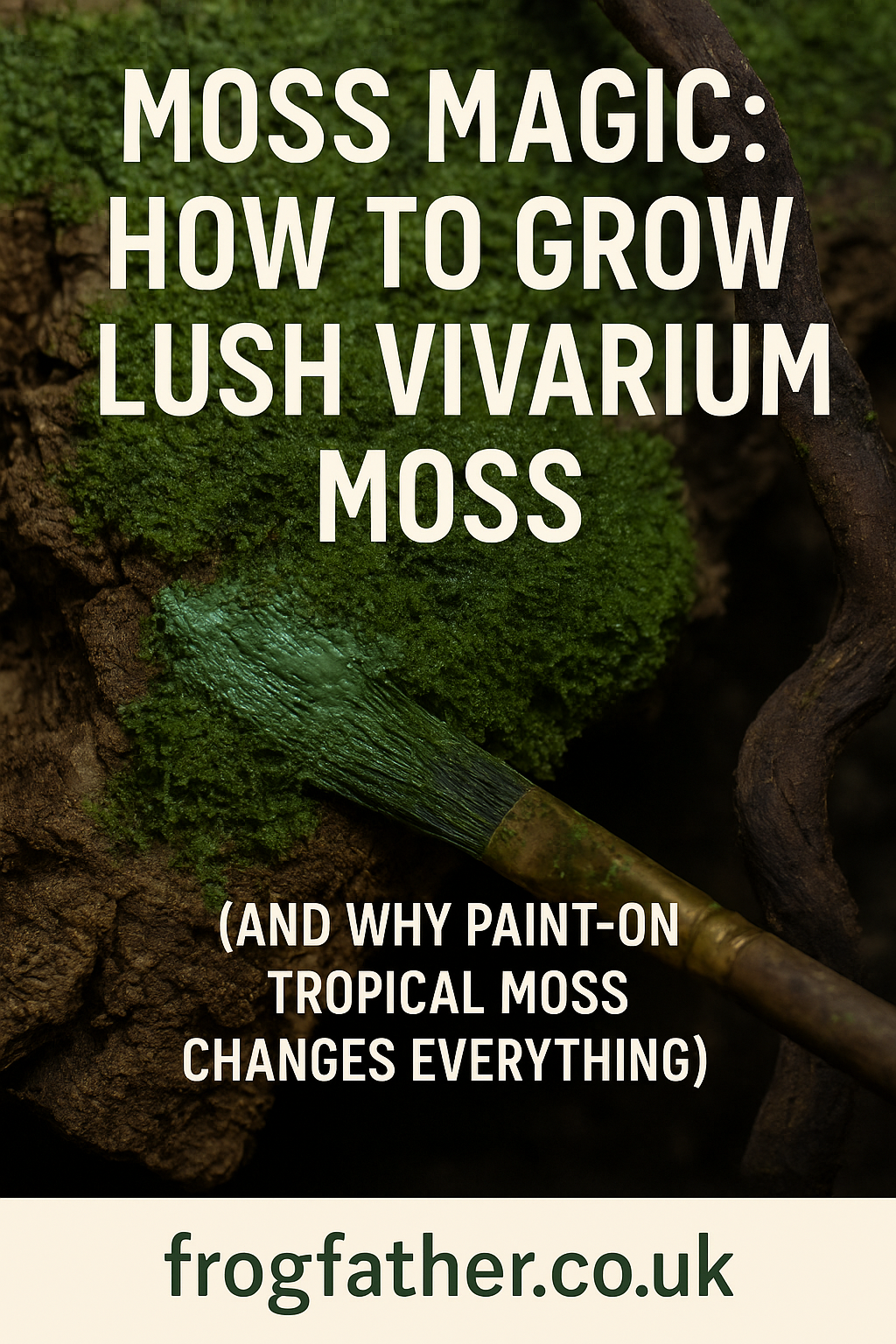
If you’ve ever tried to glue moss to wood only to watch it crumble, you’ll appreciate the genius of Paint-On Tropical Moss Starter. Instead of sticking pre-grown mats, this product lets you paint a mix of spores and substrate directly where you want moss to grow. It’s like nature’s wallpaper paste — minus the mess.
- Easy application: Brush or dab it on cork, wood, rocks, or foam backgrounds.
- Real tropical species: Designed for high-humidity vivariums.
- Quick colonisation: Green fuzz appears within 7–14 days under good conditions.
- Animal-enclosure use: prepare the moss/material as directed and assess residues/inputs before amphibian exposure; “natural” does not itself prove universal amphibian safety.
Because you’re starting from spores, the moss adapts to your tank’s conditions from day one. That means less shock, more coverage, and a far more natural look over time.
☀️ Light and Circadian Rhythm
Moss doesn’t need intense lighting, but it does benefit from a predictable day-night cycle. Too much light bleaches the fronds; too little and growth halts. A 12-hour photoperiod using soft full-spectrum LEDs like the Arcadia Jungle Dawn range works beautifully. Keep the light diffuse, not harsh, to mimic a rainforest canopy.
If you’re upgrading your lighting, consider 3D-Printed Jungle Dawn Light Risers to improve spread and reduce glare — small tweaks that make a huge difference to moss health and overall aesthetics.
🍂 Leaf Litter: The Moss Companion
Leaf litter is the unsung hero of moss culture. It shades delicate rhizoids, adds organic nutrients, and prevents evaporation. Premium tropical blends like Frogfather’s Bioactive Leaf Mix break down slowly, mimicking the forest floor and feeding beneficial microbes that stabilise your moss bed.
🧪 A Microbe’s-Eye View
Moss surfaces support microbial communities and interact with decomposing organic material. That ecology is real, but it should not be presented as a closed, self-reinforcing or self-sustaining loop.
That’s why patience wins. Avoid harsh cleaning agents and let nature rebalance. If you’re worried about pests, spot-treat rather than reset. A balanced microfauna population will do the heavy lifting.
⚙️ Water Quality and Maintenance
Use RO or dechlorinated water. Hard tap water leaves mineral crusts that suffocate moss. Keep misting light but regular — ideally two to three short bursts per day rather than one heavy soak. Wipe glass and check drainage weekly to avoid stagnant zones.
Every few months, gently prune overgrown moss to let air and light reach the base. Never peel it off surfaces — that breaks rhizoids. Instead, trim with scissors like you’re giving the forest a haircut.
🌱 Troubleshooting Common Moss Issues
- Brown patches: Too much direct light or dry air. Move to shaded zones and boost humidity.
- Yellowing: Nutrient imbalance; add new leaf litter or a tiny amount of liquid fertiliser outside frog zones.
- White mould film: Usually transient — increase ventilation and let springtails clean it up.
- Stalled growth: Check temperature (aim for 22–25 °C) and ensure you’re misting with soft water.
🐸 Why It Matters for Dart Frogs
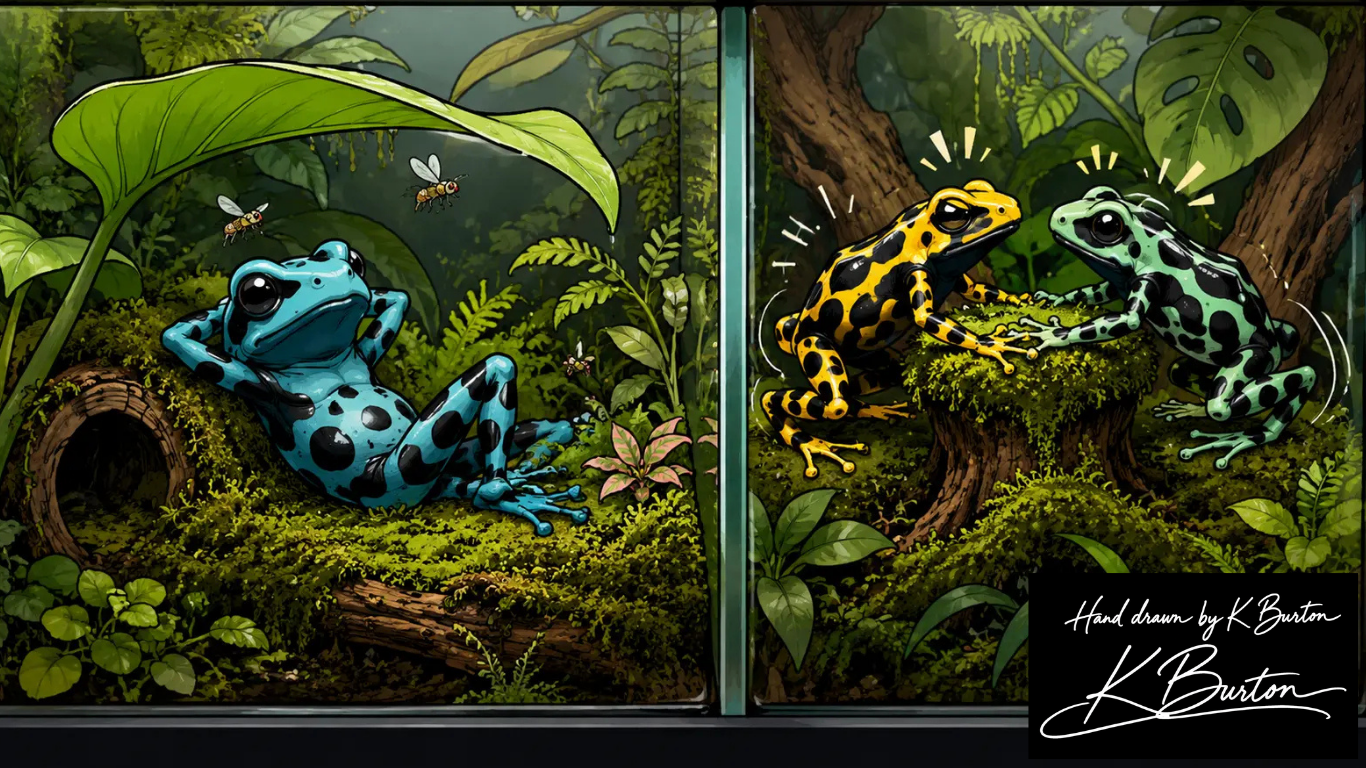
Beyond aesthetics, moss plays a key welfare role. It moderates humidity, protects delicate frog skin, and buffers temperature swings. Many dart frogs, like Ranitomeya species, even rest on moss pads between climbs. A thriving moss carpet equals healthier frogs and fewer hydration issues.
❓ Frequently Asked Questions About Vivarium Moss Growth
Can I use paint-on moss in dart frog tanks?
Paint-On Tropical Moss Starter is intended for humid planted vivarium surfaces. Growth and animal-enclosure suitability depend on preparation, ingredients, curing/establishment and the intended species; it is not described as universally “100% amphibian-safe” or perfect for every frog enclosure.
How long does it take for moss to grow?
Under stable humidity and moderate lighting, you’ll see fuzzy green moss growth in about 7–14 days. Full coverage usually develops within 4–6 weeks, depending on temperature and airflow.
Can moss survive without misting?
No — tropical moss relies on consistent humidity. Instead of heavy soaking, use short mist cycles two or three times a day to keep surfaces moist but not dripping.
Will moss grow on foam backgrounds?
Yes! The spores in Paint-On Moss attach to wood, cork, rock, and foam equally well. Keep the surface damp and avoid blasting it directly with misting nozzles until it takes hold.
What’s the ideal light for moss growth?
Soft, full-spectrum LED lighting with a 12-hour cycle (such as the Arcadia Jungle Dawn range) promotes dense, healthy moss. Avoid harsh spotlights that dry the fronds out.
💬 Final Thoughts
Building a living carpet isn’t instant — but when it works, it transforms your enclosure. Paint-On Tropical Moss Starter gives keepers a controllable, sustainable way to seed real moss that grows where you want it. Pair it with good lighting, airflow, and a solid cleanup crew, and you’ll have a mini-rainforest thriving behind glass — the way nature intended.
✨ Ready to turn your vivarium green again? Grab a pot of Paint-On Tropical Moss Starter and start painting your next masterpiece.