
Description
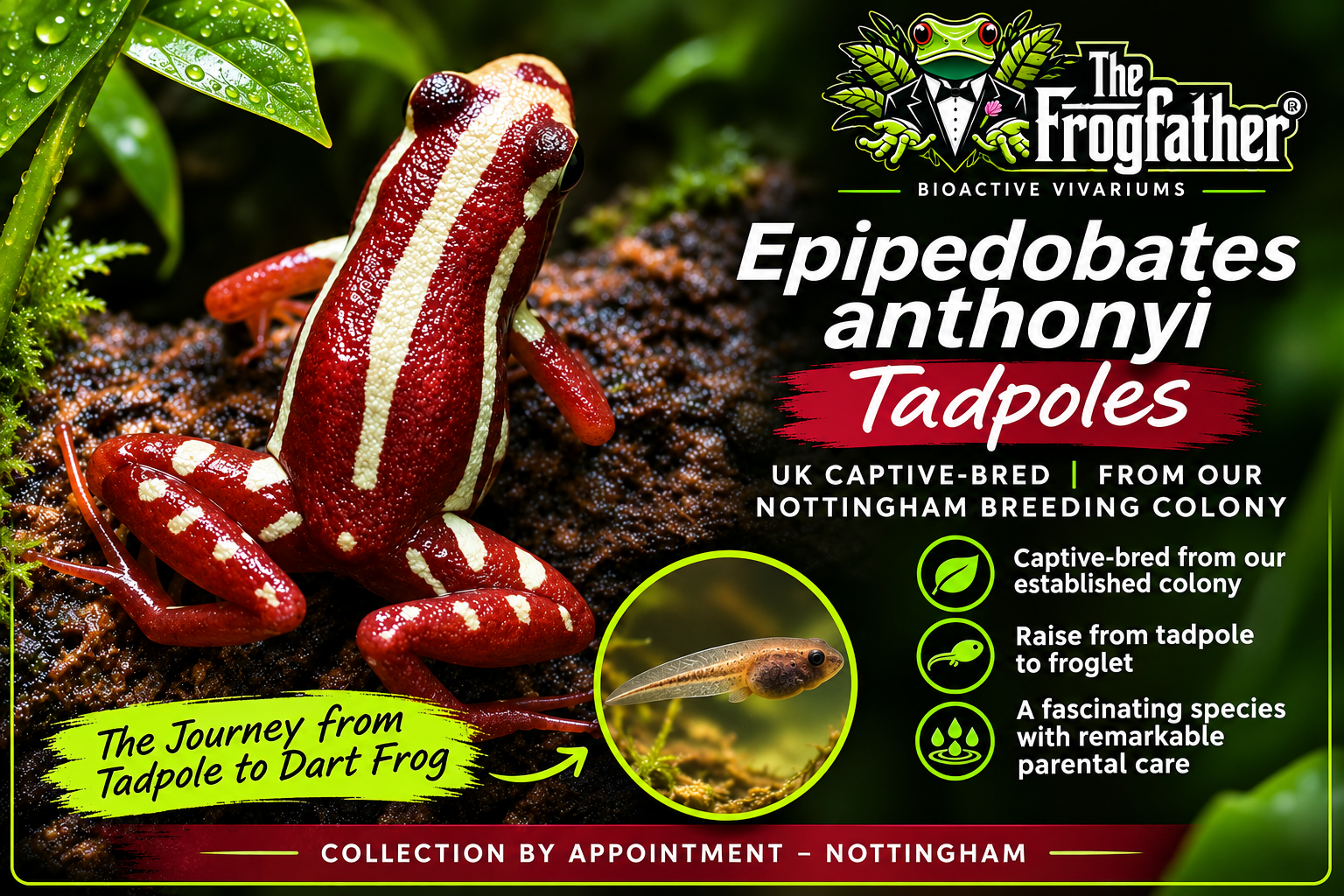
Epipedobates anthonyi Tadpoles – Captive Bred at The Frogfather
There are few experiences in amphibian keeping quite as rewarding as watching a tiny tadpole transform into a fully formed dart frog.
Here at The Frogfather in Nottingham, we breed our own Epipedobates anthonyi, commonly known as Anthony’s poison dart frog. These fascinating South American amphibians are known for their energetic personalities, distinctive calls and extraordinary parental behaviour.
Our captive-bred tadpoles offer enthusiasts the opportunity to witness one of nature’s most remarkable transformations, from an aquatic tadpole to a miniature terrestrial frog.
Raised From Our Own Breeding Colony
Our tadpoles come from our established breeding colony, allowing us to observe the animals throughout their reproductive cycle.
One of the most fascinating behaviours of Epipedobates anthonyi is the role played by the males in raising their offspring.
Following egg development, the male transports newly hatched tadpoles on his back to suitable bodies of water, where they continue growing and developing.
Watching a tiny dart frog father carrying his offspring is an extraordinary sight and one of the reasons this species is such a favourite here at The Frogfather.
From Tadpole to Froglet
Raising Epipedobates anthonyi tadpoles allows you to observe the stages of amphibian metamorphosis first-hand.
- Aquatic development: Tadpoles grow and feed in appropriately maintained water.
- Hind-leg development: The first visible signs of transformation begin to appear.
- Front-leg emergence: The developing froglet starts preparing for life outside the water.
- Tail absorption: The tail is gradually reabsorbed as the animal completes metamorphosis.
- Life as a froglet: The newly emerged frog begins feeding on tiny terrestrial invertebrates.
Development rates vary between individuals and depend on water conditions, feeding, temperature and other husbandry factors. There is no guaranteed timetable for metamorphosis.
Everything You Need to Get Started
Preparing the correct environment before your tadpoles arrive is essential. We offer a selection of specialist products designed to support their development and transition to terrestrial life.
Recommended: Tadpole Grow-Out Kit & Bioactive Tub
Our complete TadpoleGrowout Kit includes equipment for the aquatic rearing stage alongside a prepared bioactive grow-out environment for froglets after metamorphosis.
It’s a convenient option for keepers who want to prepare for both stages of development.
Creating a Natural Environment for Your Froglets
Once metamorphosis is complete, young Epipedobates anthonyi require a secure, humid terrestrial environment with appropriate ventilation, shelter and access to tiny live foods.
Natural leaf litter provides sheltered areas, helps create a more complex habitat and supports the microfauna within a bioactive enclosure.
Our Forest Floor Tamarind Leaves are ideal for creating a natural-looking forest floor, with small leaves that are particularly convenient for detailed vivarium layouts.
These leaves are intended for the terrestrial enclosure, rather than as a replacement for appropriate aquatic tadpole care.
Feeding and Supplementation After Metamorphosis
While tadpoles require a suitable aquatic diet, newly emerged froglets transition to feeding on tiny live invertebrates.
Springtails and appropriately sized fruit flies are commonly used as starter foods, with feeder size adjusted as the frogs develop.
Once your froglets are eating suitable terrestrial feeder insects, nutritional supplementation becomes an important consideration.
At The Frogfather, we use our All-in-One Vitamin & Mineral Dust as our routine feeder-insect supplement.
Our system is designed for a light coating of suitable feeder insects at every feed, combining calcium, vitamins and trace minerals in one convenient formulation. Individual nutritional needs should always be considered alongside the complete diet and husbandry.
Important: Supplement dust is for suitable feeder insects after metamorphosis. It should not be added directly to tadpole water.
Why Choose Captive-Bred Tadpoles From The Frogfather?
- Our own breeding colony: We maintain and breed the parent animals ourselves.
- UK captive-bred: Tadpoles are produced through our Nottingham breeding programme.
- Responsible husbandry: We focus on appropriate animal care and preparation.
- Specialist support: We can advise on suitable equipment and developmental requirements.
- Complete equipment options: Tadpole raising and froglet grow-out supplies are available from our shop.
Frequently Asked Questions
Are these tadpoles captive-bred?
Yes. Our Epipedobates anthonyi tadpoles originate from our own captive breeding colony in Nottingham.
How long will they take to become frogs?
Development varies depending on the individual, temperature, feeding and water conditions. We cannot guarantee an exact metamorphosis date.
Can I keep the tadpoles together?
Individual rearing is a useful precaution, particularly where differences in size or feeding behaviour develop. Our tadpole raising kit includes individual rearing cups.
What happens when the tadpoles develop legs?
As metamorphosis approaches, the animals must have safe access out of the water into an appropriately humid environment. A prepared grow-out setup helps accommodate this transition.
What should I feed the froglets?
Newly emerged froglets need very small live foods such as springtails and appropriately sized fruit flies. Suitable feeder insects can be lightly dusted with an appropriate nutritional supplement.
Can the tadpoles be delivered?
Collection is currently available by appointment from Nottingham. Please contact us to discuss availability and collection arrangements.
Availability and Collection
Our breeding programme operates around the natural reproductive cycles of our frogs, so tadpole availability can vary.
Collection by appointment from Nottingham.
Please ensure that you have suitable aquatic housing and a plan for the froglet stage before purchasing.
If you’re unsure which equipment you need, please contact us through the website and we’ll be happy to help.
By The Frogfather
Nottingham, United Kingdom