

Husbandry & Evidence Review – 5 September 2026
Leaf-litter hiding can be normal. Concern is driven by change plus appetite, body condition, coordination, breathing, temperature/moisture and social context rather than hiding alone.
Written by The Frogfather | UK dart frog keeper, breeder and bioactive vivarium specialist | Last reviewed: 28 August 2026
Why Is My Dart Frog Buried Under Leaf Litter? Normal Hiding or a Warning Sign?
Finding a dart frog tucked beneath the leaf litter can be unsettling, particularly when the frog is usually bold. It may look as though the animal has disappeared, become trapped or deliberately buried itself.
In many cases, the frog is simply using one of the most valuable parts of a naturalistic vivarium. Loosely layered leaves create shaded pockets, protected routes and local moisture conditions that cannot be understood from one hygrometer reading. A frog may rest there, avoid disturbance, hunt microfauna or briefly seek a more comfortable microclimate.
The behaviour matters most when it represents a change and occurs alongside other signs. A frog that slips beneath a curled leaf and later emerges to feed is very different from one that remains concealed, loses weight, ignores food and looks weak when seen.
Why do dart frogs go underneath leaf litter?
Leaf litter is not merely decoration placed over the substrate. In a well-built vivarium, it forms a three-dimensional forest-floor layer containing gaps, curled edges, shaded chambers and routes between plants and hardscape.
A frog may move beneath it for several ordinary reasons:
- Security: overhead cover reduces visual exposure while allowing the frog to move.
- Rest: a quiet pocket beneath a leaf can provide a protected resting place.
- Moisture: lower layers often retain moisture longer than exposed surfaces.
- Temperature: shaded ground-level pockets may differ from brighter or more exposed areas.
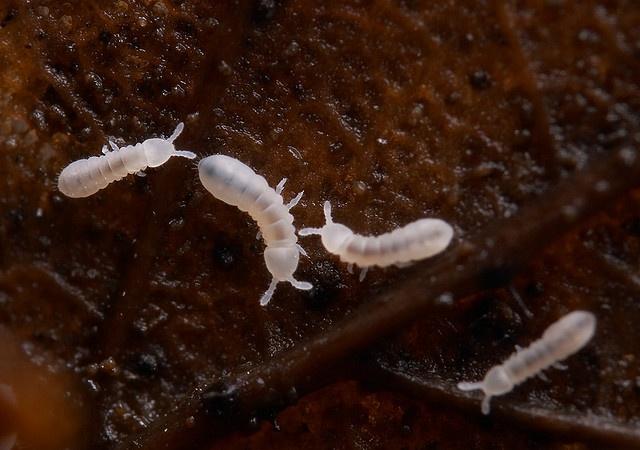
- Foraging: springtails and other tiny prey gather around decomposing organic material.
- Breeding: some frogs inspect secluded surfaces, court, guard territories or use sheltered sites associated with egg deposition.
- Avoiding disturbance: movement outside the vivarium, maintenance or a recent change may prompt temporary concealment.
Context is everything. A healthy frog may vanish beneath the leaves for part of the day and reappear at feeding time. Some individuals use the same retreat repeatedly. Others become much more visible once they learn the enclosure’s routines.
The broader guide to why dart frogs hide covers enclosure-wide shyness. This article concentrates on the more specific behaviour of entering the leaf layer itself.
Do dart frogs burrow?
Keepers often use “buried” or “burrowing” to describe any frog that disappears beneath leaves. Usually, the frog has pushed through existing gaps or slipped beneath a curled edge rather than excavating a tunnel like a specialised fossorial frog.
Loose leaves move easily around a small animal, so a frog can appear surprisingly deep without digging into the substrate. That distinction matters because entering a structured litter layer is expected behaviour; repeatedly forcing into waterlogged soil, compacted substrate or a drainage-layer gap suggests a husbandry or enclosure-access problem that should be corrected.
Can a frog become trapped?
A healthy dart frog should be able to move through loose, appropriately sized leaves. Problems are more plausible when the layer contains heavy decorations, unstable stone, sticky decomposed mats, collapsing hardscape or artificial materials with narrow openings.
Do not compress leaf litter into a flat wet blanket. Preserve air spaces and curled edges, and make sure hardscape cannot shift. Block access to unsafe drainage cavities, pump compartments and gaps behind backgrounds. If the enclosure is structurally sound, the simple fact that you cannot see the frog does not mean it is trapped.
Is hiding under leaves normal for a new dart frog?
Yes. Transport, a new enclosure, unfamiliar neighbours, different lighting and activity outside the glass can temporarily increase hiding. The frog has not yet learned where cover, food and boundaries are, so using the leaf layer is a sensible response.
A settling frog should gradually establish a routine. You may see it emerge when the room is quiet, shortly after misting or as prey becomes available. Improvement is more important than an exact deadline: an individual that is feeding and becoming more confident is different from one whose condition is declining.
During proper dart frog quarantine, observation is easier because the setup is intentionally simple. Once a frog enters a densely planted display vivarium, avoid dismantling the enclosure every day to confirm its location. Excessive searching can extend the very behaviour causing concern.
Species and individual temperament matter
Dart frogs do not all behave alike. Larger Dendrobates may become conspicuous and food-driven, while some smaller species spend much more time moving through cover. Even frogs of the same species and age may differ substantially in confidence.
Judge a frog against its established pattern where possible. A naturally secretive animal is not automatically unwell; a normally bold frog disappearing for several days represents a more meaningful change.
Environmental reasons a dart frog may stay beneath the leaves
A frog chooses among the conditions available to it. If it spends nearly all its time in one protected pocket, investigate what that location offers—or what the exposed enclosure lacks.
The exposed surface is too dry
A digital display showing high relative humidity does not prove that every surface is suitable. Humidity varies with height, airflow, time since misting and proximity to wet material. The sheltered underside of a leaf may remain comfortable after exposed surfaces have dried.
Read the dart frog humidity and microclimate guide before responding by soaking the entire vivarium. The goal is a stable system containing choices, not permanently saturated surfaces.
The vivarium is too warm
Heat from lighting, pumps, nearby equipment or a warm room can create an enclosure gradient. Ground-level shaded areas may be cooler, prompting a frog to remain below cover. Measure at frog level and at different times rather than relying on a room thermometer.
Heat becomes urgent when hiding accompanies reduced feeding, unusual posture, rapid or laboured breathing, poor coordination or weakness. Follow the dedicated dart frog heat-stress guide if temperatures have risen.
Lighting or exposure is excessive
Plant lights can make a vivarium look spectacular while leaving the forest floor visually exposed. Sparse planting, reflective glass, long photoperiods or sudden changes in brightness may cause frogs to stay below cover.
Rather than simply reducing all light and compromising plant health, add low-level planting, wood, cork and shaded routes. A secure frog often becomes more visible because it can retreat at any moment.
The litter is the only usable microclimate
One perfect central reading can hide major differences between the vent, upper foliage, substrate and shaded retreats. The guide to dart frog vivarium zones explains why measurements should be interpreted spatially.
If every frog crowds into one damp pocket, do not remove the pocket to force visibility. Identify why the rest of the enclosure is less usable.
The enclosure is too wet
More misting is not the automatic solution to hiding. A frog may also use curled leaves to get away from saturated soil, standing water or constantly drenched surfaces. A sour smell, decomposed leaf mat, persistent condensation and waterlogged substrate indicate that drainage, airflow or misting may need review.
Normal leaf-litter hiding versus a warning sign
| More consistent with normal sheltering | More concerning |
|---|---|
| Frog emerges to feed or explore | Frog repeatedly ignores suitable moving prey |
| Good posture, coordination and alert response | Flat posture, weakness, wobbling or poor righting response |
| Stable body shape and condition | Visible narrowing, prominent pelvic bones or documented weight loss |
| Temporary after moving, maintenance or disturbance | New behaviour that persists or progressively worsens |
| Uses several retreats and follows a recognisable routine | Remains in one place and appears unable or unwilling to move normally |
| Skin looks normally hydrated and intact | Abnormal shedding, sores, discolouration, swelling or excessive dryness |
| Other frogs show compatible, relaxed behaviour | Chasing, pinning, exclusion from food or several frogs becoming withdrawn |
Hiding is a behavioural observation, not a diagnosis. Interpret it with appetite, body condition, droppings, breathing, posture, skin and changes in the enclosure. The normal-versus-red-flag behaviour guide helps place these signs together.
What should you do when a dart frog disappears under the leaves?
- Think about timing. Note when the frog was last seen behaving and feeding normally, plus any recent move, maintenance, new animal or equipment change.
- Observe before disturbing. Watch quietly around the usual feeding period and after misting. Look from the sides as well as the front.
- Check the environment. Measure temperature at frog level and in more than one zone. Review surface moisture, drainage, ventilation and lighting.
- Offer food where it can be monitored. Place an appropriate amount of dusted prey near the retreat without flooding the enclosure with feeders.
- Assess social behaviour. Watch which frog controls feeding areas and what happens when the hidden individual emerges.
- Record evidence. Photograph the frog when visible and compare body shape over time. Use the guide to monitoring dart frog weight and body condition without unnecessary catching.
- Escalate appropriately. If the frog is not feeding, is losing condition or shows another clinical sign, arrange veterinary advice rather than repeatedly modifying the vivarium.
Should you dig the frog out?
Not as a daily reassurance exercise. Repeatedly lifting leaves, moving wood and chasing the frog removes security and can make future observation harder.
A careful visual check is justified when the frog has missed its normal activity for an unusual period, the enclosure contains a possible hazard, a health concern already exists or you need to identify an individual before veterinary care. Lift loose leaves slowly and replace them without collapsing the retreat. Avoid grabbing the frog.
How long is too long?
There is no responsible universal number of hours or days. Species, individual temperament, enclosure complexity, feeding routine and recent disturbance all affect visibility. Use change from the frog’s baseline and evidence of normal feeding and condition rather than a countdown.
How to create leaf litter that gives security without hiding problems
Good leaf litter should allow natural retreat while remaining safe and structurally useful.
- Cover most exposed substrate with at least two loose, overlapping layers.
- Use durable larger leaves as structure, with medium leaves filling gaps.
- Retain curled edges and natural spaces rather than pressing leaves flat.
- Create deeper pockets beneath plants, cork and shaded areas.
- Leave some accessible feeding and observation areas.
- Remove unsafe, contaminated or heavily decomposed material as needed, but do not sterilise the floor constantly.
- Maintain drainage and airflow so the lower layer is humid without becoming an anaerobic wet mat.
- Use leaves from safe, properly identified and appropriately prepared sources.
The complete dart frog leaf-litter guide explains suitable structure, depth and maintenance in more detail.
Do not design the vivarium solely to keep frogs visible
A display enclosure should let the animal choose cover. Removing leaves to stop a frog hiding may make it feel more exposed and therefore less willing to move. Counter-intuitively, generous cover frequently produces bolder behaviour because the frog can travel between safe points.
The goal is not a permanently visible frog. It is a frog that can choose where to be while maintaining normal appetite, condition and behaviour.
Frequently asked questions
Is it normal for a dart frog to hide under leaf litter?
Yes. Dart frogs commonly use loose leaf litter for security, rest, foraging and access to sheltered microclimates. It becomes more concerning when the behaviour is a persistent change accompanied by poor feeding, weight loss, weakness or another abnormal sign.
Do dart frogs bury themselves in soil?
Dart frogs usually move through gaps beneath leaves rather than excavating soil like specialised burrowing frogs. Repeatedly forcing into compacted substrate, drainage cavities or unsafe gaps should prompt an enclosure review.
Should I uncover a dart frog that is hiding?
Do not repeatedly uncover a healthy frog simply for reassurance. A careful check is reasonable when its normal routine has changed, a hazard may be present or signs of illness justify examination or veterinary care.
Can low humidity make a dart frog hide beneath leaves?
Yes. The sheltered layer beneath leaves may retain moisture after exposed surfaces dry. Check several microclimates rather than trusting one humidity reading, but do not respond by saturating the whole enclosure without assessing drainage and ventilation.
Can a vivarium be too wet even if the frog is under leaf litter?
Yes. A frog may use curled leaves to avoid saturated substrate or constantly drenched surfaces. Waterlogged soil, collapsed wet leaf mats, persistent stagnant conditions or a sour smell require a review of misting, drainage and airflow.
Can bullying cause one dart frog to remain hidden?
Yes. A subordinate frog may retreat beneath litter when another frog controls food, space or movement routes. Watch the group during feeding and look for displacement, chasing, exclusion and loss of body condition.
How long can a dart frog stay hidden under leaves?
There is no universal safe duration because species, individual temperament and recent disturbance vary. Compare the behaviour with that frog’s normal routine and look for evidence that it still emerges, feeds and maintains good condition.
When should hiding beneath leaf litter concern me?
Concern rises when a normally visible frog suddenly remains concealed and also stops eating, loses weight, develops abnormal posture or skin, breathes with obvious effort, moves poorly or is being socially excluded. Seek amphibian-experienced veterinary advice when health signs are present.

Can bullying make a dart frog hide under leaf litter?
Yes. Social pressure is often subtle. The dominant frog does not need to be visibly wrestling its enclosure mate whenever you look. Guarding a feeding area, repeatedly approaching, calling from a preferred site or interrupting another frog’s movement may be enough to keep the subordinate animal beneath cover.
Possible clues include:
Provide several feeding zones and multiple routes between cover. If one frog is deteriorating, adding more leaves may hide the conflict without solving it. Separation into an appropriate prepared enclosure may be necessary while the group is assessed.