
Why Are My Springtails Disappearing? 10 Causes and Solutions
By The Frogfather
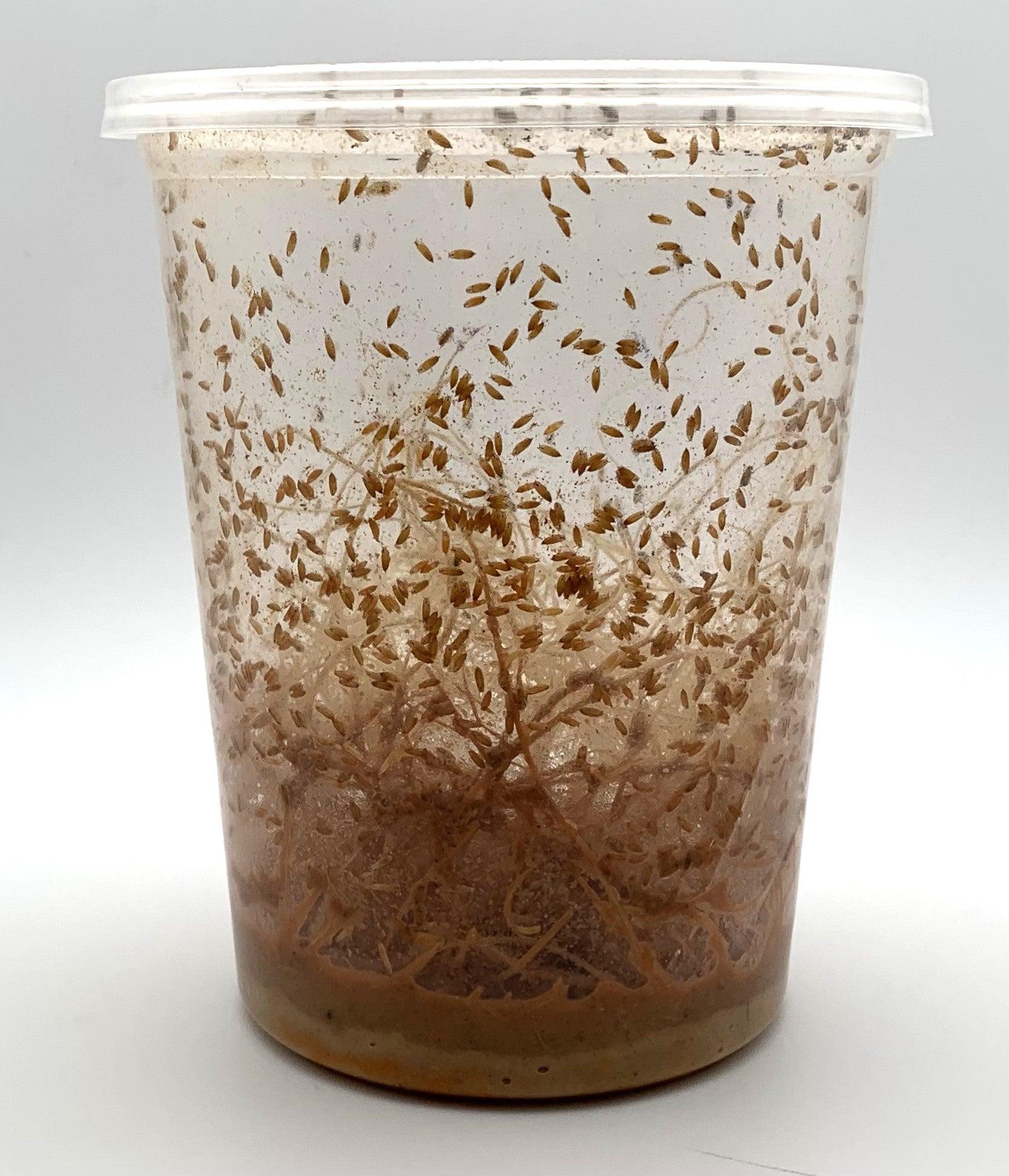
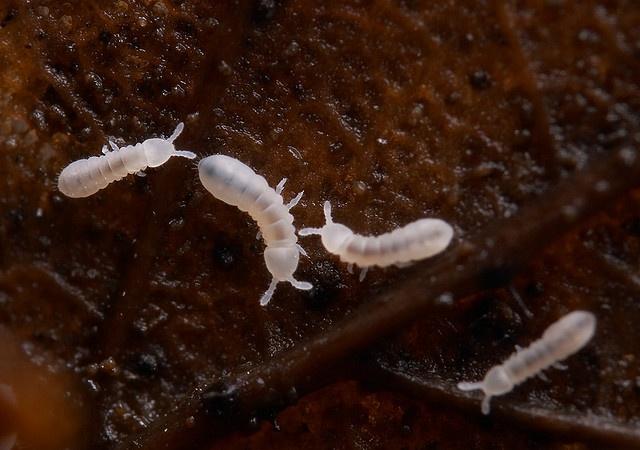
You’ve added a healthy springtail culture to your new bioactive vivarium. When you first tipped them in, you could see hundreds of tiny white creatures moving across the substrate.
A week later, you can’t find a single one.
Have they died? Have your frogs eaten them all? Or has something gone wrong with the substrate?
It’s a question I regularly encounter when discussing bioactive enclosures, and the answer is often much less worrying than people expect.
Springtails can be present and reproducing without being particularly visible.
At Frogfather HQ, springtails are an important part of my established bioactive systems. I maintain cultures separately and use them throughout my vivariums, where they contribute to the breakdown of organic material and support the wider substrate ecosystem.
However, an apparently empty enclosure doesn’t automatically indicate a thriving colony either. Sometimes springtails really do decline, and understanding why is important.
In this guide, I’ll explain ten reasons springtails may seem to disappear, how to check whether they’re still present and what I would do to encourage a sustainable population.
Quick Answer: Why Have My Springtails Disappeared?
Springtails may become difficult to see because they have moved deeper into the substrate, spread throughout the enclosure or are concentrating in moist, sheltered areas.
However, populations can also decline because of unsuitable moisture, temperature, food availability, substrate conditions, contamination or predation.
Before buying another culture, investigate the conditions inside your vivarium and look for springtails in the places they’re most likely to be living.
1. Your Springtails Have Moved Into the Substrate
This is one of the simplest explanations.
When springtails are first introduced, they’re often concentrated in one area. They may be easy to spot on the surface because they’ve just been disturbed or transferred from a culture container.
Once they settle, they disperse into the leaf litter, soil pores and sheltered areas beneath hardscape.
Depending on the species, many spend much of their time away from exposed surfaces.
In other words, you may be seeing fewer springtails because they’re behaving naturally, not because they’ve disappeared.
How to Check
Carefully lift a small piece of damp leaf litter or inspect the underside of an accessible piece of cork bark.
Look for tiny organisms moving through the moist material beneath it.
A magnifying glass or a photograph taken with your phone’s macro setting can help.
Avoid repeatedly disturbing the whole substrate just to count them.
2. Your Springtails Have Spread Throughout the Vivarium
A newly introduced culture may contain hundreds of springtails in a relatively small quantity of material.
That makes them easy to see.
Once those same animals spread through an entire vivarium, their density in any particular spot becomes much lower.
For example, a culture added to a small container may look extremely active, while the same number of springtails distributed across a heavily planted 60 cm enclosure may be almost invisible.
This is particularly noticeable in vivariums with deep substrate, substantial leaf litter and complex planting.
Don’t judge the health of a colony purely by how many springtails you can see on the glass.
3. The Substrate May Be Too Dry
Springtails are closely associated with moisture, although the requirements vary considerably between species.
Many commonly cultured tropical springtails thrive in damp environments.
If the substrate dries excessively, they may retreat into deeper or more humid areas. Severe or prolonged drying can reduce survival and reproduction.
What to Check
- Is the substrate drying out beneath the leaf litter?
- Are ventilation openings causing excessive drying in particular areas?
- Does moisture reach the substrate, or is misting mainly wetting the leaves?
- Are there consistently damp refuges available?
Remember that a humidity reading taken above the substrate does not necessarily tell you how moist the substrate itself is.
At Frogfather HQ, I assess the actual enclosure conditions rather than relying on a single humidity percentage.
What to Do
Maintain suitable substrate moisture for the springtail species and the animals living in the enclosure.
Do not compensate for dry substrate by saturating the entire vivarium indiscriminately.
4. The Substrate May Be Too Wet
It might seem contradictory, but excessive water can also cause problems.
Springtails need appropriate moisture, not necessarily permanently flooded substrate.
When soil pores become filled with water, oxygen availability can decrease, potentially creating unsuitable conditions for some springtail species.
Different springtails tolerate different degrees of saturation, so the precise response depends on the organisms involved.
Warning Signs
- Water pooling on the substrate surface.
- Compacted, muddy substrate.
- Persistent standing water beneath leaf litter.
- Unpleasant smells from the substrate.
- Drainage water accumulating to an inappropriate level.
Correct drainage problems while preserving the moisture conditions required by your frogs and plants.
For more on this subject, see our guide to why a bioactive vivarium smells bad.
5. There May Not Be Enough Suitable Food
Springtails feed on a range of materials, including fungi, microorganisms and decomposing organic matter. Their precise diet varies between species.
In a mature bioactive vivarium, these resources are often produced naturally as leaves and other organic materials break down.
However, a brand-new enclosure may not yet support the same biological activity as an established one.
If food resources are limited, a springtail population may grow slowly or fail to maintain its original numbers.
Should You Add More Food?
Not automatically.
Overfeeding can encourage unwanted mould, mites and other organisms, particularly in a small enclosure.
In a separate springtail culture, carefully controlled supplemental feeding may be useful.
Inside an occupied vivarium, I would focus first on suitable leaf litter, substrate structure and stable conditions rather than scattering large amounts of food.
6. Your Vivarium Is Still Establishing Its Bioactive Ecosystem
Newly assembled vivariums can look finished long before their biological systems have matured.
The plants may be in place, the background may be complete and the substrate may look perfectly natural.
But the microorganisms, fungi and decomposer communities are still developing.
Springtail populations can fluctuate as these resources change.
This is one reason I value mature bioactive substrate at Frogfather HQ.
An established system already contains a community of microorganisms and microfauna, although its presence does not guarantee that every newly introduced springtail species will thrive.
What to Do
Give the enclosure time to establish, provided the environmental conditions are suitable.
Continue observing rather than repeatedly replacing the substrate or introducing large numbers of new organisms.
7. Your Frogs or Other Animals May Be Eating Them
Springtails can be eaten by dart frogs and other small insectivorous animals.
For very small froglets, springtails may form part of an appropriate feeding programme, depending on the species and size of the prey.
In an established enclosure, predation may influence how many springtails are visible on the surface.
However, it doesn’t necessarily mean the entire population has been consumed.
Springtails living beneath leaf litter and within substrate pores may remain less accessible to predators.
How to Help
Provide a well-structured substrate and adequate leaf litter so springtails have sheltered areas in which to live and reproduce.
Continue feeding your frogs appropriately rather than expecting the springtail colony to provide all their nutrition.
8. Temperature May Be Affecting Reproduction
Temperature influences the activity, development and reproduction of springtails.
However, there is no single ideal temperature for every springtail species.
Some species are adapted to cooler conditions, while others are associated with warmer tropical environments.
A culture that reproduces well in one room may behave differently when moved into a vivarium with a different temperature cycle.
What I Would Check
- Actual daytime and nighttime temperatures.
- Whether the enclosure experiences excessive heat.
- Whether temperatures fall outside the needs of the springtail species.
- Whether a recent change in heating coincides with the decline.
Do not increase the vivarium temperature solely to encourage springtail reproduction if doing so would compromise the welfare of the animals housed there.
The frogs’ environmental requirements take priority.
9. Chemicals or Contaminated Materials May Have Affected the Colony
Springtails are small invertebrates and can be affected by substances introduced into their environment.
Potential concerns include:
- Pesticide residues on new plants.
- Insecticidal sprays.
- Unsuitable cleaning products.
- Contaminated substrate or decorations.
- Unverified chemical treatments used against other pests.
If springtails suddenly decline after introducing a new material or treatment, consider whether exposure could be involved.
Amphibians may also be vulnerable to chemical exposure, so this is not simply a springtail husbandry issue.
What to Do
Stop using any suspect product and assess the enclosure’s safety.
Do not add further chemicals in an attempt to correct the problem.
If amphibian exposure or illness is suspected, seek prompt advice from an appropriately experienced veterinary surgeon.
10. The Original Culture May Have Been Small or Struggling
Not every starter culture contains the same number of living springtails.
A newly established culture may contain relatively few adults, with much of its future population represented by eggs or juveniles that are difficult to see.
Likewise, an ageing or poorly maintained culture may have fewer viable individuals than expected.
That can affect how quickly a population becomes established in a new vivarium.
When assessing a culture, consider whether it was actively reproducing before introduction, rather than relying solely on the number of visible adults.
How to Tell Whether Springtails Are Still Alive in Your Vivarium
Before deciding your springtails have died, try a few simple checks.
- Inspect damp leaf litter: Carefully lift a small piece and look beneath it.
- Check accessible cork bark: Springtails may gather on moist undersides.
- Look near decomposing material: Fungal growth and decomposing leaves can attract some species.
- Use magnification: Tiny juveniles may be difficult to see with the naked eye.
- Check at different times: Surface activity can change with moisture and disturbance.
- Repeat observations: Not finding springtails during one inspection does not prove they’re absent.
Avoid repeatedly digging up plants or disturbing frogs simply to locate a few springtails.
Springtails Disappearing: Troubleshooting Table
| What you’re seeing | Possible explanation | What to check |
|---|---|---|
| Springtails disappear immediately after introduction | They have dispersed into the substrate | Damp leaf litter and sheltered areas |
| Few springtails visible on the surface | Normal hidden activity or low population density | Several locations over time |
| Population declines as substrate dries | Insufficient moisture | Substrate moisture beneath leaf litter |
| Population declines in saturated substrate | Waterlogging or unsuitable oxygen conditions | Drainage and substrate structure |
| Slow growth in a new enclosure | Developing microbial food resources | Leaf litter, substrate maturity and conditions |
| Decline after introducing plants or treatments | Possible chemical exposure | Recent additions and product history |
| Springtails visible mainly under leaves | Normal sheltered behaviour | Whether the population persists over time |
Should You Add Another Springtail Culture?
Sometimes adding another culture is worthwhile, particularly if the original introduction was very small or there is good reason to believe the population has failed.
However, I would first check the environmental conditions.
If the substrate is unsuitable, adding another thousand springtails may simply result in another unsuccessful introduction.
Where possible, use an actively reproducing culture suited to the conditions in your enclosure.
It’s also worth maintaining a separate backup culture, so you can replenish a vivarium without repeatedly purchasing new colonies.
How to Encourage Springtails to Reproduce Naturally
Rather than chasing a particular springtail count, I focus on creating conditions that allow a stable population to establish.
Provide Suitable Leaf Litter
Leaf litter creates shelter, helps retain local moisture and provides material that supports decomposer communities.
Maintain Appropriate Moisture
Avoid both excessive drying and inappropriate saturation.
Different springtail species have different requirements, so consider which type you’re keeping.
Use Suitable Substrate
Substrate should support the plants, animals and decomposer organisms without becoming persistently compacted or waterlogged.
Avoid Unnecessary Chemicals
Don’t introduce insecticides or other treatments without establishing their suitability for the enclosure.
Allow Time
A bioactive ecosystem develops over time.
Stable conditions and suitable resources are more useful than repeatedly disturbing the substrate to check progress.
Do Springtails Need Feeding in a Bioactive Vivarium?
Not necessarily.
In a mature, planted bioactive enclosure, springtails may obtain sufficient resources from naturally occurring fungi, microorganisms and decomposing organic material.
In a separate culture or a newly established system, supplemental feeding may sometimes be appropriate.
However, excessive feeding can create problems of its own.
I would avoid adding large quantities of yeast, rice or other foods directly to an occupied frog vivarium simply to make the springtails more visible.
Instead, assess whether the substrate ecosystem is developing appropriately.
Can You Have Too Many Springtails?
Springtail populations respond to environmental conditions and available resources.
A large visible population may occur where food and moisture are abundant.
In many situations, this is not inherently harmful.
However, an unusually large population can sometimes indicate a concentrated food source or changing substrate conditions worth checking.
The aim isn’t to eliminate springtails or maintain a specific number.
It’s to support a functioning ecosystem.
My Approach at Frogfather HQ
One of the benefits of working with mature bioactive systems is learning that the organisms you can see are only a small part of what is happening.
Springtails may be highly visible in a culture tub but much harder to find once they’ve dispersed into a planted enclosure.
That doesn’t necessarily mean anything has gone wrong.
I maintain separate springtail cultures so that I have established populations available when setting up or maintaining vivariums.
But I also recognise that different springtail species behave differently and that no single culture method is suitable for every environment.
When springtails appear to disappear, I prefer to investigate the substrate, moisture and available resources rather than immediately assume the colony has failed.
Most importantly, I wouldn’t compromise the frogs’ environmental requirements simply to encourage more visible springtail activity.
Final Thoughts: Invisible Doesn’t Mean Absent
If you’ve added springtails to your bioactive vivarium and can no longer see them, don’t immediately assume they’ve died.
They may have moved beneath the leaf litter, dispersed through the substrate or settled into areas you rarely inspect.
However, genuine population declines can occur, particularly when moisture, temperature, food availability or substrate conditions are unsuitable.
Check the environment, look in sheltered areas and monitor over time.
And remember that a successful bioactive vivarium isn’t measured by how many springtails are visible on the glass.
It’s measured by whether the enclosure continues to provide a suitable, functioning environment for the animals and organisms living within it.
That’s the approach I follow at Frogfather HQ.
The Frogfather