
Let’s address it calmly.
If your bioactive vivarium smells, something is out of balance — but that does not automatically mean disaster.
Healthy bioactive systems should smell:
- Earthy
- Fresh
- Slightly forest-like
If instead you’re noticing:
- Sour odour
- Stagnant smell
- Rotten egg scent
- Strong mustiness
Then we need to look at oxygen, moisture, and biological balance.
First: What a Healthy Bioactive Vivarium Should Smell Like
In a properly functioning system:
- Microbes break down waste aerobically.
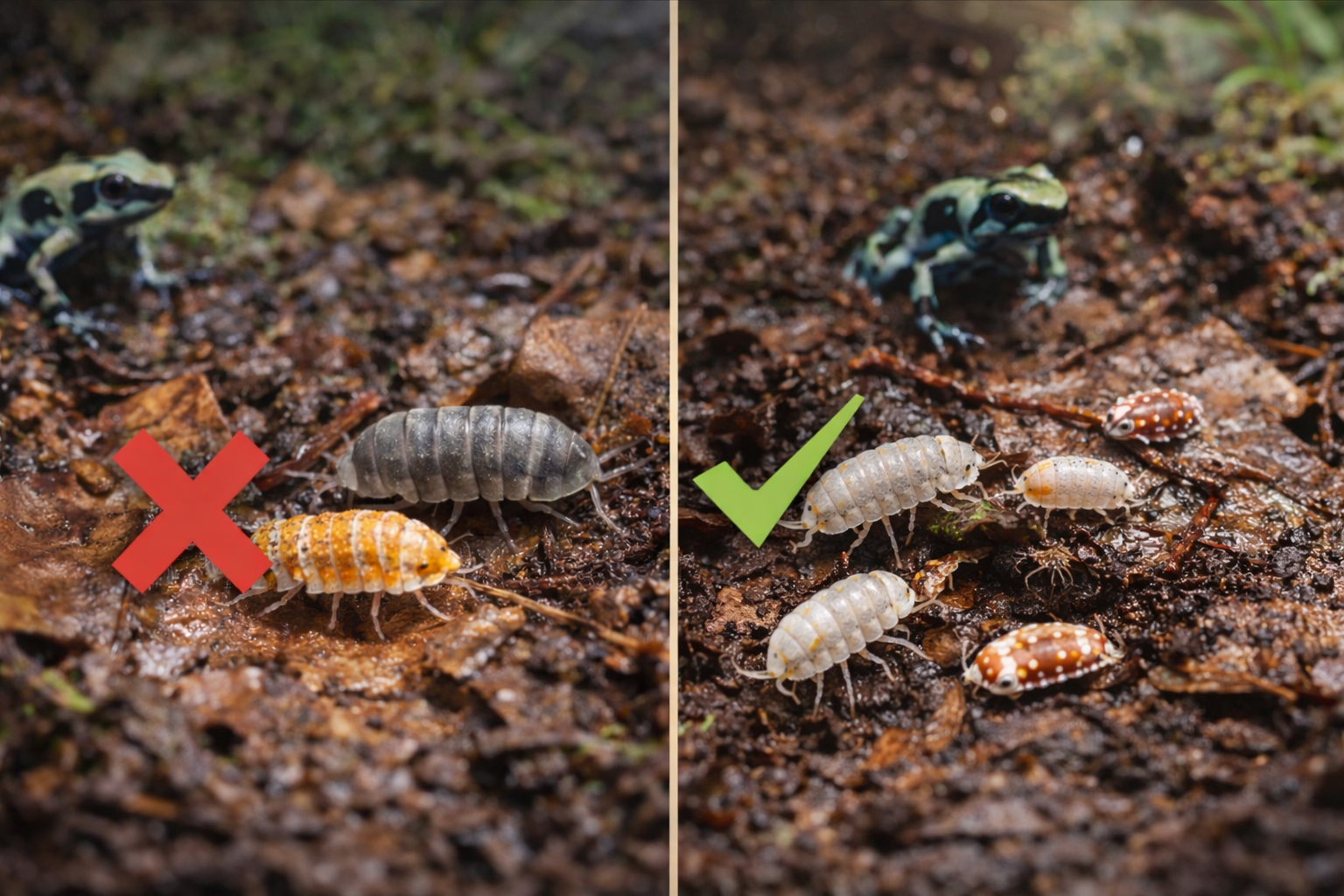
- Springtails regulate mould.
- Isopods process leaf litter.
- Airflow prevents stagnation.
That combination produces a neutral, natural scent.
If your enclosure smells unpleasant, it’s almost always due to anaerobic activity.
The Most Common Cause: Anaerobic Substrate
Anaerobic means “without oxygen.”
When substrate becomes:
- Overly compacted
- Waterlogged
- Poorly drained
- Untouched for long periods
Oxygen cannot penetrate deeply.
When that happens, anaerobic bacteria begin breaking down organic matter. That produces sulphur-like smells — the classic “rotten egg” odour.
Overwatering & Misting Imbalance
Many dart frog setups are misted once or twice daily.
That’s fine — but if your substrate never partially dries in the upper layers, compaction increases.
Signs of overwatering include:
- Standing water at the base
- Muddy substrate texture
- Persistent condensation
- Strong earthy sourness
Moist is correct. Saturated is not.
Insufficient Springtail Population
If fungal growth is left unchecked, odours can develop quickly.
Springtails are your primary mould regulators.
When populations crash or are insufficient, microbial balance shifts.
Boosting density — especially using structured substrate and consistent micro-feeding such as Springtail Supermix — can restore stability in many systems.
Dead Zones Under Hardscape
Large cork pieces, background ledges, and heavy decor can create airless pockets beneath them.
Waste accumulates.
Moisture stagnates.
Airflow stops.
These are common smell hotspots.
Carefully lifting and checking underneath major structures can reveal compacted substrate.
Drainage Layer Failure
If your drainage layer is full and never siphoned, water can rise back into the soil.
This creates constant lower-layer saturation.
Periodic drainage maintenance prevents this issue.
Leaf Litter Breakdown Overload
Leaf litter is beneficial — but thick, unmoved layers can trap moisture and decay anaerobically.
Isopods help process leaf litter efficiently. Supporting their nutrition using balanced calcium-rich formulas such as Isopod Repro – High Calcium Breeding Formula helps maintain active, breeding populations that prevent organic overload.
Quick Diagnostic Checklist
- Does the substrate feel compacted?
- Is water pooling at the bottom?
- Are springtails visible?
- Is airflow adequate?
- Has drainage been emptied?
If two or more answers concern you, that’s likely your cause.
How to Fix a Smelly Bioactive Vivarium
Step 1: Increase Oxygen
- Lightly aerate top layers.
- Open doors for ventilation temporarily.
Step 2: Reduce Moisture
- Adjust misting frequency.
- Allow partial drying between cycles.
Step 3: Boost Clean-Up Crew
- Add fresh springtails.
- Ensure isopod density is healthy.
Step 4: Spot Clean Problem Areas
- Remove visibly rotting organic matter.
- Replace severely compacted substrate if needed.
When Smell Indicates a Serious Issue
If you detect:
- Ammonia smell
- Black sludge zones
- Persistent sulphur odour
Then substrate replacement may be required.
FAQ
Should a bioactive vivarium smell?
A healthy system smells earthy and neutral, not sour or rotten.
Is mould smell dangerous to dart frogs?
Mild fungal activity is normal, but strong odours suggest imbalance.
Can overfeeding clean-up crews cause smells?
Yes. Excess food can decay anaerobically.
Does adding more springtails fix bad smells?
If the cause is fungal imbalance, increasing springtails often helps restore equilibrium.
How often should drainage layers be emptied?
As needed — typically every few months depending on misting frequency.
Final Thoughts
A smelly vivarium is not a failure. It’s feedback.
Bioactive systems are living ecosystems. When oxygen, moisture, and microfauna are balanced, smell disappears naturally.
Correct the structure. Support the clean-up crew. Adjust moisture.
Balance returns.
Kind regards,
Tony
Frogfather.co.uk