
Husbandry & Evidence Review – 5 September 2026
Tadpole feeding ecology varies greatly among amphibians. Relevant published reviews include Pryor (2014); poison-frog-specific work also shows water composition can affect larval outcomes: Higgins et al. (2021).
Successfully hatching dart frog eggs is only the beginning of the breeding journey. Raising healthy tadpoles requires clean water, careful observation and patience. Although many species are relatively straightforward to rear, small husbandry mistakes during this stage can affect growth, metamorphosis and ultimately the health of the froglets.
In this guide, we’ll explain exactly how we raise captive-bred dart frog tadpoles at Frogfather, from the moment they hatch until they emerge as froglets. We’ll cover water quality, feeding, maintenance, common mistakes and the milestones you can expect during development.
What Happens After Hatching?
When a dart frog tadpole hatches, it is usually still carrying a noticeable yolk reserve. This provides nutrition during the first few days of life while the digestive system develops.
During this period, the tadpole is relatively inactive compared with later stages. It spends much of its time resting while absorbing the remaining yolk.
🐸 Frogfather Philosophy
We don’t rush newly hatched tadpoles into feeding. Allowing them time to absorb their yolk naturally gives them the best possible start before introducing prepared foods.
Should Tadpoles Be Raised Individually?
For many hobbyists, individual rearing is a practical monitoring method because each tadpole’s feeding, growth and water can be assessed separately. It is Frogfather’s preferred approach for many species, not a universal biological requirement or proof that communal rearing is inherently unsafe.
Housing each tadpole separately makes it easy to monitor growth, observe feeding, perform water changes and identify any problems early. It also removes competition between siblings and greatly simplifies record keeping.
While some experienced breeders successfully rear certain species communally, individual tubs remain our preferred approach.
Choosing a Tadpole Container
Tadpole containers do not need to be elaborate. Small, food-safe plastic tubs with secure lids work extremely well and allow each individual to be managed independently.
The container should be easy to clean, easy to inspect and provide enough water volume to remain stable between maintenance sessions.
Clear containers are particularly useful as they allow the tadpole to be observed without unnecessary disturbance.
Next: We’ll look at water quality, tadpole tea, Indian almond leaves, Java moss and creating the ideal rearing environment.
Water Quality
Water quality and chemistry are major factors in tadpole rearing, alongside species-specific nutrition, temperature, stocking density and general husbandry. No single variable should be treated as the whole explanation for larval success.
Poor water quality places unnecessary stress on developing tadpoles and can contribute to poor growth or developmental problems.
Rather than constantly chasing water chemistry, consistency is generally the key to success.
Preparing Tadpole Water
Many breeders use conditioned water prepared specifically for tadpoles.
At Frogfather, we prepare what many hobbyists refer to as “tadpole tea” by conditioning clean water with natural botanicals before it is used in rearing tubs.
This creates water that more closely resembles the environments many dart frog tadpoles naturally inhabit.
Indian Almond Leaves
Indian almond leaves are commonly used because they slowly release tannins into the water while also providing additional surface area for microbial growth.
As the leaf gradually breaks down it also creates a more natural environment for developing tadpoles.
Java Moss
Java moss serves several useful purposes within a tadpole tub.
- Provides shelter.
- Increases surface area.
- Supports beneficial microorganisms.
- Creates a more natural environment.
Although not essential, we routinely include small amounts of Java moss within our individual rearing containers.
🐸 Frogfather Tip
A simple setup often works best. Clean water, a small piece of Indian almond leaf and Java moss provide everything most tadpoles need during the early stages of development.
Next: Feeding schedules, nutrition and monitoring growth.
Feeding Dart Frog Tadpoles
As the yolk reserve is absorbed, tadpoles begin actively searching for food.
A varied, high-quality diet supports healthy growth and successful metamorphosis.
Food should be offered in small quantities that are readily consumed, avoiding excessive waste that could reduce water quality.
How Often Should You Feed?
Small daily feeds are generally preferable to large infrequent meals.
Regular observation allows feeding amounts to be adjusted as each tadpole grows.
Monitoring Growth
Healthy tadpoles gradually develop through several easily recognised stages.
- Increasing body size.
- Visible mouthparts.
- Strong tail growth.
- Development of hind legs.
- Development of front legs.
- Gradual tail absorption.
Photographing tadpoles every few days provides an excellent record of development and makes it much easier to identify any abnormalities.

Water Changes
Regular partial water changes help maintain excellent water quality without causing sudden environmental changes.
Replacing small amounts of water with freshly prepared conditioned water is generally preferable to complete water changes.
Next: Preparing for metamorphosis and moving froglets onto land.
Preparing for Metamorphosis
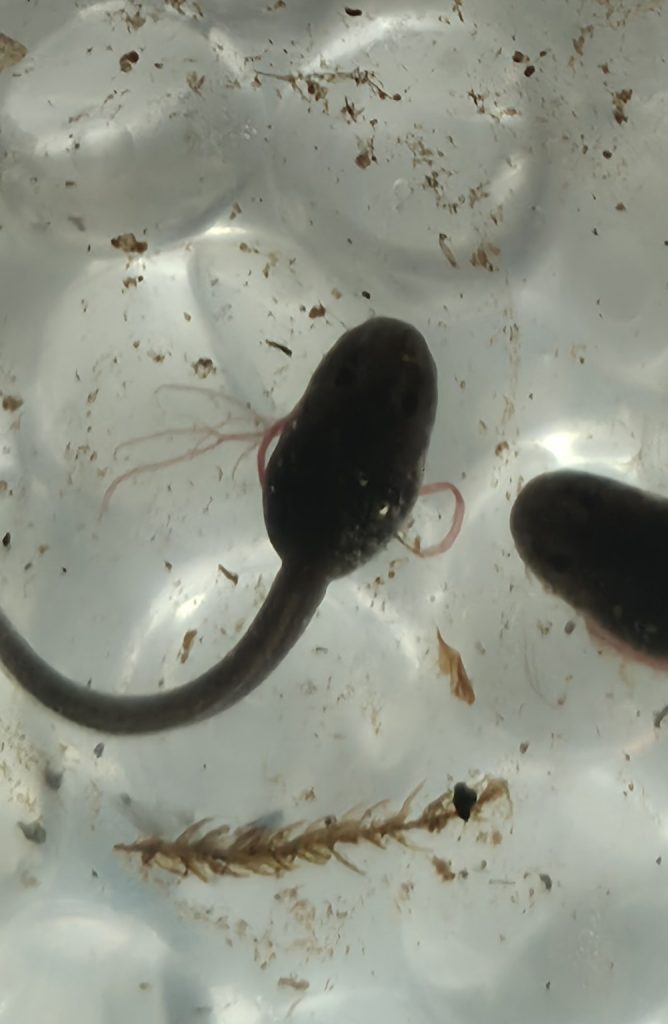
As the hind legs and front legs become fully developed, the tadpole begins transitioning into a froglet.
At this stage it will gradually spend more time near the water surface and require easy access to land.
Moving to a Froglet Grow-Out Tub
Once the tail has been almost completely absorbed, the young frog can be transferred into a suitably humid grow-out enclosure with abundant cover and appropriately sized live food.
This marks the beginning of an entirely new stage of husbandry.
Common Tadpole Rearing Mistakes
- Overfeeding.
- Poor water quality.
- Large water changes.
- Overcrowding.
- Allowing containers to overheat.
- Moving froglets too early.
Frequently Asked Questions
Can multiple tadpoles live together?
Some species can, but individual rearing makes monitoring and maintenance much easier.
How often should I change the water?
Small, regular partial water changes are generally preferable to infrequent complete changes.
When do tadpoles become froglets?
Once the limbs have developed and the tail has been absorbed, the young frog can move onto land.
Continue Learning
- Collecting & Incubating Dart Frog Eggs
- Raising Healthy Dart Frog Froglets
- Complete Guide to Feeding Dart Frogs
- Complete Guide to Dart Frog Supplementation
Final Thoughts
Raising dart frog tadpoles is one of the most rewarding parts of captive breeding. By maintaining excellent water quality, providing appropriate nutrition and allowing each tadpole to develop at its own pace, you’ll greatly improve your chances of producing strong, healthy froglets ready for life on land.