
Description
Oophaga pumilio ‘Redhead’ Small Form – Captive-Bred Dart Frog
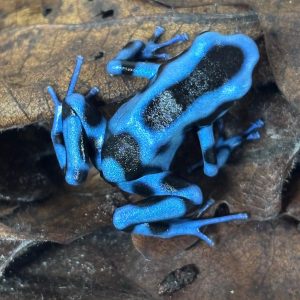
Captive-bred Oophaga pumilio ‘Redhead’ Small Form, a striking hobby line of one of the most fascinating poison frog species in captivity.
Oophaga pumilio are small, colourful and behaviourally fascinating frogs, but they are best suited to experienced dart frog keepers. Their territorial behaviour and highly specialised reproductive strategy make them very different from many of the more commonly kept Dendrobates species.
🐸 Species & Line Information
- Scientific name: Oophaga pumilio
- Line / form: ‘Redhead’ Small Form
- Family: Dendrobatidae
- Breeding origin: Captive bred
- Experience level: Best suited to experienced dart frog keepers
- Reproductive strategy: Obligate egg-feeding
Taxonomy note: Oophaga pumilio is the scientific species name. ‘Redhead’ Small Form is the hobby line designation under which these captive animals are maintained and is not a separate species or subspecies.
Where named Oophaga pumilio lines are maintained, we recommend keeping accurate provenance records and avoiding intentional crosses between different lines.
🌿 Vivarium & Environment
Provide a mature, densely planted and well-structured tropical vivarium with good ventilation, substantial leaf litter, climbing surfaces, plants and numerous retreats.
Structural complexity is particularly important with Oophaga pumilio. Plants, hardscape and visual barriers help create separate usable areas within the enclosure and give animals opportunities to retreat from one another.
Moisture and ventilation should be managed together rather than attempting to maintain one fixed relative-humidity reading. A healthy enclosure should provide suitable humid microhabitats while retaining effective airflow and avoiding persistently stagnant, saturated conditions.
🌡️ Temperature
Oophaga pumilio should be maintained under stable, moderate tropical conditions appropriate to the species. Particular care should be taken to avoid prolonged overheating and rapid temperature changes.
If additional heating is required, it should be appropriately controlled and monitored at animal level rather than relying solely on the temperature outside the vivarium.
🐸 Social & Territorial Behaviour
Oophaga pumilio can be strongly territorial, and compatibility should never be assumed simply because animals have been introduced as a pair or group.
Provide plenty of visual barriers, retreats and usable territory, and monitor behaviour carefully. Keepers should have the ability to separate animals if persistent aggression, exclusion from resources or other compatibility problems develop.
🪰 Feeding
Offer appropriately sized live prey as part of a consistent feeding and supplementation programme. Small fruit flies and springtails are commonly used, alongside other suitable live foods where appropriate.
Established microfauna are extremely useful within a bioactive vivarium, particularly for smaller frogs, but should complement rather than replace a managed feeding programme.
🥚 Fascinating Obligate Egg-Feeding Behaviour
One of the most remarkable aspects of Oophaga pumilio is their reproductive strategy.
After eggs hatch, tadpoles are transported to suitable small bodies of water. The female subsequently returns and deposits unfertilised trophic eggs, which provide the developing tadpoles with their specialised food source.
This obligate egg-feeding behaviour is one of the defining features that makes keeping and breeding Oophaga so fascinating, but it also means that successful reproduction requires appropriate environmental conditions, suitable deposition sites and compatible, established adults.
Breeding should never be assumed simply because a male and female are housed together.
🌱 Suitable Planting & Structure
A heavily planted enclosure can provide both security and useful breeding structure. Bromeliads and other plants capable of creating small water-holding sites are commonly incorporated into Oophaga vivariums, alongside cork, branches, leaf litter and other naturalistic features.
The aim should be to create a complex three-dimensional environment offering multiple retreats, visual barriers and usable areas rather than an open display enclosure.
👤 Who Are These Frogs Suitable For?
- Experienced dart frog keepers
- Keepers specifically interested in Oophaga behaviour and husbandry
- Keepers able to maintain named captive lines separately
- Those able to monitor territorial behaviour closely
- Keepers prepared to provide a mature, structurally complex bioactive vivarium
If this would be your first dart frog species, please contact us before purchasing. We are always happy to discuss your setup and whether this particular species is appropriate for what you are trying to achieve.
🧬 Maintaining Line Integrity
‘Redhead’ Small Form is the hobby line designation under which these animals are maintained. We recommend keeping named Oophaga pumilio lines separately and maintaining accurate provenance records wherever possible.
We do not recommend deliberately crossing different named Oophaga pumilio lines. Keeping them identifiable preserves useful provenance information for future keepers and breeders.
🧼 Handling & Hygiene
Like other dart frogs, Oophaga pumilio are best observed rather than routinely handled. Captive-bred animals maintained on cultured feeder insects do not have access to the same dietary alkaloid sources as wild frogs, but sensible amphibian hygiene should always be followed.
Handle only when necessary, avoid contaminating the frog’s skin with residues from your hands, and wash your hands before and after working with the enclosure.
🐸 Live Animal Disclaimer
This product is a live amphibian and is available for UK legal purchase only.
Live-animal courier delivery is temporarily paused. Please check the current Live Animal Policy / FAQ before ordering for the latest collection and future delivery options.
By purchasing, you confirm that you are aged 18 or over and that keeping this species is legal in your location.
Learn more in our Live Animal Policy.
Live-Animal Husbandry Review
Last reviewed: September 2026
Temperature, moisture, enclosure structure and social compatibility should be matched to the species, life stage and individual animals. Relative humidity readings are useful for monitoring trends but should be interpreted alongside ventilation, temperature, substrate moisture and the different microhabitats available within the enclosure.
Individual behaviour and social compatibility can vary.
Additional information
| Weight | 0.1 kg |
|---|---|
| Dimensions | 10 × 10 × 10 cm |
Shipping & Returns
📦 Shipping & Returns
- Shipping: Most items are delivered within 3–7 working days via tracked courier.
- Live animals: Frog deliveries are scheduled in line with our terms of service and Delivery Policy using DEFRA-registered couriers. You’ll be contacted to arrange a suitable delivery date.
- Custom vivariums: Made to order with a short lead time, agreed before purchase.
- Returns: Free 30-day returns for non-live goods. See our Returns Policy.
- Need help? Contact us anytime at thedon@frogfather.co.uk.