
Description
Captive-Bred Oriental Fire-Bellied Toads – Bombina orientalis
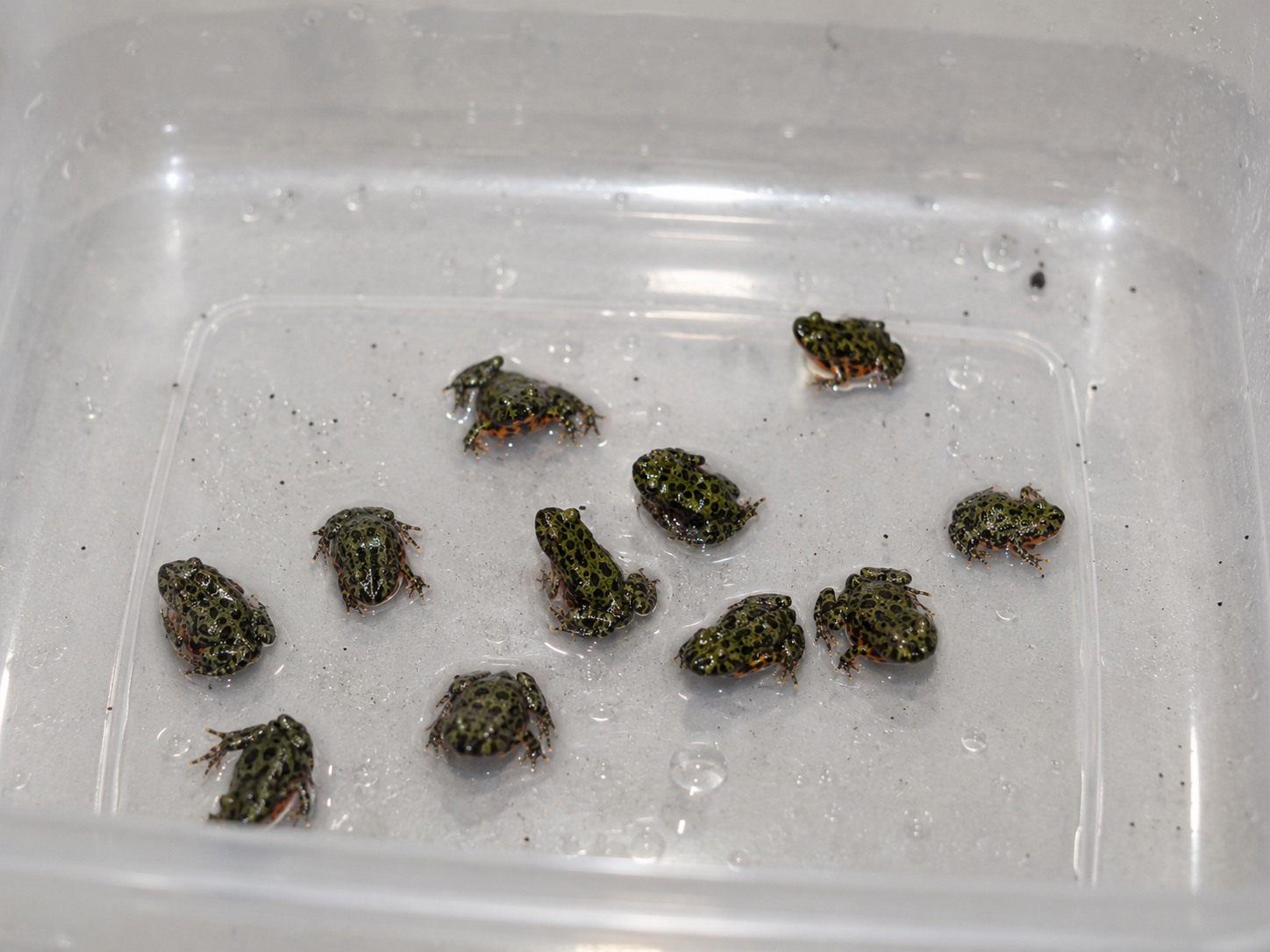
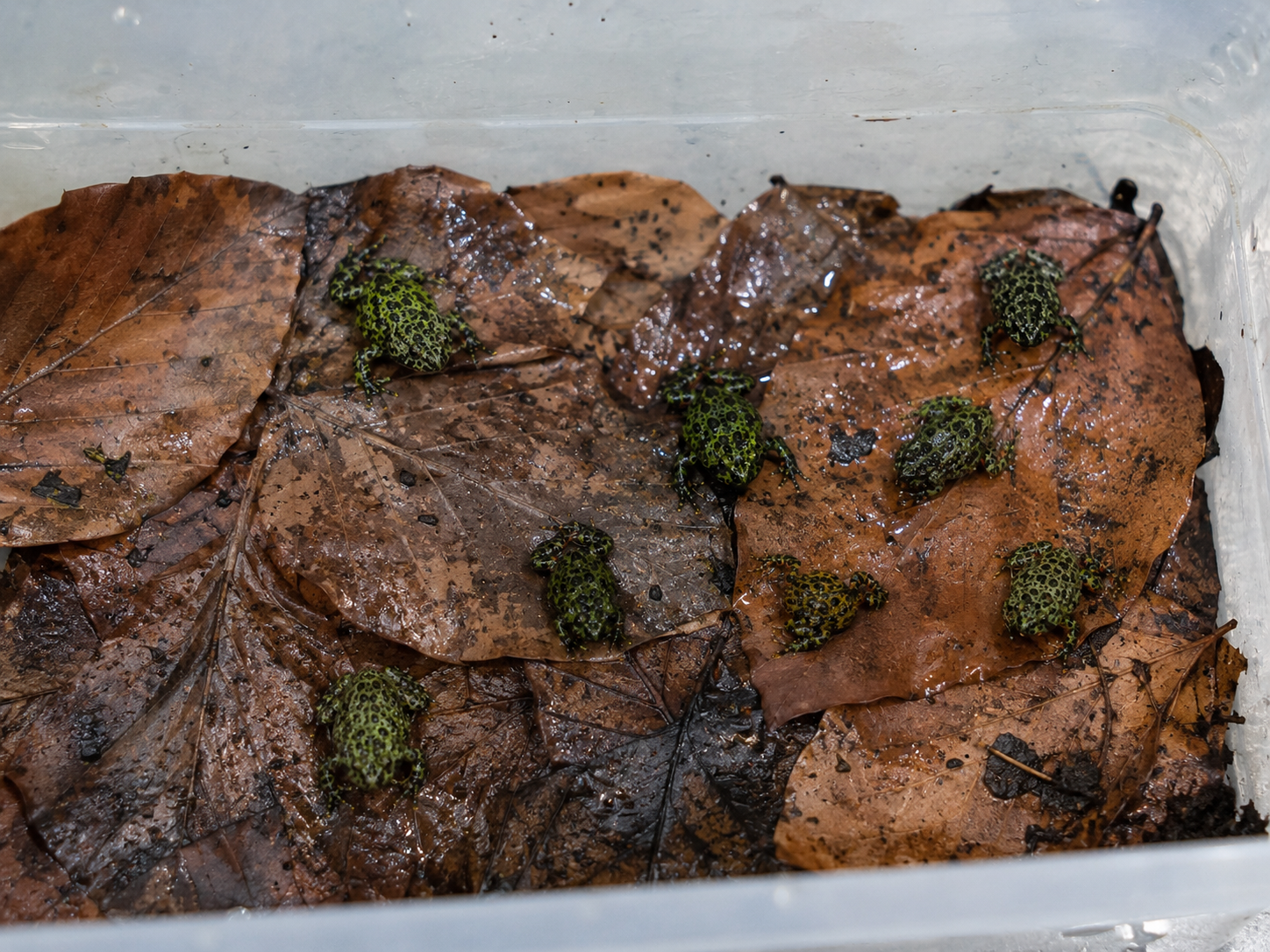
Captive-bred juvenile Oriental Fire-Bellied Toads, an active semi-aquatic species requiring clean water, accessible land and appropriate cool-to-moderate temperatures.
Beginner wording corrected
We have removed “hardy”, “forgiving of husbandry mistakes”, “perfect amphibian for beginners” and similar claims. Bombina can be rewarding captives, but water-quality failures, overheating and poor nutrition can still cause serious welfare problems.
Environment
- Provide both accessible aquatic and terrestrial/resting areas.
- Use clean conditioned water and maintain water quality through appropriate filtration and water changes.
- Avoid prolonged high temperatures; this is not a warm dart-frog species.
- Humidity should emerge from the semi-aquatic enclosure design and ventilation rather than a fixed 60–80% RH target.
Feeding
Offer a varied selection of appropriately sized live prey. Waxworms are energy-dense and should be occasional rather than routine. Use an appropriate supplementation programme rather than assuming every feeder should simply receive the same fixed dusting schedule.
UVB
We have replaced the phrase “UVB beneficial but not essential”. Experimental work in captive Bombina orientalis shows UVB exposure can significantly affect vitamin-D3 status and skeletal outcomes, but it does not establish one universal lamp percentage or distance. If UVB is provided, use controlled exposure with shade and consider it together with dietary calcium/D3.
Group housing
Compatible groups may be maintained where there is sufficient space, feeding access and water quality, but monitor individuals and do not allow stocking density to compromise the aquatic system.
Skin secretions
Fire-bellied toads possess defensive skin secretions. Handle minimally, wash hands afterwards and avoid contact with eyes/mouth. Do not mix them with other amphibian species.
Live-Animal Husbandry Review
Last reviewed: 5 September 2026
Temperature, moisture, enclosure size, social compatibility and supplementation should be matched to the species, life stage and individual animals. Frogfather therefore avoids treating a single RH percentage, fixed enclosure size or pair/group formula as a universal rule.
Evidence & further reading
Michaels et al. – UVB, dietary calcium and vitamin D3 in captive Bombina orientalis