
Description
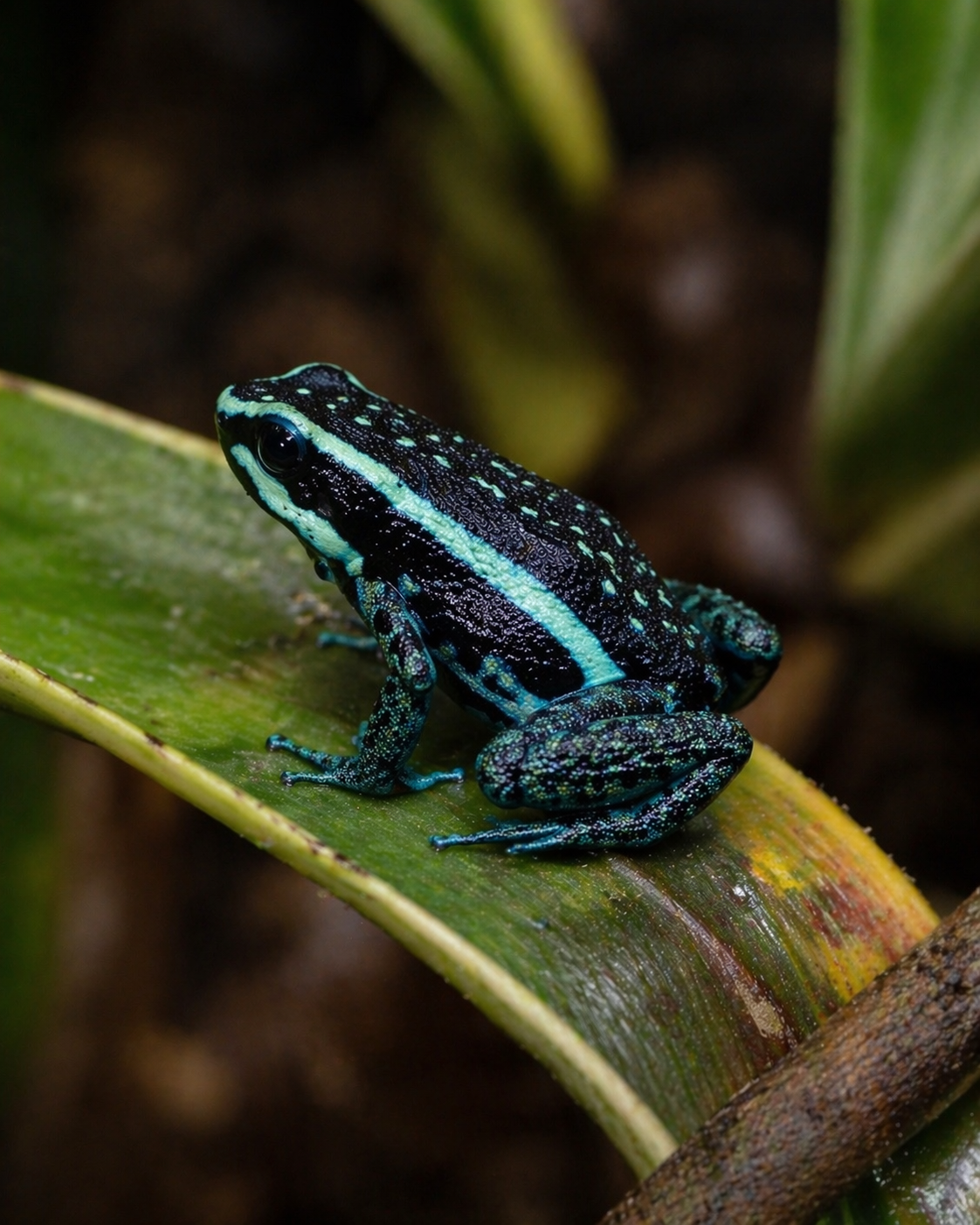
Ameerega bassleri ‘Sisa’ – Captive-Bred Juveniles
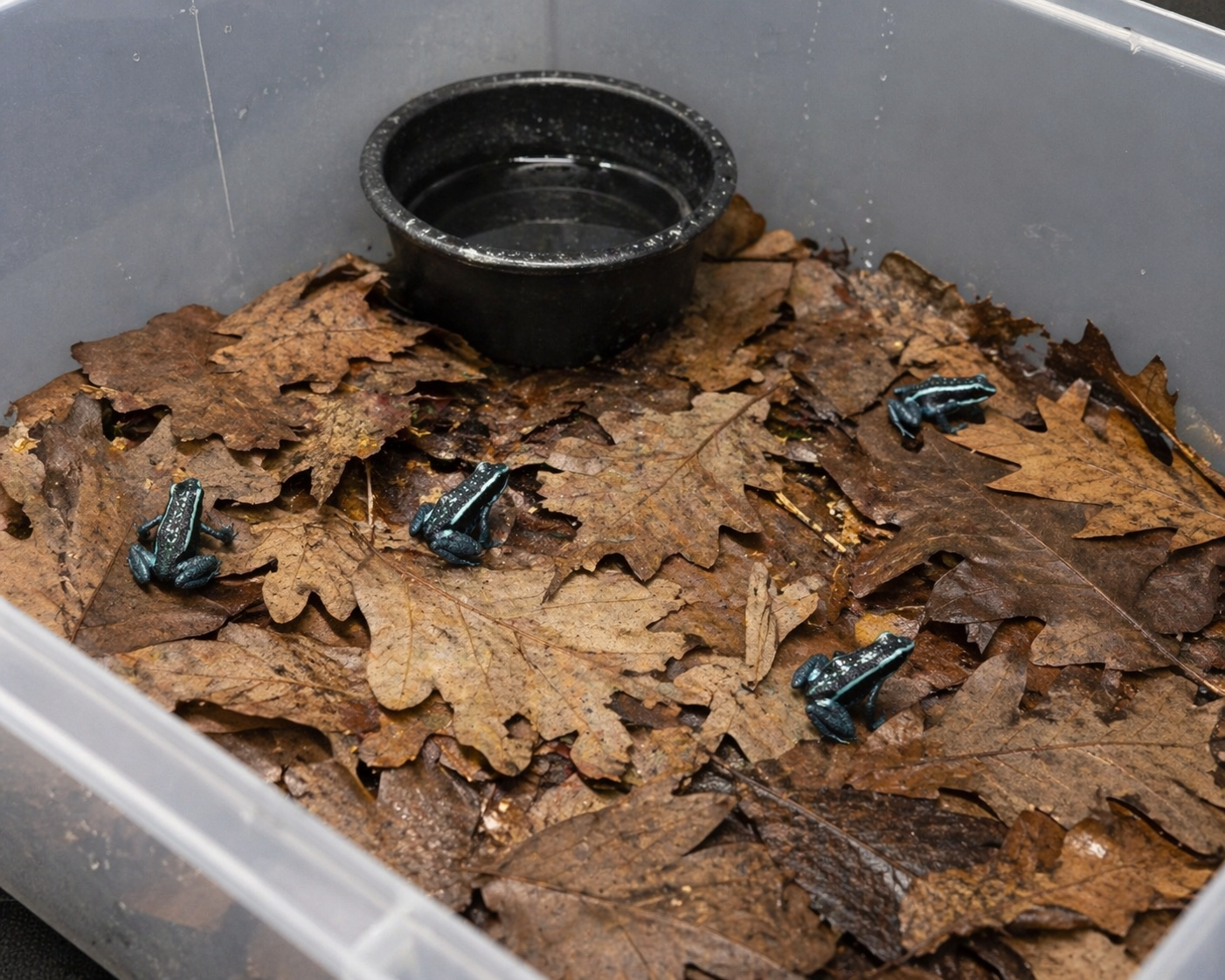
Captive-bred juvenile Ameerega bassleri ‘Sisa’, approximately the age and condition stated in the current listing, feeding on appropriately sized live prey.
Housing
Ameerega are active dart frogs that benefit from substantial usable floor area, cover, visual barriers and a well-structured planted enclosure. Some compatible groups can work, but “great group potential” should not be interpreted as guaranteed compatibility. Monitor mature animals and be prepared to separate individuals if aggression or exclusion develops.
Temperature and moisture
Use a species-appropriate moderate tropical temperature range with good ventilation and access to wetter and drier microhabitats. Avoid choosing care solely from a fixed RH percentage.
Supplementation wording corrected
Earlier copy said Frogfather All-in-One was “designed to support growth, condition, colour and long-term health” and suggested a clay bath as a useful natural mineral source. Those statements have been qualified.
At Frogfather we use our All-in-One as a routine single-powder feeder-supplement system. Appropriate frequency and total nutrient intake depend on species, life stage, feeder type, UVB/D3 provision and the rest of the diet. Clay is an optional husbandry feature; we do not claim it provides a required mineral source or medical benefit.
UVB
These juveniles have been exposed to controlled UVB in Frogfather husbandry. That is a description of how they were raised, not evidence that one fixed lamp percentage or distance is universally required for A. bassleri. If UVB is used, provide effective shade and assess exposure at animal level.
Live-Animal Husbandry Review
Last reviewed: 5 September 2026
Species suitability depends on adult size, behaviour, social structure, enclosure design, temperature, moisture, ventilation and the individual animals. Frogfather does not treat a fixed humidity percentage, enclosure size or group formula as a universal rule.
Mixed-species housing introduces additional risks including competition, predation, incompatible environmental needs, pathogen transfer and difficulty monitoring individual food intake. It is therefore not recommended merely because two species appear to use similar temperature or humidity ranges.




