Description
All-in-One Vitamin & Mineral Dust – 100g Pouch
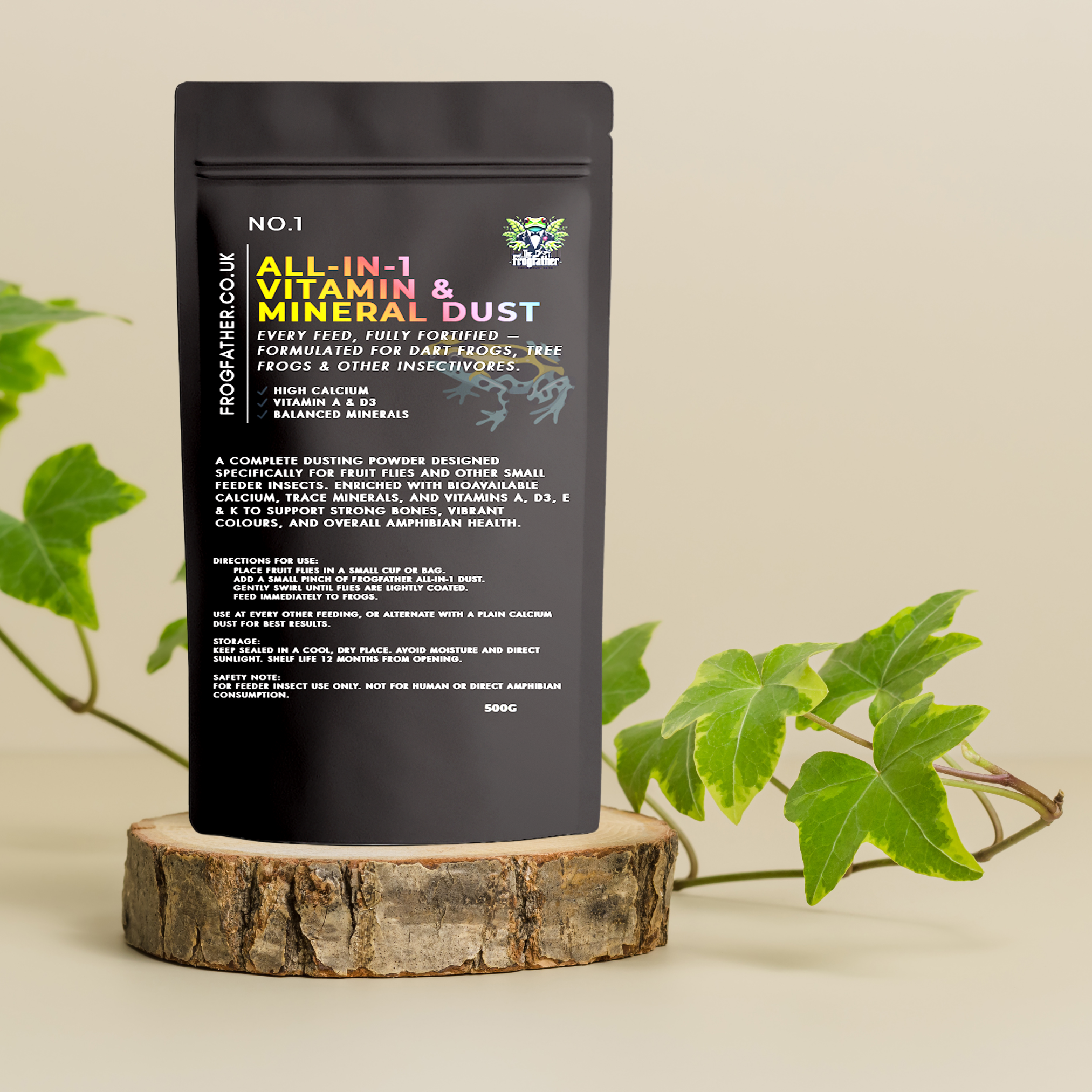
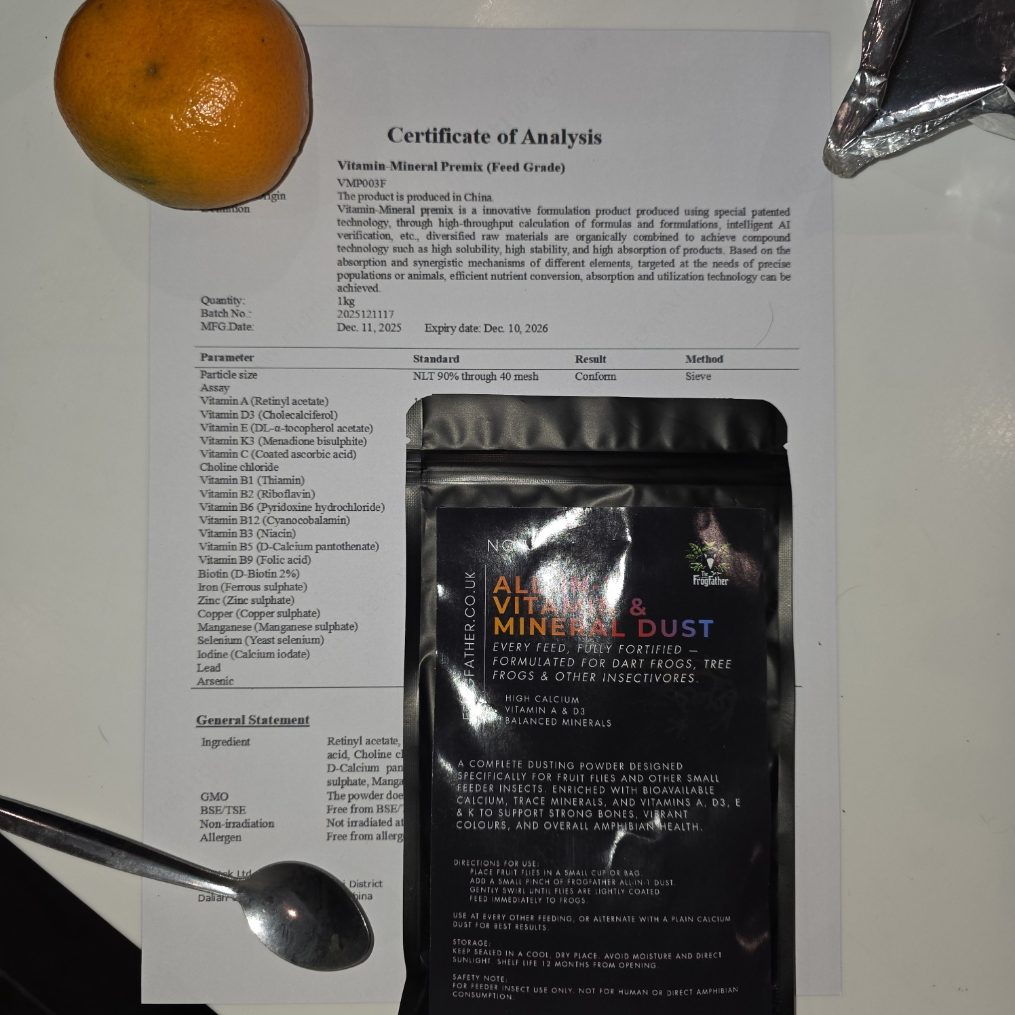
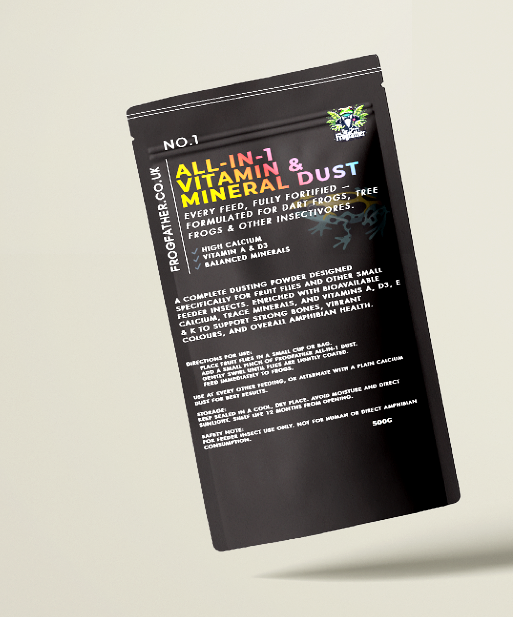
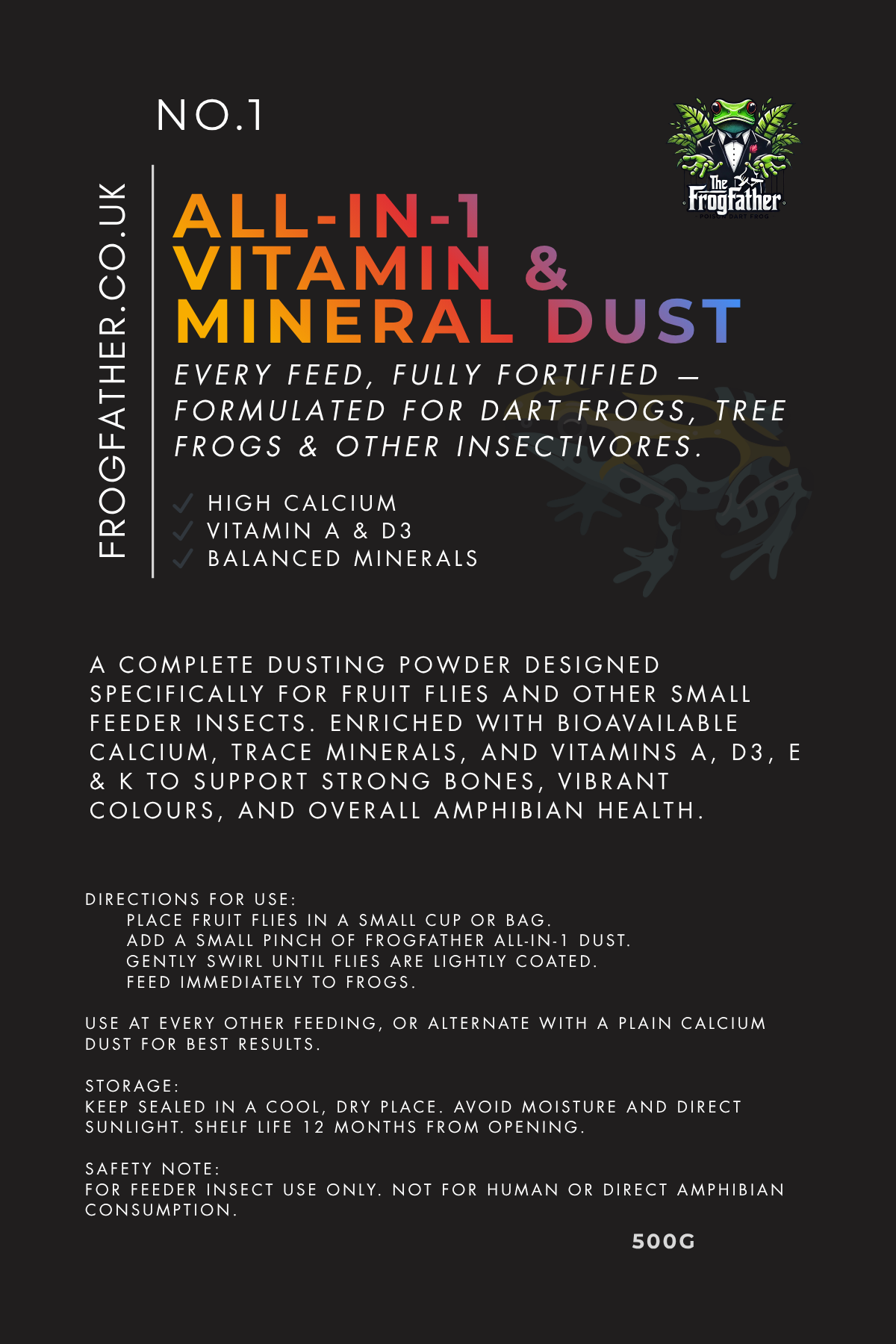
A simple, consistent supplementation system developed for lightly dusting fruit flies and other small feeder insects. Supplied in a 100g pouch as standard.
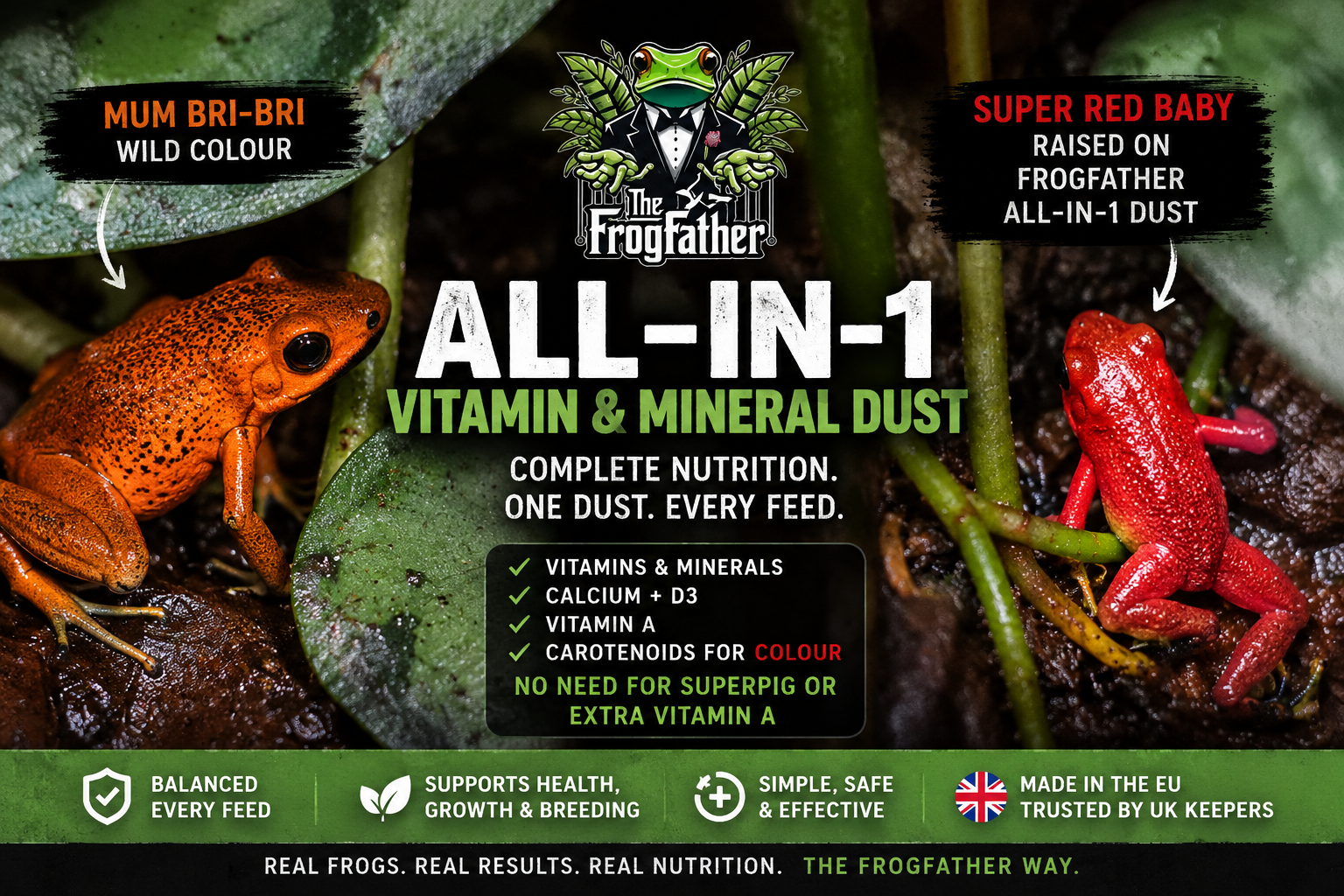
All-in-One combines calcium, vitamins, minerals, trace elements and carotenoids in a single fine powder. It was developed primarily around the needs of dart frogs and other small insect-eating exotics, where very small feeder insects can make consistent supplementation unnecessarily complicated.
At Frogfather, this is the routine single-powder supplementation system we use with our own feeder insects.
Why an All-in-One Supplement?
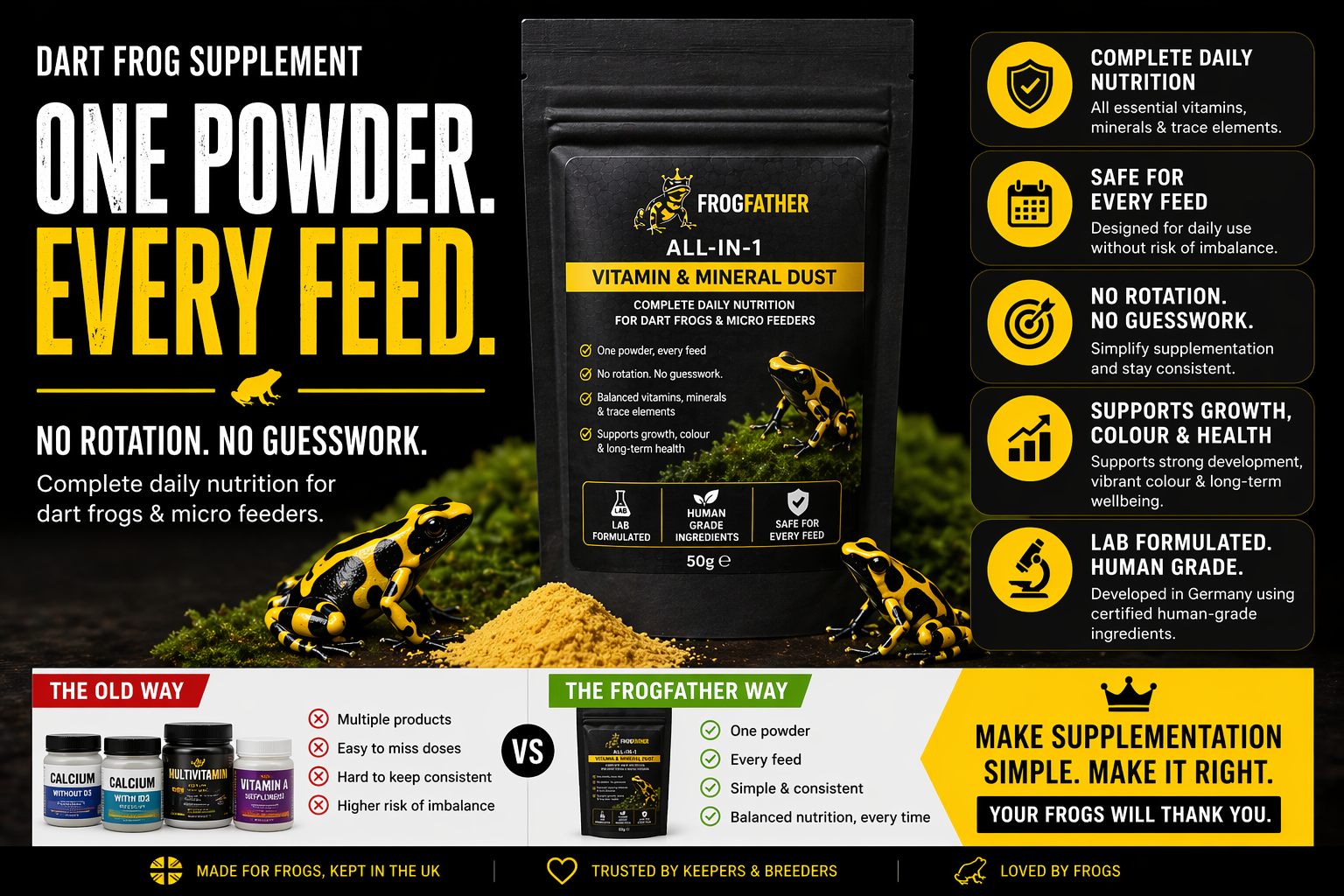
Traditional supplementation often involves keeping several separate products and rotating between calcium, vitamin, mineral and carotenoid supplements on different feeding days.
There is nothing inherently wrong with a carefully managed rotation, but it introduces another opportunity for inconsistency: remembering which product was used, how recently it was used, and how heavily the feeders were coated.
Our aim with All-in-One was therefore simple: combine the components of routine supplementation into one easy-to-use powder and make consistent light dusting easier.
What Does It Provide?
The formulation combines:
- Calcium
- Vitamins
- Minerals and trace elements
- Vitamin A sources
- Carotenoids
These nutrients form part of normal amphibian nutrition, but nutritional requirements are not identical across every species, age, diet or husbandry system.
For that reason, we deliberately avoid claiming that one supplementation schedule has been scientifically established as perfect for every frog. Diet, feeder quality, life stage, breeding status, UVB exposure and species can all influence nutritional requirements.
How to Use
Place the feeder insects into a suitable dusting container with a small amount of All-in-One and gently shake or roll them until they have a light, even coating.
The aim is not to bury the insects in powder. A fine visible coating is sufficient.
Offer dusted feeders promptly after preparation. This is particularly important with fruit flies, which continually groom themselves and can gradually remove supplement from their bodies.
Storage & Freshness
Each batch is freshly made. To help protect the powder during storage:
- Store in a cool, dry place, away from direct sunlight, heat sources and humid vivarium conditions.
- Keep it in its original pouch and close the pouch securely immediately after each use.
- Use a clean, dry utensil to take out only the amount needed. Keep water and damp equipment out of the pouch.
- Do not return powder from the feeder-dusting container to the pouch.
For best freshness, we recommend using the powder within six months of manufacture. This period runs from when the batch is made, rather than when the pouch is first opened.
If you keep only one or two frogs and still have powder left at the end of that period, we recommend replacing it with a fresh pouch. The 100g pack size does not change the recommended use period.
Do I Still Need Separate Calcium, D3, Vitamin A or Multivitamin Products?
All-in-One was developed specifically to allow us to use one combined routine dusting supplement rather than maintaining a complicated rotation of separate products.
That is how we use it at Frogfather.
However, supplementation should always be considered as part of the animal’s complete husbandry rather than in isolation. An animal with unusual nutritional requirements, a veterinary treatment plan, a highly specialised diet or substantially different husbandry may require a different approach.
What About UVB?
UVB exposure and dietary vitamin D3 are related parts of calcium metabolism, so the overall husbandry system matters.
We do not recommend treating supplementation as a substitute for appropriate enclosure design, lighting, diet or species-specific husbandry. Equally, the presence of UVB does not automatically tell us everything about an individual animal’s dietary requirements.
If you use UVB, consider the strength of the lamp, distance from the animal, available shade, enclosure design and the requirements of the species you keep.
Designed for Small Feeders
The powder is particularly suited to small feeder insects such as fruit flies, where a fine coating is preferable to a heavy layer of supplement.
It can also be used with other appropriately sized feeder insects where a powdered supplement is suitable.
Evidence, Not Absolutes
Amphibian nutrition is an area where there are still significant gaps in species-specific research. We therefore prefer to distinguish between what published evidence supports, what established husbandry practice suggests, and what we have observed through our own practical experience.
Our All-in-One system is intended to make routine supplementation simpler and more consistent. It is not intended to suggest that every amphibian species has identical nutritional requirements.
Want to understand the reasoning in more detail?
Read our complete Dart Frog Supplementation Guide →
Important: This product is a nutritional supplement and should be used alongside an appropriate varied diet and species-specific husbandry. If an animal is unwell or you suspect a nutritional deficiency, seek advice from an appropriately qualified veterinary professional.