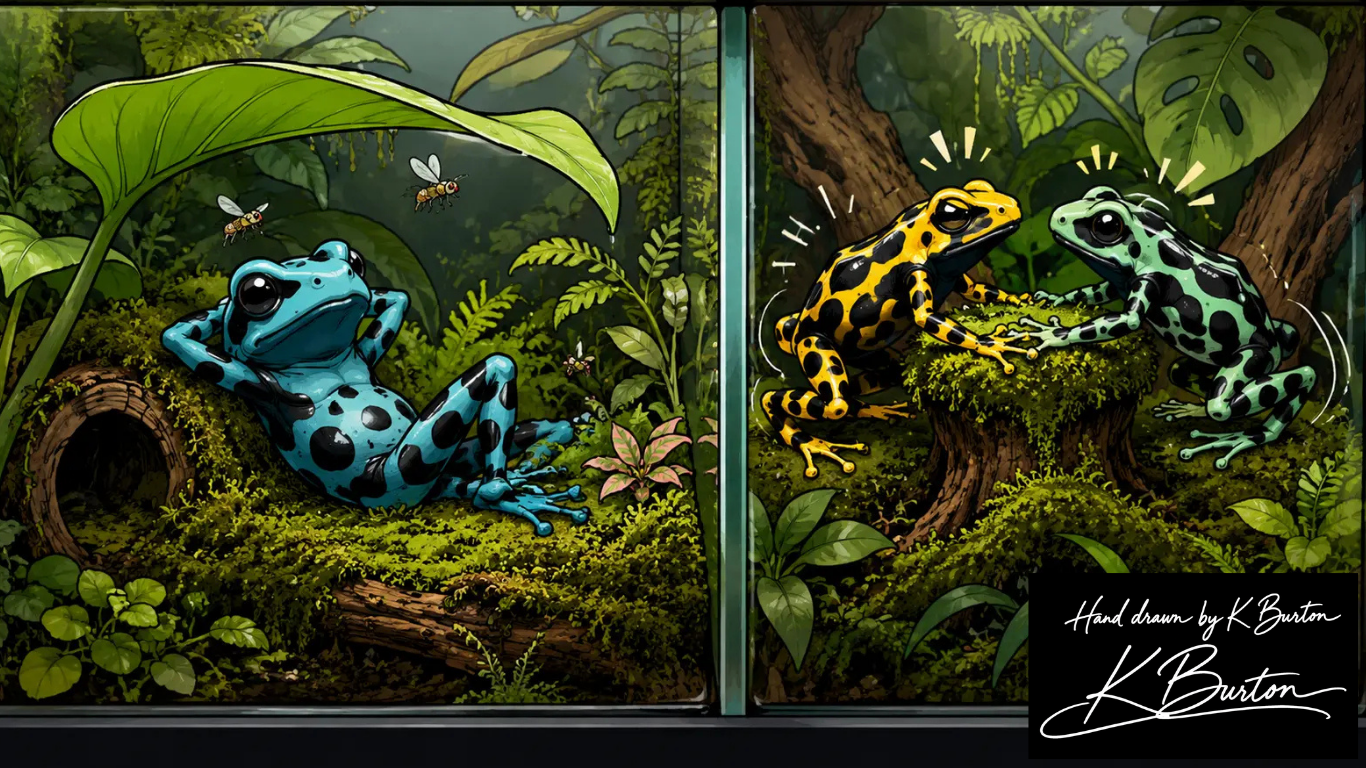

Husbandry & Evidence Review – 6 September 2026
This personal escape case report is retained, but fixed survival-time, warping and recovery/quarantine rules have been removed.
It’s a noise you never forget. That tiny plop on laminate flooring at 6am. Then dead silence. Followed by an awful realisation: your dart frog is not in the vivarium.
Welcome to the panic-fuelled nightmare every frog keeper dreads — the great escape. Here’s the full story of how I found my missing dart frog, how I prevented it happening again, and the vital tips every UK keeper needs to know to stop a tragic outcome.
Why Dart Frogs Escape in the First Place
Contrary to their sluggish stereotype, dart frogs are fast. Tiny, alert, and opportunistic — they’ll bolt the moment an opening appears. That includes:
- Warped mesh lids on Exo Terra-style vivariums
- Gaps in sliding glass doors
- Loose feeding hatches
- Unsealed cable ports or misting holes
- Accidental openings during feeding or misting
Some plastics/mesh/doors can deform with heat, mechanical stress or age, but warping is not inevitable in every humid room. Check gaps and closures directly rather than relying on material assumptions.
My Escape Story: Step-by-Step Breakdown
1. The Realisation
It started like any other morning. Misting on. Lights warming up. Coffee brewing. And then — plop. I turned, and the cobalt blur was gone. Gone from the viv, gone from sight. Just wet prints and a frog-shaped hole in my heart.
2. Immediate Frog Room Lockdown
- Closed all windows, doors, and vents
- Turned off fans and heating
- Lowered the lighting
- Removed pets from the area
You need to reduce escape chances further and give yourself the best possible environment to spot movement.
3. Tools I Grabbed
- Headtorch and mobile phone torch
- Several small deli cups
- Damp paper towel
- Plastic spatula (soft-edged)
4. Where to Look for Escaped Dart Frogs
- Under and behind vivariums
- Curtain hems and folds
- Laundry piles
- Under floor mats or rugs
- Warm cables and plug areas
- Inside plant pots or misting buckets
Search quiet, dark, sheltered areas first and provide damp refuges/traps. Escaped frogs may move unpredictably, so also check behind/under furniture, curtains, plants, cables and enclosure stands.
5. How I Found Mine
After 20 sweaty minutes of silent crawling, I spotted movement — just the faintest shimmer under the curtain. He’d wedged himself into the hem, likely attracted by the darkness and warmth from the radiator.
Safe Retrieval: Don’t Make It Worse
DO:
- Use a soft tub or deli cup to gently guide the frog in
- Wear powder-free gloves or use clean, wet hands
- Place them into a prepared rehydration tub (moist paper towel, loose moss, shallow lid of spring water)
DON’T:
- Grab them with fingers
- Chase or herd aggressively
- Do not leave a recovered frog exposed unnecessarily; transfer it promptly to a clean, secure, species-appropriate recovery/quarantine container and assess its condition.
Rehydration and Recovery
My guy was active but a bit dull in colour. No visible dehydration signs, but I gave him an hour in a mossy cup before reintroducing him. He perked up almost instantly — back to calling by the evening.
Signs of stress to watch:
- Wrinkled or dry skin
- Unresponsive or limp
- Pale or greyish tone
- Rapid breathing
Escape-Proofing Your Vivarium (Properly This Time)
What I changed:
- Replaced warped mesh with 3mm acrylic sheet
- Added neoprene gasket seals to door edges
- Installed magnetic locks to feeding ports
- Sealed all cable holes with rubber grommets
- Daily door and lid check now part of routine
Warpage can occur in some lids/materials, especially with heat or poor support, but it is not guaranteed. Inspect enclosure integrity routinely.
FAQ: Escaped Dart Frogs in the UK
How long can a dart frog survive outside the vivarium?
There is no reliable universal number of hours an escaped dart frog can survive outside its enclosure. Survival depends on temperature, humidity, exposure, surfaces, injury and species; start searching immediately.
Should I use heat mats or traps to lure them out?
No heat mats — too risky. Use damp towels and low lights. They’re more likely to move if it’s quiet and humid.
Can escaped dart frogs be safely returned to their enclosure?
If the frog may have contacted chemicals, other animals, contaminated water or sustained injury, use an appropriate quarantine/observation period and seek veterinary advice as needed rather than relying on a fixed one- or two-day rule.
Is this more common with Exo Terra vivs?
Yes. Their mesh lids warp easily and doors don’t always seal unless modified.
Final Thoughts
Not all escape stories end well. I was lucky. But since then, every viv I build or sell includes frog-proofing as standard. It’s not just about building pretty displays — it’s about safe homes for creatures that trust us.