
If you’re building a bioactive vivarium, especially for dart frogs, you’ll quickly hear two words repeated over and over:
Springtails. Isopods.
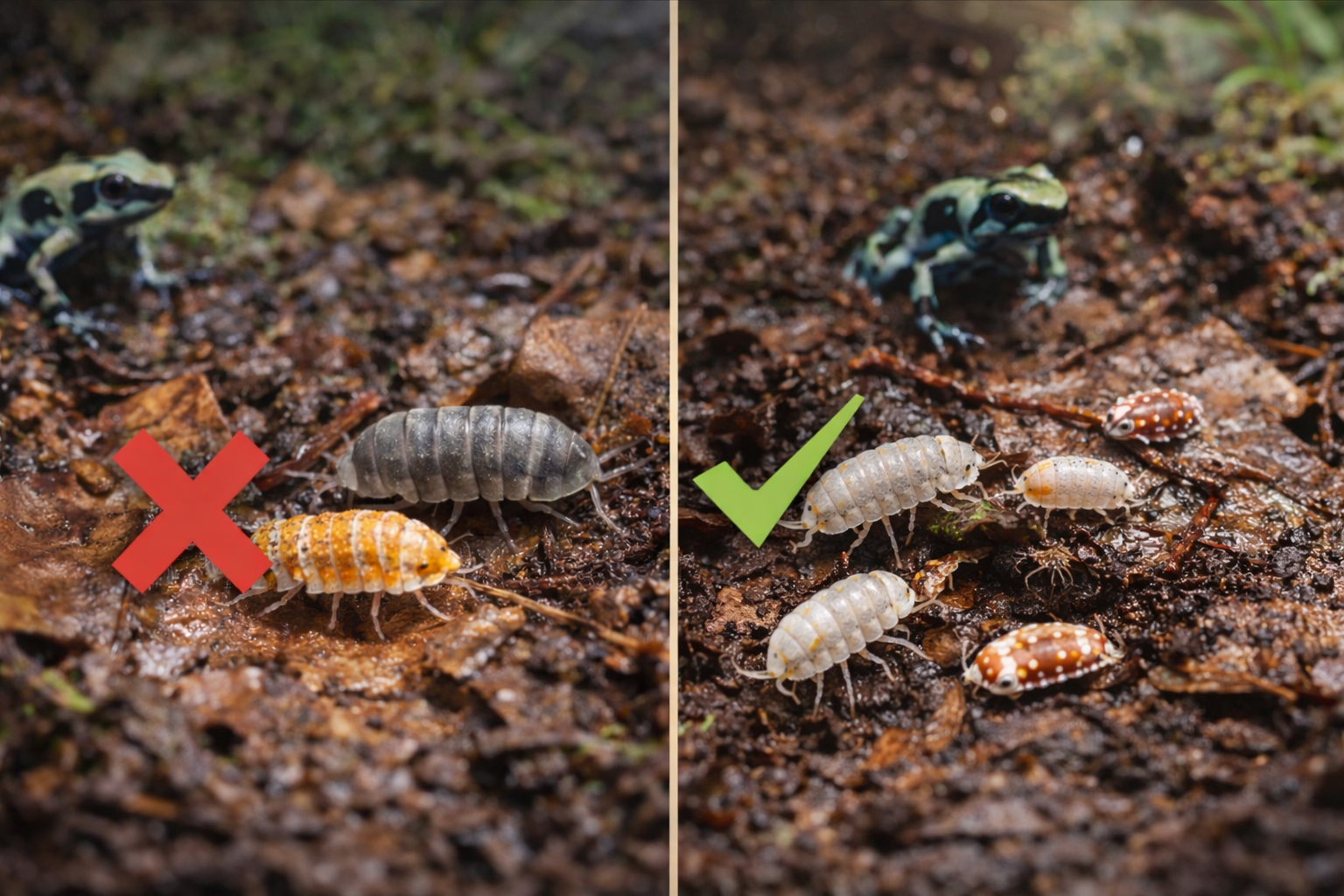
Both are labelled “clean-up crew”. Both live in the substrate. Both break down waste.
But they are not the same. And one does not replace the other.
Understanding the difference between isopods and springtails is one of the most important upgrades you can make to long-term vivarium stability.
What Do Springtails Actually Do?
Springtails (Collembola) are microscopic detritivores and fungal regulators.
Their primary roles include:
- Breaking down microscopic organic waste
- Consuming fungal hyphae and mould spores
- Regulating microbial blooms
- Processing fine particulate debris
They reproduce rapidly when conditions are correct and occupy upper and mid substrate layers.
In many systems, they are the first organism to stabilise a new setup.
Without them, fungal blooms can take over before the ecosystem balances itself.
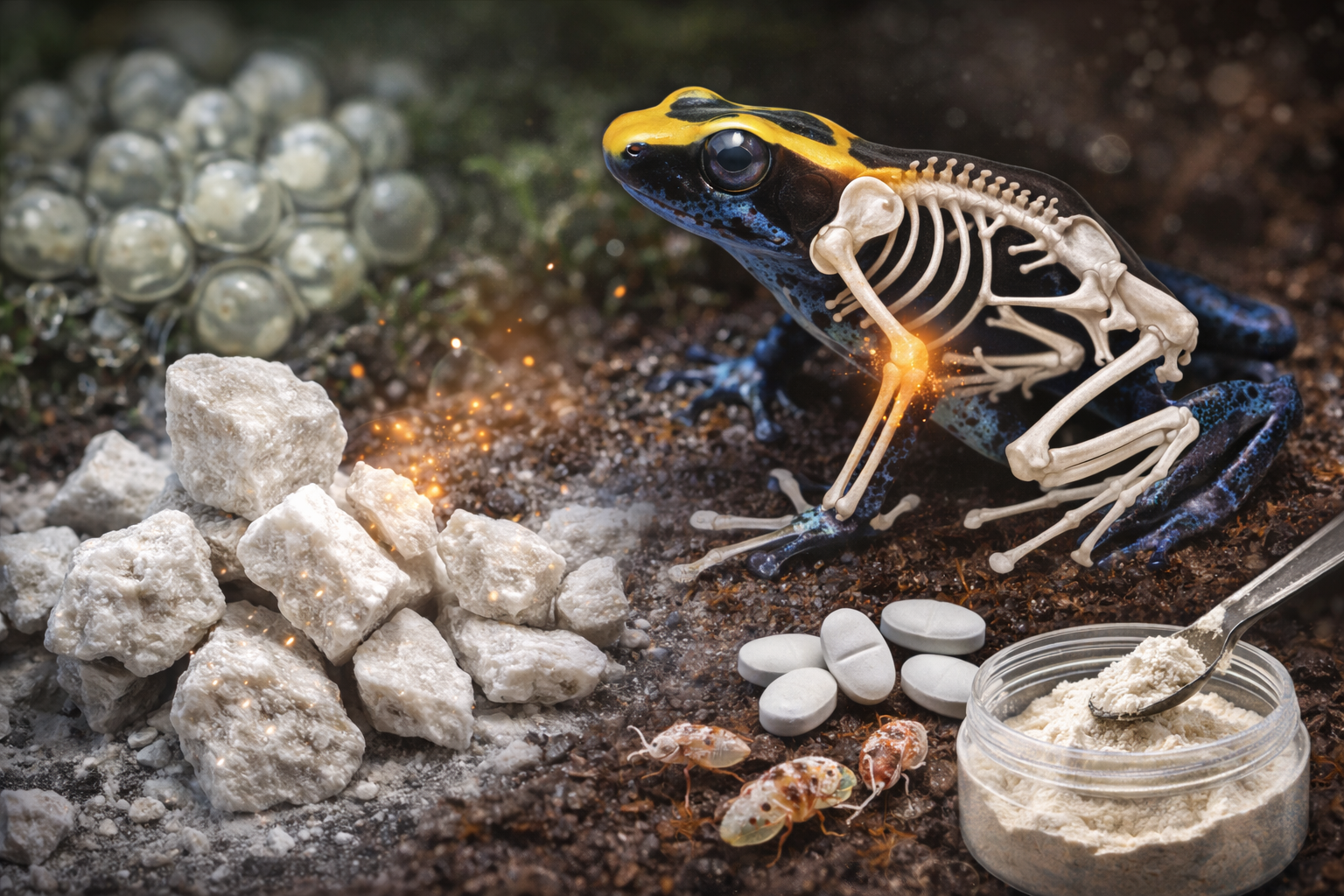
To support strong, stable populations, feeding matters. A consistent micro-food source such as Springtail Supermix helps maintain density and prevents population crashes in both culture tubs and active vivariums.
What Do Isopods Actually Do?
Isopods are macro-detritivores — larger crustaceans that process heavier organic matter.
Their key roles include:
- Breaking down leaf litter
- Processing larger faecal material
- Fragmenting decaying plant matter
- Aerating the upper substrate layers
They move bulk material into smaller fragments that springtails and microbes can then finish processing.
In simple terms:
Isopods handle the big stuff. Springtails handle the fine stuff.
Reproduction & Population Dynamics
Springtails reproduce explosively when moisture, airflow, and structure are correct.
Isopods reproduce in broods and take longer to establish visible density.
This difference is critical in new vivariums.
Springtails stabilise first. Isopods build long-term processing power.
For keepers breeding isopods or maintaining high-density colonies, nutrition becomes important. A calcium-rich breeding support formula like Isopod Repro – High Calcium Breeding Formula supports moulting, reproduction, and structural health in cultured and vivarium populations.
Can You Run a Vivarium With Only Isopods?
You can — but you will likely struggle with mould regulation.
Isopods do not regulate micro-fungal blooms at the speed springtails do.
New setups especially benefit from strong springtail presence.
Can You Run a Vivarium With Only Springtails?
In small or lightly stocked enclosures, yes.
However, they cannot efficiently process:
- Thick leaf litter layers
- Larger faecal waste
- Substantial plant die-off
That’s where isopods provide balance.
Which Is Better for Dart Frog Vivariums?
For dart frogs, the correct answer is:
Both.
Springtails maintain microbial balance and suppress mould.
Isopods process bulk organic matter and maintain substrate turnover.
Together, they create a layered clean-up system that mirrors natural rainforest soil ecology.
Functional Comparison
| Function | Springtails | Isopods |
|---|---|---|
| Mould Control | Excellent | Limited |
| Leaf Litter Breakdown | Minimal | Excellent |
| Reproduction Speed | Rapid | Moderate |
| Visible Activity | Microscopic | Visible |
| Substrate Aeration | Minor | Moderate |
Why Bioactive Systems Fail Without Balance
When only one organism dominates:
- Mould can bloom unchecked.
- Waste can accumulate.
- Substrate compacts.
- Fungal smell develops.
A layered clean-up crew prevents these issues before they escalate.
FAQ
Do I really need both isopods and springtails?
In most tropical vivariums, yes. They perform different ecological functions and support each other.
Will dart frogs eat isopods?
Occasionally. Smaller species may be consumed, but established populations typically sustain themselves.
Can springtails outcompete isopods?
No. They occupy different ecological niches within the substrate.
Why is my vivarium mouldy even with isopods?
Mould regulation is primarily a springtail function. Isopods alone are rarely sufficient.
How often should I feed bioactive clean-up crews?
Supplement lightly and consistently to prevent crashes while avoiding overfeeding that causes mould blooms.
Final Thoughts
Isopods vs springtails is the wrong question.
The better question is: how do they work together?
Balanced correctly, they create stability, resilience, and long-term sustainability in your bioactive vivarium.
That’s when systems stop feeling fragile — and start feeling established.
Kind regards,
Tony
Frogfather.co.uk