Husbandry & Evidence Review – 5 September 2026
Pest management is risk reduction rather than proof of a perfectly balanced ecosystem. Physical removal, quarantine and exclusion are preferred first steps; commercial bait claims are kept within the current product evidence.
Snails and slugs are one of those things every vivarium keeper deals with eventually. One day your moss looks perfect — the next, you spot a silvery trail on the glass or a half-eaten leaf. While they’re harmless in small numbers, an outbreak can quickly throw off your carefully balanced bioactive ecosystem.
If you’ve found a few unwanted guests creeping around your setup, don’t panic. This guide explains how snails and slugs get into vivariums, when they become a problem, and how to remove them without harming frogs, isopods, or beneficial microfauna.
🌱 How Snails and Slugs Sneak Into Your Vivarium
Most infestations start with hitchhikers. Eggs and juveniles hide in plant roots, leaf litter, cork bark, or even bits of moss. Once inside the warm, humid conditions of a vivarium, they thrive — especially in dart frog enclosures and tropical plant tanks where moisture levels stay high.
To avoid introducing pests in the first place, always:
- Rinse new plants thoroughly before planting.
- Quarantine décor and leaf litter for a few days.
- Check moss and substrate for tiny white or translucent eggs.
🐌 When Are Snails and Slugs a Problem?
In small numbers, a few snails help break down decaying matter. But an overpopulation can cause serious trouble — chewing moss, damaging delicate plants, and even disturbing eggs or small froglets. Slugs are particularly destructive, and they reproduce quickly when conditions are right.
Signs you’ve got a problem include:
- Chewed or skeletonised plant leaves.
- Slime trails on glass or decor.
- Snails or slugs visible during misting or at night.
🧠 Common Mistakes to Avoid
It’s tempting to reach for pest sprays or copper tape, but these can harm your frogs, isopods, and springtails. Even natural repellents like coffee grounds or salt are far too harsh for closed, humid environments.
The best approach is gentle, natural, and repeatable — something that targets the pests without upsetting your bioactive balance.
🐸 The Frog-Safe Solution: Bioactive Snail & Slug Removal Kit
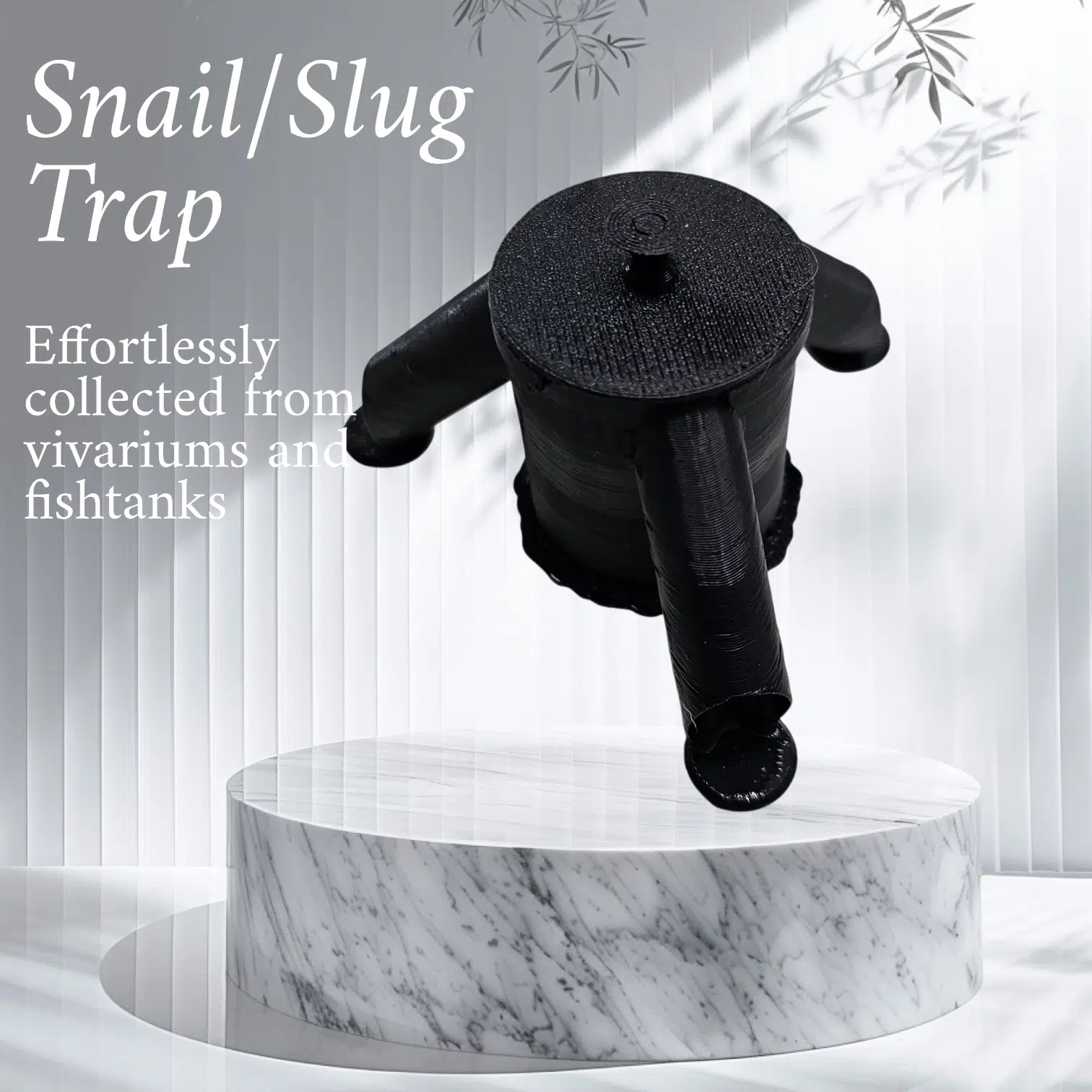
The new Bioactive Snail & Slug Removal Kit was developed for exactly this problem. It uses a natural, plant-based bait that lures pests out overnight without releasing harmful chemicals or scents into your tank.
Each kit includes:
- A reusable micro bait dish designed for compact vivariums.
- Plant-based natural bait that attracts snails and slugs safely.
- Calcium powder dust to support healthy cleanup crew snails if you keep them intentionally.
- A care and prevention guide written for dart frog and tropical enclosures.
Simply place the bait dish inside the enclosure overnight, and remove it in the morning — you’ll find the snails and slugs drawn to it. Dispose of them humanely, rinse the dish, and repeat as needed. It’s clean, easy, and most importantly, bioactive-friendly.
💧 Why It Works So Well in Bioactive Setups
The previous page described the bait as completely non-toxic and biologically neutral. That is too absolute. Use any bait/trap according to its current instructions, minimise access by frogs and non-target invertebrates, and remove it after use. “Natural” ingredients do not establish universal toxicological safety or prove zero effect on microbes/pH.
This makes it ideal for:
- Dart frog enclosures with high humidity.
- Plant propagation boxes or moss cultures.
🪲 Balancing the Ecosystem
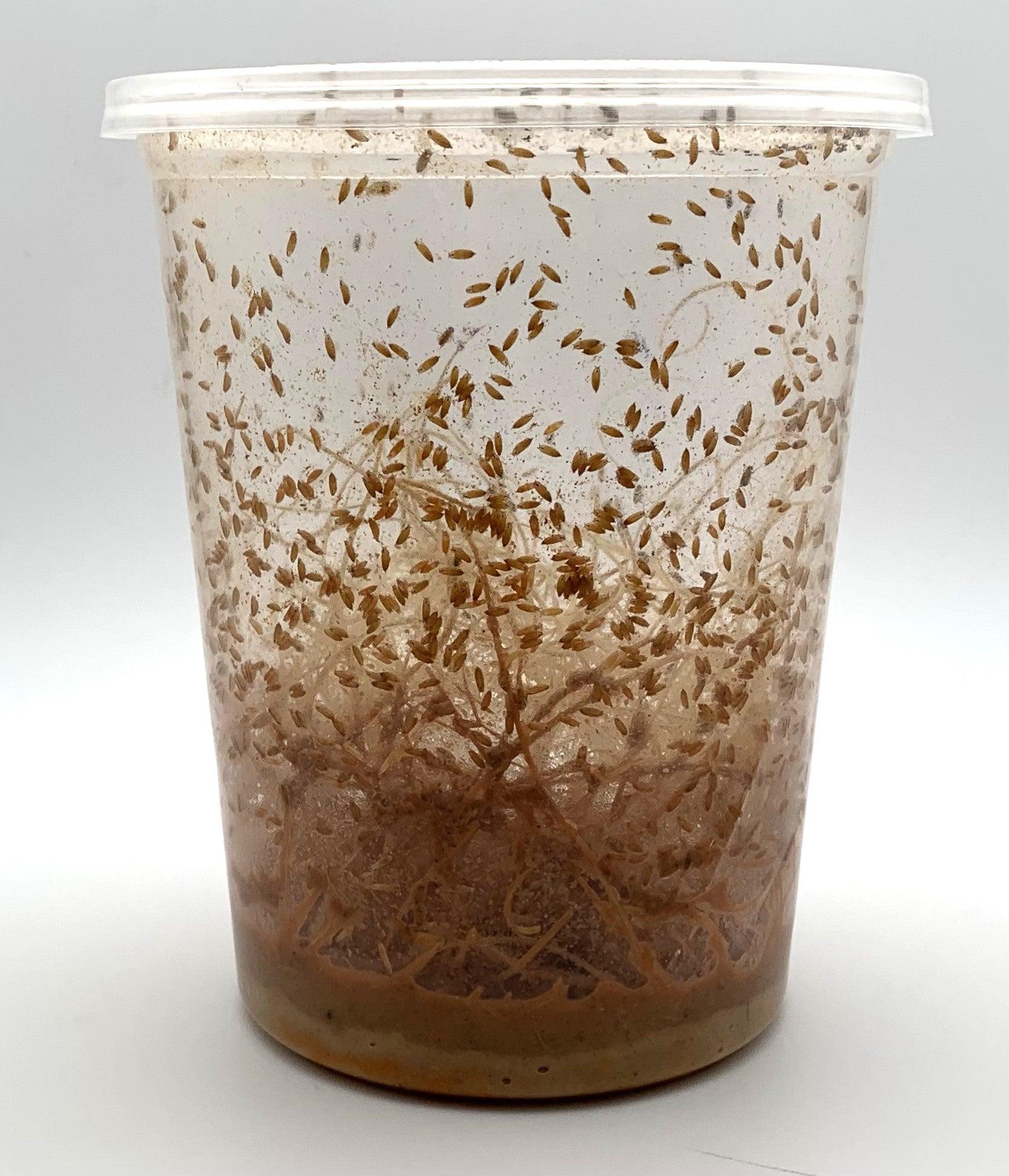
Snail and slug outbreaks often indicate an imbalance — usually too much moisture, decaying plant matter, or overfeeding. Reducing excess food and improving airflow with a Springtail Collection Riser helps your cleanup crew regain control naturally.
After removal, correct the conditions supporting the outbreak—food residues, plant material, access routes and moisture where relevant. Add microfauna only if the existing population actually needs reseeding; they do not automatically stabilise the ecosystem.
🌿 Prevention Tips
- Quarantine and rinse all plants before adding them to your vivarium.
- Bake or freeze natural materials like cork bark or leaf litter before use.
- Inspect moss closely — especially around the base where eggs hide.
- Keep airflow consistent to avoid stagnant, overly damp conditions.
✅ Final Thoughts
Dealing with snails and slugs in a bioactive setup doesn’t have to mean tearing everything down or risking your animals with chemicals. The Bioactive Snail & Slug Removal Kit offers a natural, safe, and sustainable way to restore balance to your ecosystem.
Whether you keep dart frogs, isopods, or simply love lush tropical plant tanks, this simple kit keeps your setup clean — the way it should be.
❓ Frequently Asked Questions
How do snails and slugs get into my vivarium?
They usually arrive as hitchhikers on new plants, moss, leaf litter, or décor. Their eggs are tiny and can survive transport in moist substrate. Once in the warm, humid conditions of a vivarium, they hatch and multiply quickly.
Are snails bad for a bioactive vivarium?
A few small snails can actually help break down waste. However, an infestation can damage plants and upset the balance of your ecosystem. Slugs, in particular, will eat delicate mosses and tender plant shoots if left unchecked.
How should the Bioactive Snail & Slug Removal Kit be used around frogs and microfauna?
Yes — it’s completely frog-safe and contains no pesticides or copper. The bait is plant-based and only attracts snails and slugs, leaving frogs, isopods, and springtails untouched.
How do I use the kit inside my vivarium?
Place the reusable bait dish in the enclosure overnight. In the morning, remove the dish and dispose of any snails or slugs humanely. Rinse and repeat as needed until the population is under control.
Will this work in dart frog or isopod enclosures?
Absolutely. The kit was designed for dart frog vivariums, isopod colonies, and tropical plant terrariums. It’s safe in high humidity and won’t disrupt your bioactive balance.
How can I prevent future snail or slug infestations?
Rinse all plants before adding them, quarantine new décor, and inspect moss for hidden eggs. Maintaining good airflow and avoiding over-misting helps reduce the conditions they thrive in.