
Description
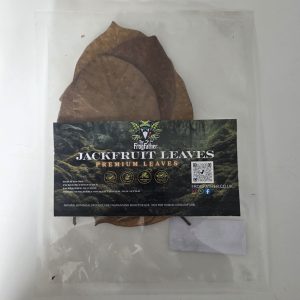
Premium Dried Indian Almond (Catappa) Leaves – 50g
Dried Terminalia catappa leaves for use as botanical leaf litter in suitable vivariums, terrariums and aquatic or semi-aquatic husbandry systems.
Vivarium use
- Creates natural floor cover and visual structure.
- Provides surfaces and organic material used by springtails, isopods and other detritivores as leaves break down.
- Can help reduce direct evaporation from small areas of damp substrate by physically covering the surface.
- Breakdown rate varies with leaf thickness, moisture, microbes, microfauna and enclosure conditions.
Catappa “tea” and tannins
When soaked, catappa leaves release tannins and other water-soluble botanical compounds that colour the water amber/brown. Keepers commonly use this type of botanical infusion in aquatic and amphibian husbandry.
Evidence correction: we previously said catappa “frog tea” supports amphibian skin health and that the leaves provide antifungal and antibacterial protection in a vivarium. We have removed those claims. Laboratory studies have demonstrated antimicrobial activity from concentrated T. catappa extracts, but this does not show that an ordinary leaf infusion treats or prevents disease in dart frogs, or that dried leaves reliably suppress mould and bacteria inside a vivarium.
Preparation
Inspect and rinse leaves before use. If you are preparing a botanical infusion, use amphibian-appropriate water and allow the liquid to cool fully before use. Remove leaves or water if they become excessively fouled.
Botanical leaves should not be used as a substitute for appropriate water quality, quarantine, hygiene or veterinary treatment.
Leaf Litter & Evidence Review
Last reviewed: 5 September 2026
Leaf litter can provide cover, feeding surfaces for detritivores, organic material for decomposition and local moisture retention. Breakdown rate varies greatly between plant species, individual leaves and enclosure conditions.
Some Terminalia catappa extracts show antimicrobial activity in laboratory assays, but that does not establish that ordinary dried leaves in a frog vivarium prevent infection, suppress mould reliably or improve amphibian skin health. We therefore describe tannins and botanical use without turning in-vitro extract results into veterinary claims.
Evidence & further reading
- Mwangi et al. (2024) – antimicrobial activity of Terminalia catappa extracts in vitro
- Govindan et al. (2026) – T. catappa extract antibacterial activity; authors note in-vivo validation is still required
- Onoda et al. – global patterns of leaf mechanical properties; tropical leaves are not universally tougher than temperate leaves