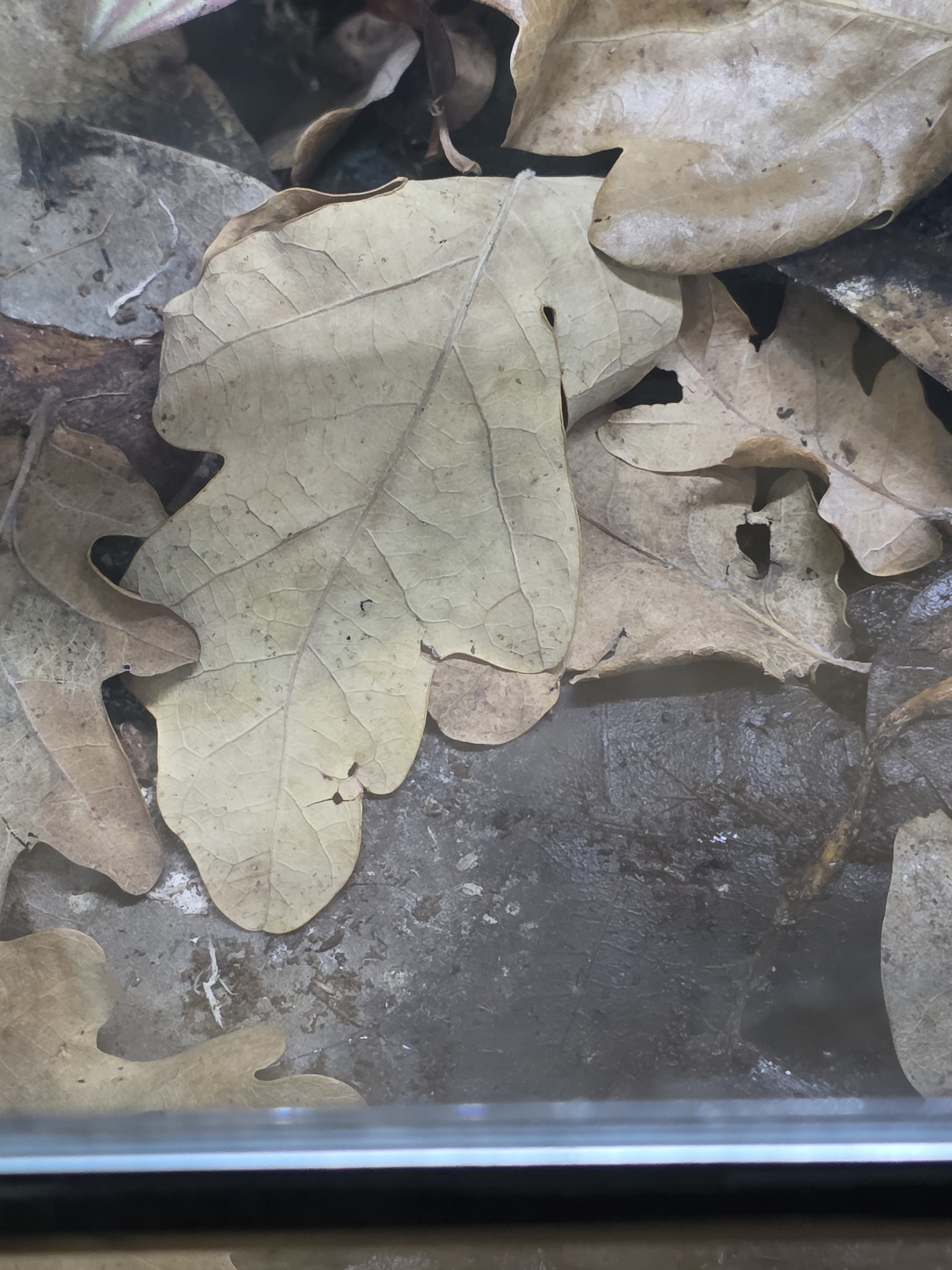

Can You Use Wild-Collected Moss in a Dart Frog Vivarium?
By The Frogfather
Walk through almost any British woodland and you’ll find moss growing across fallen branches, stones, tree roots and damp banks. Some of it looks absolutely perfect for a tropical vivarium.
It is tempting to collect a handful, take it home and use it to create a miniature rainforest.
After all, moss is natural. Dart frogs live in natural environments. Surely adding a little woodland moss cannot be a problem?
Unfortunately, it isn’t quite that straightforward.
Wild-collected moss can introduce unwanted organisms, contaminants and potentially infectious material into an enclosure. Some British mosses are also poorly suited to the warmer conditions maintained in tropical vivariums.
There are legal and conservation considerations too. Just because moss is growing beside a public footpath doesn’t mean it is available for collection.
At Frogfather HQ, I approach vivarium planting with animal welfare as the first consideration. Moss can be useful and visually attractive, but it is never worth introducing an unnecessary risk simply to make an enclosure look more established.
In this guide, I’ll explain the risks of using wild moss, whether washing or quarantining it makes a difference, why some mosses fail in tropical conditions and which alternatives I would consider instead.
Quick Answer: Is Wild Moss Safe for Dart Frogs?
I would not recommend introducing freshly collected wild moss directly into an occupied dart frog vivarium.
Wild moss may carry small invertebrates, microorganisms, soil particles and residues from its original environment. Its exposure history is usually unknown.
There is also no reliable home washing or quarantine procedure that can guarantee wild moss is free from every relevant contaminant or pathogen.
Even if the moss is clean, it may not be adapted to the temperatures, lighting and moisture conditions inside a tropical enclosure.
For an occupied dart frog vivarium, a traceable, cultivated moss from a suitable supplier is generally the more controlled option.
Why Do People Want to Use Wild Moss in Vivariums?
It’s easy to understand the appeal.
Moss provides a natural-looking surface, softens the appearance of hardscape and can help retain moisture around planting areas.
It is particularly attractive on:
- Cork bark and branches.
- Rock surfaces and background ledges.
- Moist planting pockets.
- Shaded areas beneath tropical plants.
- Decorative foreground sections.
Wild moss also appears inexpensive, especially when compared with buying cultivated moss.
However, its purchase price is only one consideration. A failed planting may need replacing, and introducing unwanted organisms or contaminants can create much more work than sourcing suitable material in the first place.
There is another important distinction: moss that looks attractive in a cool British woodland may not remain attractive in a warm tropical vivarium.
1. Wild Moss Can Introduce Unwanted Hitchhikers
A clump of woodland moss is not simply a plant.
It is a miniature habitat.
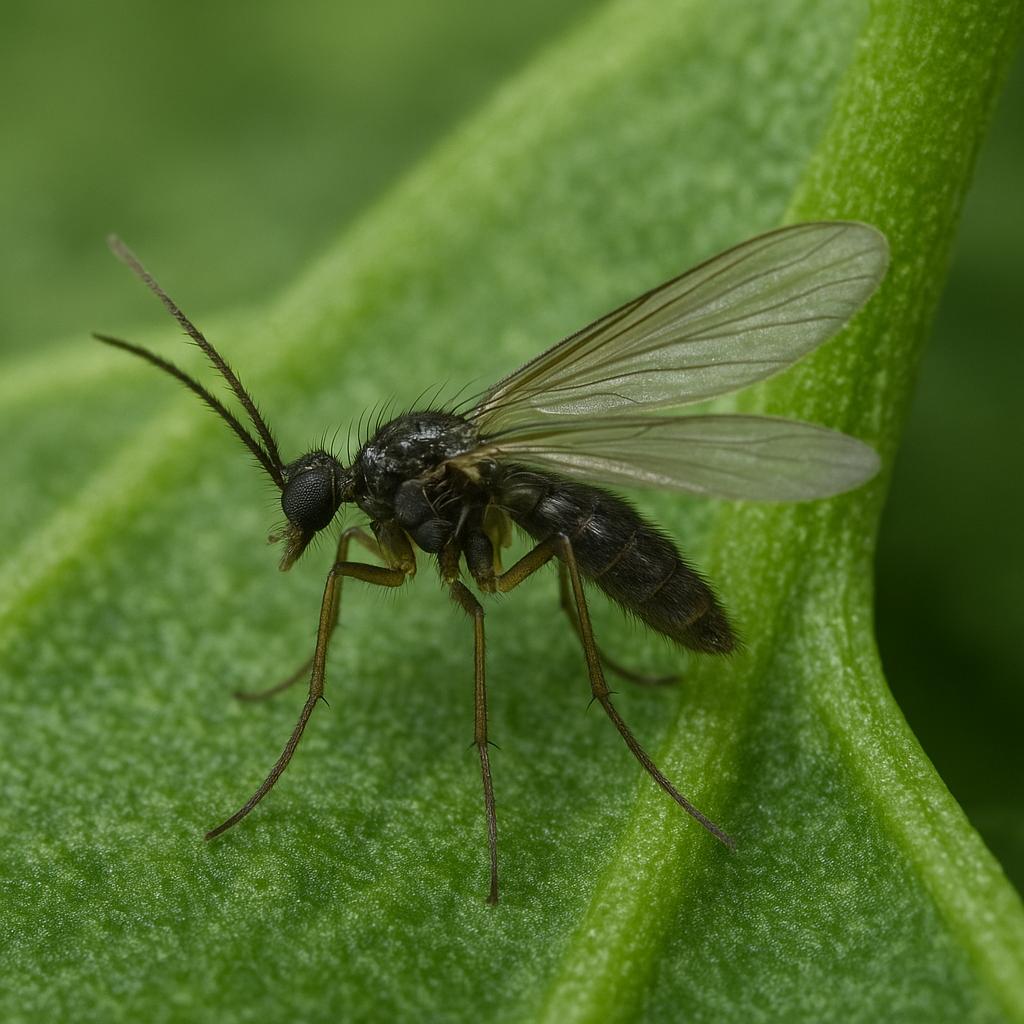
Between its stems and leaves, it may contain mites, springtails, nematodes, insect larvae, tiny snails, slugs and other organisms.
Many of these are normal components of a healthy woodland ecosystem. Their presence in the wild is not inherently problematic.
The question is whether you want to introduce them into a controlled enclosure containing captive amphibians.
Snails and Slugs
Small snails and slugs can arrive unnoticed in damp plant material.
Once established, some species may damage plants or become difficult to remove from a densely planted enclosure.
Their eggs may be especially difficult to spot.
Mites
Many mites are harmless decomposers or predators of other tiny organisms. However, not every mite is desirable, and visual identification can be difficult.
The presence of mites does not automatically indicate a dangerous infestation.
Nevertheless, introducing an unidentified community of organisms is unnecessary when safer sourcing options are available.
Other Invertebrates
Wild moss may also contain insect larvae, small predators and organisms that compete with existing microfauna.
Not all of these will survive in a tropical vivarium, but some may establish themselves.
At Frogfather HQ, I deliberately introduce selected microfauna rather than relying on whatever happens to arrive with materials collected outdoors.
2. Wild Moss May Carry Pesticide or Chemical Residues
One of the more difficult problems with wild-collected moss is that its environmental history is rarely known.
Moss collected from a garden, roadside, agricultural boundary or managed public space may have been exposed to chemicals.
Potential sources include:
- Herbicide or pesticide applications.
- Spray drift from nearby land.
- Road-related contamination.
- Industrial or urban pollution.
- Garden treatments and fertilisers.
This does not mean every piece of wild moss is contaminated.
It means that appearance alone cannot establish whether it is suitable for an amphibian enclosure.
Why This Matters for Dart Frogs
Amphibian skin plays an important role in water and electrolyte exchange. Chemical exposure can therefore be an important husbandry consideration.
Different substances have different toxicities, exposure pathways and effects. It would be inaccurate to suggest that every trace of every chemical causes harm.
However, when the exposure history is unknown, there is little justification for introducing the material into an occupied enclosure.
Will Washing Remove Pesticides?
Washing may remove loose dirt and some surface residues.
It cannot reliably demonstrate that all contaminants have been removed.
Some substances may be absorbed into plant tissues or retained in associated organic material.
Therefore, rinsed does not mean pesticide-free.
3. Wild Moss Creates an Unnecessary Biosecurity Question
Amphibian biosecurity is about reducing opportunities for infectious agents to move between animals, environments and equipment.
Wild-collected biological material can introduce uncertainty because it may have contacted soil, water, wildlife or other environmental sources.
Two important amphibian pathogens are the chytrid fungi Batrachochytrium dendrobatidis (Bd) and Batrachochytrium salamandrivorans (Bsal).
These are not interchangeable diseases, and their host associations differ.
Government guidance recognises that Bsal can spread through contaminated environmental materials, including soil, water and equipment.
That does not prove a particular clump of moss carries Bsal, nor does it mean moss is a common or established transmission route in every situation.
It does, however, support a sensible principle: avoid transferring unnecessary environmental material between wild habitats and captive amphibian systems.
Can Moss Carry Chytrid Fungus?
The presence and survival of amphibian pathogens depend on the organism and environmental conditions.
It would be misleading to claim that all wild moss carries chytrid fungus.
It would be equally misleading to claim that a simple rinse guarantees it does not.
For a valuable captive collection, avoiding uncertain environmental introductions is a proportionate precaution.
What About Ranavirus?
Ranaviruses are another group of pathogens relevant to amphibian health.
Their transmission and environmental persistence vary according to circumstances.
Wild-collected material that has been exposed to amphibian habitats introduces an avoidable uncertainty, particularly when its origin is unknown.
For that reason, I would not use material collected from ponds or areas frequented by wild amphibians as a shortcut to stocking an occupied frog vivarium.
4. British Woodland Moss May Not Survive in a Tropical Vivarium
This is one of the most overlooked problems.
People often assume that because moss grows in a damp woodland, it will thrive in a humid tropical vivarium.
But humidity is only one part of its environmental requirements.
Many British mosses are adapted to seasonal temperature changes, different light conditions and periods of drying or cooling.
A tropical vivarium may provide:
- Relatively stable warmth throughout the year.
- Artificial lighting with a different intensity and duration.
- Frequent misting.
- Limited seasonal variation.
- Different airflow and substrate chemistry.
Some temperate mosses may tolerate these conditions for a period. Others gradually brown, thin out or die.
The outcome depends on the species and the environment.
Why Does Wild Moss Turn Brown?
Possible explanations include unsuitable temperature, insufficient light, excessive light, poor airflow, inappropriate moisture or failure to establish on the chosen surface.
Brown moss is not always dead. Some species naturally change colour during drying or dormancy.
However, persistent deterioration inside a tropical vivarium suggests the conditions may not suit that particular moss.
Does More Misting Help?
Not necessarily.
If a moss is struggling because of temperature or light, adding more water may not solve the problem.
Excessive misting can also create waterlogging elsewhere in the enclosure.
I would never adjust the entire vivarium’s environment simply to keep a decorative patch of moss green if doing so compromises the frogs’ needs.
5. Is It Legal to Collect Moss in the UK?
Wild moss collection is not simply a matter of finding some and taking it home.
In England, the Wildlife and Countryside Act 1981 provides legal protections for wild plants, including restrictions on unauthorised uprooting.
Some species receive additional protection.
Collection from protected sites, including Sites of Special Scientific Interest (SSSIs), can involve further restrictions and consent requirements.
Public access to land does not automatically give permission to remove plants or other natural materials.
What If It’s Only a Small Amount?
Taking a small amount does not automatically make collection lawful.
Permission, location, species and the manner of collection all matter.
Rules may also differ across England, Scotland, Wales and Northern Ireland.
Before collecting anything, establish that you have the necessary permission and that collection is lawful at that location.
What About Moss From My Own Garden?
Garden moss may be easier to trace than material collected from public land, but ownership does not eliminate husbandry concerns.
You would still need to consider pesticide use, fertilisers, wildlife exposure and suitability for tropical conditions.
For occupied amphibian enclosures, I would generally prefer cultivated material with a clearer history.
6. Is Wild Moss Collection Environmentally Responsible?
Mosses are important components of natural habitats.
They help retain moisture, provide shelter for small organisms and contribute to local ecological processes.
Removing moss from woodland can disturb the organisms living within it and damage established growth.
Some mosses grow slowly or occupy specialised habitats.
Although moss may appear abundant, its ecological value is not necessarily reflected by its size.
For vivarium keepers, cultivated moss is often the more responsible choice.
It avoids unnecessary disturbance to wild habitats and offers greater control over what enters the enclosure.
7. Can You Clean Wild Moss to Make It Safe?
There are many online suggestions for preparing wild moss.
These include soaking, rinsing, quarantining, freezing, heating and using chemical treatments.
Unfortunately, none of these should be treated as a universally reliable method of making unknown wild moss safe for amphibians.
Rinsing
Rinsing can remove visible soil and some loose organisms.
It does not guarantee the removal of eggs, microorganisms, pathogens or chemical residues.
Soaking
Soaking may encourage some invertebrates to leave the moss.
It may also damage certain moss species and does not establish that the material is pathogen-free.
Freezing
Freezing is not a validated universal disinfection method.
Different organisms and pathogens have different tolerances, and freezing may damage the moss itself.
Heating or Boiling
Heat can kill living moss and alter the material.
If the objective is to establish a living green carpet, boiling the moss defeats that purpose.
Heating also does not provide a simple, verified solution for every possible chemical contaminant.
Chemical Disinfection
I would not recommend applying household disinfectants, bleach or other unverified chemicals to moss intended for an occupied dart frog vivarium.
Residues and plant damage create additional concerns.
Cleaning can reduce certain visible risks, but it is not the same as establishing that a material is safe.
8. Does Quarantining Wild Moss Make It Safe?
Quarantine is useful for observation, but it has limits.
Keeping moss separately may allow you to identify visible hitchhikers, monitor its growth and discover whether it survives under controlled conditions.
However, a moss sample that looks healthy after several weeks is not necessarily free from pathogens or chemical residues.
There is no universal quarantine duration that can guarantee safety against every possible hazard.
What Quarantine Can Tell You
- Whether the moss remains alive under the conditions provided.
- Whether visible snails, slugs or other organisms emerge.
- Whether unwanted plant growth becomes apparent.
- Whether the moss deteriorates or develops unusual odours.
What Quarantine Cannot Guarantee
- Complete removal of pesticide residues.
- Absence of all pathogens.
- Absence of microscopic eggs or organisms.
- Long-term survival in a different enclosure.
Quarantine is a risk-management tool, not a certification process.
9. What Moss Is Better for a Dart Frog Vivarium?
The best choice depends on where you intend to grow it.
Some mosses are better suited to damp hardscape, while others are more appropriate for planting pockets or consistently moist surfaces.
It is also worth remembering that a successful dart frog vivarium does not need to have every exposed surface covered in moss.
Leaf litter, established plants and suitable hardscape are often more important to the enclosure’s function.
Captive-Cultivated Tropical Moss
For decorative living moss, I would look for material cultivated under controlled conditions and suitable for the temperatures and moisture levels of the intended enclosure.
Ask the supplier about its origin and any chemical treatments.
Even cultivated material should be inspected before use.
Java Moss
Java moss, commonly sold for aquariums, can sometimes be used in consistently damp vivarium locations.
Its success outside water depends on moisture, light, airflow and how it has been grown.
It should not be assumed that every aquarium-grown batch will immediately adapt to terrestrial conditions.
Sphagnum Moss
Sphagnum is commonly used in horticulture and vivarium applications, particularly for moisture management and plant propagation.
Live sphagnum and dried sphagnum are different products with different uses.
Neither should automatically be treated as an ideal replacement for leaf litter across an entire dart frog enclosure.
Source it responsibly and consider the needs of the species being kept.
Other Cultivated Mosses
Several cultivated mosses are marketed for terrariums and tropical planting.
Common names can be unreliable, so identifying the actual species and understanding its growing conditions is more useful than relying on a label such as “rainforest moss”.
10. Moss Isn’t Always the Best Ground Cover
One of the biggest mistakes in vivarium design is trying to recreate the appearance of a rainforest floor without considering how the habitat functions.
Many natural rainforest floors contain substantial leaf litter, exposed roots, decomposing wood and patches of bare substrate.
They are not necessarily continuous carpets of bright green moss.
For dart frogs, leaf litter provides important cover and supports microfauna.
It can create sheltered areas where frogs forage and retreat.
A visually attractive moss carpet should not replace these functional habitat features.
My Preferred Design Principle
I would rather build a vivarium with appropriate leaf litter, established plants, accessible hiding places and stable environmental conditions than one that looks spectacular for a photograph but requires unsuitable husbandry to maintain.
Moss is an optional planting component, not the foundation of dart frog welfare.
11. How to Introduce Purchased Moss More Carefully
Even when buying cultivated moss, I recommend a sensible inspection process.
- Choose a traceable supplier. Ask where the moss originated and whether pesticides or other treatments have been used.
- Inspect the packaging. Look for unwanted organisms, unusual residues and signs of deterioration.
- Keep it separate initially. A clean, dedicated container allows you to observe its condition before introducing it to an established enclosure.
- Check its growing requirements. Confirm that the intended location provides suitable moisture, temperature, light and airflow.
- Remove unsuitable material. Discard obviously decaying or contaminated sections rather than adding them to the vivarium.
- Introduce a manageable amount. Start with a small planting area and monitor how it performs.
- Continue observing. Watch for deterioration, unwanted organisms or changes to the surrounding substrate.
These steps reduce some practical risks but do not guarantee that purchased moss is sterile or completely free from contaminants.
12. Where Should Moss Be Placed in a Dart Frog Vivarium?
Placement often determines whether moss survives.
A location that receives frequent misting may still dry rapidly if it is directly beneath strong lighting or exposed to continuous airflow.
Equally, a permanently saturated planting pocket may not suit every moss species.
Consider:
- The moisture level of the surface.
- How quickly the area dries between misting cycles.
- The intensity and duration of lighting.
- Whether the moss can attach to the surface.
- The temperature at that particular location.
- Whether the placement interferes with drainage or frog access.
Small experimental patches can be useful before covering a large area.
If a particular moss repeatedly fails, I would reconsider the species or location rather than continually changing the whole enclosure.
13. Why Is My Vivarium Moss Going Brown or Dying?
When moss begins deteriorating, the cause isn’t always obvious.
Here are some possibilities to investigate.
| Symptom | Possible explanation | What to investigate |
|---|---|---|
| Moss gradually turns brown | Unsuitable growing conditions or normal colour change | Species, moisture, light and temperature |
| Moss dries between misting cycles | Surface moisture may be insufficient | Local airflow and mounting surface |
| Moss becomes slimy or deteriorates | Excessive moisture, decay or unsuitable conditions | Drainage, airflow and substrate condition |
| Moss remains green but doesn’t spread | Slow growth or limited resources | Species identification and growth requirements |
| Moss declines after being moved indoors | Environmental change or poor adaptation | Temperature, lighting and previous growing conditions |
Do not assume that every brown patch is caused by insufficient misting.
14. Is Moss Necessary for a Bioactive Vivarium?
No.
A bioactive vivarium can function successfully without extensive moss growth.
The important components include suitable substrate, appropriate moisture management, living plants, leaf litter, selected microfauna and environmental conditions that meet the animals’ needs.
Moss can contribute to the appearance and microhabitats of the enclosure, but it is not essential to the definition of bioactive husbandry.
In some designs, extensive moss coverage may actually make it harder to maintain the leaf litter areas that dart frogs use.
15. What I Would Do at Frogfather HQ
When I’m planning a vivarium, I start with the animals and the environment they require.
That determines the substrate, drainage, planting, airflow and available cover.
Decorative moss comes later.
I’ve worked with mature bioactive substrates, extensive plant collections and established microfauna populations, and one thing remains consistent: adding more biological material is not automatically an improvement.
Every new introduction changes the enclosure in some way.
For that reason, I prefer material with a known origin and a clear purpose.
Wild-collected moss may look beautiful, but the uncertainty surrounding contaminants, unwanted organisms and long-term suitability makes it a poor first choice for an occupied dart frog vivarium.
I’d rather use cultivated moss where it genuinely suits the environment, and allow leaf litter, tropical plants and natural hardscape to provide the rest of the structure.
That approach may not produce a perfectly green carpet, but it prioritises a stable habitat over appearance alone.
16. Wild Moss Versus Cultivated Moss: Which Would I Choose?
| Consideration | Wild-collected moss | Traceable cultivated moss |
|---|---|---|
| Origin | May be uncertain | Often easier to establish |
| Chemical exposure | Usually unknown | Supplier may provide treatment history |
| Hitchhikers | Wild organisms may be present | Still possible; inspect carefully |
| Tropical suitability | May be poorly adapted | Can select a suitable cultivated species |
| Conservation impact | May disturb wild habitats | Avoids direct collection when genuinely cultivated |
| My preference | Avoid for occupied frog vivariums | Preferred when suitable and responsibly sourced |
17. The Bottom Line: Natural Doesn’t Automatically Mean Safe
Wild-collected moss can look like the perfect finishing touch for a tropical vivarium.
But it comes with questions that are difficult to answer: what organisms are living inside it, what substances has it been exposed to, and will it actually thrive in the enclosure?
Washing or quarantining may help with some visible problems, but neither can guarantee complete safety.
There are also legal and conservation reasons to avoid casual collection from the countryside.
For an occupied dart frog vivarium, my preference is to use responsibly cultivated material from a traceable source, and only where its growing requirements match the enclosure.
And if moss doesn’t suit a particular area, that’s absolutely fine.
A healthy dart frog vivarium doesn’t need to look like a carpet of green moss. It needs to provide the right environment for the frogs.
That’s always the priority at Frogfather HQ.
The Frogfather
Further Reading and Sources
Frequently Asked Questions About Wild Moss in Dart Frog Vivariums
Is wild moss safe for dart frogs?
Wild moss is not automatically safe for dart frogs. It may contain unwanted invertebrates, microorganisms or chemical residues from its original environment. Its suitability for tropical conditions may also be uncertain. At Frogfather HQ, I prefer traceable, cultivated moss rather than introducing freshly collected woodland moss into an occupied enclosure.
Can I collect moss from my garden for a vivarium?
You can consider moss from your own garden, but knowing where it grew does not guarantee its safety. Consider any pesticide or fertiliser use, contact with wildlife, contamination and whether the moss can tolerate tropical vivarium conditions. For occupied amphibian enclosures, cultivated material with a known history is generally preferable.
Does washing wild moss make it safe for dart frogs?
Washing may remove loose soil and some visible organisms, but it cannot guarantee the removal of pesticide residues, pathogens or microscopic eggs. Rinsed moss should not automatically be considered safe for an amphibian enclosure.
How long should I quarantine moss before adding it to a vivarium?
There is no universal quarantine period that guarantees wild moss is free from every relevant contaminant or pathogen. Keeping moss separately allows you to observe visible hitchhikers and assess its health, but quarantine cannot establish complete safety.
Can wild moss introduce parasites or diseases into a vivarium?
Wild-collected biological material can introduce organisms and environmental material of uncertain origin. Although this does not mean every moss sample carries a disease, avoiding unnecessary transfers from wild habitats is a sensible amphibian biosecurity precaution.
Why does woodland moss turn brown in a tropical vivarium?
Some woodland mosses are adapted to cooler temperatures, seasonal changes or different lighting conditions. They may struggle in a consistently warm tropical enclosure. Browning can also result from unsuitable moisture, light or airflow, although colour change does not always mean the moss is dead.
Is it legal to collect moss from UK woodlands?
Not automatically. Permission, land ownership, species protections and the location all matter. Removing wild plants without appropriate authorisation may be unlawful, and protected sites can have additional restrictions. Check the applicable rules before collecting moss.
What is the best moss for a dart frog vivarium?
There is no single best moss for every dart frog vivarium. A responsibly cultivated species suited to the enclosure’s temperature, moisture, lighting and airflow is generally a better choice than unidentified wild moss. The intended growing surface also matters.
Can I use sphagnum moss in a dart frog vivarium?
Sphagnum moss can be useful in certain vivarium planting and moisture-management applications. However, live and dried sphagnum have different uses, and neither should automatically replace the leaf litter and substrate structure required by the animals.
Do dart frogs need moss in their vivarium?
No. Dart frogs do not require a continuous carpet of moss. Suitable leaf litter, plants, hiding places, substrate, ventilation and moisture conditions are generally more important. Moss can be a decorative and functional addition when it suits the enclosure, but animal welfare should determine the design.