
One of the most common messages I receive is some version of this:
“My dart frogs look healthy. They’re eating. Humidity is right. Temperature is right. But they just won’t breed.”
After working with multiple species and morphs over the years, I can tell you this — when dart frogs don’t breed, it’s rarely because of just one obvious mistake. More often, it’s subtle husbandry factors stacking up.
This guide walks through the real reasons breeding stalls in captivity, based on experience, not theory.
1. You Don’t Actually Have a Proven Pair
This sounds obvious, but it’s the number one issue.
- Juveniles are extremely difficult to sex.
- Subdominant males may never call.
- Females can be present but under-conditioned.
Calling is your first reliable sign. No calling? You may not have a male. Or he may not feel secure enough to advertise.
Before troubleshooting everything else, confirm:
- Audible calling behaviour
- Size differences (females typically larger in many species)
- Toe pad development and posture differences
2. Overfeeding (Yes, Really)
This surprises people.
Constant heavy feeding removes competition pressure and can suppress natural breeding triggers. In the wild, seasonal fluctuation plays a role. In captivity, we often provide perfect conditions all year round.
Excess feeding can also lead to supplement wash-off if misting systems run heavily, reducing mineral intake over time.
Healthy, steady conditioning beats constant overfeeding.
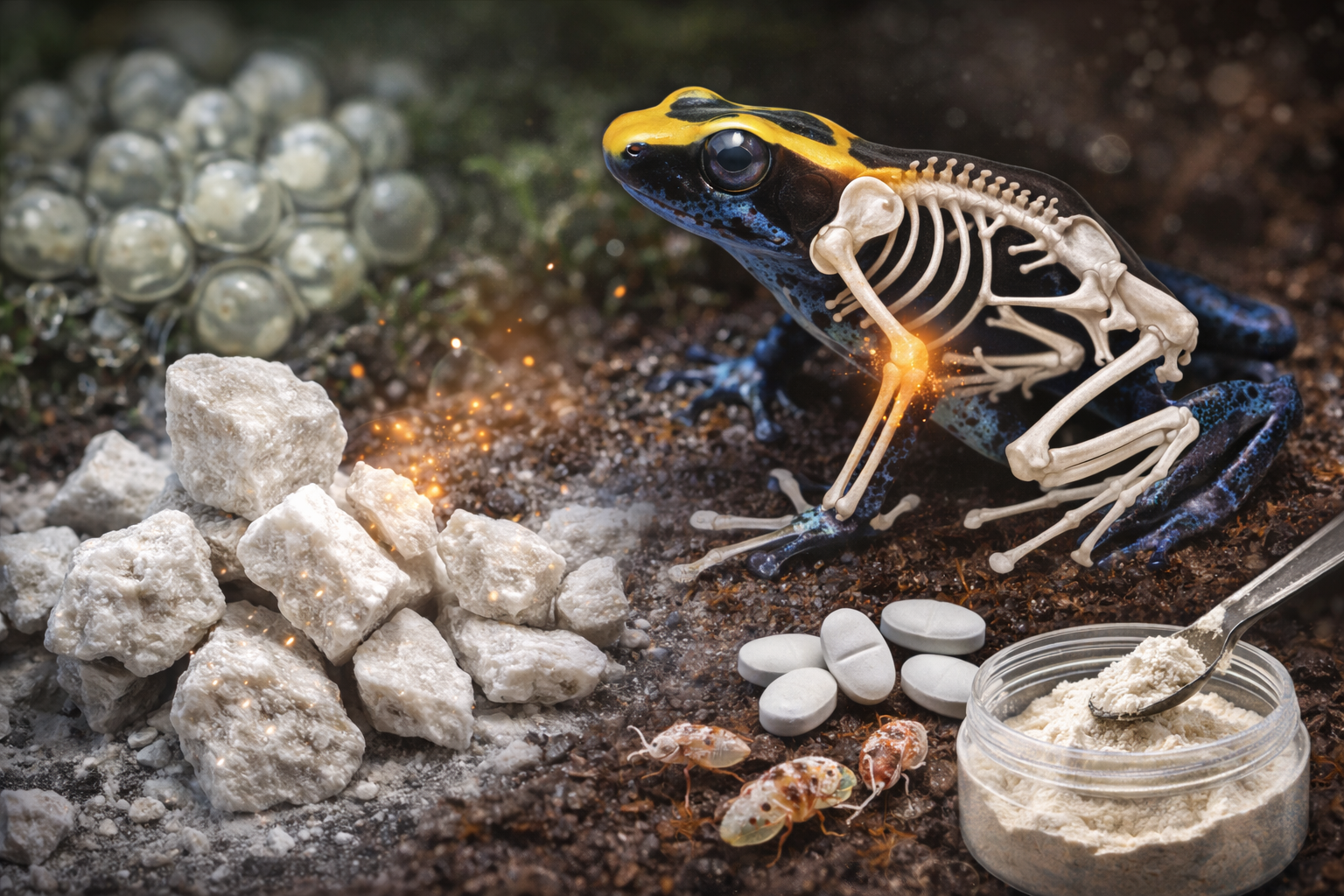
3. Mineral Imbalance (The Silent Killer of Breeding Success)
Dart frog reproduction is mineral intensive.
- Egg production requires calcium.
- Proper muscle contraction requires balanced electrolytes.
- Vitamin A plays a role in epithelial health and reproductive condition.
If supplementation is inconsistent, eggs may be infertile, poorly formed, or never laid.
I recommend a consistent dusting routine using a comprehensive product such as our All-in-1 Vitamin & Mineral Dust, ensuring minerals remain available even in high-humidity systems.
Supplement rotation matters. Consistency matters more.
4. No Seasonal Shift
Even equatorial species experience variation in rainfall and temperature.
If your vivarium conditions are static 365 days a year, frogs may never receive a biological “trigger.”
Try subtle seasonal simulation:
- Increase mist frequency for 2–3 weeks
- Increase feeding slightly during “wet season”
- Reduce slightly afterwards
Often, calling increases within weeks of environmental change.
5. Incorrect Egg-Laying Sites
If a pair is courting but you’re not seeing eggs, they may simply dislike your provided site.
Different species prefer:
- Film canisters
- Coconut huts
- Leaf axils (bromeliads)
- Petri-style flat dishes
Placement matters too. Too exposed and they won’t use it. Too dry and eggs fail. Too wet and fungus develops.
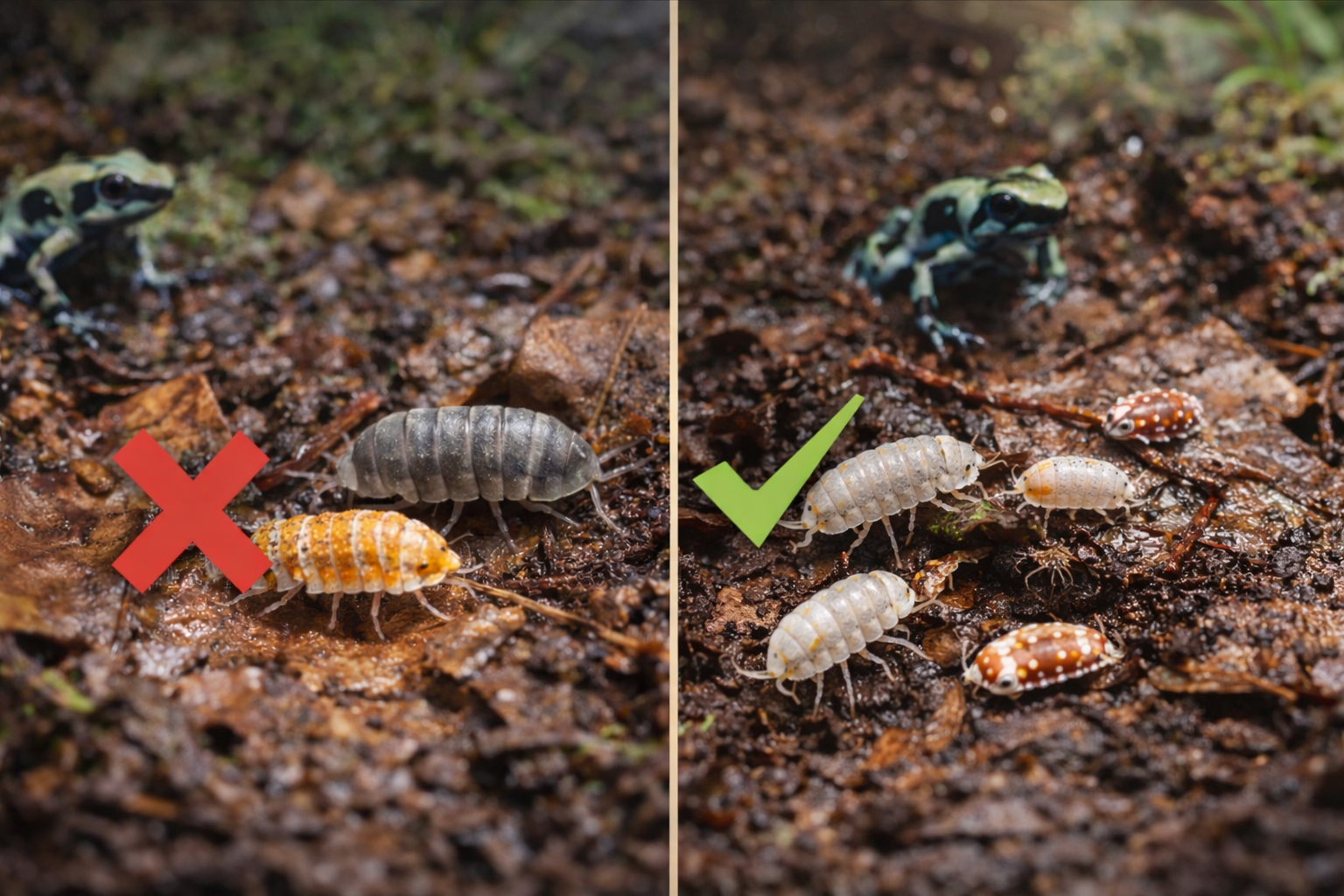
6. Microfauna Deficiency
A healthy bioactive system supports breeding indirectly.
Why?
- Cleaner eggs
- Lower fungal load
- Reduced stress
- Better natural foraging behaviour
If your springtails and isopods aren’t thriving, your system may lack balance.
7. Stress You Can’t See
Dart frogs breed when they feel secure.
Hidden stressors include:
- Constant foot traffic near the enclosure
- Overhandling
- Bright lighting with no shaded retreats
- Insufficient visual barriers
- Dominance bullying in group setups
Security equals reproduction. If they don’t feel safe, they won’t invest energy into eggs.
8. They’re Simply Not Mature Yet
Many species take 10–18 months to reach full reproductive condition.
Even if they look adult-sized, they may not be hormonally mature.
Patience is part of successful breeding.
What Breeding Success Usually Looks Like
- Increased calling
- Territory establishment
- Chasing behaviour (non-aggressive)
- Female following male to site
- Egg deposition in hidden location
Often, once conditions align, breeding becomes consistent and repeatable.
Common FAQ
How long should I wait before worrying?
If frogs are under 12 months old, focus on conditioning rather than worrying. If over 18 months with no calling, review sex ratio and environment.
Why are my eggs infertile?
Often mineral imbalance, improper fertilisation timing, or young/inexperienced males.
Should I separate pairs?
Some species thrive in pairs; others do well in small groups. Dominance behaviour may suppress breeding in certain setups.
Does higher humidity always trigger breeding?
No. It’s the change in conditions, not constant high humidity, that often stimulates reproductive behaviour.
Final Thoughts
Breeding dart frogs isn’t about chasing one magic fix.
It’s about balance — nutrition, environment, security, and patience.
If your frogs aren’t breeding, don’t panic. Step back, review the fundamentals, adjust gradually, and give them time.
When conditions align, they usually let you know.