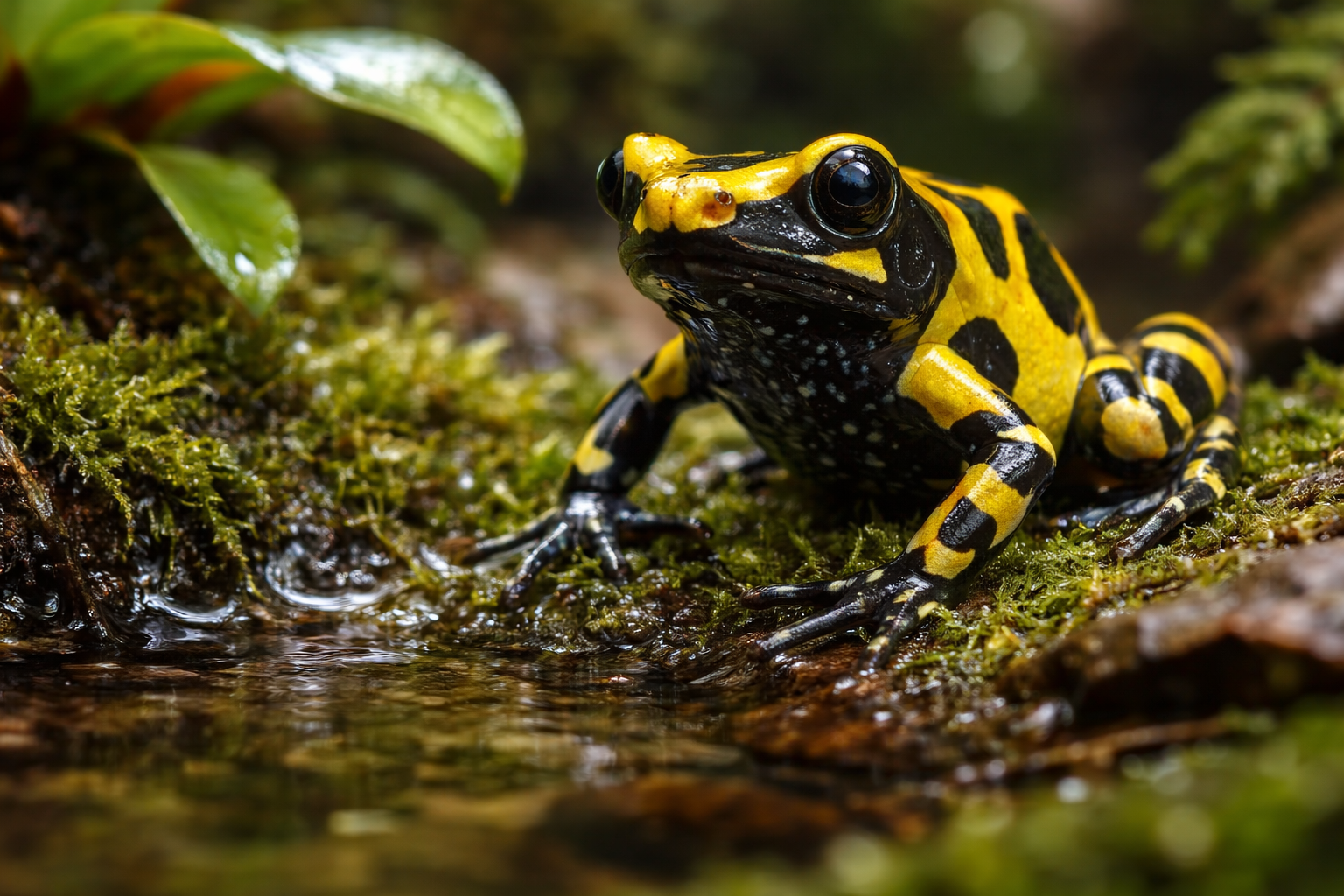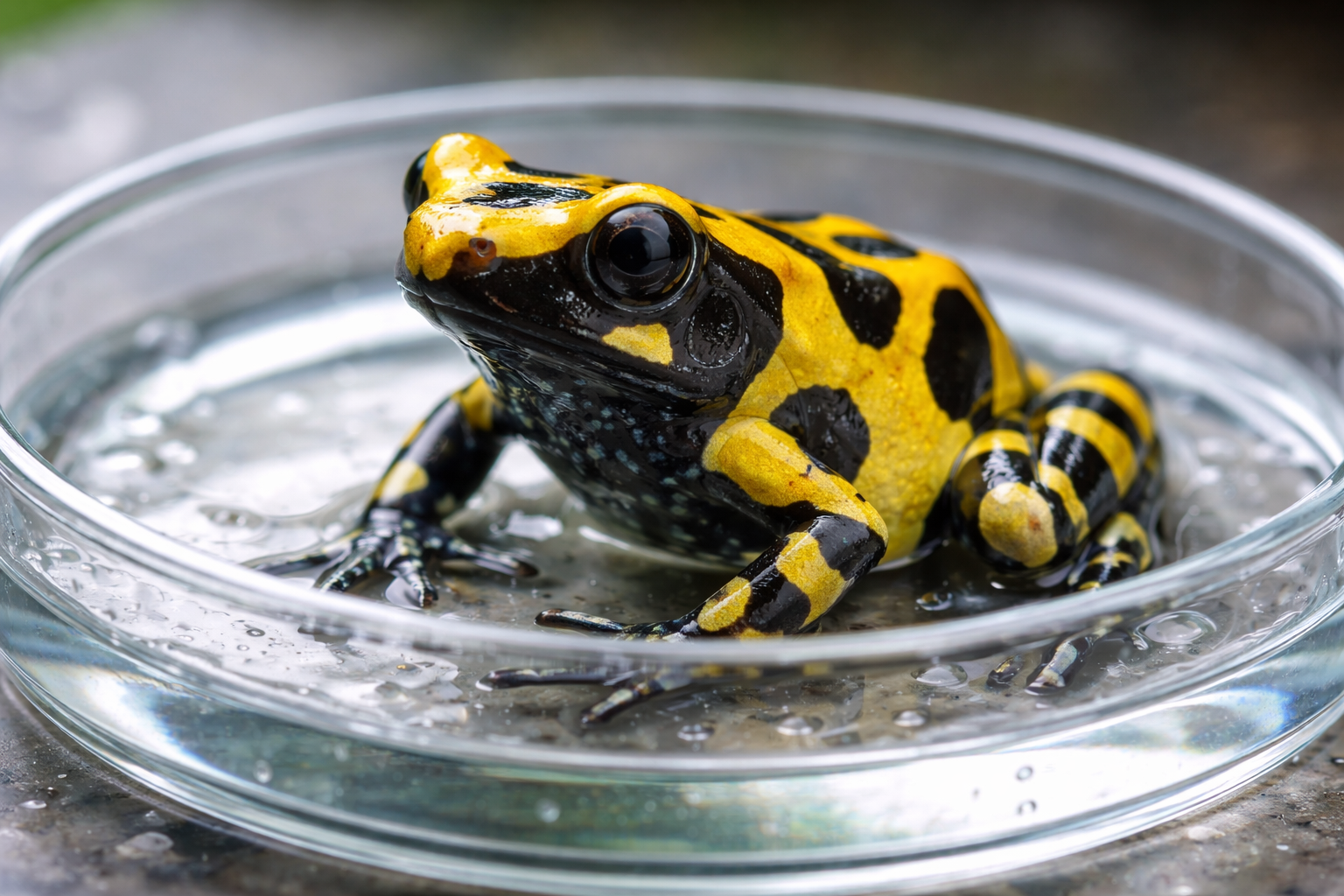

When people think about keeping arrow frogs, they usually focus on feeding and supplements first. That makes sense — nutrition is vital. But for poison dart frogs, diet only works properly when the environment supports it.
Moss, microhabitats, and humidity aren’t decorative extras. They are functional parts of how arrow frogs live, feed, hydrate, and regulate their bodies. Without them, even well-fed frogs struggle to thrive.
This article explains why moss-based microhabitats matter so much, how they support feeding and supplementation, and what this means for modern dart frog setups.
Related: Dart frog care, guidance, and resources
How arrow frogs use microhabitats in the wild
In nature, poison dart frogs don’t experience a uniform environment. Instead, they move constantly between microhabitats — small pockets of different moisture, temperature, and shelter.
These include:
- moss-covered ground
- leaf litter
- rotting wood
- plant bases and roots
Each of these zones plays a role. Some retain moisture, others harbour microfauna, and others provide shelter from heat or predators.
Arrow frogs evolved to exploit this patchwork environment. Captive setups need to recreate it deliberately.
Why moss is more than decoration
Moss is one of the most misunderstood elements of dart frog keeping. It isn’t just about looks.
Healthy moss:
- retains moisture without becoming waterlogged
- creates cool, humid refuges
- supports springtails and other microfauna
- prevents substrate compaction
For arrow frogs, this means easier hydration, more natural movement, and constant access to tiny prey items.
Without moss, enclosures often become too dry at ground level — even when humidity readings look correct.
Humidity and skin health in poison dart frogs
Poison dart frogs rely heavily on their skin for hydration and gas exchange. Unlike reptiles, they don’t drink from bowls.
Stable humidity:
- prevents dehydration
- supports normal shedding
- reduces stress
Dry microhabitats force frogs to expend energy staying hydrated — energy that should be going into feeding, growth, and breeding.
Moss buffers humidity at ground level, where arrow frogs actually live.
Microhabitats and feeding behaviour
Earlier in this series, we explored what arrow frogs eat and why microfauna matter. Those two topics come together here.
Microhabitats created by moss and leaf litter:
- harbour springtails continuously
- allow frogs to forage naturally between feeds
- support juveniles and froglets
In sterile setups, feeding becomes artificial and intermittent. In microhabitat-rich environments, feeding is constant and low-level — just like in the wild.
Related: Microfauna, foods, and supplements for dart frogs
Why bare or minimal setups cause long-term issues
Minimalist enclosures are often easier to clean, but they come with hidden costs.
Over time, arrow frogs kept without proper microhabitats may show:
- reduced activity
- poorer feeding response
- slower growth in juveniles
- increased stress behaviour
These issues are often misattributed to diet or supplements, when the real cause is environmental.
Establishing moss safely in dart frog enclosures
Introducing moss isn’t as simple as adding a handful and hoping it survives. Moss needs moisture, light, and a suitable surface.
Many keepers now use starter products designed specifically for tropical vivariums, which:
- establish evenly
- avoid contamination
- support long-term growth
Learn more: Paint-on tropical moss starter for vivariums
Moss, nutrition, and supplementation work together
Moss doesn’t replace feeding or supplements — it makes them work better.
In a well-established enclosure:
- microfauna consume excess food and supplement dust
- nutrients cycle naturally through the system
- frogs encounter food more frequently
This creates stability. Instead of peaks and crashes, the system supports steady health.
Precision, not complexity
Arrow frogs don’t need complicated setups — they need intentional ones.
Moss, microhabitats, humidity, feeding, and supplements all support one another. Remove one, and the others become less effective.
Understanding this relationship is what separates short-term success from long-term thriving.
Continue the series
- Arrow Frogs vs Poison Dart Frogs: Names, History, and Care Explained
- What Do Arrow Frogs Eat? Feeding Poison Dart Frogs Properly
- Do Poison Dart Frogs Need Supplements?
- Dart frog care and resources
Key takeaway: Moss and microhabitats are not optional extras. For arrow frogs and poison dart frogs, they are core components of hydration, feeding, and long-term health.