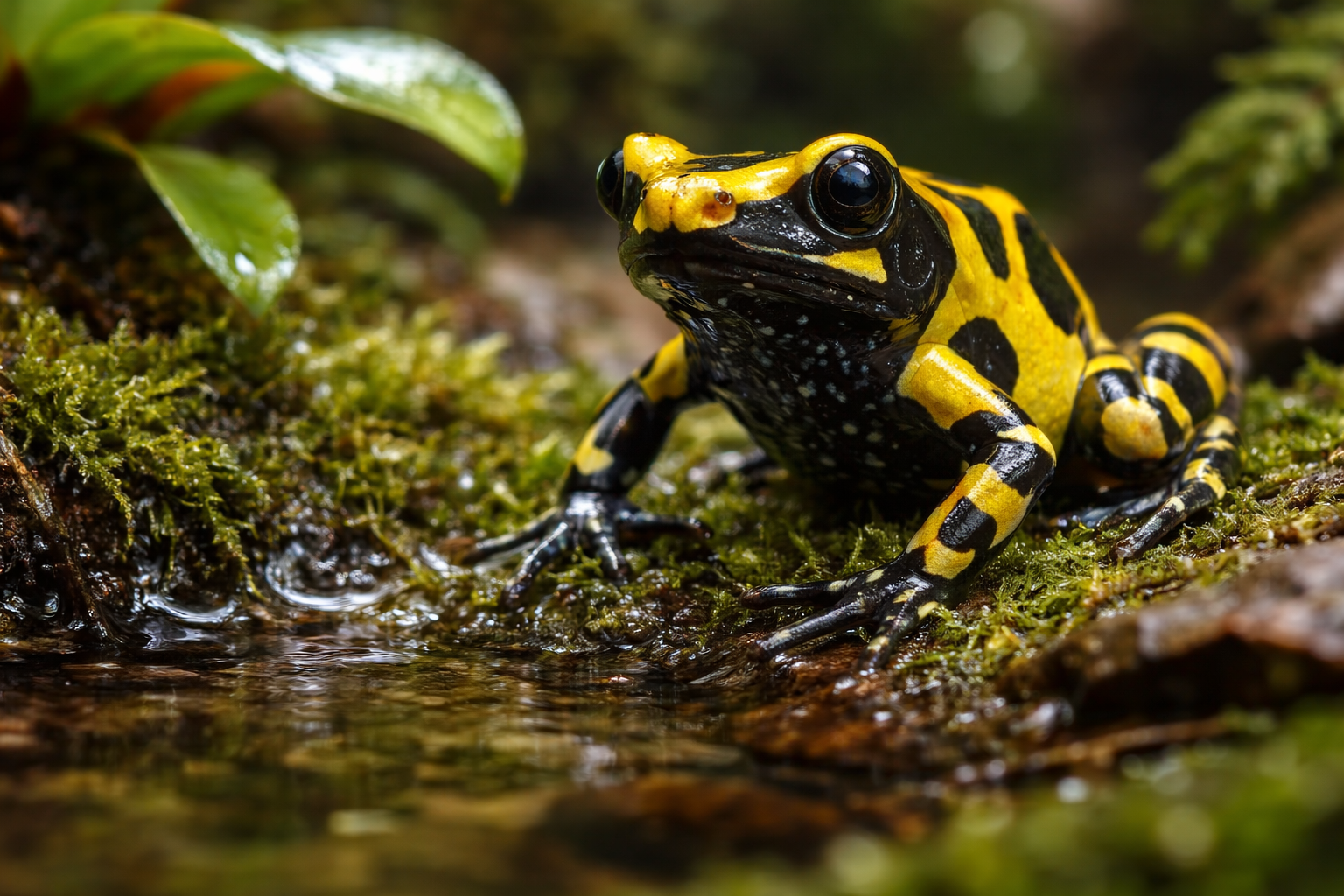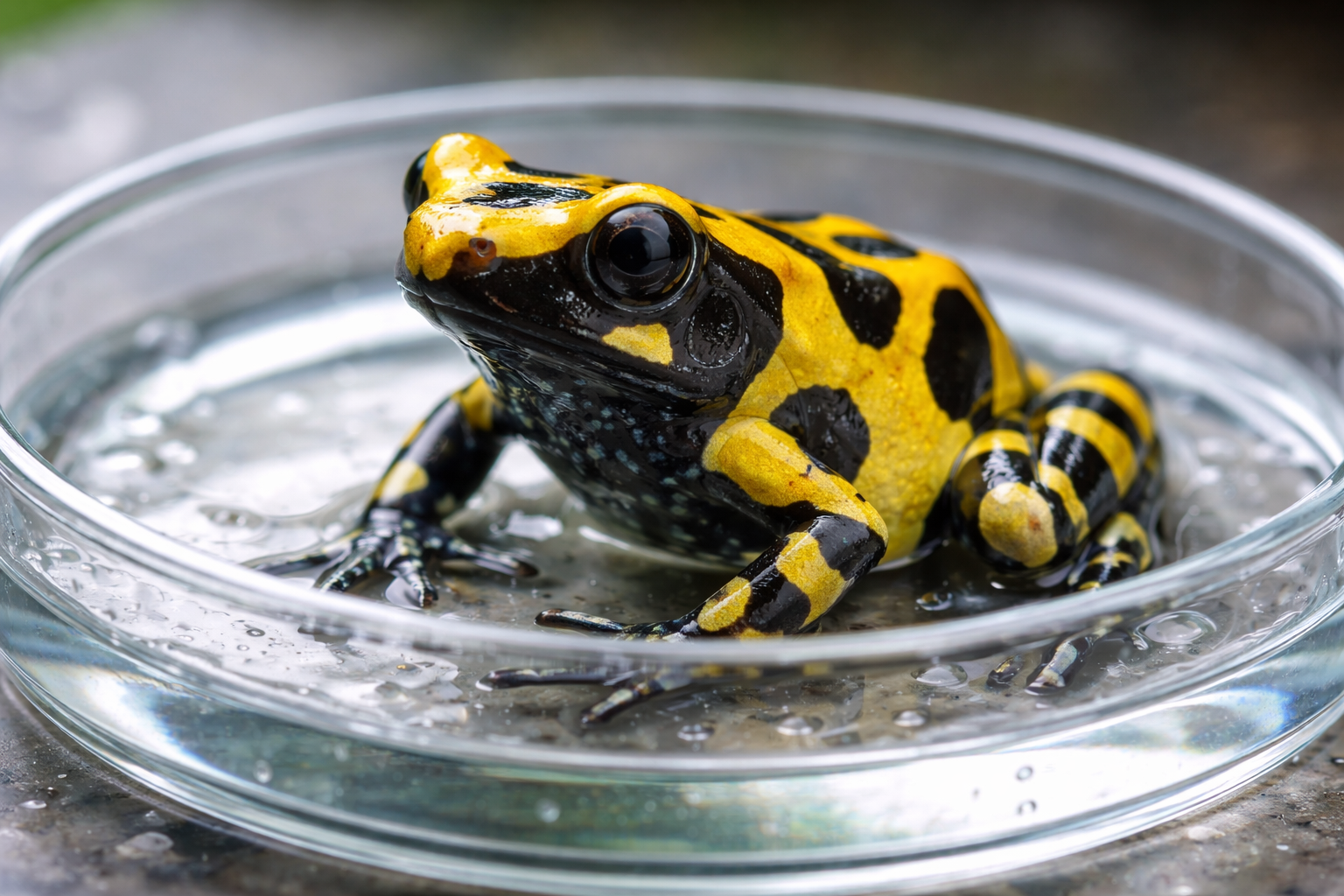

One of the most common questions people ask after discovering arrow frogs is deceptively simple: what do they eat?
The short answer is “small insects”. The longer — and far more important — answer is that feeding poison dart frogs correctly is one of the biggest factors in their long-term health, colour, breeding success, and lifespan.
In the wild, arrow frogs feed constantly on a huge variety of tiny invertebrates. In captivity, that complexity has to be recreated deliberately. This guide breaks down exactly what arrow frogs eat, how that differs from the wild, and how to feed poison dart frogs properly in a modern setup.
Related: Dart frog care, information, and resources
What do arrow frogs eat in the wild?
Wild poison dart frogs spend most of their day hunting. Rather than eating large prey items, they consume many tiny invertebrates, including:
- ants
- mites
- small beetles
- springtails
- other micro-arthropods
This constant intake of small prey does two critical things:
- it fuels their fast metabolism
- it provides the chemical compounds that make some species toxic in the wild
In captivity, those wild prey species are absent — which means diet must be managed intentionally.
Are captive arrow frogs poisonous?
No. Captive poison dart frogs (including those often called arrow frogs) are non-toxic.
Their famous toxins come entirely from their wild diet. Without access to alkaloid-rich ants and mites, captive frogs cannot produce poison.
This makes diet even more important, because while toxicity disappears, nutritional dependency increases.
The core captive diet: fruit flies
For most keepers, the foundation of an arrow frog diet is fruit flies, typically:
- Drosophila melanogaster (small)
- Drosophila hydei (larger)
Fruit flies are widely used because they are:
- easy to culture
- appropriately sized
- readily accepted by most species
However, fruit flies alone are not a complete diet. Over-reliance on a single feeder insect is one of the most common mistakes in dart frog keeping.
Why microfauna matter so much
In nature, arrow frogs don’t eat in “meals”. They forage continuously, picking off tiny prey as they move through leaf litter and moss.
This is where microfauna come in.
Springtails and other microscopic invertebrates:
- provide constant low-level feeding
- stimulate natural hunting behaviour
- support juvenile frogs and froglets
They also act as a safety net — especially for young frogs that may not compete well for fruit flies.
Explore: Microfauna, foods, and supplements for dart frogs
Feeding frequency for poison dart frogs
Most adult arrow frogs should be fed small amounts frequently, rather than large meals infrequently.
A typical schedule might look like:
- fruit flies: 3–4 times per week
- microfauna: continuously present
Juveniles and froglets often require more frequent feeding, supported heavily by springtails and other tiny prey.
Why supplements are essential
Unlike wild diets, captive feeder insects are nutritionally incomplete. Without supplementation, deficiencies can develop slowly — and by the time symptoms appear, damage may already be done.
Common issues linked to poor supplementation include:
- weak bones
- poor growth
- reduced breeding success
- shortened lifespan
This is why dusting feeder insects with a balanced vitamin and mineral supplement is considered standard practice for poison dart frogs.
Recommended reading: All-in-1 vitamin and mineral dust for dart frogs
How feeding links to colour and behaviour
Well-fed arrow frogs don’t just survive — they thrive.
Proper nutrition supports:
- strong coloration
- active daytime behaviour
- consistent calling in males
- reliable breeding in established pairs
When feeding is inconsistent or nutritionally weak, frogs may appear dull, lethargic, or reluctant to breed.
Common feeding mistakes to avoid
Many long-term problems in dart frog keeping trace back to feeding shortcuts.
Watch out for:
- feeding only fruit flies
- skipping supplementation
- underestimating the value of microfauna
- overfeeding large prey items
Arrow frogs evolved to eat constantly, not heavily.
Feeding as part of a bigger system
Diet doesn’t exist in isolation. Feeding works best when combined with:
- bioactive substrates
- moss and leaf litter
- stable humidity
All of these elements support microfauna populations, which in turn support healthier frogs.
This is why feeding, habitat, and supplementation should always be considered together — not separately.
Continue the series
- Arrow Frogs vs Poison Dart Frogs: Names, History, and Care Explained
- Dart frogs: care, guidance, and resources
Key takeaway: Arrow frogs thrive on variety, frequency, and balance. When poison dart frogs are fed properly — with microfauna support and correct supplementation — they reward keepers with colour, activity, and longevity.