
Misting systems have become almost standard in dart frog and tropical vivarium setups. WiFi control, timed bursts, fine atomisation — it all sounds ideal.
But here’s the uncomfortable question:
Are you misting for the frogs… or for your hygrometer reading?
Over-misting is one of the most common hidden problems in bioactive systems. And the signs are often subtle until something crashes — springtails decline, mould spikes, supplements wash off feeders, or frogs lose condition.
This article isn’t anti-misting. It’s about balance.
What Misting Is Actually Supposed to Do
A proper misting cycle should:
- Hydrate plants
- Replenish surface moisture
- Create natural drinking opportunities
- Simulate rainfall cycles
It is not meant to:
- Keep the substrate permanently soaked
- Replace ventilation
- Hold humidity at 100% constantly
The Hygrometer Trap
Many keepers chase a number — 90%, 95%, sometimes even 100% humidity.
But in the wild, humidity fluctuates. It rises after rainfall and falls gradually throughout the day.
If your enclosure never drops below 90%, you may be creating stagnant conditions rather than healthy ones.
Humidity stability comes from substrate moisture and planting density — not constant spray cycles.
How Over-Misting Affects Microfauna
Springtails
Springtails love moisture — but they also need oxygen.
Constant saturation can:
- Reduce oxygen pockets in substrate
- Slow reproduction
- Create anaerobic zones
If your springtail population never booms despite feeding them, over-misting could be suppressing growth.
Isopods
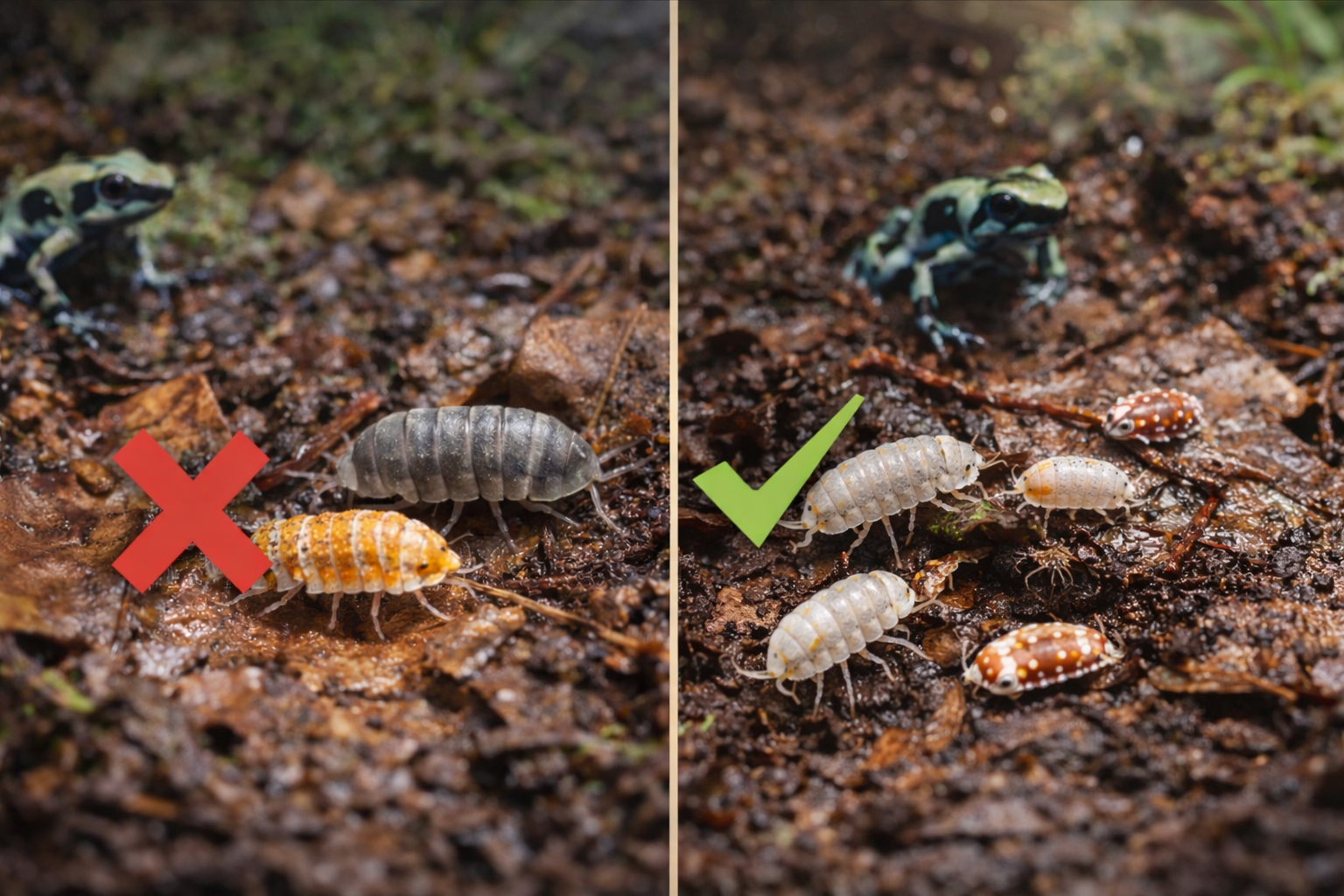
Isopods require moisture gradients. If the entire enclosure is equally wet, they cannot self-regulate.
Long-term saturation leads to population crashes.
Supplement Wash-Off (The Hidden Nutritional Issue)
This one is rarely discussed.
If you heavily mist shortly after feeding, fine supplement dust can wash off fruit flies before frogs consume them.
That means:
- Lower calcium intake
- Reduced vitamin absorption
- Gradual mineral deficiency
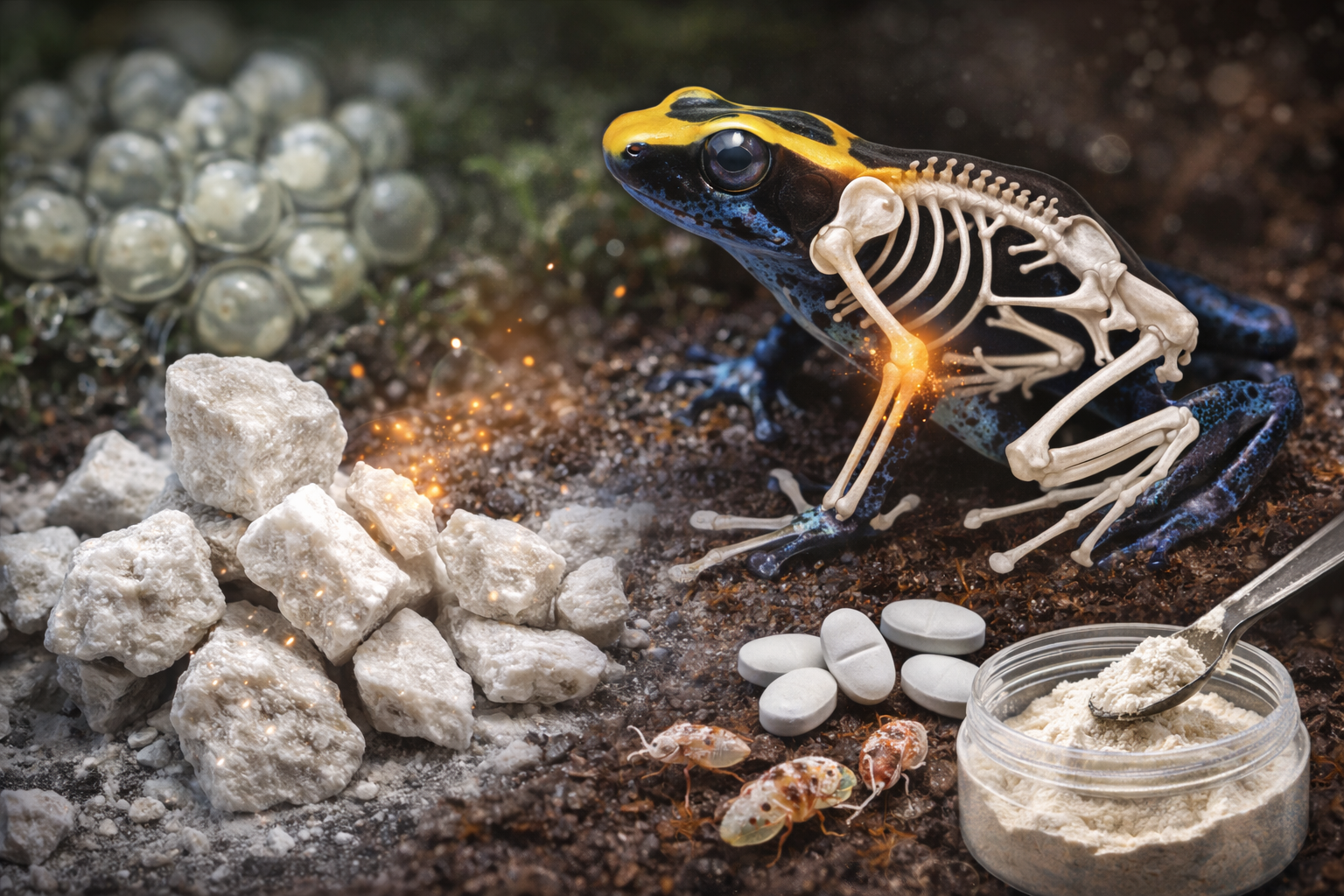
Consistent supplementation — such as using a balanced dust like our All-in-1 Vitamin & Mineral Dust — works best when feeders stay dry long enough to be eaten.
Signs You’re Probably Misting Too Much
- Substrate permanently glossy or waterlogged
- Condensation that never clears
- Persistent mould despite springtails
- Fruit flies drowning or sticking to surfaces
- Glass film returning within 24 hours
Healthy systems breathe and dry slightly between cycles.
What a Healthy Misting Pattern Looks Like
A more natural approach:
- One moderate mist in the morning
- Optional light mist in late afternoon
- Allow partial dry-down between cycles
Substrate should be damp below the surface, not flooded at the top.
Misting vs Fogging
Fogging increases air moisture but does little for substrate hydration.
Misting hydrates surfaces but can oversaturate if poorly timed.
Neither replaces proper ventilation.
Manual vs Automated Systems
Automated systems are consistent — which is good.
But they remove observational instinct.
Manual misting forces you to observe:
- Leaf condition
- Substrate moisture
- Frog behaviour
Automation should support husbandry, not replace it.
Humidity Gradients Matter
A healthy vivarium should contain:
- Moist zones
- Slightly drier zones
- Vertical variation
Constant saturation removes behavioural choice for the animals.
FAQ
What humidity should dart frogs be kept at?
Generally 70–95% depending on species, with natural fluctuation rather than constant saturation.
Is 100% humidity dangerous?
Constant 100% humidity encourages stagnant air and mould growth.
How often should I mist?
Typically once daily is sufficient in most well-planted setups, with adjustments based on airflow and drainage.
Can I rely solely on a misting system?
No. Proper ventilation and substrate hydration are equally important.
Final Thoughts
Misting systems are tools — not solutions.
If your vivarium feels swampy rather than rainforest-like, dial it back.
Healthy bioactive systems breathe, cycle, and fluctuate.
Balance beats saturation.