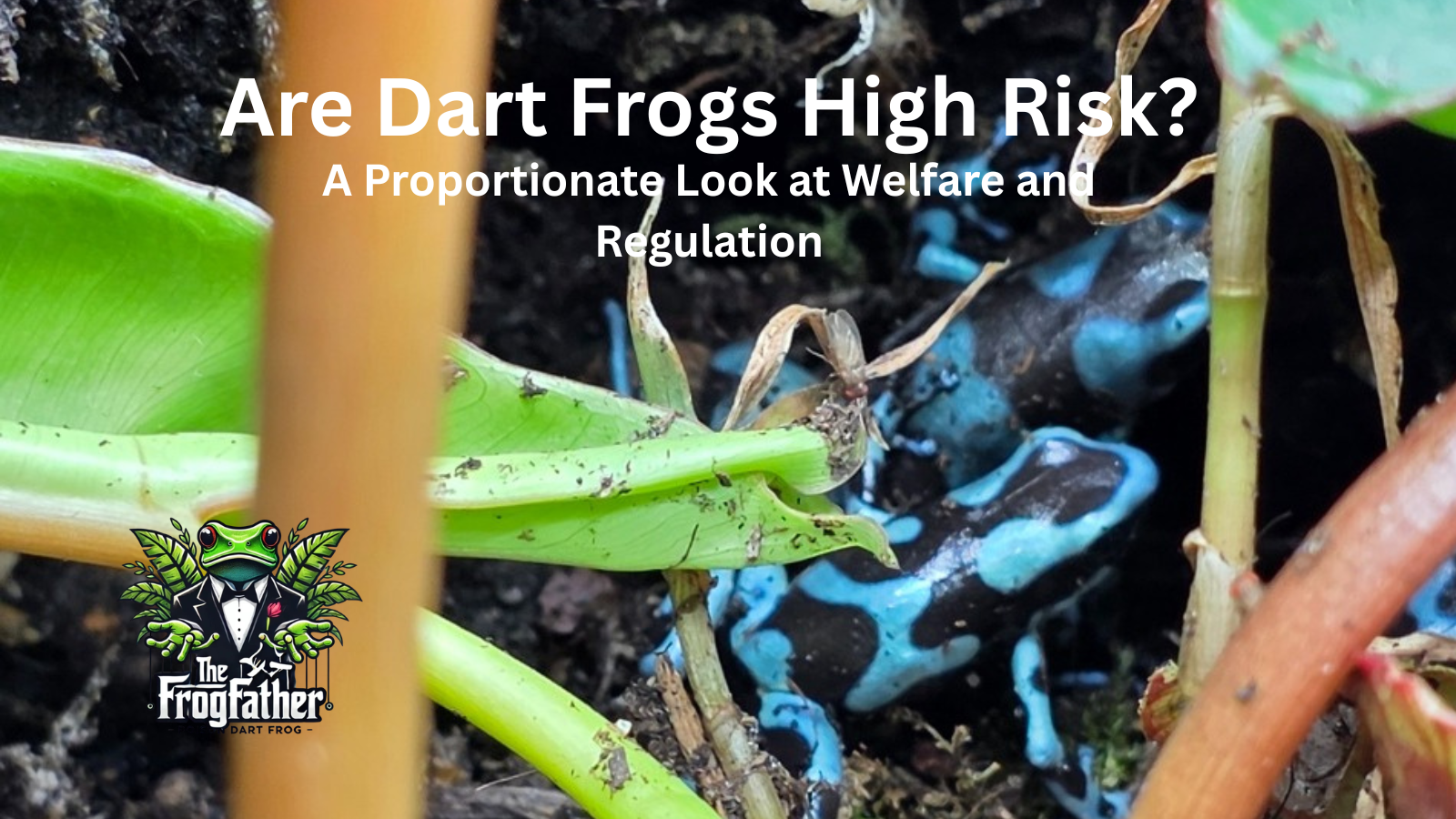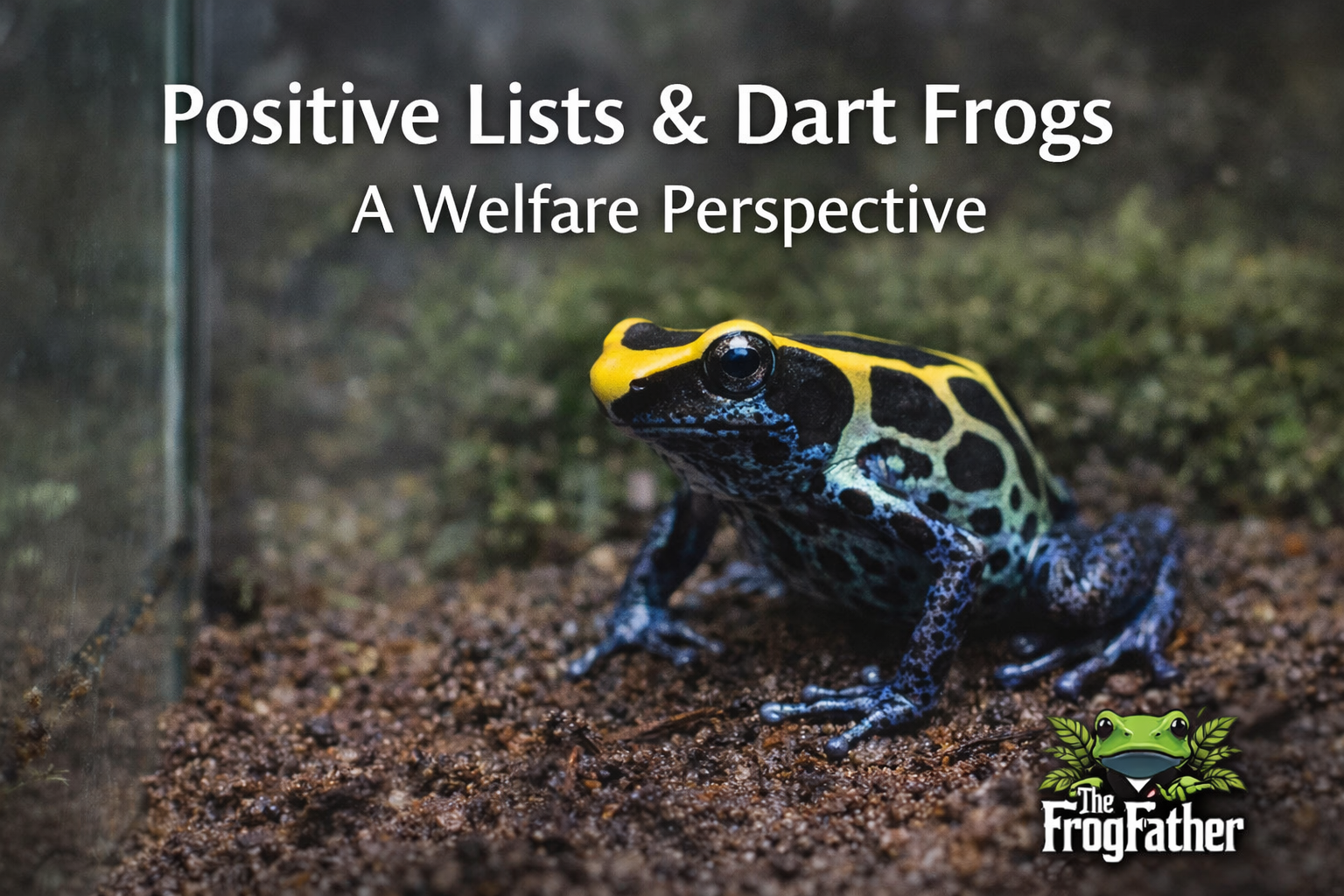

There is a persistent narrative that private keeping undermines conservation. In some cases globally, that has been true. But with dart frogs in the UK, the reality is more complicated — and in many instances, the opposite.
Responsible captive breeding has reduced pressure on wild populations for decades.
Captive Lines Are Not New
Many dart frog species kept in the UK today are multi-generational captive lines. Some morphs have been bred consistently for over twenty years.
That matters.
Established captive lines mean reduced reliance on imports. Reduced imports mean less incentive for wild collection.
When breeding is done properly, traceably and transparently, it strengthens both welfare and conservation outcomes.
Genetic Integrity and Lineage
Responsible breeders maintain:
- Locality data
- Morph consistency
- Accurate pairing records
- Separation of distinct lines
This is not casual reproduction. It is structured management.
Good breeders understand that mixing morphs irresponsibly undermines long-term genetic stability.
The Welfare Standard
Professional breeders operate to standards. That includes:
- Controlled environmental conditions
- Structured supplementation protocols
- Quarantine procedures
- Record keeping
- Veterinary access where required
When breeders exit due to restrictive policy, that knowledge base shrinks.
Policy Must Recognise Captive Success
In the debate around positive lists and regulation, it is important to distinguish between:
- Species with ongoing wild extraction pressure
- Species already established in sustainable captive breeding networks
Most dart frogs kept in the UK fall into the second category.
Removing Responsible Breeders Creates Risk
If experienced breeders leave the space:
- Quality declines
- Knowledge transfer slows
- Oversight weakens
- Informal trading increases
Conservation and welfare benefit from responsible participation, not exclusion.
Captive Breeding as Conservation Support
Captive populations provide:
- Genetic reservoirs
- Education opportunities
- Reduced import demand
- Structured animal welfare oversight
Conservation is not achieved by discouraging experienced keepers. It is achieved through standards, transparency and proportional regulation.
Final Thoughts
Dart frog conservation is not served by oversimplification.
Responsible breeders play a role in maintaining stable captive populations, reducing wild pressure and raising welfare standards.
Policy should recognise that contribution.
Frequently Asked Questions
Do captive breeders help conservation?
Yes. Established captive breeding reduces demand for wild-caught animals and supports stable, traceable populations.
Are most dart frogs in the UK wild-caught?
No. The majority are captive-bred, often from multi-generational lines maintained by UK breeders.
Does captive breeding remove pressure from wild populations?
When managed responsibly and transparently, it significantly reduces import demand.
Should breeders maintain locality data?
Yes. Accurate record keeping supports genetic integrity and long-term population stability.